
Editorials
[Set Report] ‘Texas Chainsaw 3D’!

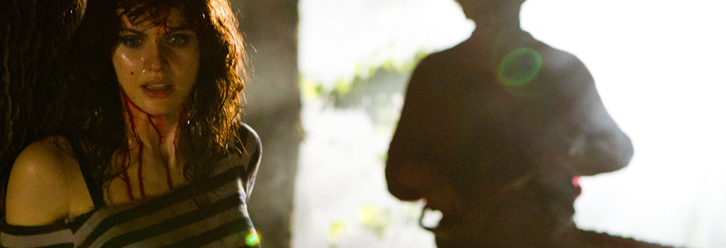
On January 4, 2013 Lionsgate will gas-up their chainsaw and pull the cord on Texas Chainsaw 3D, the John Luessenhop-directed “sequel” to Tobe Hooper’s classic Texas Chainsaw Massacre that stars Dan Yeager, John Dugan, Bill Moseley, Alexandra Daddario, Sue Rock, Tania Raymonde, Scott Eastwood, Gunnar Hansen, Tobe Hooper, Paul Rae, Keram Malicki-Sánchez, Ritchie Montgomery, Trey Songz, Marilyn Burns, Shaun Sipos, Thom Barry and Richard Riehler.
It’s hard to believe the film is finally hitting theaters as we sent Bloody Disgusting correspondent Alyse Wax to the Louisiana set back in August of 2011 (when it was titled Leatherface 3D). This morning we’re excited to finally bring you Alyse’s set report, along with two images exclusive to those who attended!
In addition to this report, Evan Dickson has interviews with John Luessenhop and Alexandra Daddario hitting later this week and early next week. Watch for more leading up to the Leatherface’s return right here on Bloody Disgusting.

By: Alyse Wax
Shreveport, Louisiana in the dead of August was not a thrilling thought for this city girl whose entire knowledge of Louisiana (outside of New Orleans) comes from “True Blood”. But the idea of checking out the latest Texas Chainsaw Massacre film definitely piqued my interest. After all, early word was that this installment – which they were calling Leatherface 3D on set – was meant as a sequel to Tobe Hooper’s original classic, and completely ignored every other Chainsaw-related flick.
The studio picked a good day for ten journalists to come visit the set (aside from the 98 degree heat and 50% humidity). The film opens right at the end of the original Chainsaw, and “moves into modern time,” according to producer Carl Mazzocone. “Our version opens on the last scene of [Tobe Hooper’s] original, and shows the Sawyers’s arrest. All the other Texas Chainsaw Massacres don’t exist to us,” Mazzocone tells us. It’s not so much what they are shooting – bits and pieces of the police standoff – but where. We are actually at the Sawyer farmhouse. The design team worked with “forensic precision” to recreate the original Chainsaw house in a barren field in the middle of a military base. From the swing out front to the slashes in the front door, it really feels like we are in 1974.
“It feels like home,” said Marilyn Burns. The original “Last Girl,” Burns played Sally in Hooper’s Chainsaw and has a cameo in Leatherface 3D as Grandma Verna. Gunnar Hansen, Hooper’s Leatherface, also has a cameo in the film as the Sawyer family patriarch (“Boss Hog” as he calls him), and he was actually startled to see the house. “I was shocked at how real it was. It was creepy seeing it again.” A tour through the interior of the house revealed only one thing out of place. “A chicken cage was a little off,” Hansen laughed. “Otherwise, everything was perfect.” From a fangirl perspective, being at the house was overwhelming. The interior was slightly less impressive than the exterior; in the daylight, it didn’t have the griminess, that stench you can almost smell through the screen. Up close, the “arm chair” was very obviously created out of plastic limbs. But walking up that long dirt road towards the iconic house was positively breathtaking. It was chilling, surreal, and almost indescribable – like walking into a different universe. I was heartbroken to learn that the following week, the entire structure would be burned to the ground.
Burns and Hansen aren’t the only two Chainsaw alums to have roles in this film. John Dugan returns as Grandpa, and Bill Moseley – who was not in the original, but played Chop-top in Hooper’s sequel – appears as another member of the Sawyer clan. “What could be more fun?” Burns asks.
It is interesting to note that during our eight hours or so on set, the only “new blood” we got to interview was Scott Eastwood (yup, Clint’s son). All we got out of him was that he played a young cop. We didn’t get to speak to top-billed Alexandra Daddario (Bereavement), who plays Heather, the girl who comes out to Texas to collect a mysterious inheritance and discovers she is related to the Sawyer clan because she wasn’t on set. [She was offered at a later date, and Evan Dickson will be posting his interview tomorrow!] We also didn’t get to speak to Dan Yeager, who plays Leatherface in this film due to scheduling issues.
Returning cast members were drawn back to the Massacre because they loved the script. “I heard it was going to be in 3D, and that was exciting,” said Burns. “Then I read the script and I loved it. I can’t tell you how many [Chainsaw] scripts I have read, tried to write, tried to produce… how many attempts from my friends…. I’ve seen so many millions of tries. I even went to see one of the remakes, because they told me it would be exactly like Chainsaw 1. But then I watched it and thought, ‘Wait a minute. This isn’t my movie.’ These people were dying, they came back to life, they added family, another town… forget it! But when I read this script, I was interested right from the beginning. I was amazed at what they had accomplished, all the twists and turns, all the surprises. It excited me!”

Hansen thought it was a good script as well, but it wasn’t what he imagined. “Years and years ago – before there ever was a second Chainsaw, I had a notion of what would make a good Chainsaw 2. Years have gone by. The older brother has escaped with Leatherface and the cook – who is not dead, but a pile of crumpled bones. They are living in an abandoned hotel at the edge of a small city in the Midwest. He has made a deal with the hotel owner to stay in residence and make sure the hotel doesn’t get vandalized. No one knows he is there with his brothers. Leatherface spends a lot of time just staring out the window, and at night he will take the cook and put him on his shoulders and go roaming through the forest. Some people decide to pull a scam on the owners and show up, and tell the cook that they are prospective buyers and have made this arrangement to stay a couple days at the hotel, to make sure it is what they want to buy. So this sets up, basically, another ‘teenagers trapped in an old house’ plot.”
What of this new Leatherface, anyway? We got to see one hazy iPhone photo of Yeager in full costume, and a few of us journalists got a split-second glance at a mask being transported – obviously a mistake, for it was quickly covered with Duvateen. Mike McCarty of KNB FX was heading up the effects on-set, and he promised that we would see the original Leatherface mask (no surprise since the beginning of this film overlaps with the end of the original). He also revealed that there would be “three new masks.” “The masks definitely have a lot to do with the story,” McCarty promises, as each new mask is the face of a new victim. “There is a mask that is one of his favorites, and there is a mask he wears at the end of the film.”
Naturally, the gore level was of particular interest. Though most of the violence and gore in Hooper’s original took place off-camera, the mind’s eye tricks most people into believing they are actually watching every gruesome detail. But in today’s age of torture-porn and shortened attention spans, you have to assume Leatherface 3D will be a bloodbath. McCarty says that his team arrived on set with about 20 gallons of blood, and that day he ordered more. “It’s a Chainsaw Massacre buffet,” he said simply. With hands stained red, I don’t doubt that.
I am a little concerned about the use of 3D. Mazzocone went with 3D because “I think 3D is cool.” He promises it will be “user-friendly” 3D that won’t cause nausea or eye strain, and that the movie was “written for 3D.” I strongly believe that 3D only works in more gimmicky situations (My Bloody Valentine 3D and Piranha 3D are both good examples) so I fear Texas Chainsaw Massacre 3D will either become silly (not necessarily bad, but not the effect you want when trying to recapture the original) or the 3D will be pointless and a mere annoyance (as in the Fright Night remake).
It all sounds good on paper. The house looks phenomenal; the original cast approves. Mazzocone says that Tobe Hooper has been very supportive of their endeavor, and was going to make a cameo, but couldn’t make it work with his schedule. The producer speaks with a lot of love for Texas Chainsaw. “It’s a fine line between copycat and homage,” he explains. “I like the simplicity of Tobe’s. We respect his style, but don’t want to copy it.” Mazzocone specifically brought in Gunnar because he felt that after the original film, Gunnar was overlooked and typecast as an actor. “I wanted to show him respect.”
Curiously, in his deal to acquire the rights to Texas Chainsaw Massacre, Mazzocone bought the rights to six sequels. How many franchises can you think of that were still worthwhile by the time they got to sequel six? Ultimately, we will have to wait until January, 4 2013 before passing final judgment. – Alyse Wax


The problem with filming sequels back-to-back is that, unless you can afford expensive reshoots, there’s no easy way to adjust course in between movies if fans react badly to where the story is headed. That’s why it’s important to have a complete narrative thought out well in advance lest you accidentally kill a budding franchise.
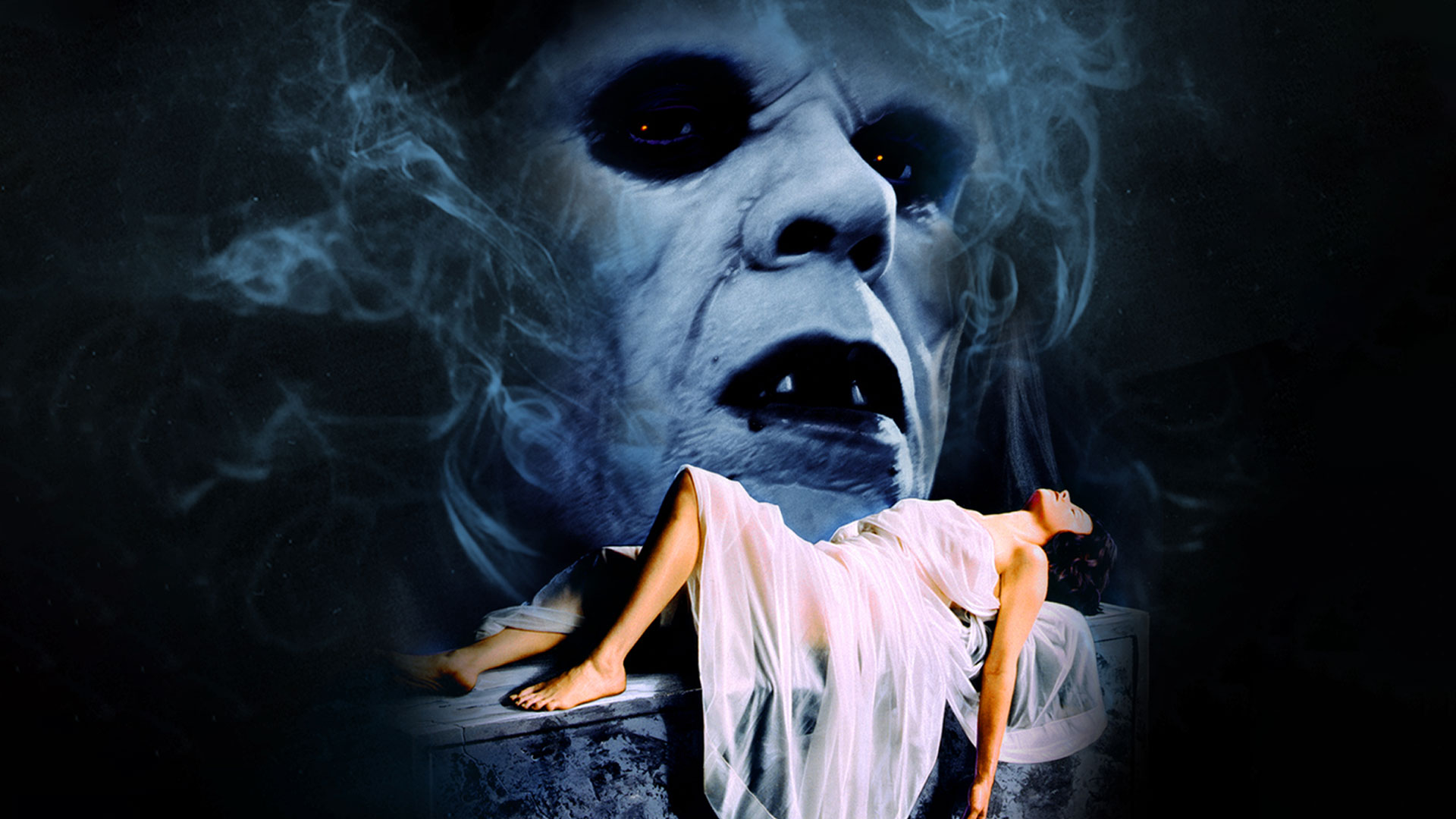
However, this isn’t always the case. Every once in a while, it seems like the cinema gods smile upon certain chaotic productions and gift moviegoers with complete franchises that feel like more than the sum of their hastily produced parts. Ted Nicolaou’s Bloodlust: Subspecies III is precisely one of these miraculous pictures, with the raw talents of the artists involved (as well as the continued support from Romania) turning the feature into an effective conclusion for a series that kind of made things up as the filmmakers went along.
That’s why I’d like to invite my fellow readers to join me on this third part of our journey through the Subspecies franchise as we look into Bloodlust and talk about how it remains a surprisingly satisfying finale to the original trilogy.
A Trilogy Planned on the Fly

Released only a year after Bloodstone found plenty of success in rental stores and mail-in VHS catalogues worldwide, 1994’s Bloodlust was produced at the same time as its predecessor in (mostly) the same locations and with the same team. This means that the movie benefited from all the same upgrades as Bloodstone, with the crew now being more experienced with the ins and outs of surviving a low-budget Romanian production and the cast really settling into their characters.
At this point, everything from location scouting to the makeup process had been streamlined, with Wayne Toth and Norman Cabrera, the main duo behind special effects, even switching out time-consuming prosthetics for latex gloves in order to speed up Anders Hove’s monstrous transformation. The titular “subspecies” demons were also once again relegated to a mere cameo appearance due to the laborious puppetry required to bring them to life.
The only real hiccup came from the fact that actress Denice Duff had replaced the first film’s Michelle (Laura Mae Tate) and was immediately expected to portray the character as both an innocent victim in part II and as a secondary villain in part III. According to behind-the-scenes interviews, the hectic production schedule that blended two different movies meant that Duff would often find herself having to alternate between two incredibly different versions of Michelle during the same shooting day – though it’s obvious that she’s having more fun with Bloodlust’s more traditionally vampiric version of her character.
In the finished film, we pick things up immediately where the previous entry left off as Rebecca (Melanie Shatner) is forced to leave her vampire sister Michelle (Duff) behind in the dungeons of Castle Vladislav due to the rising sun. This allows Mummy (Pamela Gordon) to use Michelle’s blood to revive the vicious Radu (Hove) so that he may continue his quest for the coveted Bloodstone – a magical artifact that perpetually drips the Blood of Saints.
Meanwhile, the dreamy US embassy agent Mel (Kevin Blair) agrees to help Rebecca plan a rescue mission, though they’re unaware that Radu has become infatuated with Michelle during his attempts to guide her growing bloodlust. This all culminates in a climactic confrontation meant to tie up all of the series’ loose ends in one of Full Moon Pictures’ most ambitious productions.
The Evolution of Radu

Like its predecessor, Bloodlust: Subspecies III was also warmly received by fans who argued that the series was an even bigger success than Full Moon’s other major horror franchise, Puppet Master. This praise wasn’t unanimous, however, as 1994 had seen the rise of a more modern breed of sexy vampire popularized by Anne Rice, with old-school Nosferatu like Radu being viewed as obsolete when compared to the likes of Lestat and Gary Oldman’s take on Dracula.
In a way, one might argue that Nicolaou’s film is something of a swan song for the classic vampire story, as Bloodlust combines all of the traditional elements we tend to associate with these tales into a single tragic yarn that ties a neat little bow on Radu’s story as well as the old-fashioned monster movies that he represents. The finale remains shocking despite the fact that this is the third time we see Radu get brutally killed onscreen, with the brief tease that he may one day return feeling more like a nod towards the nature of evil rather than sequel bait.
The film dabbles a bit in gothic romance and even explores the inherent power fantasy behind transforming into an immortal creature of the night, but the filmmakers never lose sight of Radu as a demonic force even when he’s willing to betray his beloved Mummy for Michelle’s sake. In fact, his twisted “love” for his fledgling makes him even creepier as we get the feeling that his passion comes from a dark and disturbing place.
Anders Hove is at his absolute best in this film, with the effects department boosting his moments of what the younger generation would call “aura farming” whenever Radu emerges from shadows like a 90s version of Count Orlok. There are even a couple of surprisingly effective jump-scares here, which is why I’d argue that Bloodlust cements Radu as one of the most memorable cinematic vampires of all time despite his humble origins.
Subspecies Saves Its Best For Last

Nicolaou and Vlad Panescu also saved the best for “last” (more on that in a bit) regarding the film’s visuals, with the cinematography and overall atmosphere of Bloodlust absolutely surpassing what we saw in the previous films. Everything feels appropriately climactic this time around (including the wonderful soundtrack that was co-composed alongside an authentic Romanian orchestra), and I appreciate how this is the fastest-paced entry in the trilogy since the film doesn’t need to waste time setting anything up.
Bloodlust still suffers from some of the same low-budget blemishes as its predecessors, but there’s so much creative passion here that no amount of wonky effects work or stilted dialogue can get in the way of appreciating the flick’s gothic grandeur. That’s why it’s not surprising that the movie’s definitive(-ish) ending would later be retconned as fans begged for more Radu.
Of course, the next entry in this series would be a different kind of vampiric endeavor altogether, with the filmmakers attempting to engage with the same trends that ultimately killed Radu and his antiquated kin. That, however, is a story for another time. For now, I’ll merely insist that Bloodlust: Subspecies III remains a highlight of Full Moon’s expansive catalogue and is definitely worth seeking out today.
You must be logged in to post a comment.