Interviews
[Interview] Composer Cris Velasco On The Horror Genre, Clive Barker, And Scoring ‘ZombiU’


There are a myriad zombie games releasing over the next year, including Day Z, The War Z, The Walking Dead, Human Element, and many more, yet one of the more exciting titles is the Wii U exclusive ZombiU. As our first look at what survival horror on the Wii U could be like, there’s a lot riding on this game’s ability to prove that Nintendo’s next console can be a major player in the horror genre, as opposed to its predecessor, which despite having no shortage of horror games release on it, never managed to birth any real successes. It looks, and perhaps most importantly, sounds incredible, and that’s thanks in large part to composer Cris Velasco. I had the opportunity to chat with Cris about the game — see what he had to say about the horror genre and scoring ZombiU, after the break.
BD: You’ve worked on a few horror games in the past; are you a big fan of the genre?
Oh yes! My love of horror and monsters has been with me since I was a child. That was on more of a visceral level though. I just thought monsters looked really cool. I still do actually! But now, I can really appreciate what a good horror novel, movie, game can do to me on an emotional level. It’s sort of the equivalent of eating a really spicy meal. It hurts, but it’s a good pain.
As a teenager, I discovered the books of Clive Barker. He became such a source of inspiration for me. The worlds he conjured up just really spoke to me. I used to watch the Hellraiser movies (1 and 2) at least once a week. This was all way before I started composing. When I finally first began to write music years later, I had a few opportunities to meet Clive and I told him that my goal was to one day work with him. Fast forward another 10 years or so, and I found myself at his house discussing how the music for Clive Barker’s Jericho should sound. That was definitely a dream come true for me! Ever since then, I’ve been really itching to get to work in horror again.
BD: What’s been the most exciting thing about composing the soundtrack for ZombiU?
The whole score was written in about 10 days. That was pretty exciting! I also got to record my good friend, Nicole Garcia, on violin. I’ve known Nicole since high school and have used her on numerous recordings. We put together a string quintet for this game. There were two violins, a viola, and two cellos. I called them the Apocalypse Ensemble. The idea was to have a much more intimate setting for the strings. It creates a much rawer sound by using only a few players like this. A scarier sound.
BD: Have you played ZombiU, and if you have, what do you think? Is there something about the game that drew you to it?
I’ve played it just a little bit. All I can say about it is that it’s really scary. ZombiU seems to be horror done right. As most people can attest, a good horror game or film is all about the anticipation of being scared. It should make you terrified to look around the corner or open a door. The unknown is so much scarier than throwing a million creatures at you left and right. From what I played of ZombiU, I think they nailed it.

BD: What kind of music are you into? Do you listen to certain groups, soundtracks, or genres when you’re composing a soundtrack?
I don’t listen to anything specific while I’m in the middle of a project. I do listen to music all the time though. Recently, I’ve been on a Russian-based classical music phase. Lots of Prokofiev, Shostakovich, Myakovsky, Glière, etc. I also just downloaded the Lincoln soundtrack today. I’m very anxious to hear what Williams has cooked up.
BD: What’s your process for creating a song? Do you play the game or use gameplay or concept art while you’re working, or is it created largely from scratch?
The process changes depending on what stage the game is in. As a general rule though, the more information I have about the game, the better. ZombiU was already in a playable state by the time I started composing so that made things a bit easier. I also got to work with my good friend Manu (audio director) on this one. He is very specific about the music he’s after. He’s also great about sending me any game footage, screenshots, or concept art to help me get into the vibe. Being able to see the game is so important. I’ve seen enough zombie movies over the years to have a pretty good idea what it will look like. However, nothing beats actually watching the footage of a zombie eating your brain to get you in the mood!
BD: You’ve worked on numerous games, including God of War, Mass Effect, and Clive Barker’s Jericho – how does your approach to each project differ?
Each score is stylistically different of course. For a game like God of War, I want to help bring a sense of awe to the player. For something like ZombiU, I just want to scare you! However, I think that my approach generally stays the same no matter what game I’m working on. The goal is always to write the best music I can while helping to enhance and elevate the project. If the music can live outside the game too, that’s really the ultimate satisfaction.
BD: Are there any horror film or video game soundtracks or composers that inspire you?
Two of my favorite soundtracks are Chris Young’s score to Hellbound and Wojciech Kilar’s score for Dracula. These scores had a huge influence on me and my desire to become a composer.
BD: If you could compose for any series or upcoming game, do you have something you would really like to work on?
I’ve been so fortunate to have already worked on many of my dream projects. God of War, Mass Effect, and Clive Barker’s Jericho were all major milestones in my life. I would still love to work within the Star Wars universe though. Also, anything based on the Cthulhu Mythos would be amazing. And if a new Zork game ever gets made, I want to score it!
I want to give a big thanks to Cris Velasco for taking the time to talk horror with us — for more of Cris’ work, feel free to head on over to his website. If you want to pre-order the ZombiU soundtrack, you can do that right here.
Feel free to ever-so-gently toss Adam an email, or follow him on Twitter and Bloody Disgusting




Interviews
‘Rubberhead’ Director Nick Taylor on FX Maverick Steve Johnson, Practical Effects, and Seven-Year Journey

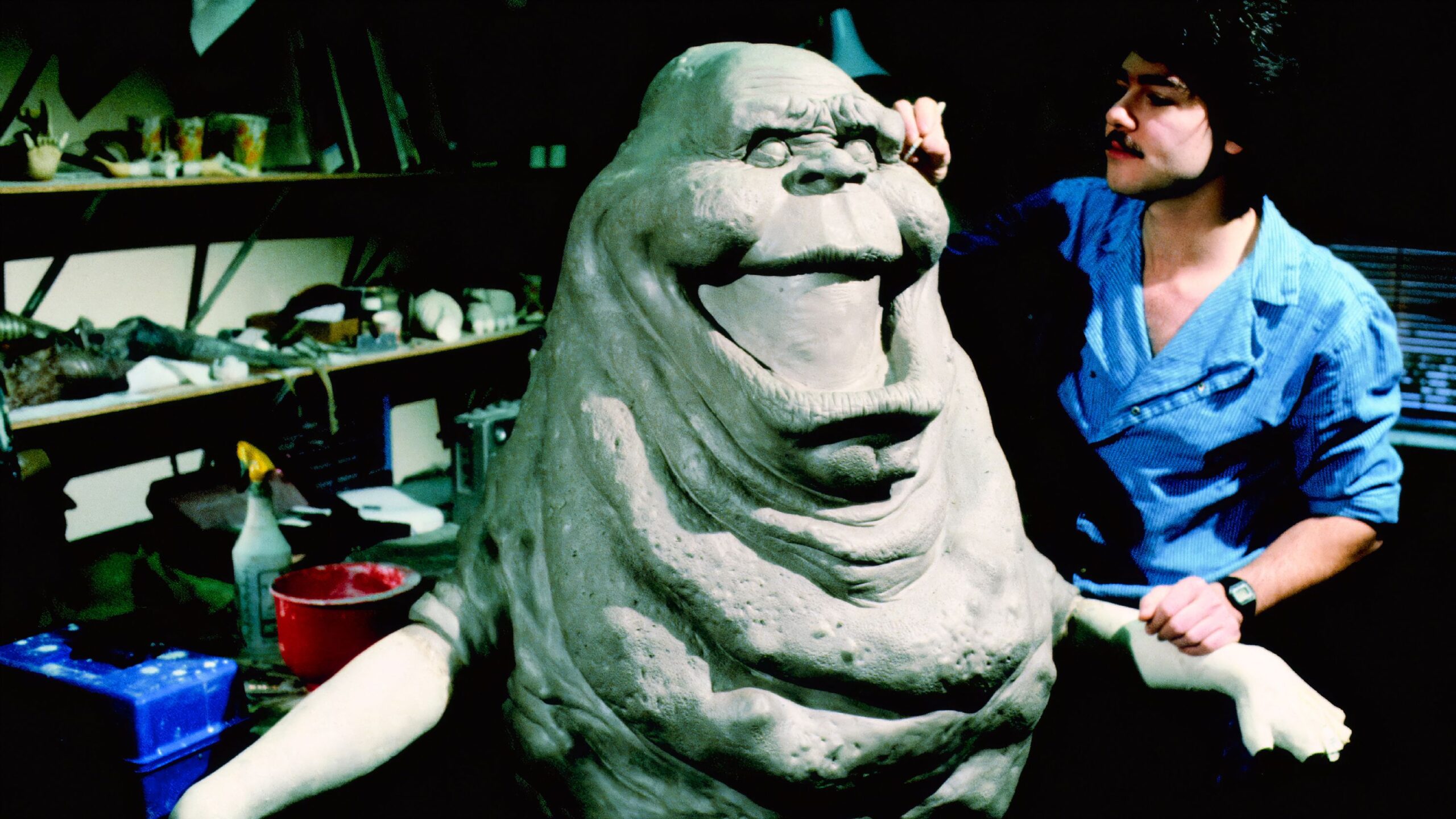
Horror journalist, producer, and podcast host Nick Taylor moves into the director’s seat for his feature debut with illuminating documentary Rubberhead: The Life & Monsters of Steve Johnson.
It chronicles the wild life and career of SFX maverick Steve Johnson, based on the multi-volume book series Rubberhead: Sex, Drugs and Special FX, and those familiar likely already know Rubberhead isn’t your standard horror documentary.
Johnson is responsible for so many memorable movie monsters, having worked on Fright Night, Poltergeist II, An American Werewolf in London, A Nightmare on Elm Street 4: The Dream Master and Night of the Demons, to name a few. He’s also extremely candid in ways that feel atypical in this industry, open about his failures as much as his successes.
“It was a natural progression for sure,” Nick Taylor tells Bloody Disgusting of his transition into filmmaking ahead of Rubberhead‘s world premiere next week at the Fantasia Film Festival on July 23. “I think with my podcast, I got adept at interviewing people and pulling creative lessons out of them, which was the point of my podcast. I wanted this movie to be sort of a creativity pill for artists where if they’re starting a project or feel creatively stuck, they could watch this movie and be inspired and get actual practical creative lessons.”
Taylor’s background in PR and marketing also organically led him down this path.
He charts the course from book promo to documentary director: “But also Bloody Disgusting had a lot to do with this movie because in the very beginning when I first met Steve, I was helping him promote his book and I said, ‘Hey, I got a marketing background and a journalism background. Let me help you promote this book. I’ll just pitch stories from your life to the media, and we’ll see what happens.’ And John Squires wrote an article about Steve making Slimer under the influence of tons and tons of cocaine, and that went fairly viral.”

“For a week, it was story time with Steve,” Taylor continues. “He would tell me a story from his life, and every story was about a major movie, a major director, lots of drugs and alcohol and insanity. I would write them up, and I think John published about three or four of them. So huge shout out to John Squires because that was really great. So yeah, there were definitely a lot of outgrowths of my journalism background that definitely contributed to this movie.”
Rubberhead condenses the multi-book series into a cohesive feature film with a breezy runtime, sparking the obvious question as to how Taylor approached condensing Johnson’s life down to an under 2-hour documentary film.
“That was one of the more difficult parts of all of this, because we had enough for a series or an epically long six-hour fan documentary,” he answers. “But from day one, I did not want to make a fan documentary. I love them. They’re a lot of fun, but I did want the movie to stand on its own two feet as a character-driven portrait of an artist and a time period and a technology, that being practical effects. I did want to be objective. I didn’t want to make this too long. I wanted to make it re-watchable. So I think we just really had to focus on what the narratives were that we wanted to tell. So there were some basically almost cliché archetypical mythic narratives present in Steve’s life. We could have made this way longer, but we wanted to keep it short. But luckily that’s why you have special features.”

Johnson quickly proves to be an engaging subject thanks to his self-effacing wit and frank self-reflections; expect no shortage of stories about how drugs factored into the height of his career or the failures it wrought.
That rare quality was an asset for Rubberhead, Taylor confirms. “He does not shy away from anything about the drugs, the addiction, the bridges burned, the mistakes made, the lessons learned. He just is honest about all of it. He’s had a lot of time for reflection, and he’s done a lot of reflection, so he doesn’t shy away from any of it, which is huge because it’s very refreshing. I don’t think a lot of people are that way, at least in this industry from what I can see. So I think it was hugely beneficial. We wanted to lean into that, and we wanted to make this sort of a gonzo Hunter S. Thompson sort of wild tale through Steve’s overall life.“
Condensing his life into this doc was a slow and steady process for Taylor, too. “It’s been almost seven years. It’s been a labor of love. We’ve been as indie as it gets. We would shoot what we could when we could, and then we would edit when we could. Then after a while it all came together.”
In a way, making Rubberhead brings Taylor’s horror fandom full circle. It turns out that the very film that sparked his interest in the genre and practical effects also comes with an amusing Steve Johnson anecdote.
Taylor explains, “My gateway for sure was Beetlejuice. I saw that at a very young age; I think I was four or five. I felt somebody had shown me, my soul. I get a little emotional thinking about it. There was something about that movie that felt so strange and unusual, but also felt so familiar. It was spooky, but it was fun, and it was lighthearted, and it had humor, but it also had this macabre celebration to it that I just really got into as a kid. I felt somebody had shown me my own soul. And funny story, Steve got fired from Beetlejuice because Tim Burton gave him his hand-drawn designs and Steve’s like, ‘Oh my God, these look like kids did them. This is not what you want. I know what you want. I’m going to redesign these for you.’ And Tim Burton was like, ‘Yeah, no, you’re not.’ So yeah, funny story.”

You must be logged in to post a comment.