Editorials
‘Kolobos’ -1999 Slasher Blended American Reality TV With Classic Italian Horror [Hidden Gems]


Like most, I wasn’t familiar with Kolobos until many years after the independent horror film was quietly released direct to video in 1999. It didn’t help that the title is difficult to pronounce and even harder to remember; Kolobos is a word cryptically uttered several times throughout the movie, but its meaning — left unexplained until the finale — bears no impact on the plot. The generic artwork that was slapped on the cover didn’t do it any favors either.
It wasn’t until Arrow Video rescued the film from obscurity with a Blu-ray restoration two decades later that it made its way onto my radar. The marketing hook — “The Real World meets Saw by way of Suspiria” — immediately caught my attention. It’s an apt comparison, and Kolobos was ahead of its time in regards to all three.
The Real World is a fitting point of reference, as it laid the groundwork for what would become known as reality television. The genre rose to prominence in the early 2000s with the likes of Survivor and Big Brother, which went on to be skewered in My Little Eye and Halloween: Resurrection, but Kolobos beat them to the punch. It also pre-dates the Saw franchise, but the similarities — particularly to Saw II — are noteworthy. Kolobos doesn’t lean as heavily into the torture angle, but it features a group of strangers imprisoned in a house equipped with deadly booby traps.
Although its structure shares more in common with the slasher genre, complete with Scream‘s postmodernism, Kolobos draws significant influence from Italian horror. Not since Re-Animator‘s interpolation of the Psycho theme has there been such a flagrantly derivative soundtrack homage as Kolobos composer William Kidd‘s riff on Goblin’s Suspiria score. The Dario Argento worship extends to the vibrant cinematography and elaborate death scenes. Bear in mind that Kolobos was made in the early days of the internet and DVDs, when Argento’s work was harder to come by and his status as a master of horror was confined to smaller circles.
In Kolobos, a mysterious artist’s newspaper ad seeking “progressive minded individuals” to live together in a snowy mountain resort and have it all filmed for a “groundbreaking experimental film” yields a collection of five individuals: Kyra (future WWE diva Amy Weber), a shy artist with a history of mental health issues; Gary (John Fairlie), a clean-cut philosophy student; Erica (Nichole Pelerine), a pretentious actress; and Tina (Promise LaMarco), a bubbly fast-food worker who single-handedly dates the movie with her distinctly ’90s style.
After spending the first act developing the characters, the horror aspects are swiftly introduced when the first victim is claimed via boobytrap and all exits are sealed. Prior to this point, the characters engage in playful banter, but the lack of major conflict between them feels like a missed opportunity, as petty drama is a cornerstone of reality TV.
Kolobos was shot on 35mm with a $500,000 budget by three then-recent University of Southern California film school graduates: co-writers/co-directors Daniel Liatowitsch and David Todd Ocvirk and co-writer/producer Nne Ebong. It was primarily filmed on location for 18 days in Omaha, Nebraska, in the home of a friend of executive producer/financer Edward R. Taylor, with 5 days of additional photography taking place later in Los Angeles.
Liatowitsch cites “Italian horror that we felt never got its due” like Suspiria, Inferno, Phenomena, Tenebrae, and Stage Fright as inspirations for the film’s visual palette. While Kolobos lacks the opulence of Argento’s work, cinematographer Yoram Astrakhan (Dinocroc) adopts similarly colorful lighting, practically motivated via emergency lights that are triggered when the house goes into lockdown.

Kyra experiences nightmarish visions that bring to mind the dreamlike cinema of Lucio Fulci, while the faceless killer (Ilia Volok, Gemini Man) she sees is inspired by The Wax Mask. The Italian horror tributes extend to the merciless kills; a tooth-shattering mouth smash is lifted from Deep Red, and a sequence of eye trauma mirrors Zombie. Jason Collins (The Maze Runner, The Hunt) adeptly designed the splattery special effects.
While Liatowitsch and Ocvirk relished the opportunity to play in the horror world, Ebong sought to hoist archetypal reality TV characters by their own petard. “I thought it would be really cool to do something that was kind of a commentary on young people who were doing anything to be famous but presenting a version of themselves that was other than who they really were,” she explains.
A chance zoo visit resulted in the film’s title when Liatowitsch saw a colobus monkey — its name originating from the Greek kolobus, meaning mutilated — whose lack of functional thumbs allows it to swing through trees more efficiently. The idea that a perceived flaw can evolve into a superior species stuck with Liatowitsch, applying the concept to their faceless villain. Kolobos is an infinitely more unique, but also more awkward, name than its working title, Trapped.
Kolobos makes creative use of its limited budget, utilizing an ingenious premise with a single primary location and a handful of characters. The acting lacks nuance at times but never to a distracting degree. Scream queen Linnea Quigley even makes a cameo appearance in an uncharacteristically subdued role. It’s visually interesting and well paced, save for the overlong epilogue that was tacked on.

Panic struck the filmmakers when their 100-page script only translated to a 63-minute first cut. They secured additional funding from Taylor, allowing them to pad the runtime with a superfluous but serviceable framing device set in a hospital. The final cut, running 87 minutes, initially earned a dreaded NC-17 rating from the MPAA. They made the required edits to the gore to receive an R rating but then pulled a switcheroo and released the original version, which went unnoticed by the powers that be.
The filmmakers’ hopes for a sequel, alluded to by the film’s ending, never came to fruition. (Liatowitsch speculates that the genre shift brought on by The Blair Witch Project‘s success hurt their chances.) Their work in the industry has been sparse since: Liatowitsch made a virtual gaming documentary titled Avatars Offline in 2002; Ocvirk co-wrote the 2021 indie horror film Bashira; Ebong was an associate producer on ABC’s 2005 sci-fi series Invasion and recently executive produced the new Prime Video young adult series The Summer I Turned Pretty.
Fangoria was interested in distributing Kolobos under its Fangoria Presents banner, but it didn’t work out financially. The film was ultimately released by York Home Video. Although it got some theatrical play and found a bigger audience overseas, Kolobos was largely forgotten until Arrow Video’s aforementioned Blu-ray edition (from which the quotes in this article are sourced). Thanks to the wonders of streaming, this innovative indie gem is now available on Screambox, Tubi, Shudder, AMC+, and Arrow.




The problem with filming sequels back-to-back is that, unless you can afford expensive reshoots, there’s no easy way to adjust course in between movies if fans react badly to where the story is headed. That’s why it’s important to have a complete narrative thought out well in advance lest you accidentally kill a budding franchise.
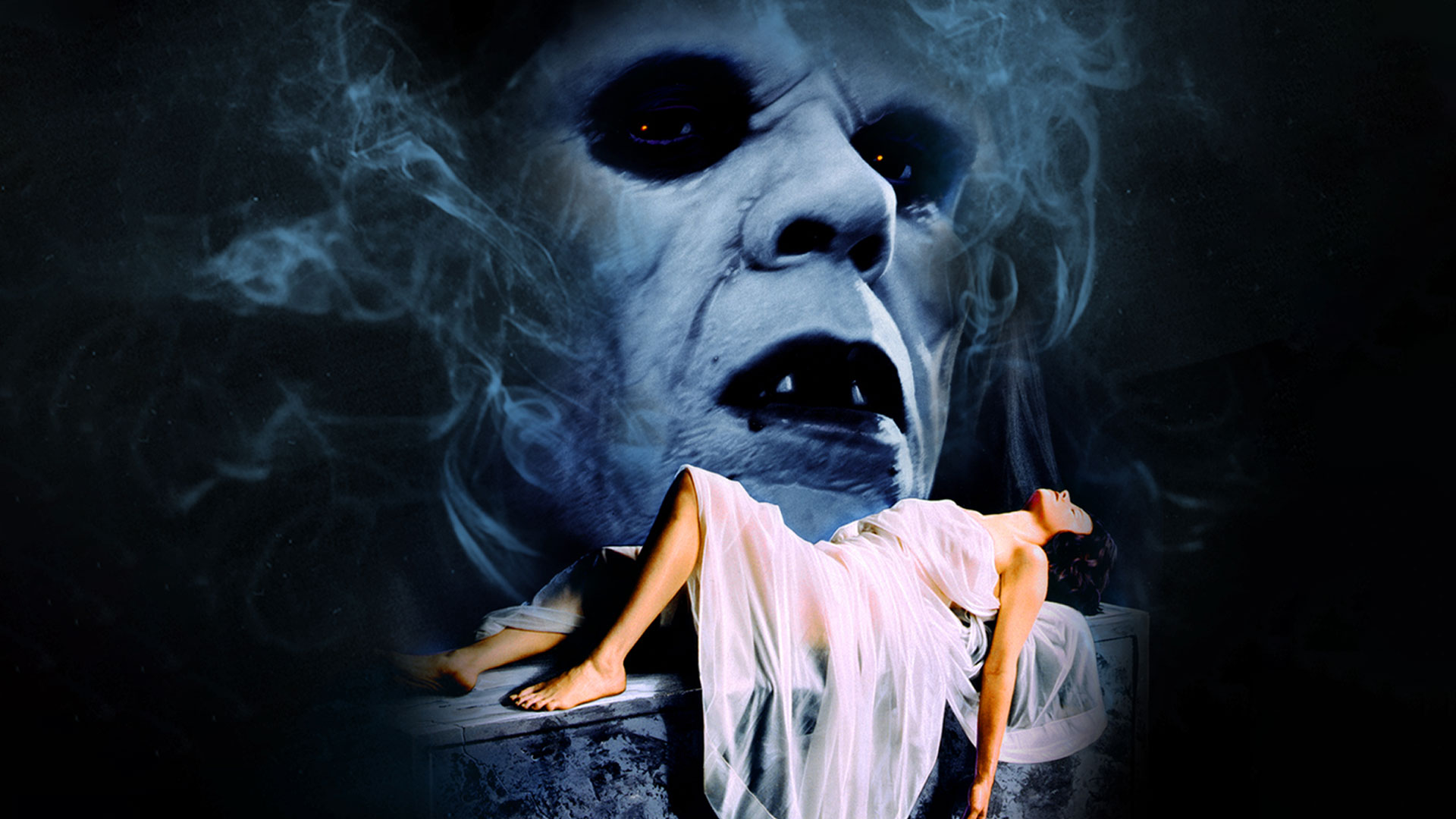
However, this isn’t always the case. Every once in a while, it seems like the cinema gods smile upon certain chaotic productions and gift moviegoers with complete franchises that feel like more than the sum of their hastily produced parts. Ted Nicolaou’s Bloodlust: Subspecies III is precisely one of these miraculous pictures, with the raw talents of the artists involved (as well as the continued support from Romania) turning the feature into an effective conclusion for a series that kind of made things up as the filmmakers went along.
That’s why I’d like to invite my fellow readers to join me on this third part of our journey through the Subspecies franchise as we look into Bloodlust and talk about how it remains a surprisingly satisfying finale to the original trilogy.
A Trilogy Planned on the Fly

Released only a year after Bloodstone found plenty of success in rental stores and mail-in VHS catalogues worldwide, 1994’s Bloodlust was produced at the same time as its predecessor in (mostly) the same locations and with the same team. This means that the movie benefited from all the same upgrades as Bloodstone, with the crew now being more experienced with the ins and outs of surviving a low-budget Romanian production and the cast really settling into their characters.
At this point, everything from location scouting to the makeup process had been streamlined, with Wayne Toth and Norman Cabrera, the main duo behind special effects, even switching out time-consuming prosthetics for latex gloves in order to speed up Anders Hove’s monstrous transformation. The titular “subspecies” demons were also once again relegated to a mere cameo appearance due to the laborious puppetry required to bring them to life.
The only real hiccup came from the fact that actress Denice Duff had replaced the first film’s Michelle (Laura Mae Tate) and was immediately expected to portray the character as both an innocent victim in part II and as a secondary villain in part III. According to behind-the-scenes interviews, the hectic production schedule that blended two different movies meant that Duff would often find herself having to alternate between two incredibly different versions of Michelle during the same shooting day – though it’s obvious that she’s having more fun with Bloodlust’s more traditionally vampiric version of her character.
In the finished film, we pick things up immediately where the previous entry left off as Rebecca (Melanie Shatner) is forced to leave her vampire sister Michelle (Duff) behind in the dungeons of Castle Vladislav due to the rising sun. This allows Mummy (Pamela Gordon) to use Michelle’s blood to revive the vicious Radu (Hove) so that he may continue his quest for the coveted Bloodstone – a magical artifact that perpetually drips the Blood of Saints.
Meanwhile, the dreamy US embassy agent Mel (Kevin Blair) agrees to help Rebecca plan a rescue mission, though they’re unaware that Radu has become infatuated with Michelle during his attempts to guide her growing bloodlust. This all culminates in a climactic confrontation meant to tie up all of the series’ loose ends in one of Full Moon Pictures’ most ambitious productions.
The Evolution of Radu

Like its predecessor, Bloodlust: Subspecies III was also warmly received by fans who argued that the series was an even bigger success than Full Moon’s other major horror franchise, Puppet Master. This praise wasn’t unanimous, however, as 1994 had seen the rise of a more modern breed of sexy vampire popularized by Anne Rice, with old-school Nosferatu like Radu being viewed as obsolete when compared to the likes of Lestat and Gary Oldman’s take on Dracula.
In a way, one might argue that Nicolaou’s film is something of a swan song for the classic vampire story, as Bloodlust combines all of the traditional elements we tend to associate with these tales into a single tragic yarn that ties a neat little bow on Radu’s story as well as the old-fashioned monster movies that he represents. The finale remains shocking despite the fact that this is the third time we see Radu get brutally killed onscreen, with the brief tease that he may one day return feeling more like a nod towards the nature of evil rather than sequel bait.
The film dabbles a bit in gothic romance and even explores the inherent power fantasy behind transforming into an immortal creature of the night, but the filmmakers never lose sight of Radu as a demonic force even when he’s willing to betray his beloved Mummy for Michelle’s sake. In fact, his twisted “love” for his fledgling makes him even creepier as we get the feeling that his passion comes from a dark and disturbing place.
Anders Hove is at his absolute best in this film, with the effects department boosting his moments of what the younger generation would call “aura farming” whenever Radu emerges from shadows like a 90s version of Count Orlok. There are even a couple of surprisingly effective jump-scares here, which is why I’d argue that Bloodlust cements Radu as one of the most memorable cinematic vampires of all time despite his humble origins.
Subspecies Saves Its Best For Last

Nicolaou and Vlad Panescu also saved the best for “last” (more on that in a bit) regarding the film’s visuals, with the cinematography and overall atmosphere of Bloodlust absolutely surpassing what we saw in the previous films. Everything feels appropriately climactic this time around (including the wonderful soundtrack that was co-composed alongside an authentic Romanian orchestra), and I appreciate how this is the fastest-paced entry in the trilogy since the film doesn’t need to waste time setting anything up.
Bloodlust still suffers from some of the same low-budget blemishes as its predecessors, but there’s so much creative passion here that no amount of wonky effects work or stilted dialogue can get in the way of appreciating the flick’s gothic grandeur. That’s why it’s not surprising that the movie’s definitive(-ish) ending would later be retconned as fans begged for more Radu.
Of course, the next entry in this series would be a different kind of vampiric endeavor altogether, with the filmmakers attempting to engage with the same trends that ultimately killed Radu and his antiquated kin. That, however, is a story for another time. For now, I’ll merely insist that Bloodlust: Subspecies III remains a highlight of Full Moon’s expansive catalogue and is definitely worth seeking out today.
You must be logged in to post a comment.