Books
‘Ghosts of Fear Street’ – The Spinoff Series That Mixed ‘Goosebumps’ and ‘Fear Street’ [Buried in a Book]

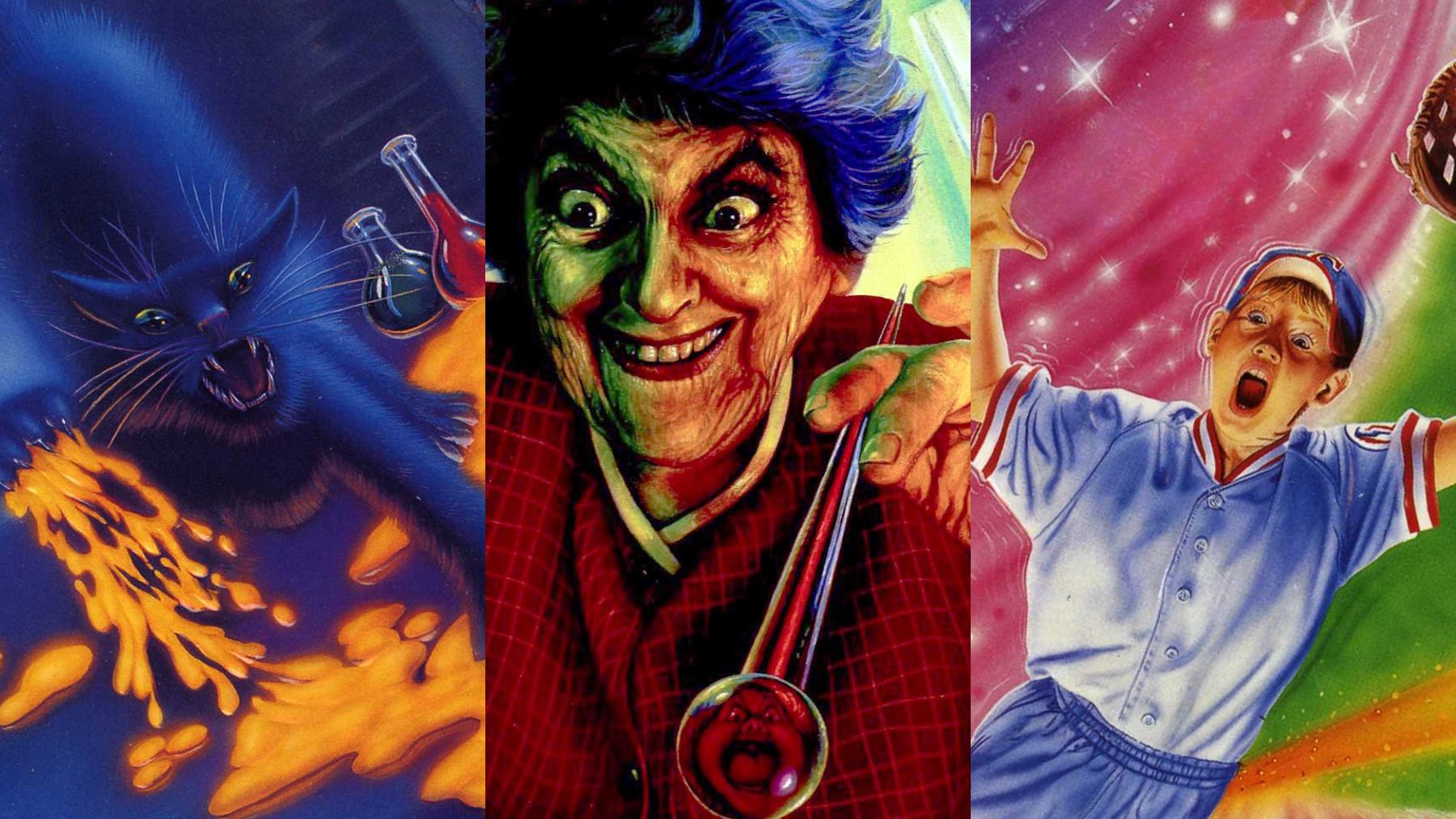
With the success of both Fear Street and Goosebumps in the early ‘90s, it only made sense to combine them into one series. And R. L. Stine’s Ghosts of Fear Street is essentially that. Just the kiddos are now the targets of undue terror in Shadyside, though the dangers are strictly otherworldly.
Everything from phantoms to aquatic apes are lurking in and around the town’s most notorious neighborhood, and only the young’uns are aware of their presence. These books, while not actually written by Stine himself, are on the same wavelength as Goosebumps.
As seen in these three randomly selected entries, some are more wacky than others.

The eighth volume, written by Stephen Roos, begins with Al being disappointed by his recent birthday. Everyone in his family is brainy, and he’s also smart, but unlike his parents and older sister Michelle, Al doesn’t think life should completely revolve around academics. More importantly, he thinks his birthday gift should be something he would enjoy. Nevertheless, his folks and sister give him a chemistry set, which he’s not even allowed to touch until Michelle can teach him how to use it safely.
Surprise, surprise, Al doesn’t wait for his big sis. He and his best friend Colin crack that set open with the intent of making a stink bomb. They don’t know how to make one, but out of sheer luck, the set came with instructions. What they come up with, though, is far from a stink bomb — it’s a living piece of goo that does the strangest thing when it comes in contact with other organisms. One touch of the orange glob and a person — or cat — is sapped of their intelligence.
The ooze was making us stupid!
Al’s been drained enough to the point where he can’t even put his shoes on correctly, and he thinks the capital of Brazil is Cleveland. Admittedly, dumbing the ostensible hero down so he can’t even save himself is wise, but that leaves readers with an overlong play-by-play of Al’s Science Bowl at school. He and his classmates, who each touch the ooze during a game of Keep Away, all succumb to the same side effects and tank the competition. It’s dull stuff, to say the least.
The excitement finally kicks in once the ooze takes on a 10-foot tall humanoid shape and comes after Al for what little brain cells he has left. The entity reveals it’s really an extraterrestrial lifeform hiding in children’s chemistry sets all over, and those stink bomb instructions were put there to create it. With the intent of bringing the best brains back to its home planet, the alien slips up when it comes in contact with Al’s dog, Tubby. The pooch’s inferior brain matter neutralizes the ooze and undoes all the earlier damage… for the time being.
The Ooze takes a long time to get going, and the reveal is not enough to justify a tedious and often repetitive account of Al’s misadventures as a witless tween. However, there is a bit of sadness here because Al’s parents seem to have little interest in their son outside his academic activities and achievements. Losing his smarts forever could have meant losing his parents’ love. That overlooked subplot is indeed the scariest thing here.

Jahnna N. Malcolm, the collective pen name for Jahnna Beecham and Malcolm Hillgartner, delivers the most enjoyable book in this whole lot. The sixteenth volume, ominously titled Don’t Ever Get Sick at Granny’s, finds young Corey leaving Shadyside for a few days so he can stay at his grandmother’s house while his parents take his older sister Meg to her dance audition. Before leaving, though, his parents assure Corey his stay will be fun so long as he doesn’t get sick. They leave without explaining that odd statement, and even worse, Corey starts to come down with a small fever.
Upon confirming her grandson is definitely sick, Marsha channels her inner Annie Wilkes and puts Corey through hell. That road to his recovery is paved with homespun torture. Granny Marsha pins the boy down to his bed with ten itchy and heavy wool blankets, all in a bid to sweat out his fever. Then, she refuses to let him use the bathroom until he downs glass after glass of water, followed by an entire pitcher of orange juice. Other Marsha-approved methods of misery include rubbing a DIY liniment all over Corey — causing him to break out in “fur” — and forcing him to run on a treadmill until he’s exhausted.
“No!” Granny snapped. “Stop asking questions and start rubbing.”
Corey later tries to escape, but with his parents’ hotel number missing and the door locked, leaving is out of the question. The story gets extra tense and confusing when Corey does find the phone number and learns his family never checked into their hotel. Adding to the already bizarre quality of this book is the discovery of Meg inside the walls; she left her audition to save her brother. Though it seems her effort is all in vain, Marsha is eventually dealt with like the witch she’s turned out to be — Granny literally melts when she’s doused in liquid.
As if this book couldn’t be any weirder, it does the unthinkable and claims everything was just a fever dream. Granny Marsha doesn’t exist, and Corey’s been recuperating at home all this time. That is until the book quickly pulls another rug out from under readers’ feet. Once again, Corey wakes up from another nightmare, but now he’s the family dog! Don’t Ever Get Sick at Granny’s is a rollercoaster, and while not everything makes sense, Malcolm goes big while other Ghosts of Fear Street authors stay close to the edge. Some light sadism and body horror, as well as a left-field twist, are the highlights of this morbid offering.

Last up is P. MacFearson’s Field of Screams, a tale of time-travel and baseball. The twenty-second book begins with two kids, including Buddy Sanders, playing ball outside one of the many creepy houses on Fear Street. Buddy encounters a strange old guy named Ernie at said house, but according to the cops, no one’s lived there since 1948. The time-travel element quickly sets in as soon as Buddy gets a ball to his head during a game, and he wakes up in… you guessed it, 1948.
Trapped in the past with no known way of returning to his time, Buddy lives out the life of another kid coincidentally named Buddy (Gibson). That mysterious Ernie fella spoke of Buddy Gibson’s little league team, nicknamed The Doom Squad, that ended up dying after losing a championship. Their bus stalled on the railroad tracks before being hit by a train. Buddy, inhabiting the body of Gibson and living with his coach’s family in the meantime, now figures he can go home if he prevents the accident from ever happening.
“And now they’re buried in Fear Street Cemetery!”
Field of Screams is the quaintest book here, despite its foreboding title. This story largely entails how Buddy tries to fit in — your amusement is often based on his culture shock — and how he tries to “correct” fate. At first he thinks sabotaging the Doom Squad’s chance at going to the championship is his easiest way out, but an uncanny force interferes. What he believes is an evil ghost is really Buddy Gibson, whose soul was forced out of his own body. Gathering his strength and swearing revenge on Sanders, Gibson isn’t about to let this time traveler ruin everything he’s worked so hard for.
So, if throwing the game is out of the question, Buddy (and Buddy, after they merge into one body and come to an agreement) does the opposite and helps the team win the championship. Now, anyone who’s ever come across a time-travel story knows fate is usually set in stone, so this next development comes as no surprise. The team’s bus, driven by Ernie, narrowly evades a train on that fateful day. Alive and well, Buddy Sanders finally finds his way back home and learns Gibson’s destiny changed for the better after having survived his near death experience. The weirdest thing about this book is maybe the atypical happy ending with no hint of further danger.
Don’t Ever Get Sick at Granny’s outmatches the other two books in this sampling, as far as entertainment and imagination goes. And with different authors behind Ghosts of Fear Street, there is also a variety of writing skills and styles to contend with. Regardless, these short books colorfully illustrate how there’s never a dull (or safe) moment when growing up on Fear Street.
There was a time when the young-adult section of bookstores was overflowing with horror and suspense. These books were easily identified by their flashy fonts and garish cover art. This notable subgenre of YA fiction thrived in the ’80s, peaked in the ’90s, and then finally came to an end in the early ’00s. YA horror of this kind is indeed a thing of the past, but the stories live on at Buried in a Book. This recurring column reflects on the nostalgic novels still haunting readers decades later.




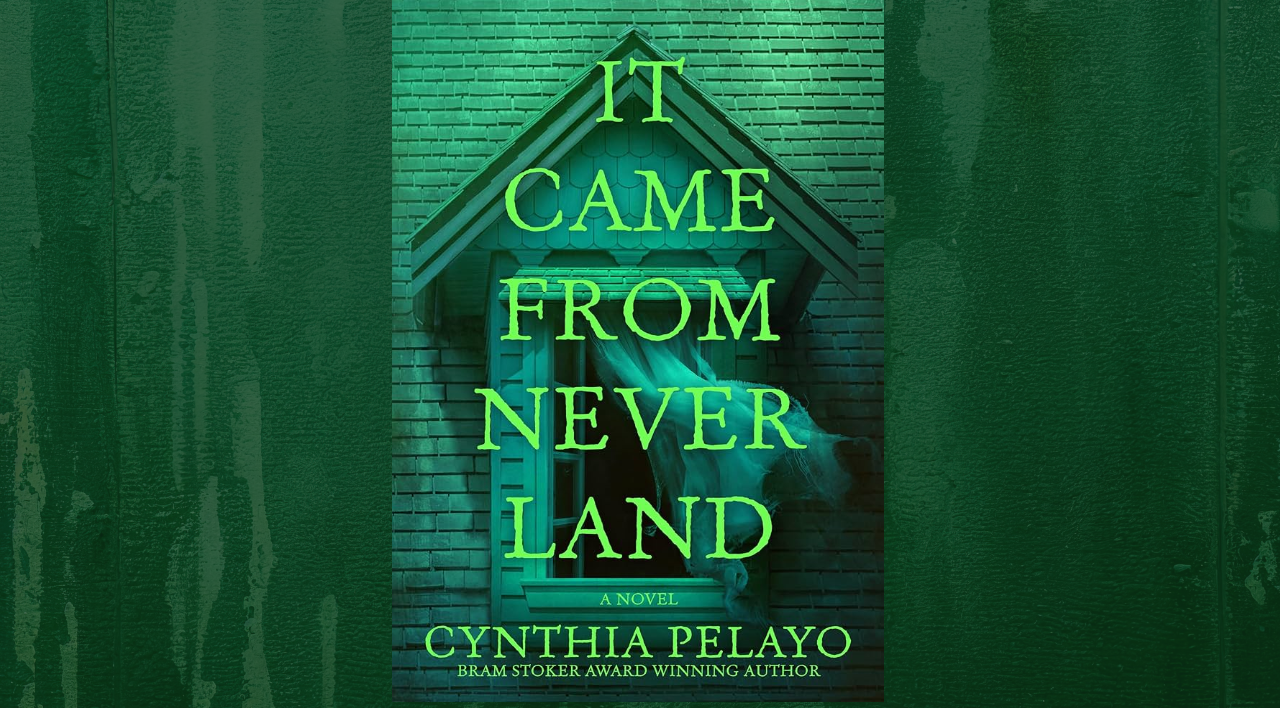
There’s a layer of the mythic in everything Cynthia Pelayo writes, whether she’s charting the little-known history of her home city of Chicago or digging deep into the pool of shared stories that’s served humanity since ancient times. Regardless of subject matter or narrative, Pelayo reads like a writer constantly in search of the threads of legend and myth that bind us all together and keep us awake at night.
It Came From Neverland, Pelayo’s latest novel, takes that search and applies it to one of the most famous children’s stories ever conceived, J.M. Barrie’s beloved and oft-adapted tale of the Boy Who Never Grew Up. But this is not just a Peter Pan retelling, or a Peter Pan meta-sequel. Through gorgeous prose, finely drawn characters, and an iron grip on the themes that drive the story, Pelayo crafts It Came From Neverland into one of the year’s must-read genre novels, both a horrifying spin on Peter Pan and a luminous dark fantasy about the search for salvation in a cold, brutal world.
In Pelayo’s version of events, Wendy Darling and her brothers John and Michael really did travel to Neverland when they were children, drawn there by a charismatic and irresistible figure called Peter Pan. But this Neverland is far from the Disney version, and after fighting to survive in that ageless place, the children made their way home and shut Peter Pan out of their lives, refusing to so much as utter his name, lest he find them again.
Flash forward to 1914, where Wendy’s working as a schoolteacher at Marigold House, a London orphanage growing increasingly crowded amid the outbreak of World War I. By day, she teaches and volunteers at a local hospital, reading to the war wounded, and by night, she remembers to check every window latch and keep an eye on every shadow. But lately those shadows seem to behave strangely again. Crows caw all around her. And worst of all, children are disappearing again. Peter Pan is back, and faced with memories of how no one believed her the first time, Wendy prepares to face him one more time.
This is a remarkably well-suited atmosphere for moments of classic, chill-inducing terror, and Pelayo wastes no time weaving a world in which every bird call, every stray thought from the mouth of a child, could be evidence that this monstrous Peter Pan is near. Wendy lives a haunted existence, and as the chaos of war grips London, old fears grip her while new ones fight for position. If you come to this novel looking for something like Stephen King’s IT by way of J.M. Barrie, you’re going to get it, through flashbacks and dark lore and wonderfully well-timed scares, but Pelayo’s not done.
This version of Wendy Darling, through whom we see most of the narrative, cares for children in adulthood because she did not receive the care she needed herself as a child in the aftermath of a traumatic experience. She considers it her duty to listen to them, to protect them, to understand them in a world that still views them not as human beings, but as potential locked up in tiny bodies.
Setting the book in 1914, when young men across Europe were signing up to go and die in a war they didn’t quite understand, underscores this beautifully. Children are grist for the mill in the world of It Came From Neverland, their eager spirits waiting to be crushed by a machine of war and empire and capitalism that will not relent even if an armistice eventually arrives. It’s a wider, more existential layer of horror than the storybook monster, which gets us to open the book in the first place, but the real brilliance at work here is how Pelayo ties it all together.
At the core of all of this, the beating, icy heart of It Came From Neverland‘s horror and its search for meaning amid the narratives of war, children’s fiction, collective memory, and more, Pelayo is most interested in what it really means to never grow up. It means retaining a sense of play, yes, but it also means a refusal to move on, to embrace not just the responsibilities of aging, but the moral burdens of it.
Peter Pan is a monster not because he likes to play, but because he does not consider consequences, mortality, or even the needs and desires of others. The same is true of the leaders of Europe sending young men off to die in a war, and the same is true of leaders now, playing dice with human lives amid the rise and fall of the stock market. To never grow up is to lose something essential about being human, and Pelayo depicts that loss as both existentially terrifying and heartbreaking. That terror and heartbreak drive the novel, but Wendy’s efforts to escape that terror and to mend her broken heart make it fly.
It Came From Neverland is available June 9 wherever books are sold.


You must be logged in to post a comment.