


With Full Moon’s Puppet Master series getting a reboot this summer courtesy of Puppet Master: The Littlest Reich, it seemed like a great idea to revisit the original series of films and create a running tally of all the best death scenes.
Like I said, it seemed like a great idea.
Don’t get me wrong: I grew up on Full Moon movies and the original Puppet Master was a staple of my youth. I’m a fan. But the reality is that the deaths in the Puppet Master movies aren’t especially interesting. Unlike major mainstay franchises like Friday the 13th and A Nightmare on Elm Street, these aren’t movies defined by their inventive kills scenes. The fans return for movie after movie (11 and counting as of this writing) for the weird little puppets, as each one only has one way to kill someone – and a few barely even have that. I’m looking at you, Jester.
That makes coming up with a list like this pretty challenging, though it hopefully won’t be the case forever: based on the little bit of early word I’ve heard, any one of the deaths in The Littlest Reich will outdo every kill in the first 11 movies combined. This gives us a lot to look forward to when the movie is released later this summer.
Without further ado, here are seven of the best kills from the Puppet Master franchise…

Neil Gallagher (Jimmy Skaggs), PUPPET MASTER
Here’s the thing about the Puppet Master movies: almost every really good death in the series comes at the end of each film, when the puppets inevitably team up and combine their powers to kill someone more evil than them. It’s how at least half of the entries end. I’m giving the advantage to the original because a) it was the first to use this conceit and b) it’s pretty gnarly.
Neil Gallagher, thought dead by suicide at the start of the movie, reveals himself to be reanimated thanks to the secrets of Andre Toulon, the O.G. Puppet Master. He resents the little bastards, though, and makes the fatal mistake of insulting them and tossing one (Pinhead) across a room and even popping off its tiny head. Well, that’s all it takes for the puppets to turn on his undead ass, joining forces and each taking a turn using their unique ability to tear him apart: Tunneler drills directly into his calf muscle, then Blade cuts his fingers off as he tries to escape. Pinhead, having put himself back together, begins crushing Gallagher’s head. Blade stabs his other hand and then hooks his mouth open so Leech Woman can begin puking up leeches right into his mouth (a weirdly inefficient way to kill someone) while Tunneler continues to drill into his neck. They mess him up so bad that his widow, who just learned that her husband is an evil genius who brought himself back from the dead and has ordered the deaths of all the other characters, begs them to stop.
What really earns this particular kill a spot on the list, though, is that it takes a really, really long time, which makes it all the more satisfying.

Billy the Annoying Kid (Sean Ryan), PUPPET MASTER II
The first sequel in the franchise introduced a new puppet, Torch, who has a German Stahlhelm for a head and a flamethrower for a hand. Torch won my heart when he loses his patience with an obnoxious 10-year old and sets him on fire. It’s the most transgressive moment in the entire Puppet Master series. For that, I love it.
Joey Carp (Michael Guerin), CURSE OF THE PUPPET MASTER
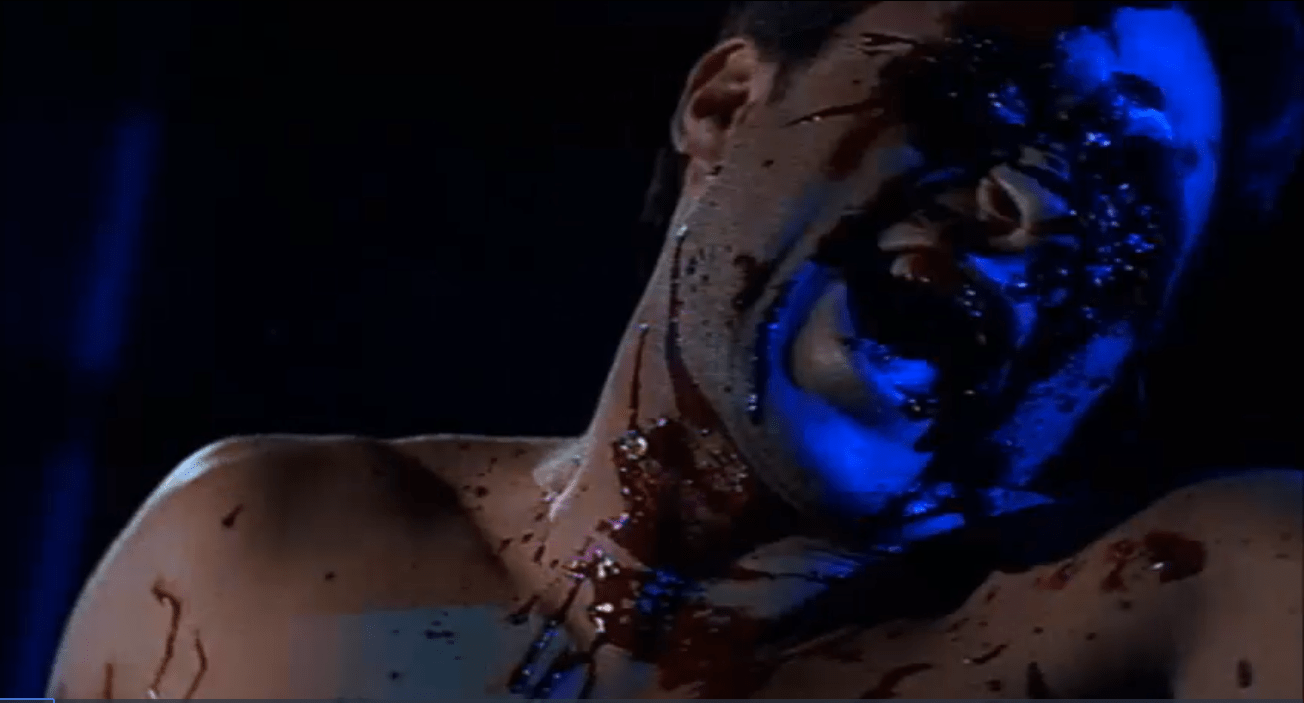
As the biggest douche across all 11 Puppet Master films, Joey Carp really, really deserves what he gets in the sixth movie in the franchise. After repeatedly bullying town simpleton Tank Winsley (Josh Green) and threatening/attempting to rape Tank’s girlfriend Jane (Emily Harrison), Joey is finally killed off during an intense weightlifting session. He’s mid-bench press when Blade hops on top of him and slashes his face over and over, while at the same time Tunneler drills into his crotch. Good riddance, Joey. Anyone as rapey as you deserves to have his dick drilled.
Dr. Gerde Ernst (Tonya Kay), PUPPET MASTER: AXIS TERMINATION
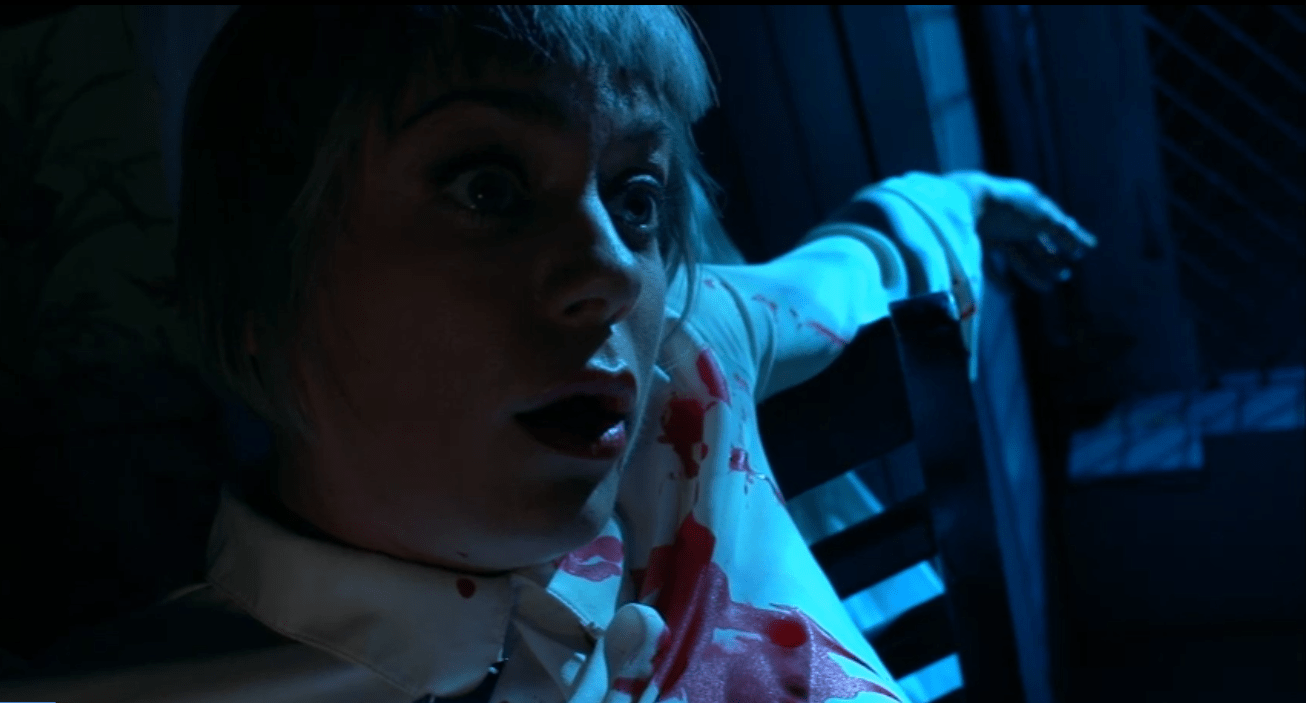
The most recent of the Full Moon Puppet Master movies (and the third and final entry in the “Axis” cycle of sequels) suffers from the same budgetary restrictions that have neutered much of the company’s current output. That means that despite Charles Band’s promise that this would be the goriest entry in the franchise, the kills in Axis Termination are just okay, lacking the resources to make them spectacular in any way. The best death in the film again comes at the end when the puppets turn on psychic Nazi Dr. Gerde Ernsti for betraying them. She’s basically gunned down by Bombshell and Blitzkrieg, which is fairly uninspired but at least executed with maximum splattery squibbage. What elevates her death is that immediately after she’s shot, Dr. Ivan Ivanov (a fixture within the Full Moon universe, here played by George Appleby) removes her soul from her body and permanently destroys it. That’s some cold shit.
Nazi Driver (Neil Parrow), PUPPET MASTER III
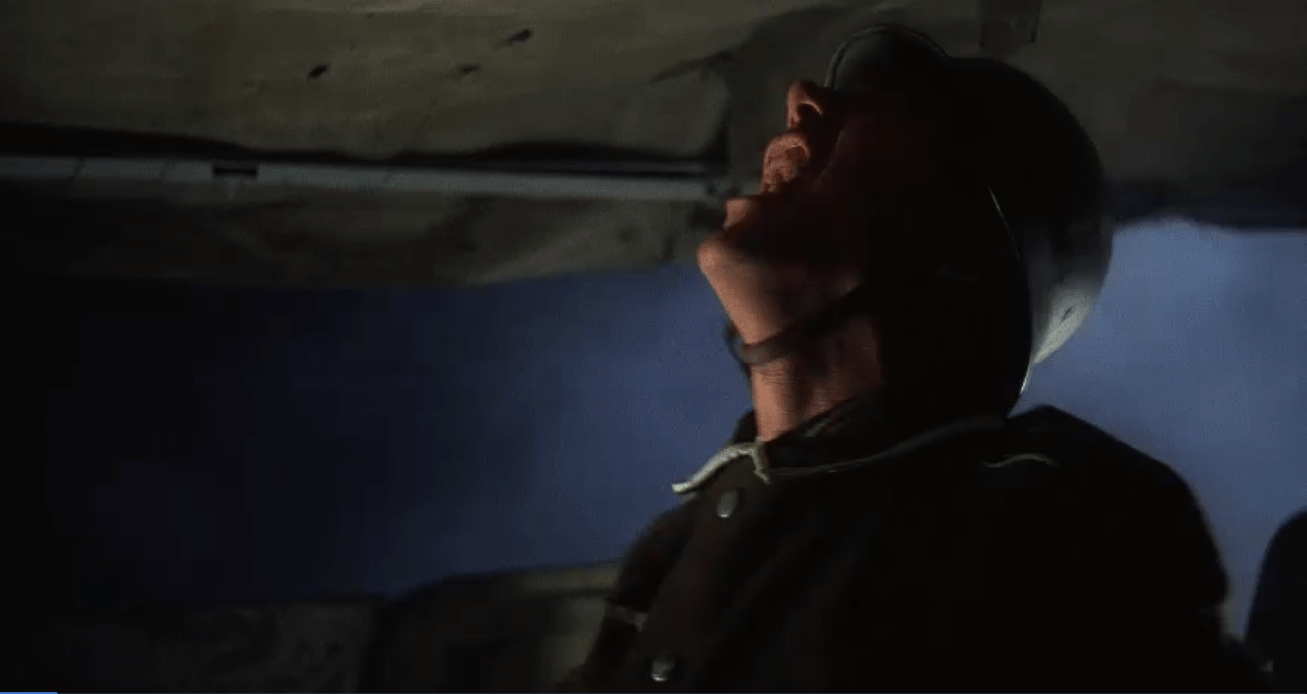
Widely considered to be the best film in the series, Puppet Master III jumps back 40 years to WWII and acts as a prequel in which we get to see how Andre Toulon (now played by Guy Rolfe) gave life to his puppet creations. The bloodiest, most memorable death in the movie comes once again at the drill of Tunneler, who drills into a car seat and through the chest of the German soldier driving like some kind of puppet Xenomorph. I suspect Tunneler is involved in most of the memorable deaths in the franchise because he’s the only puppet equipped with a weapon that does the kind of bodily damage we often want to see in horror movies.

Klaus (Aaron Riber), PUPPET MASTER: AXIS OF EVIL
I mean, at this point I’m really just trying to mix it up. Maybe Klaus’s death isn’t that impressive, but at least it departs from the others in that it doesn’t involve Tunneler’s drill or Blade’s knife. Klaus, the Nazi soldier we first meet at the opening of the original Puppet Master when he arrives at Toulon’s hotel moments after he commits suicide, returns for the ninth film (played by a different actor) in a larger role. He’s killed with a throwing star to the eye from new puppet Ninja, who thankfully only lasted this one film. Klaus then gets his skull crushed when Pinhead drops a big statue on it. I don’t know. At least it’s a little different.
Leech Woman (Leech Woman), PUPPET MASTER II
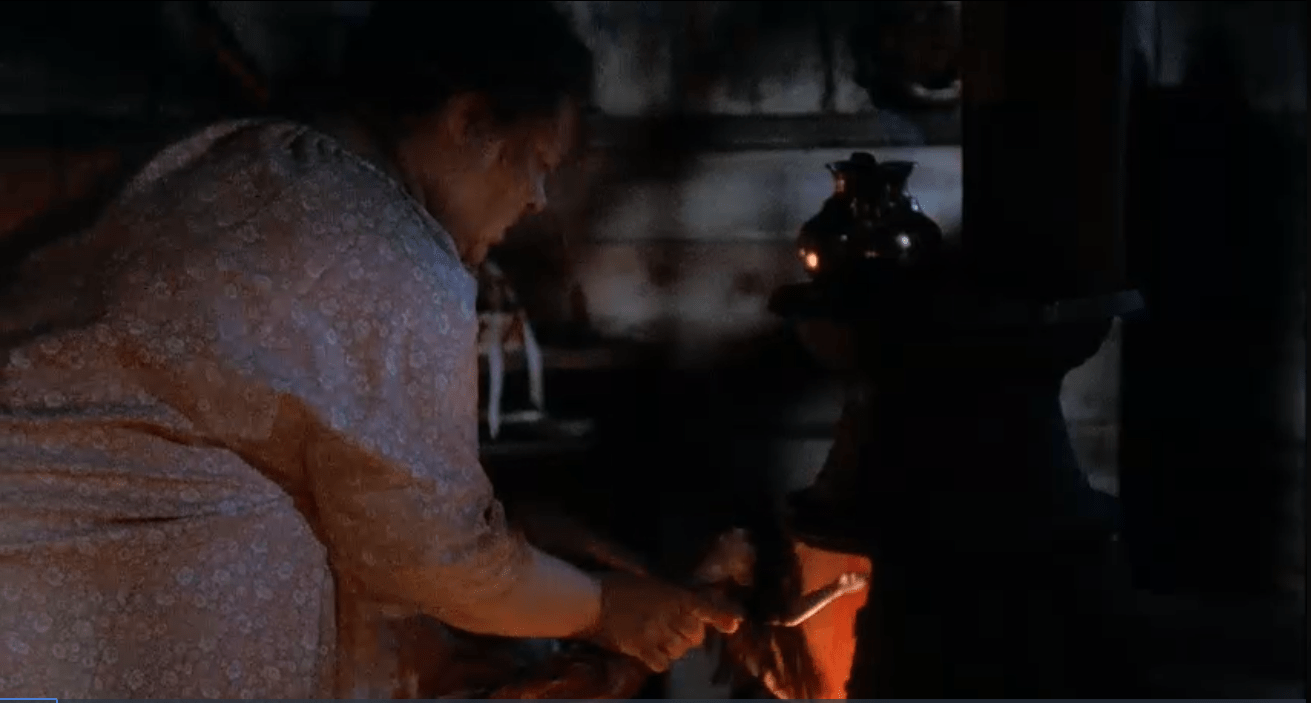
The most inexplicably strange of the evil puppets meets her end in just the second entry in the franchise when she’s thrown into a furnace and burned alive halfway through the movie. The exact reason for killing off Leech Woman – and again, it should be pointed out that this is a puppet that pukes up leeches – is the subject of some controversy. The sequel’s screenwriter has claimed he was told to kill her off by Charles Band, who didn’t like the character; Band has said that it came at the request of Paramount, who found the character too bizarrely grotesque for even their DTV killer puppet franchise. She didn’t stay sidelined too long, of course; she returned in flashback form just one movie later (where it’s revealed that the leech-puking puppet contains the soul of Toulon’s dead wife, making the puppet that much weirder) and in every Puppet Master after part 5. She makes this list because she was the first puppet to be killed off and because the story behind her demise is kind of funny. She was just too gross to live.