Editorials
[Retrospective] For Better And For Worse: ‘F.E.A.R. 2’ Turns 10


Inspired by the J-Horror craze going on at the time, Monolith’s F.E.A.R. was a solid action fest of a shooter that entertained as much as it terrified. Yeah, the ending was clichéd, but dammit, the slow-motion ability, combined with some beefy weapons and slick graphics made for some fun times. And yes, this was also the time we were still afraid of mysterious long-haired girls with weird powers. So naturally, Monolith got to work and gave us F.E.A.R. 2: Project Origin in 2009, which has quietly hit its 10-year anniversary. I say ‘quietly’ because like the series’ inspiration, people seem to have forgotten about it. It’s kind of a shame, since the title had, and in some cases, still has, a lot to offer. But that’s also despite having an overarching issue that ultimately led to it being overlooked in the first place.

Picking up 30 minutes before the end of F.E.A.R., you are Michael Beckett, a Delta Force operator whose squad is sent in to take one Genevieve Aristide into protective custody before Armacham Technology Corporation (the folks behind the mess in the first game) get to her first. Of course, things don’t go the way they should, as ATC gets to Aristide first. After Beckett and his crew fight them off, Aristide mentions that Beckett and several of his teammates are all part of a project known as “Harbinger”. Of course, before you get any more from Aristide, the ending to F.E.A.R. occurs, leaving you underground, fighting to get back to the surface with the ATC on your back, and Alma taking a special interest in you…
Impressively, even after 10 years, F.E.A.R. 2‘s graphics still look amazing. The original game, while looking marvelous for the time, was admittedly too contrasted and too “clean” in its presentation. Plus, this was just before Crysis hit, moving the bar for visual quality. As for F.E.A.R. 2, the game actually has color and style, rather than being bathed in the harsh lights that were everywhere in the first game. Damage done to buildings (particularly the school) still look realistic enough, though the texture work is again a little too clean looking in places.
Of course, if you played the original, you’re going to find some aspects of the graphics having taken a step back. The contrast in the graphics in F.E.A.R. had a sort of oppressive, harsh feel to it all, and made the game that much more intense. It also made damage done to the environment after a firefight stick out. The graphics in F.E.A.R. 2 now no longer have that contrast. Enemies no longer stand out, and their design has taken on a more “Call of Duty” look, which feels really generic. The blood effects had also changed. No longer do you have those clouds of red mist and other particle effects accenting the carnage as much as they did. They’re still there, but don’t stand out as much.

A bigger focus this time for F.E.A.R. 2 was its story. As mentioned, the ending to the first game was something you could see coming, but the overall story was kind of thin (it’s a first-person shooter, after all). And while you’re still getting an FPS-style story with side characters that don’t have much going on for them, you do have a bit more in terms of a “bond” with some characters rather than none at all. You now have something more interesting to chew on with the Harbinger project, its involvement with you and your teammates, the ATC wanting to clean up everything, and then of course Alma.
Alma’s goal, as the game puts it, is to consume you because you emit psychic energy as a result of Aristide performing experiments on you after the Point Man detonates the Origin Facility’s reactor. The same experiments that give you your Reflex Mode now have you on occasion having to fend off Alma’s psychic attacks in true “Mash ‘Q’ to not die” moments. Later on, it turns out that she’s after more than just your psychic energy.

Another big focus for F.E.A.R. 2 was its gameplay. A lot of what made the first game so great with the Reflex Mode, the weapons, the AI and the melee combat, is still here, but a lot has also been changed. Many of the weapons found in the first game are back, they feel kind of nerfed. For example, your standard pistol has been changed so that it requires ammo, but doesn’t feel like (or reflect) the damage that you could do in the previous game. You also can’t dual wield. The same can be said of your shotgun, which again doesn’t have the same punchy feel as the previous iteration. In fact, you probably will only end up using the assault rifle and one other weapon during your entire playthough, given how imbalanced everything feels. But, you do get to stomp around in a mech at a certain point, so that adds a bit of spice (even if you can’t do it from the outset).
The physics are probably the most noticeable change. In the previous game, you could ragdoll enemies to your heart’s content, and even stick them to the walls with the Penetrator. In F.E.A.R. 2, you no longer have that much of a ragdoll effect, which takes away a bit of the fun. It also makes the running melee attacks feel lame. Grenades no longer detonate on impact (though you can cook them this time), and bounce around like spooked rabbits, making their use limited.

As for the AI, they still do much of what made the first game so tense in their use of cover and attempts to flush you out from behind cover. This time, however, they feel more like a wave rather than a squad, lining up to get shot at rather than having you work to get them out in the open. In fact, you’ll do more remaining behind cover than actually rushing out and using your melee attacks while firing (as you did in F.E.A.R.). Again, it’s the whole “be like Call of Duty” thing.
If you haven’t gathered it by now, F.E.A.R. 2 suffers from being a game that was great on the PC, but in order to appeal to the masses (read: the console market), it had to be stripped of what made the original so good. Small things, like the HUD now resembling something you’d see on for a console game, bullets no longer having tracers to better pinpoint your shot, the down-the-sights aiming, the aforementioned graphical changes, the quicktime events, etc. all add up. In fact, if you watch the making-of videos for the game, you get the sense that it all was more or less taking a PC shooter and turning it into a console shooter, while not alienating the established fanbase. Needless to say, it didn’t work. You’re left with a game that while fun to play, satisfied neither camp enough to make it a surefire Call of Duty challenger.

There’s still a lot to like about F.E.A.R. 2. The game certainly was certainly boosted in the story department (as well as the horror), but admittedly took a few steps back when it came to a lot of other areas. It brought the series to console owners, which did open up the audience somewhat. It certainly wasn’t a bad game (despite me doing the constant comparison to the original), but the overall feel that Monolith chose to focus on taking out what was special from the first game in favor of homogenizing it, is disappointing. Still, the fact that the horror aspect was boosted with the story does make the game more appealing in that regard for some genre fans, myself included. F.E.A.R. 2 is one of the few older horror FPS games still worth checking out, despite losing some of what made the first game so great.



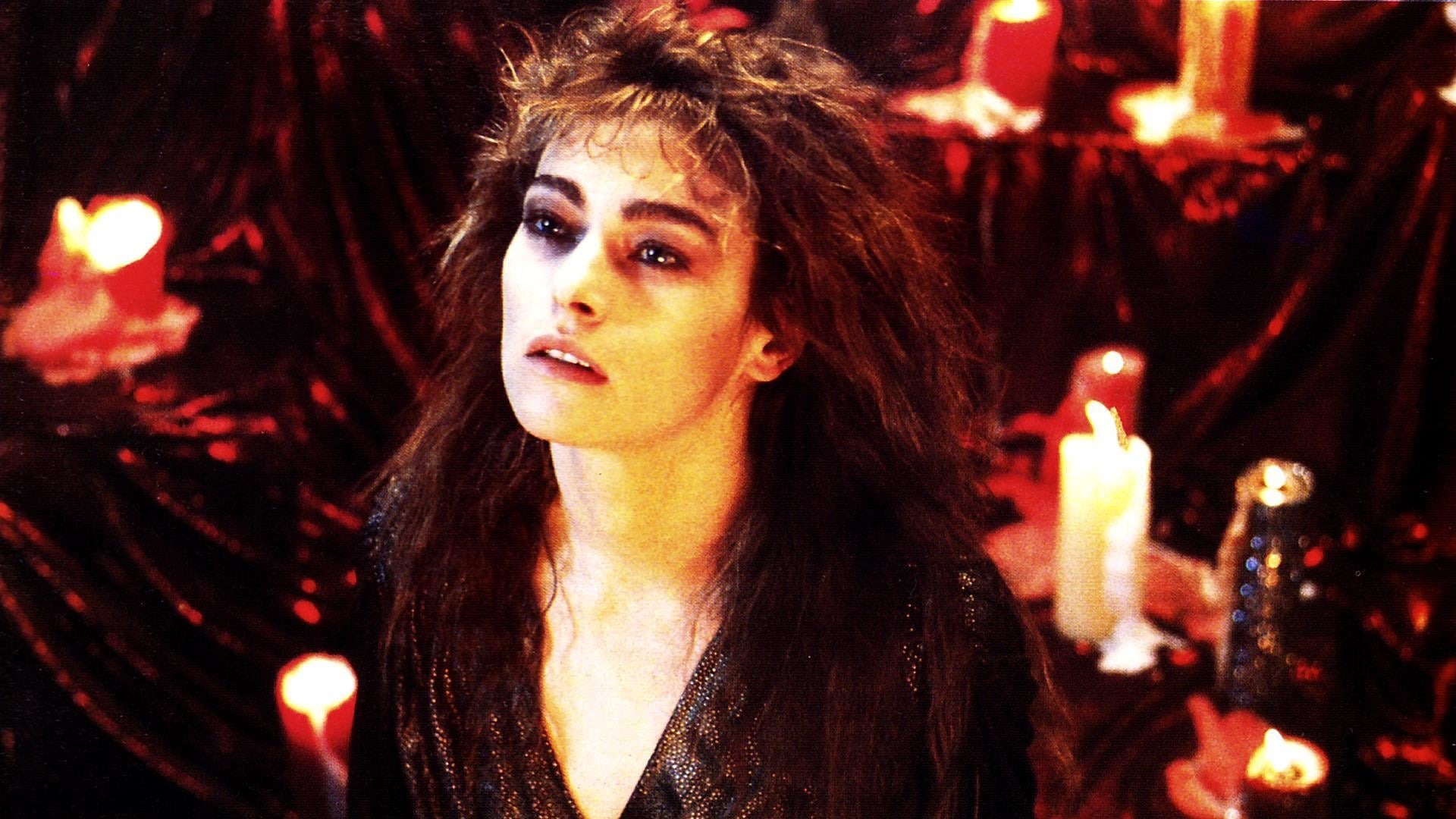
Horror was thriving so well in the 1980s that movies like Pen Densham’s The Kiss (1988) would understandably get lost in the shuffle, only to then gain their fans later on in life. Even still, this one Canadian-American curio has had a more challenging time than others, as far as contemporary reevaluations go, which is very likely due to the movie’s limited availability—at least as of this write-up.
However, the scarceness of The Kiss, while a bit annoying, makes it like catnip for ‘80s horror completists everywhere. Hopefully, a lot of them will walk away satisfied after watching this hidden gem.
Even though The Kiss was intended as the first of several horror collaborations between Astral Pictures and TriStar, as well as the first feature produced by Densham, Richard B. Lewis and John Watson’s Trilogy Entertainment Group, it ended up being the only one produced from that former union. Once the movie was released, TriStar’s distribution jitters—they opted for a regional rollout—did the $6-million flick no favors. TriStar’s cold feet toward horror releases have been well noted, but The Kiss still did a tad better than Night of the Creeps (1986), another genre outing that flopped due to its regional opening.
Shot in Montreal, but set in Albany, New York, The Kiss—which was still called The Host just a few months before its October premiere—concerns an average middle-class family and their forthcoming situation. The uncanny problem in store for them was, in fact, set in motion some years earlier. As that hot and dusty flashback to the Belgian Congo shows, a familial curse was set upon the two Dunbar sisters well before Meredith Salenger’s teenage character was born.

Meredith Salenger, Nicholas Kilbertus and Mimi Kuzyk in The Kiss
The Kiss, which was based on a story by co-writer Stephen Volk (Ghostwatch) and penned by both Volk and Tom Ropelewski, has the outward appearance of The Stepfather (1987). This movie, though, is anything but a gender-flipped retread of that classic domestic disturber. For starters, The Kiss is far less grounded in reality—that much is clear from its unsettling opening scene. There, a trusting girl (Priscilla Mouzakiotis) is the victim of her own deceptive aunt (Céline Lomez); the movie’s titular act, and the story’s first shock, becomes the means of transferring an ancient evil from one host to another.
In the present day, Salenger’s role of Amy Halloran, a religious schoolgirl, is dealt a harsh blow in life once her mother, Hilary Halloran née Dunbar (Pamela Collyer), suddenly dies in a freak accident. But rather than a complete stranger sweeping the Halloran widower (Nicholas Kilbertus) off his feet some months later, Joanna Pacula’s character is that chosen temptress. Here, Pacula plays the grown-up version of the afflicted girl last seen in the movie’s opener. Since Amy’s mother is insistent about there being no reunion between estranged sisters, and she even contemplates buying a gun shortly before her tragic demise, it’s presumable that Aunt Felice poses a threat to her family.
The Kiss isn’t a movie ever too concerned about its own predictability. The audience is indeed often one step ahead of the story here, but also keep in mind how every one of those steps is loud. Take, for instance, the death of Amy’s mother; the Halloran matriarch goes out in garish, gruesome fashion, as a supernaturally commandeered truck sends Collyer’s character through a store window first, then leaves her one leg short. The directorial enthusiasm truly comes out in horrific moments such as these.
The Kiss is always sure to revel in its characters’ ills and misfortunes. So if the plot doesn’t impress, then its lurid parts should. Amy’s mother’s exit scene was proof of an eager, first-time horror director proving his worth. Then, bestie Heather (Sabrina Boudot) survives to tell the tale of a bizarre escalator mishap that, despite showing relatively less gore, spikes viewers’ empathy meter. The wilder bits of this movie, however, commence with that inevitable hookup between Felice and Amy’s bewitched father; their kitchen coitus is paralleled by Amy’s feverish classroom terror. The outcome there is a disquieting cross-cut of sex magic and a young woman’s menstrual onset plus hallucinations.

Sabrina Boudot in The Kiss
From foam appliances to bladders, that parade of special effects in The Kiss casts its own spell on the audience. Felice’s familiar, a visibly malevolent cat, was realized here with several models, some more articulate than others. Admittedly, the demon cat’s not as convincing as most of the effects here, but accepting that artifice, as opposed to fighting it, will make the whole experience way more enjoyable. As for the makeup used to manifest Felice’s inner villainy, it is more minimal and subtle than one might like; yet the work done to turn Pacula into an antithesis of herself is nonetheless compelling.
The otherworldly perils and dreadful goings-on wouldn’t work half as well as they do in The Kiss without the story’s contrast effect. Finding frights in picturesque, extremely ordinary settings was something that took off in the ‘80s, thanks to that sweeping shift to locales like the suburbs. And Amy’s home, a replica of a real Montreal suburban house, is the ideal battleground for any proper good-versus-evil story. It’s also prime real estate for this movie’s satanic panic-inspired horrors.
Because of their ostensibly similar plots, The Kiss has been compared to The Exorcist (1973). Except in Densham’s movie, the sinister, non-Christian entity targeting a teen girl lies within something less apparent and, perhaps, more devastating upon its exposure. To an outsider, Pacula’s Aunt Felice is too beautiful and unobjectionable to ever suspect of being a monster. More suspicious is how quickly she rips into the fabric of the Halloran home. Felice’s mere presence upsets the “texture of family life,” according to the director.

The demon cat in The Kiss
Taking out Amy’s mother and best friend, and distracting her father, would suggest The Kiss is playing by a different set of rules. It is initially leaving its adolescent target unsupported in a rather grim scenario. In contrast, though, this story offers up a surrogate parent who does her best to fill in the holes of Amy’s eroding home life. Mimi Kuzyk does good work as that family friend and doctor, Brenda, who guides the lost child without also steering her in any one direction; she is naturally skeptical of Amy’s accusations until it’s almost too late to do anything about them. So although The Kiss does an admirable job of undoing the main character’s support system, it never leaves her without a lifeline. This dark movie, in spite of everything that’s transpired, doesn’t deprive itself of light and hope.
The Kiss is a potent mélange of familiar ideas. If not for the director’s surprise flair for horror, though, the movie would have been less effective. What a shame that Pen Densham didn’t continue with the genre. As for Joanna Pacula, she is, too, owed credit as the wicked vixen opposite Meredith Salenger’s pitiable Amy; she never fails to be unsettling in her role. Pacula makes Aunt Felice a sexy yet intimidating character.
For horror that steadily doles out madness and menace, while also delivering a flashy and ghastly conclusion, The Kiss is certain to please. Yes, it’s cheesy all the way, but most favorably, everyone involved plays everything straight. That kind of commitment goes a long way with this movie.

The Kiss
You must be logged in to post a comment.