Editorials
Daniel Kurland Selects the 10 Best Foreign Horror Films of 2019

*Keep up with our ongoing end of the year coverage here*
2019 has come and gone and it’s managed to be yet another standout year for the horror genre. Horror continues to hack away at the mainstream and has proven that it’s a major force to be reckoned with when it comes to both film and television. This year threw some major horror heavy hitters at audiences that were hard to miss, with IT: Chapter Two, Midsommar, Us, and Child’s Play being only a handful of 2019’s big releases.
All of these are memorable American horror movies, but 2019 also contained some very powerful foreign horror films that didn’t get the same level of publicity. There are a lot of movies out there and it’s easy for mainstream tunnel vision to set in, so here’s a helpful look at the very best foreign horror films of 2019 that absolutely deserve your attention.
One Cut Of The Dead
Directed by Shinichirou Ueda; Japan

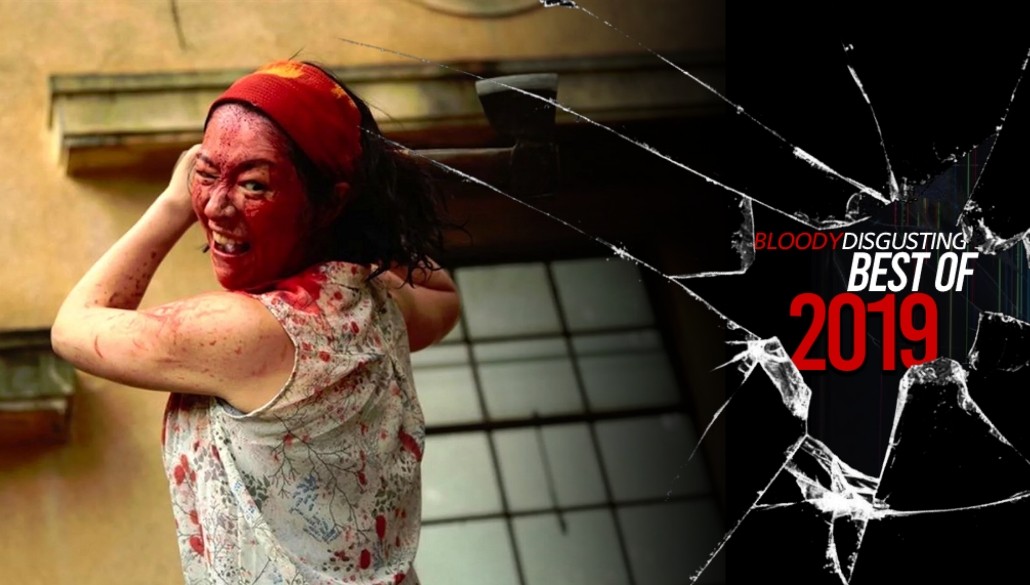
It’s films like One Cut of the Dead that are why people love horror movies in the first place. The ambitious meta experiment from out of Japan is a mash-up of everything glorious about the genre. It may actually be impossible to watch this movie and not fall in love with it. One Cut of the Dead looks at a team of ragtag filmmakers who are trying to make a low-budget zombie film when their production suddenly gets interrupted by an actual zombie outbreak. It’s a simple, brilliant idea, but the concept is pushed even further by the technical magic of how this film is presented as if it’s all done in a single take. One Cut of the Dead is ready to be scrutinized, but it flows with such a fun, passionate tone that will even win over the biggest zombie hater. Whether you’re laughing at the comedy, screaming at zombie carnage, or marveling at the cinematography, there’s plenty to keep you entertained in One Cut of the Dead. Horror-comedy hybrids remain a difficult mix to truly do right, but movies like One Cut of the Dead make them look easy.
Climax
Directed by Gaspar Noé; France

Climax is just as much of a technical marvel as One Cut of the Dead, but it disorients and overloads the senses of its audience in an entirely different manner. Gaspar Noé is a master of visual flair and knowing how to turn the camera into an active character in his films. Climax may be the best example of this as the camera voyeuristically watches the increasingly unhinged rhythmic movements of a dance troupe. It’s debatable if Climax is technically a horror film (although it’s more of one than say, Parasite), but there’s no denying that the scenario that it presents is horrifying: the refreshments at the dance troupe’s party get spiked with LSD and madness ensues.
Climax takes its time, but it slowly descends into hell in a chilling fashion. Each dancer is trapped in their own personal nightmare as everyone struggles to get a firm grasp on the situation. In addition to the copious mind games, the film overflows with incredible choreography and jaw-dropping movement. It’s a movie that you never want to take your eyes off of, even if some of those moments may scrape your soul and make you want to scream.
Koko-Di Koko-Da
Directed by Johannes Nyholm; Sweden, Denmark

Koko-Ki-Koko-Da is a wildly inventive mash-up of time loop horror with emotional melodrama. The film begins with happy couple, Elin and Tobias, undergoing a terrible tragedy that rocks the foundation of their family. Years later, it seems like they’ve maybe been able to get back to a good place, but a mysterious series of events seems to trap them in the past and force them to repeatedly reckon with their former trauma until it can permanently be put to rest. It takes an incredibly emotional internal story and then turns it into something more cosmic, but all in the name of self-reflection. It uses this intense premise as a way for Elin and Tobias to finally move on and receive the therapy that they need.
There’s an interesting haunted folk tale aesthetic to the film that gives it this eerie, dream-like quality, even when the subject matter is pitch black. It’s a strange reconciliation of sensibilities, but it works, and almost puts you in a child’s innocent, confused perspective through all of this. The trio of antagonists that stalk their prey through these time loops are easily some of the most upsetting characters you’ll encounter in a horror film this year. Koko-di Koko-da operates with an unwavering confidence and creates a dangerous, palpable fear. Shots linger, take their time, and aren’t concerned with pleasing the audience. The film finds the perfect moments to strike and it will leave you helpless in its wake.
The Yellow Night
Directed by Ramon Porto Mota; Brazil

What’s beautiful about The Yellow Night is that it starts off the same way that about a couple dozen other horror films do. Some teenagers, fresh out of high school, are looking to party and cause some trouble as they head into some foreign area that they don’t know anything about. These individuals find themselves stranded and with spotty cell service, but that becomes the least of their concerns when the remote Brazilian town that they’re stuck in doesn’t seem to operate under the normal laws of physics. Time becomes fluid in more ways than just some ordinary time loop scenario and hallucinations and other fractures in reality become commonplace. In addition to the unpredictable nature of how time breaks, the film is shot in a stunning fashion that bathes everyone’s dread in neon lights and stark colors. It’s like if Spring Breakers turned into some heady horror film and that alone should sell you on this courageous blend of sensibilities. Right from the opening credits, it’s the very best kind of cosmic romp along the likes of Jodorowsky or Lynch, playing out like a strange hybrid of The Warriors and The Craft.
The Yellow Night features a cast of extremely affable characters that quickly grow on you. The women in the film, in particular, conjure such electric energy. At one point they just segue into an inexplicable high-energy musical performance that’s freaking incredible. A lot of this movie is not about asking questions, but just letting its tone and imagery take you over. There’s so much hauntingly beautiful cinematography that’s a joy to look at. The Yellow Night explores what it feels like to be real, or what it is to exist. It powerfully taps into the feeling that reality is slipping away from you and you’re helpless to stop it. It’s a kaleidoscopic nightmare with no hope.
Sea Fever
Directed by Neasa Hardiman; Ireland, Sweden, Belgium

“Alien, but on the water,” is a simple, yet appealing idea that Sea Fever doesn’t squander. A routine sea mission begins to take a turn for the unexpected when a mysterious entity latches itself onto a boat’s hull. Initial impressions indicate it’s some rare, new form of barnacle, but it’s merely the start of this crew’s problems as their situation at sea gets more dangerous. Sea Fever excels with the claustrophobic setting of the ship, the paranoid quality that takes over once danger rears its head, as well as the sheer terror of this monster that sees them all as prey. All of these tropes have been done well many times before so while Sea Fever isn’t breaking any new ground, it does all of this incredibly confidently and still manages to cause big surprises and brutal deaths. The design for the film’s sea monster is also really creative. It doesn’t take the obviously ferocious approach, but is instead something more vast and enigmatic. It’s like a massive jellyfish-esque membrane that’s infinitely more complex than it appears. This is ultimately more of a threat than something that’s just a purely violent creature, like a shark.
Sea Fever is a suspenseful, intelligent approach to an isolated horror film that does a lot with a little. It doesn’t just reinvigorate tired ideas, but it creates a thoroughly creative monster that’s a joy to watch wreak havoc.
In the Quarry
Directed by Bernardo and Rafael Antonaccio; Uruguay

In the Quarry is an intimate, boiled down horror film that riffs on other isolated classics like Knife in the Water, Repulsion, or even the recent Harpoon. I’m always a huge fan of this “bottle episode” approach to horror films where subtle characterization and every line of dialogue are crucial to decoding the film. In the Quarry’s spin on this premise sees a group of friends—one female among a pack of testosterone-filled men—isolated at a remote campground, rather than sticking them in the middle of the ocean. In spite of how they may not look to be physically stranded, danger slowly sets in and what’s supposed to be an emotional time of coming together turns into a powder keg of anxiety where old relationships may be torn apart and forever destroyed.
In the Quarry has a very basic structure in place, but acts as a strong reminder that you don’t always need a scary monster in horror. Sometimes just people’s own egos and insecurities are even more dangerous. The film is a deep meditation on the dangers of toxic masculinity as all of these men scheme and think they are entitled to this woman in various ways, while none of them really even see her as a real person. This only gets more intense, which makes the dissolution of their bonds all the more satisfying. There are so many moments that just fixate on one character longingly staring at Alicia as everyone gets more frustrated and worked up over what’s going on. In the Quarry begins at a tense place and only grows from there.
Rock, Paper, Scissors
Directed by Macarena García Lenzi and Martín Blousson; Argentina

Rock, Paper, Scissors examines two twisted siblings who have a way of turning everything into a game (which includes an especially morbid take on rock, paper, scissors). These two must confront who they are when their much more normal sister comes to visit. This injection of normalcy triggers something in them and soon she becomes their helpless hostage in a very dark tale that doubles as the most pitch black of comedies. They turn their sister into a game. Rock, Paper, Scissors is all about pain, compliance, and how to turn life’s harshest moments into playfulness, but how that coping mechanism can also go horribly awry. Like if the guy from Life is Beautiful continued to live in a fantasy world and just started to kidnap people.
Rock, Paper, Scissors will instantly grab you and it creates a strong feeling of being trapped and helpless. The film carries a very fantastical style that it occasionally gets to show off during quick detours. At times this even feels like some deformed offspring of The Wizard of Oz. Rock, Paper, Scissors isn’t afraid to strike for the jugular and its intimate, devastating story is one of the year’s best.
Monument
Directed by Jagoda Szelc; Poland

A hospitality internship morphs into dehumanizing psychological torture in Jagoda Szelc’s unnerving Monument. A bunch of delinquent students are essentially kidnapped through the ruse of an internship and get conditioned in some very brutal ways. It’s a deeply unsettling experience that boils this film down to some complex ideas on the loss of identity. It’s quite effective to watch these individuals slowly break and become more erratic. It happens much more as a group effort and mob mentality occurs where everyone melts into one identity. This is perhaps best expressed in the film’s conclusion where a powerful, unique sequence plays out.
Monument has plenty of moments where the camera awkwardly lingers on things that should be seen as irregular or obscene, where they almost act as visual metaphors for the new lives that these people are pushed into. It makes you look at the aspects of society that you want to look away from or pretend don’t exist. The creepy setting to the film where the “internship” takes place may work better for some than others, but it generates a dark environment for everything. The film features many haunting visuals and a color palette that contains a lot of overwhelming greens and blues to represent the melancholy present during all of this. The fact that Monument tackles such heavy subject matter, but does so in a particularly pretty way, helps it stand out as such a memorable film.
Sick Sick Sick
Directed by Alice Furtado; Brazil

There is no avoiding death. It’s not going anywhere. Sick, Sick, Sick examines the pain of this realization, but also the inability to accept it, especially when an unlikely alternative may be possible. The result is a stylized, emotional look at a girl’s grief and the dangerous places it can go that highlights the unique approach of an upcoming voice in horror. Alice Furtado delivers what feels like a loving ode to Pet Sematary, only steeped in her own Brazilian culture and draped in hypnotic visual flair. Silvia’s life gets turned upside down when the love of her life meets an untimely end. Silvia is destroyed over this loss, but it’s a pain that manifests itself in vicious ways. Silvia’s not just depressed, but physically ill over her sadness. Desperate for any sort of reprieve, Silvia apprehensively turns to voodoo for help and is willing to settle with a resurrected version of her beloved Artur than no version of him at all. Of course, this tense situation only becomes drastically more complicated.
Furtado’s film is at its best when it explores the beauty in imperfections. It is also deeply interested in obsession and how it can consume individuals. Furtado’s Sick, Sick, Sick is a sweaty, sexual film and it properly cultivates that atmosphere. It accurately represents that hormonal phase of adolescence where emotions are at an all-time high. With a very thin story, it makes more of an impression with its gripping ambiance. Music and color are used in intoxicating, anachronistic ways. At times it often feels like a horror film has been blended together with a passionate piece of French New Wave cinema. Sick, Sick, Sick doesn’t fully come together, but there’s enough that works here that it still easily makes for appointment viewing.
Belzebuth
Directed by Emilio Portes; Mexico

Many of the horror films that come out of Mexico wisely pull upon the country’s culture and social climate, but Belzebuth is a strong example of how to do it right. Very pointedly, Emilio Portes’ Belzebuth tells a tense story that’s set on both sides of the US-Mexico border and centers around a number of deaths of children who are at the border. The story slowly shifts from one about class strife to a supernatural thriller that involves demons and exorcism.
Belzebuth manages to actually be surprising and get new life out of the possession and exorcism genre, while this film actually has something important to say with its story. Also, the incorporation of Tobin Bell is never a bad thing.
Honorable Mentions: Knife+Heart, The Nightshifter, Parasite, Boar and Nightmare Cinema, as well as Luz, Field Guide to Evil, and Tigers Are Not Afraid – which we included on last year’s list, but have now finally seen wider release.



I first heard about The Mandela Catalogue through a couple of nephews who were obsessed with the ARG’s sinister mythology. It was only after watching Wendigoon’s in-depth analysis of the series that I realized just how deep this rabbit hole goes.
In fact, I’d already been exposed to the nightmarish visuals of Alex Kister’s YouTube creation for years at that point without even realizing that it was the origin of several viral “cursed images” and spooky memes that had leaked into the wider internet – with this viral element actually being a part of the Catalogue’s overarching narrative.
Flash-forward to 2026 and the unprecedented success of Kane Parsons’ Backrooms has led to Hollywood betting on horrific internet properties with existing fanbases, which means that Kister’s unique hybrid of both religious and analog horror is finally headed to the big screen with a script written by Kister himself alongside Tyler Clifton.
While this news shouldn’t be too surprising if you’ve been keeping up with the ongoing success of The Mandela Catalogue (both myself and Wendigoon having previously predicted that the series would inevitably make the jump to theaters one day), plenty of horror fans are likely confused as to why so many folks are excited for what appears to be a Hollywood adaptation of a series of creepy .jpeg images under a VHS filter.
With that in mind, today I’d like to invite fellow readers to accompany me as I explore the origins of Alex Kister’s viral hit and attempt to explain exactly why we should all be excited about the Mandela Catalogue adaptation!
From High School Writing Project to Internet Horror Phenomenon

The first seeds of The Mandela Catalogue were sown when Kister was still in high school and developed a writing project subverting religious tropes in a world where biblical history had been altered by demonic forces. A little while later, Kister came across an analog horror contest on Reddit and decided to adapt his ideas into a standalone video where he would edit a religious kids’ cartoon –The Beginner’s Bible: The Nativity, to be specific- into something far creepier. This is how the iconic Overthrone video was born, with this viral short film taking on a life of its own as fans demanded more eerie content from Kister.
Though the video was originally meant to be a one-and-done sort of affair, with Kister actually regretting some of its primitive visuals and considering the editing amateurish and “YouTube-Poop-like” when compared to his current standards, fan reaction and free time during the COVID-19 pandemic encouraged the (then) seventeen-year-old filmmaker to continue producing content set in this same world. The Mandela Catalogue name was inspired by the Mandela Effect conspiracy theory, as the series would slowly begin to explore the subtle horror of alternate histories.
Inspired by existential dread brought on by extended periods of quarantine as well as a personal crisis of faith, Kister continued to expand his alternate timeline where the rise of Christianity had been prevented by what was presumably the Devil disguised as the Archangel Gabriel. This alternate course of fictional events led to the existence of certain paranormal anomalies that had come to be accepted as “normal” by the 1990s, which is why most of the series’ supernatural horror is presented in such a matter-of-fact manner.
Most of this background information and religious lore is delivered by increasingly cryptic broadcasts and in-universe PSAs, as well as the occasional found footage video, that often have to be decoded by clever viewers. Of course, it’s the consistently disturbing imagery that made the series so popular – much of which was originally created by Kister on a smartphone!
The Alternates: Horror’s Most Unsettling Modern Monsters

The show’s early episodes mostly take place within the fictional Mandela County in Wisconsin and depict life in a world where demonic entities are capable of using media to enter our reality. This process usually involves scaring victims into killing themselves and then repurposing their bodies as horrific doppelgangers referred to as “Alternates”. This terrifying phenomenon has become so common that local police already have specialized procedures in place to deal with the issue, though this usually consists of simply ignoring calls for help so as to avoid spreading so-called “Metaphysical Awareness Disorder” any further.
Over time, Kister would expand this mythology and incorporate different kinds of Alternates into the mix, though the story never stopped deconstructing religious concepts. The series’ second volume exponentially increased both video quality and the overall narrative scope as we began to follow the lives of characters who had already grown up in this dystopian hellscape where the government is forced to prohibit religion, television, and even mirrors in the hopes of mitigating the damage done by the ongoing invasion of otherworldly entities.
The really interesting part comes into play when you realize exactly how the Alternates make use of scary media in order to spread their demonic influence, with the analog horror of it all being a diegetic part of the story and something of a memetic trap orchestrated by the false Gabriel.
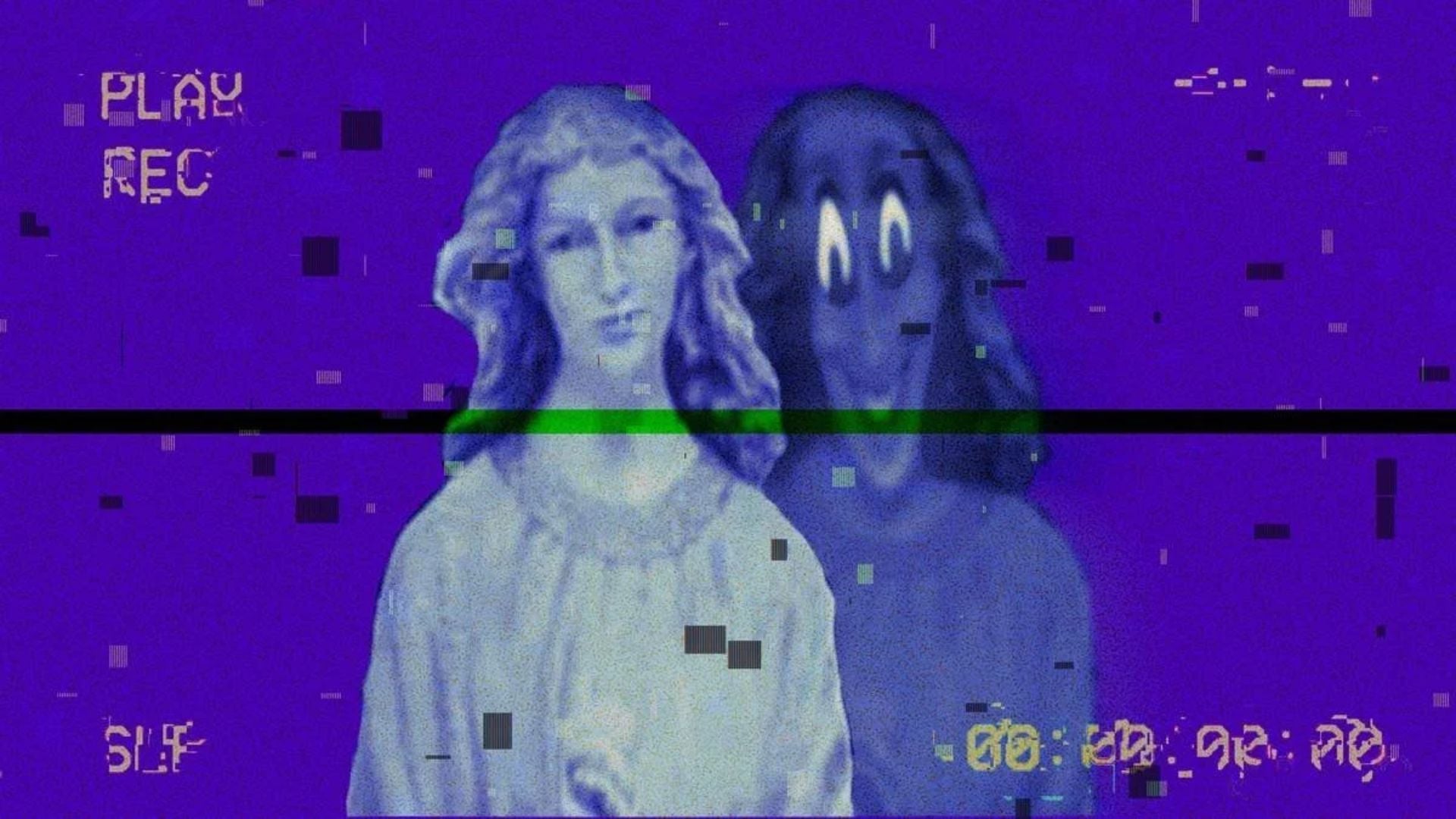
I particularly appreciate how some characters begin to suspect that there’s something wrong with their version of reality and that things weren’t meant to play out this way, especially when Mark utters the haunting line “who have I been praying to all this time?” That’s why I think The Mandela Catalogue is an effective piece of religious horror even if you don’t subscribe to the Christian worldview, as the mere idea of a world where evil has already won is a universally terrifying concept in and of itself. Not only that, but the series’ uncanny analog imagery alone is already worth the price of admission, as you’ve likely already noticed by looking at the pictures accompanying this article.
Why The Feature Adaptation Could Be Horror’s Next Big Success

It’s actually been a whole year since Kister first announced that he had been working on a feature-length screenplay for a Mandela Catalogue movie since 2022, with his proposed story following an ensemble of high-school graduates who uncover a supernatural conspiracy after the mysterious disappearance of a fellow student. This premise sounds similar to narrative elements present in the series’ second volume, but I’m pretty sure that Kister is going to go the Kane Parsons route and make the movie more of a spin-off than a re-imagining of its source material.
While notable Hollywood producers like Aaron B. Koontz, Scott Stuber, and Steven Spielberg himself are backing the upcoming project, I feel like there’s no one better to adapt this deeply personal exploration of faith and the dark side of communication than the person who first came up with it. That’s why I can’t wait to see Kister’s work on the big screen, as I have a feeling that this young filmmaker is the next one on the list about to make cinematic history – especially since this is clearly a passion project that has been in the works for years at this point!
That being said, there’s always a chance that the film could end up unleashing a fresh wave of Alternate incursions, but I guess that’s just a risk we’ll have to take.
You must be logged in to post a comment.