Editorials
Hellfire Still Burns For ‘Diablo II’ 20 Years Later

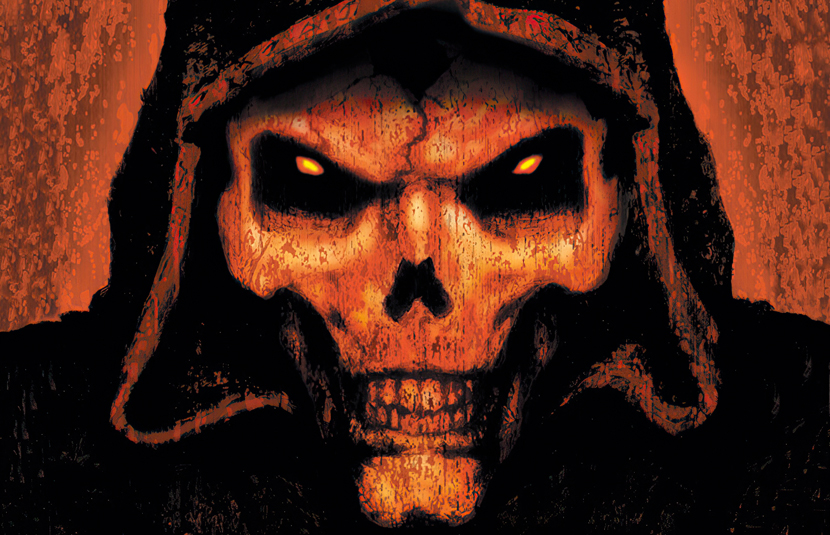
Blizzard Entertainment knew they had struck gold with the original Diablo back in 1997. The game’s unique blend of hack-and-slash dungeon-crawling and CRPG elements, combined with the online capabilities of Battle.net, had made it a hit for PC gamers. A sequel was a no brainer. And after three years of development, fans and gamers alike had a masterpiece on their hands in 2000 with Diablo II. Really? “A masterpiece”? The game seemed to be more of the same. Indeed, the game started out as more of what fans got in the first game. But Blizzard was able to realize this, and decided to take things higher. The enduring love of fans two decades on is the result.
At the end of the first game, the unnamed warrior (the player’s character) had defeated Diablo, and had taken the Soulstone, which held the demon‘s essence, and driven it into his own head in order to prevent anyone from obtaining the Lord of Terror’s power. However, Diablo’s power began to corrupt the warrior, now known as The Dark Wanderer, which results in the Wanderer losing control at times, causing demons to break out of Hell. After an incident in Tristram, resulting in the corruption of the Sisters of the Sightless Eye, a new band of warriors appear to take up the cause in finding and defeating Diablo before he brings his plans to fruition.
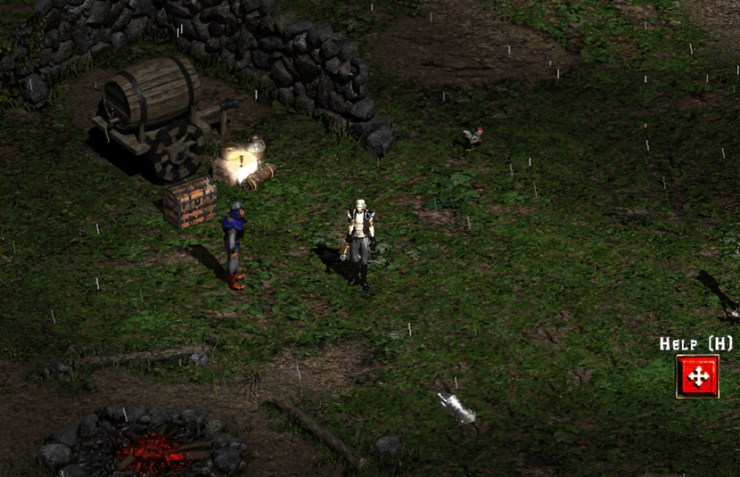
As with anything, the secret is to find what works, and to focus on improving that until you achieve greatness. Right from the start, Blizzard expanded the selection of character classes and their unique abilities, giving fans far more versatility and depth in their selections. While none of the previous classes were carried over to Diablo II, you could still find aspects of the Warrior, Rogue and Sorcerer in the Barbarian, Amazon and Sorceress. Additionally, players could also choose to play as the Necromancer or Paladin. Regardless, the skills and abilities for each class were greatly varied, resulting in several unique playstyles or “builds” for each class.
Of course, one of the main draws for Diablo fans was the “just one more item” grind, which is still as addictive as ever. And, as with the class system, items and weapons were no longer restricted to Normal, Magic and Unique. Now, you have the Rare class, which could have up to six magical properties attached to an item or weapon, potentially making these greater in value than even Unique items. You also now had Item Sets, which involved gathering accessories, armour and weapons to gain a bonus effect once everything was worn.

It didn’t stop there, as you also had Socketed items, which permitted you to put gems (and later in the Lord of Destruction expansion, runes) into them, granting them bonuses. This all led to another addition to the game: The Horadric Cube. Attained in Act II, the Cube allowed players to craft items by following recipes to create a gem higher in quality, create a random Rare/Unique item, and even allow you to attain a certain Easter Egg. The cube could also be used as additional storage while you roamed outside of town. Once in town, you now had a storage chest to place all of your gold and valuable items. No more leaving things lying around!
Speaking of lying around, death was also changed in Diablo II. While at first, when you did eventually die, you didn’t incur any penalty (other than your items’ durability). You simply respawned in town, and needed to make it back to your body and pick it up to regain all of your items you were carrying. However, die enough times, and you start getting penalized in gold, and in later difficulties, experience points. This made it all the more important to hire a mercenary to help you out, or to have a buddy or two in your party to even the odds (though the Monster Level increased each time a player joined your game).

And really, how can you talk about Diablo II without mentioning the Multiplayer? Once again utilizing its Battle.net system, Blizzard geared Diablo II for multiplayer from the outset. Now it was possible for players to create rooms for Clan meetups, as well as an expanded party system that allowed players things like loot sharing. Mentioning “Baal runs” to Diablo II veterans conjures up many memories of friends blasting through the final part of Act III to this day (the quality of the outcomes varies, however).
And once again, you had the ability to play PvP games, with players taking on one another to show off their builds. Or, for those who really got into character, you could make a living fulfilling bounties. You were once again awarded the defeated player’s ear as proof of your victory. And, if you really liked living on the edge, you could even start a Hardcore game (once you unlocked it), where if you died once, that was it.

About the only thing you could say was a drawback for Diablo II was its graphics, and that comes with a caveat. Sure, Blizzard once again demonstrated their mastery of cinematics (which mostly hold up today), but you can see where Blizzard had left in the early version of Diablo II in Act I. The open fields of Khanduras looked noticeably barren from the roving deserts and lush jungles of Act II and III, respectively. Blizzard’s artists even created the illusion of multiple planes for the player to travel on for the following Acts, making Act I feel out of place. Things got a bit better once you started into the Monastery, but the obvious fencing in (literally) of the player didn’t leave a good first impression for some.
But, things were generally leaps and bounds better in quality in the graphics. Monsters from Diablo were given graphical overhauls, and new monsters were introduced, with many unique to each Act. Bosses such as Andariel or Mephisto were far more impressive (and frightening) than the Butcher in the original game.
Accompanying the graphics were the fantastic voice-acting and memorable music by Matt Uelmen. The fan favourite “Tristram” from Diablo is hinted at in Act I when you return to Tristram, but as one would expect, the music covers the gamut from the Arabian tinges of Act II, to the tropical in Act III. And yes, Act IV in Hell is appropriately dark and foreboding. It doesn’t have the same wailing industrial guitar from Diablo, but it still manages to conjure up the necessary tension and foreboding feelings.

One could go on gushing about Diablo II and just how much fun it is to still play to this day, but what about its impact on the games of today? You don’t have to look far, as games and series like Borderlands or Dark Souls have drawn influence from Diablo II in their mechanics for grinding to find that one item, or to gain that level to use that one item. And the departures and changes made in Diablo III had players demanding for a return to “old school Diablo II”. And yes, Diablo II is still played to this day by many. Blizzard even acknowledged this with the 1.14a Patch back in 2016, which added support for modern operating systems.
So yes, for those wondering why fans are hoping that the rumoured remake of Diablo II is going to happen, or that the upcoming Diablo IV is a return to what made Diablo II so great, this entire retrospective is why. One could delve into how the Lord of Destruction expansion added even more greatness to the game, or how the modding scene is still very much alive and well, but that would be repeating what’s already known: That Diablo II deserves to suck up your weekend once again, and then some. The ease at which the game is to pick up, its repeat demand to master, and its enduring enjoyment make it worthy of being one of the best games of all time.





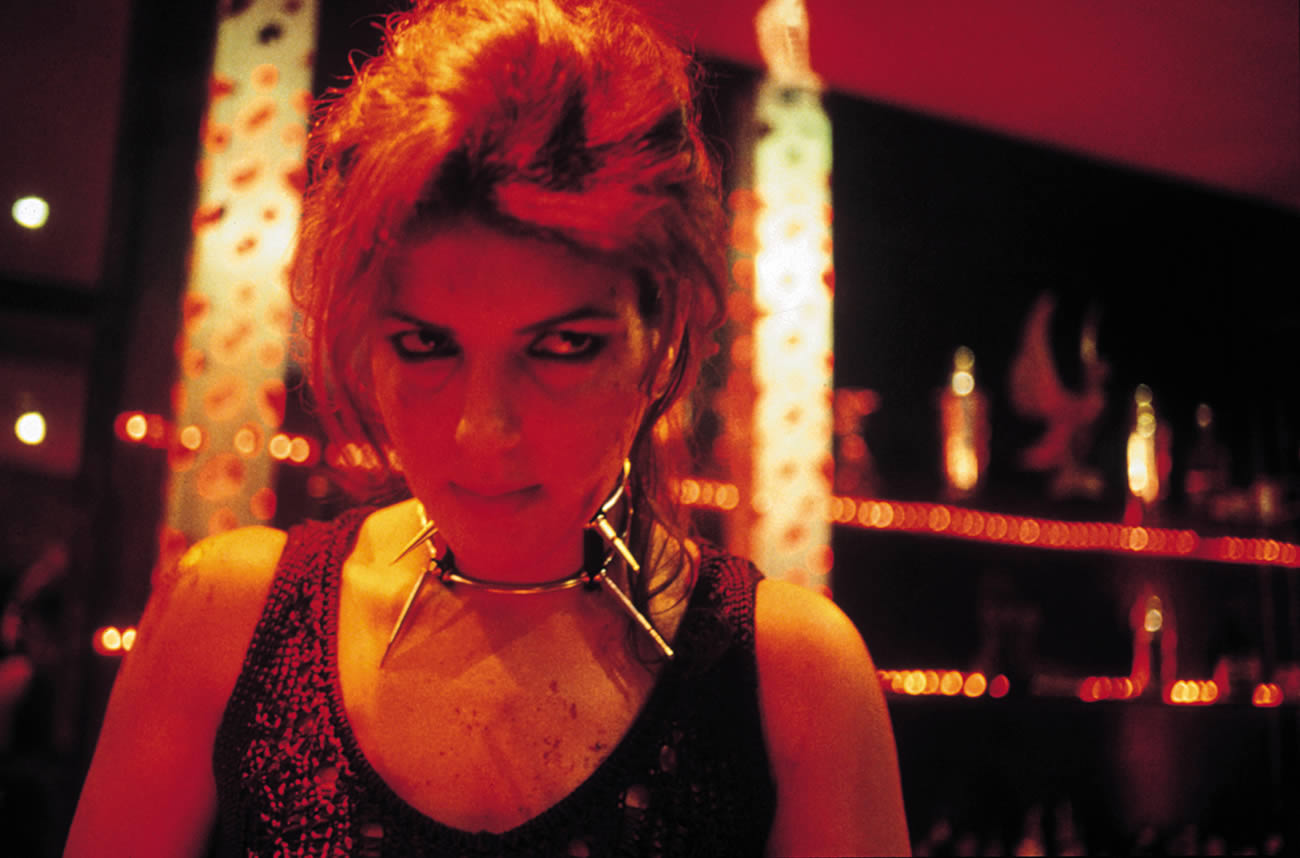
Of all the films in the New French Extremity movement, Baise-moi may be the most shocking.
From its aggressive English language title Rape Me to several scenes of unsimulated sex, Virginie Despentes and Coralie Trinh Thi’s 2000 film may not drip with the subgenre’s trademark blood and gore, but the story’s overwhelming nihilism feels like a middle finger to the patriarchal establishment.
Inspired by Despentes’s 1993 novel of the same name, Baise-moi stars adult film actresses Raffaëla Anderson and Karen Bach as Bonnie and Clyde-style criminals who rampage through France leaving a trail of bodies in their wake. But this fierce story has a tender core. When we peel back the layers of explicit sex and ostensibly senseless violence, we find the tragic tale of two young women desperate to reclaim their power in a world built on male entitlement.
After a brief glimpse at our female criminals, Baise-moi opens in a local dive bar. A boorish man plays pool with his friends while callously dismissing his girlfriend’s concerns. She hasn’t seen him in nearly a week and simply wants to know if he plans to come home. But he angrily brushes her aside, insisting that he doesn’t have to answer for his selfishness. We will never see this couple again, but their one-sided dispute reflects a world in which women must beg for attention from men who see them as less than human.
Throughout this uncomfortable argument, Nadine (Bach) has been drinking at the bar while men discuss her fondness for random sex. At home, she openly masturbates in the living room, refusing to be shamed by her nagging roommate. We learn that Nadine is a sex worker and follow her to a nearby hotel. Refusing to kiss her john on the lips, she dispassionately performs oral sex then watches TV while he fails to give her an orgasm. Despentes and Trinh Thi play with camera angles to show the extent of Nadine’s disinterest. More concerned with sausage being sliced on an infomercial, she has emotionally disconnected from her own body.

We meet Manu (Anderson), an occasional porn actress, under much more traumatic circumstances. While chatting on a park bench, she and a friend are hauled into a dirty warehouse then savagely assaulted by three strange men. We watch as Manu’s friend (played by adult film star Lisa Marshall) is repeatedly punched in the face while her clothes are ripped off followed by an extreme close-up of actual penetration. It’s a disturbing sequence that rivals New French Extremity’s most infamous texts. But this is the reality of sexual assault and Despentes and Trinh Thi refuse to shield the audience from what we are watching.
Though her friend screams and tries to escape, Manu stares daggers at her attackers while stoically obeying their commands. Her dissociation repels the angry man and he walks away, complaining about “fucking a zombie.” Manu will later explain this emotional detachment to her traumatized friend, saying, “If you park in the projects, you empty your car ‘cause someone’s gonna break in. I leave nothing precious in my cunt for those jerks.” Though they’ve not yet met, both Nadine and Manu have become so accustomed to being used for sex that they see no value in themselves. Manu assures her sobbing friend that,”It’s just a bit of cock. We’re just girls. It’ll be ok now.” then continues on with the rest of her day. While disturbing in and of itself, her response hints at prior trauma and the long-term pain of navigating a world filled with predatory men.
Despentes and Trinh Thi will spend the rest of the film subverting the classic rape-revenge structure. We never again see Manu’s attackers again and she is not driven by a newfound hatred of men. But her rage spills out wherever she goes, directed at anyone who dismisses her humanity. Manu’s brother responds with indignation and demands the rapist’s identities, seeming more upset about an insult to his family name than what his sister actually needs. When he implies that she somehow welcomed the assault, Manu shoots him in the head, steals his money, and walks out the door. Nadine finds herself in a similar position after strangling her conservative roommate to death. In parallel scenes we watch both women reach their breaking points and use murder to flee lives of shameful subservience.

Manu and Nadine cross paths in an empty subway station after the last train has left for the night. With nowhere else to go, they cut a violent path across France, careening towards Nadine’s vague errand. Their first victim is a well-dressed woman murdered for her ATM card. Though Nadine confesses sadness in the aftermath of the crime, she eventually admits, “now I feel really great. So great I almost feel like doing it again.” We remember Manu’s final words to her brother — “Bastards like you always have to hit something to feel alive” — and watch these newly liberated women succumb to the same temptation. Their crime spree seems driven by a need to reclaim power by dominating anyone who gets in their way.
Despite the carnage they leave behind, Manu and Nadine do not kill indiscriminately. Shortly after hitting the road, they pick up two strangers at a bar and have sex on their respective hotel beds. Though they do not physically touch each other, the scene ripples with intimacy as they gaze at each other instead of their men. In a traditional rape-revenge film, Manu would kill these unsuspecting paramours, punishing them for another man’s crimes. But she seems content with indulging in her own physical pleasure and the connection she establishes with Nadine. Both women have found a kindred spirit who will not judge them for asserting their own messy independence.
This is not to say that men are safe around these two unpredictable outlaws. Manu shoots a man in the street when he catcalls Nadine and they ambush and murder a condescending gun dealer. When a prospective john balks at their unapologetic promiscuity and insists on wearing a condom, Manu brands herself “the fucking condom dickhead killer” while mocking the man for his self-righteousness. She degrades and sexually humiliates him before using her high heels to stomp in his face.
Nadine has a similar response to another victim who tries to psychoanalyze her criminality. While opening his safe at gunpoint, the man flirts by insisting her crimes have been caused by a traumatic past only he can understand. Rather than fall for this faux empathy, Manu laughs in his face while Nadine shoots him to death on the living room floor. While certainly asserting their feminine strength, they do not lash out at just any man, but save their rage for male authority figures who condemn their feminist rebellion.

Though they rage against the outside world, Manu and Nadine have no grand illusions of victory and expect to die in the violence they’ve sparked. On a peaceful stroll, the outlaws discuss different methods of suicide, rejecting self-immolation as too pretentious. After tossing around options, they agree to do a bungee jump without the cord, though Nadine admits that she may need help stepping off the edge. To maintain the appearance of control, Manu suggests leaving a banner behind to frame their deaths as a courageous act rather than submission to the establishment. They will not let anyone rewrite their story and insist on going out with their heads held high.
It’s only through boredom that we uncover the hopeless heart of their true motivations. Blowing stolen cash on a fancy hotel, Nadine and Manu drink the day away while staring at the ocean, surprised that they have not yet been caught. With their faces on the cover of newspapers, they have achieved some notoriety, but failed to rock the system they despise. Simply described as two women, “one taller than the other,” their bombastic rebellion now feels more like screaming into the void. They may have found joy in rejecting rigid gender norms, indulging in random sex, and gleefully dominating toxic men, but the patriarchal world continues to turn. In this quiet moment, Manu and Nadine realize that they will not be remembered as vigilante heroes, but two waves crashing against an endless sea of male authority.
As we grow more attached to the ferocious couple, Despentes and Trinh Thi remind us of the women’s villainy, directly resisting an anti-hero narrative. Dressed to the nines, Nadine and Manu storm a swinger’s club where women openly service men. In another film, they would be feminist avengers, shooting violent johns while setting helpless women free. But Manu and Nadine kill everyone they see, leaving no one alive in the establishment. As a climax to this massacre, they force the bartender to strip and kneel on all fours before penetrating him with a loaded gun. It’s a horrific act of sexual abuse that mirror’s Manu’s own ordeal. We’re reminded that while the women’s anger may be righteous, their actions are not. Perhaps this is a showy escalation designed to force police intervention. Or has Manu become the very thing that once destroyed her life: a bastard who hurts others to feel alive?

This crime spree ends just as erratically as it began when Manu is shot while stopping for gas. Nadine burns her corpse beside a frozen lake, ensuring that no one can claim power over what little autonomy her body still holds. Dressed in a man’s suit, the grieving woman prepares to join her friend in death and holds a gun to her head. But she seems incapable of pulling the trigger. While remembering their short but violently joyful time together, we hear a gunshot and see Nadine fall to the ground. Seconds later she opens her eyes to find herself surrounded by police. The spell of her connection with Manu has been broken and the world has finally come crashing in.
We’re left to wonder what their rampage was for. They’ve failed to resist a dehumanizing social structure and will now be simply tossed aside. But the English translation casts an uncomfortable shadow over their motivations. Taken as a command, the worlds “rape me” seem to imply consent that is antithetical to sexual assault. It’s an unsettling turn of phrase that harkens back to a question Manu’s friend asked in the wake of her attack: “how could you let this happen to you?” Though it reflects the story’s aggressive tone, this translated title seems to blame the women for their destructive actions rather than interrogate the system they’ve tried to resist.
But there is an alternate interpretation, one that reflects the story’s tender core. A more accurate Enlgish translation would read “fuck me” or “kiss me,” perhaps nodding to sex positivity or the gentle kiss Nadine leaves with Manu before lighting her makeshift funeral pyre. These alternative titles seem to honor the women’s ferocious journey of self-discovery and empowerment.
Though flawed, villainous, and ultimately broken on a patriarchal wheel, Nadine and Manu have found a way to reclaim something precious in their unapologetic strength and authenticity.
Baise-moi is currently available to stream on Shudder.
You must be logged in to post a comment.