


Arachnophobia is a movie about many things, chief among them examining a man’s damn near debilitating fear of spiders. The title gives that one away early, so it’s not a spoiler. Frank Marshall’s horror-comedy explores an urban-rural divide, generational disagreements, fear of the unknown, and even anti-intellectualism. Put it together, and the scariest thing about Arachnophobia isn’t a web or a poisonous spider bite but rather the power of denial and the horror always left in its wake.
Movies like Halloween and Poltergeist bring horror into the suburbs but keep the background setting as subtext. Arachnophobia dispenses with any notion of subtext early on when two of its characters discuss the benefits of living in the country instead of San Francisco. The former is clean air, sunshine, and perfect for the kids. The latter is sirens, grime, and plenty of crime. Of course, they don’t fully believe that, but it’s something they have to tell themselves. More importantly, it’s something they’ve been told.
The decades-long narrative says quaint equals safe. The bigger the city, the bigger the population. And the bigger the population, the more people we have to fear. But Marshall understood what John Carpenter, Tobe Hooper, and Steven Spielberg knew oh so well: bad things have a way of creeping up on people who least expect the bad things to happen.

This little California town prides itself on having one doctor, one high school, and a sole cop who calls himself a police force. When bodies begin to drop, ignorance is the most blissful thing anyone can get their hands on. The horror comes from watching the residents of Canaima care so much about protecting what they believe to be perfect. They don’t even autopsy the deceased to determine the “how.”
When a mother uncontrollably weeps because she wasn’t told why her son died, or even shown his body, she’s whisked away for fear of “making a scene.” In reality, she dared to puncture the veil of fabrication the townspeople live under with real emotion and legitimate questions. By the time autopsies are allowed to happen and valid queries investigated, it’s too late for the town’s traditional power structure.
Canaima lives in denial of a changing world and a younger generation taking charge. That one doctor mentioned earlier? His retirement announcement brings Jeff Daniels’ Ross Dennings into the picture. But just as Dennings and his family settle into their new digs, the older doctor decides he just can’t ride into the sunset.
It’s not enough that Ross and his wife Molly uprooted their entire lives. Nor is it enough that she quit her job as a successful stockbroker as part of the deal to make it happen. But now Ross has to deal with the specter of the town’s most trusted medical expert undermining his expertise and making fun of his Yale degree. By the way, he’s also hoarding almost every patient the city has to offer.

The doctor isn’t like this solely because he’s a jerk; he fears his own mortality. All horror deals with death in one way or another. More often than not, rash decisions are made when someone, or a group of someones, tries to dodge the inevitable. In the case of Arachnophobia, death equals obsolete, and all choices made to deny the future have terrible consequences. One of those choices is a doctor clinging to his practice longer than he should. Another is that Ross has to go through a semi-initiation to be seen as a viable healthcare option in a city soon to have only one doctor. The old guard is willing to cling to tradition at all costs. Even if it’s with only one pinky holding on for dear life.
George Romero once said Night of the Living Dead was about a revolutionary society literally devouring the old one. The old ways didn’t work anymore, if they ever did. Romero knew “progress” turns into a four-letter word the more senior a society becomes. How do you fight the battles of today while still preparing for yesterday’s war? How can you deal with a poisonous spider at your door when you’re still debating whether an “outsider” is even good enough to lend a helping hand?
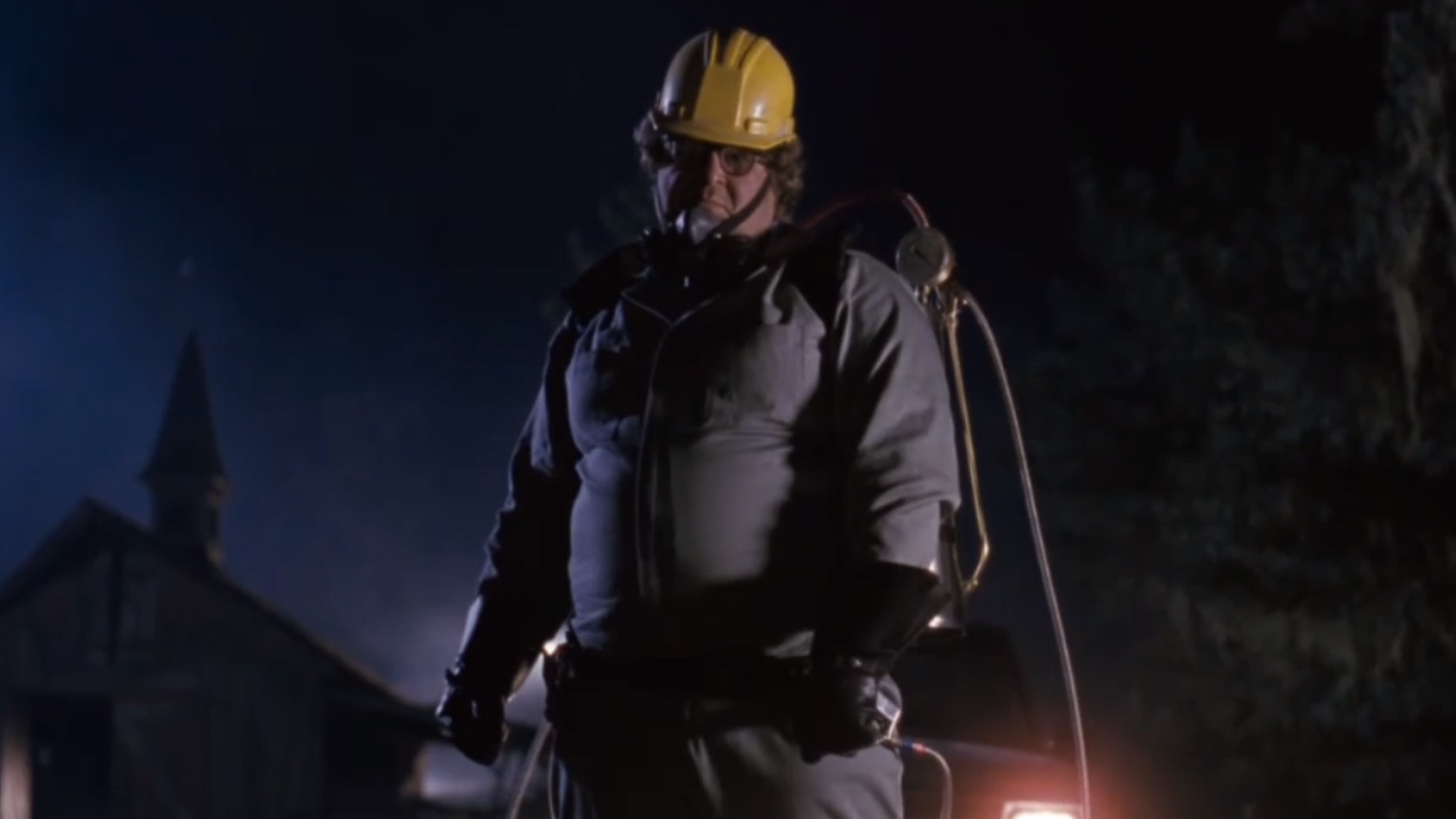
Canaima made mountains out of molehills when an actual honest-to-God mountain was staring them in the face. Denying that a thing like that could happen in their zip code far from the big city didn’t stop it from actually happening. American history is littered with incidents people said would never and could never happen on our soil, including the very recent past. And almost every time without fail, pearls were clutched because the pungent aroma of denial was in the air.
Marshall goes out of his way to satirize this denial and get to its core. It’s not about financial gains, like Jaws. Nor is it about covering up a crime, like A Nightmare on Elm Street. Arachnophobia’s particular brand of denial is the scariest of the bunch because it’s done to simply maintain the status quo. In the end, the Dennings’ move back to San Francisco. The movie tells us they’d rather deal with an earthquake than anything they witnessed in Canaima. Even without the poisonous, murderous spiders.

