
Leigh Whannell Makes Technology Scary Again In ‘Upgrade’
-


‘Ebenezer’ Official Trailer – Ti West Turns Johnny Depp into ‘A Christmas Carol’ Icon Scrooge
-


New Documentaries Explore the Cult Legacies of ‘The Keep’ and ‘Wolfen’; Watch the Trailers Now [Exclusive]
-


‘Resident Evil’ Trailer Plunges Austin Abrams Into Nonstop Survival Horror Nightmare
-


‘Clayface’ Official Trailer – DC’s Body Horror Movie Gives Rise to Gotham’s Shape-Shifting Monster

In 2018 we are so accustomed to technology in our lives that we take it for granted. It’s hard to remember a time when we were terrified of technology. Some 30 years ago, sci-fi movies were absolutely terrifying. The Terminator was going to kill you. Robocop was horrified at his new body. Hardware too showed people with horrifying technological appliances. Leigh Whannell was channeling those movies in his new movie Upgrade.
“You hit the nail on the head,” Whannell said. “Those movies from the ‘80s like Hardware and Terminator where the tech is terrifying were definitely an inspiration.
“The other thing that was inspiring about those movies was that the tech was all tactile and practical. They had to contain it within a box. They couldn’t do anything. They had to tell a story of one robot practically and glue together whatever parts they could.”
In the age of iPhones, Siri and Alexa, Upgrade is a bit of a throwback.
“It’s not just about the charm of nostalgia that makes me want to do that,” Whannell said. “It’s also that I wanted to make something that was very real and touchable like those movies were. As opposed to the ‘mothership hovering over Los Angeles’ version of CG which is fine and has its place. I wanted to do the other sort of sci-fi, the Hardware/Terminator/Robocop version.”
In Upgrade, Grey Trace (Logan Marshall-Green) is rendered quadriplegic in an assault. Equipped with Eron (Harrison Gilbertson)’s top secret technology STEM (Simon Maiden), Grey can move his body again, or even let STEM take over.
“There is a lot of horror in those sci-fi films from that era,” Whannell said. “Science-fiction I think is a closer cousin to horror than people think. If you look at a film like Alien or Aliens, The Terminator, they’re horror films wrapped in a science-fiction skin. I think the two genres are very complementary towards each other. Not that this is a horror film in any sense, I do love that body horror approach to tech and making the tech itself kind of horrific.”

When STEM takes over, Grey’s body moves separately from his head. In real life, Marshall-Green is still a single actor, so he had to sell that.
“I had a lot of help,” Marshall-Green said. “I had an incredible stunt team. I had Leigh and I had a movement coach help kind of neutralize. We spent months prepping the neck down physically and keeping kind of a placeholder so that I could go home and work on my own and with Leigh about the emotional story happening above. So it really felt like he was a passenger aboard.”
STEM also talks, and Marshall-Green could hear his costar when performing the scenes.
“Leigh was smart enough to get an element of Simon Maiden not on set, but very close,” Marshall-Green said. “We had him in his own booth. I didn’t interact with him and I had an earpiece in the entire time. All of that dialogue, that back and forth, that relationship is real time.”
Other aspects of frightening technology include a self-driving car that causes the whole incident by driving Grey and his wife (Melanie Vallejo) to the bad part of town. And yet, people are lining up to buy self-driving cars in real life.
“In this age of automation, there’s something about cars that I think human beings will be reluctant to give up,” Whannell said. “Because it’s the first time where the tech doing something for you can kill you. You’re sitting in this little metal box and now you’re completely handing the reigns over. I think it’s the first toe in the water of true A.I. where something technological, something machinic is doing the thing for you. If a machine does your dishes, there are no lives at stake. There’s a range of things computers can do in our houses that are kind of frivolous, or at least seen as being frivolous. Whereas a car is a lethal instrument. That’s going to be a big leap in terms of trust from humans to computers.”
It doesn’t seem to be too big of a hurdle. Self-driving cars are being produced and people want to own them.
“I count myself as amongst the people who are excited,” Whannell admitted.
“I live in Los Angeles. I spend far too much time in my car. If I could sit back and read and get things done while my car did the driving, I would love it. I don’t think the trust factor necessarily has anything to do with the eagerness. I think you can be very keen to let the car do the driving and still be very trepidatious about actually pushing that button. It’s one thing to think about it. It’s another thing to push the button and sit back and go okay, I’m going to read the newspaper and trust that this car is going to get you down the freeway.”
Upgrade opens this Friday, June 1 in theaters.





Interviews
‘Rubberhead’ Director Nick Taylor on FX Maverick Steve Johnson, Practical Effects, and Seven-Year Journey

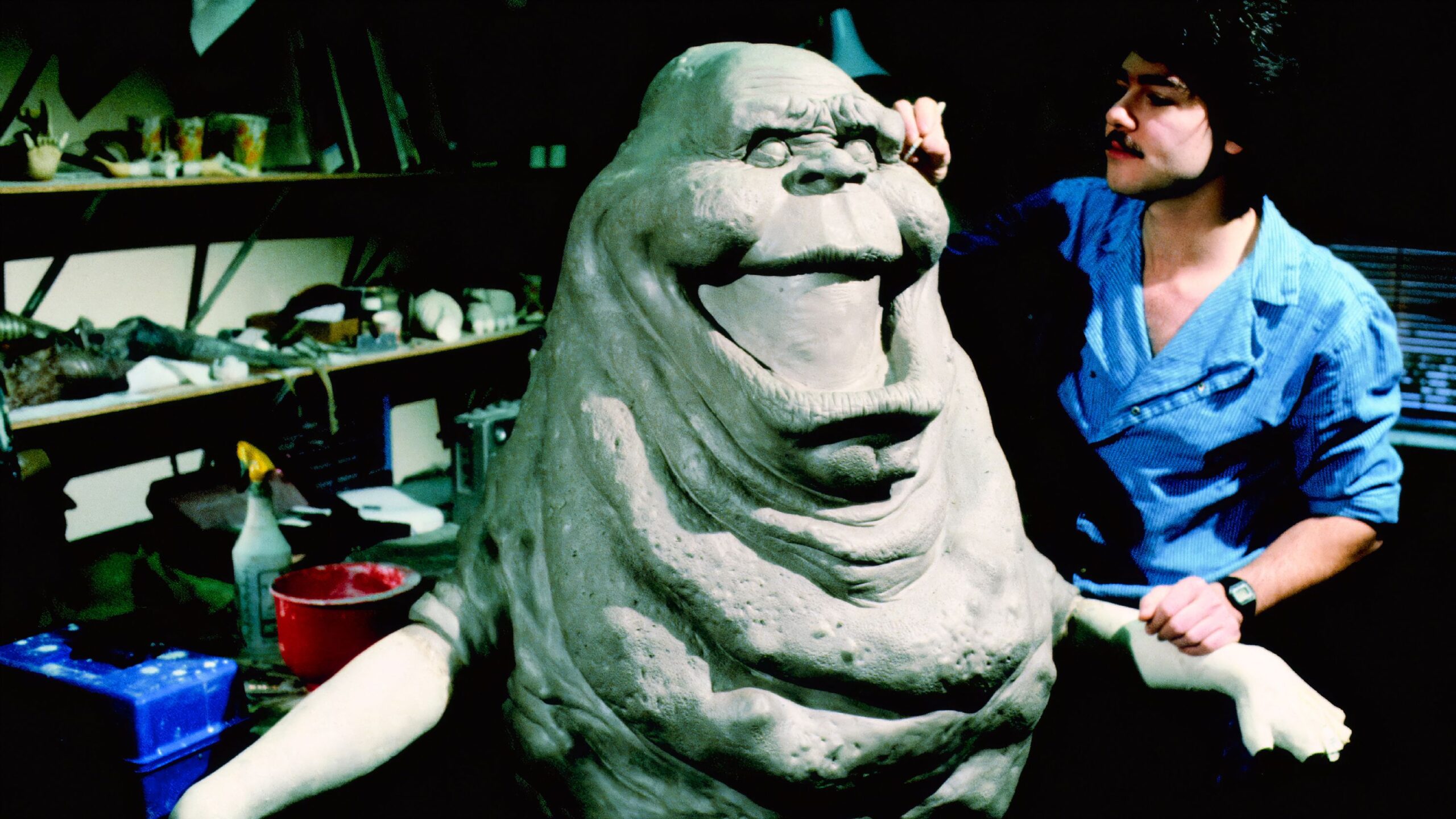
Horror journalist, producer, and podcast host Nick Taylor moves into the director’s seat for his feature debut with illuminating documentary Rubberhead: The Life & Monsters of Steve Johnson.
It chronicles the wild life and career of SFX maverick Steve Johnson, based on the multi-volume book series Rubberhead: Sex, Drugs and Special FX, and those familiar likely already know Rubberhead isn’t your standard horror documentary.
Johnson is responsible for so many memorable movie monsters, having worked on Fright Night, Poltergeist II, An American Werewolf in London, A Nightmare on Elm Street 4: The Dream Master and Night of the Demons, to name a few. He’s also extremely candid in ways that feel atypical in this industry, open about his failures as much as his successes.
“It was a natural progression for sure,” Nick Taylor tells Bloody Disgusting of his transition into filmmaking ahead of Rubberhead‘s world premiere next week at the Fantasia Film Festival on July 23. “I think with my podcast, I got adept at interviewing people and pulling creative lessons out of them, which was the point of my podcast. I wanted this movie to be sort of a creativity pill for artists where if they’re starting a project or feel creatively stuck, they could watch this movie and be inspired and get actual practical creative lessons.”
Taylor’s background in PR and marketing also organically led him down this path.
He charts the course from book promo to documentary director: “But also Bloody Disgusting had a lot to do with this movie because in the very beginning when I first met Steve, I was helping him promote his book and I said, ‘Hey, I got a marketing background and a journalism background. Let me help you promote this book. I’ll just pitch stories from your life to the media, and we’ll see what happens.’ And John Squires wrote an article about Steve making Slimer under the influence of tons and tons of cocaine, and that went fairly viral.”

“For a week, it was story time with Steve,” Taylor continues. “He would tell me a story from his life, and every story was about a major movie, a major director, lots of drugs and alcohol and insanity. I would write them up, and I think John published about three or four of them. So huge shout out to John Squires because that was really great. So yeah, there were definitely a lot of outgrowths of my journalism background that definitely contributed to this movie.”
Rubberhead condenses the multi-book series into a cohesive feature film with a breezy runtime, sparking the obvious question as to how Taylor approached condensing Johnson’s life down to an under 2-hour documentary film.
“That was one of the more difficult parts of all of this, because we had enough for a series or an epically long six-hour fan documentary,” he answers. “But from day one, I did not want to make a fan documentary. I love them. They’re a lot of fun, but I did want the movie to stand on its own two feet as a character-driven portrait of an artist and a time period and a technology, that being practical effects. I did want to be objective. I didn’t want to make this too long. I wanted to make it re-watchable. So I think we just really had to focus on what the narratives were that we wanted to tell. So there were some basically almost cliché archetypical mythic narratives present in Steve’s life. We could have made this way longer, but we wanted to keep it short. But luckily that’s why you have special features.”

Johnson quickly proves to be an engaging subject thanks to his self-effacing wit and frank self-reflections; expect no shortage of stories about how drugs factored into the height of his career or the failures it wrought.
That rare quality was an asset for Rubberhead, Taylor confirms. “He does not shy away from anything about the drugs, the addiction, the bridges burned, the mistakes made, the lessons learned. He just is honest about all of it. He’s had a lot of time for reflection, and he’s done a lot of reflection, so he doesn’t shy away from any of it, which is huge because it’s very refreshing. I don’t think a lot of people are that way, at least in this industry from what I can see. So I think it was hugely beneficial. We wanted to lean into that, and we wanted to make this sort of a gonzo Hunter S. Thompson sort of wild tale through Steve’s overall life.“
Condensing his life into this doc was a slow and steady process for Taylor, too. “It’s been almost seven years. It’s been a labor of love. We’ve been as indie as it gets. We would shoot what we could when we could, and then we would edit when we could. Then after a while it all came together.”
In a way, making Rubberhead brings Taylor’s horror fandom full circle. It turns out that the very film that sparked his interest in the genre and practical effects also comes with an amusing Steve Johnson anecdote.
Taylor explains, “My gateway for sure was Beetlejuice. I saw that at a very young age; I think I was four or five. I felt somebody had shown me, my soul. I get a little emotional thinking about it. There was something about that movie that felt so strange and unusual, but also felt so familiar. It was spooky, but it was fun, and it was lighthearted, and it had humor, but it also had this macabre celebration to it that I just really got into as a kid. I felt somebody had shown me my own soul. And funny story, Steve got fired from Beetlejuice because Tim Burton gave him his hand-drawn designs and Steve’s like, ‘Oh my God, these look like kids did them. This is not what you want. I know what you want. I’m going to redesign these for you.’ And Tim Burton was like, ‘Yeah, no, you’re not.’ So yeah, funny story.”

You must be logged in to post a comment.