Exclusives
[Exclusive] ‘Lone Survivor’ Interview Part One: Jasper Byrne Discusses the Origins and Challenges of Making the Hit Indie Horror Game

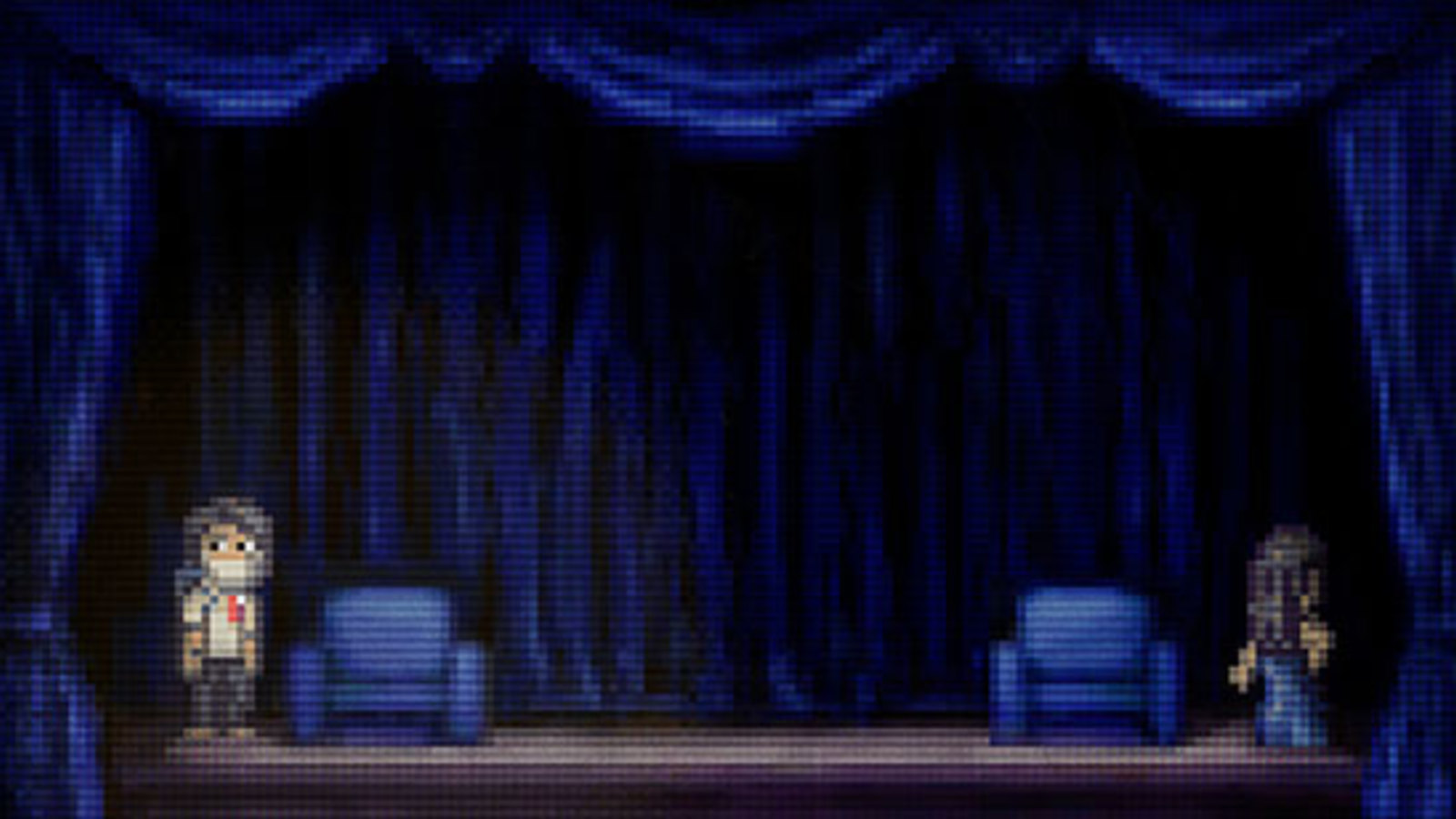
Ten years ago, the 2D psychological horror Lone Survivor made its mark on the indie games scene. Often cited as one of the strongest spiritual successors to Silent Hill, the crunchy pixel art and haunting soundscape felt like David Lynch by way of SNES. The story follows an isolated man wearing a surgical mask trying to maintain his mental wellbeing while exploring his apartment complex as a horrifying infection mutates those around him into shambling monsters.
In honor of the tenth anniversary, creator Jasper Byrne sat down with us for this two-part interview. In Part 1, we chat about the origins and challenges of the original Lone Survivor.
According to Byrne, the original concept of Lone Survivor spun out of a demake project he did where he recreated a portion of Silent Hill 2 in a 2D pixel art style.
“It goes back to an earlier game, Soundless Mountain II, which was originally for a competition. At the time, I was lamenting the fact that there were no more games like Silent Hill 2 that were very much psychological horror rather than body horror or supernatural horror.”
When he publicly released Soundless Mountain II, it got some attention, leading him to realize there was an audience for this type of game. He had been working on a point-and-click adventure game, but the scope of that project had become too ambitious, leading him to move on to something new.
“I was going to make a simple survival horror, the most basic one I can do. One weapon, one enemy, one location. I just wanted to do something as simple as possible just in order to get it finished. At the time I was working in Flash in order to have a demo out that people could play, so that kinda determined all the parameters around the project.”
Like a good classic survival horror game, Lone Survivor’s apartment is an ever-expanding space that unlocks as you go, always leading you back to your apartment, which acts as your save room and safe space. Replicating the 3D layout of an apartment complex can be challenging when using a 2D perspective, but the use of a map helps players get around.
“Initially I wasn’t going to have a map at all. The idea was each location would be so unique that you would just learn your way around. The game ended up bigger than I planned so there came a point where it became necessary, so I had to work it in. It all started with floor plans and trying to build a real apartment, then it was a case of which angle would it be best to see a room from.”

Unlocking shortcuts is also something that’s present in the level design of FromSoftware’s Souls games, a series that ranks among Byrne’s favorites, and the influence of those games can be felt in his work.
“I was playing Dark Souls at the time Lone Survivor came out. I’d played Demon’s Souls and Dark Souls for a thousand hours by that point, it just really infected the difficulty level of Lone Survivor. I die while playing, and if the designer is dying, it’s hard. That’s one of the reasons I introduced difficulty into the game because I don’t think it’s a game defined by its difficulty. It’s defined by its story. I want it to be more accessible, but I want to create a nice challenge for the hardcore player.”
Dreams and dream logic play a big part in the narrative of Lone Survivor, but Byrne tried hard to keep things grounded within that tone.
“It always comes from what you want to say. What I’m trying to do is present things with feeling rather than exposition. That comes from a combination of the sound and the art and the dialog and the timing. Sometimes it’s almost like what’s said is not important, but it is important in the timing and the rhythm of the scene.”
It’s easy for a horror game to get too dark, but Byrne was very conscious of that. David Lynch has spoken many times about balancing light and darkness in his work, saying he likes to see stories where characters come out of the darkness, and Byrne weaves that philosophy into his games.
“At some point I thought the game was getting too dark, so I spent months adding in the positive aspects, all the food cooking and the self-care aspect of the game to balance it out. When approaching dream sequences, they were often coming from a place of hope. I was trying to explore the character’s psyche and see the positive aspects, but also the negative aspects.”
Those self-care elements of the gameplay are one of the most interesting twists on the genre. Instead of just managing ammo and health resources like other survival horror games, you need to make sure to stay well-fed and rested to maintain the main character’s mental state. Much like Silent Hill 2 judged players for the way they played rather than artificial binary decisions, Lone Survivor chooses your ending based on invisible variables that you may not be aware of as you play.
“Silent Hill 2 was a huge inspiration. Right from the beginning that was in the parameters of what I was going to do, to take that idea and extend it to the whole game so that everything you did in the game would affect your ending, not just small or specific things like a fairly arbitrary decision at the end. There’s tons of scenes in the game that have alternate versions depending on your mental health, or totally different songs. I like my games to be like an iceberg.”
Despite the unconventional visuals, Byrne chased an immersive feeling to the presentation of the game, stripping away all on-screen UI and leaving information to be found in the menus.
“I like to have a very immersive feeling, and that drives a lot of my decisions. I really liked it in Silent Hill that they removed most of the UI, and Resident Evil did that too. I wanna make movie-like games. I like movies, film is my big passion too. My dad was a screenwriter, so I grew up watching tons of movies.”
While we may be used to a more grainy, pixel art style nowadays, that wasn’t as common when Lone Survivor was originally released, and the visuals were more technically forward-thinking than most people realize.
“It seems so commonplace now. Every game has got a million filters on it in Unity or Unreal, but at the time I don’t think anyone else was trying to blur pixels deliberately, writing shaders to do that sort of thing. It was really ahead of its time in a way. Most graphics cards didn’t even have shaders at that point. I’m always thinking about the tech edge, even though you wouldn’t think about it looking at my games. Nowadays retro gaming is more understood and even fetishized, whereas back then people didn’t really know people would love something like that.“
One of the most impactful aspects of the game is the audio design. Both the sound effects and music create an atmosphere that oscillates between oppressive and hopeful, and this comes from Byrne’s background as a musician.
“The funny thing is, I was in a period where I was quite down on my music in a way. The game was very much about me dealing with the loss of my dad a few years earlier. That was the reason I went into the game industry, because I just wanted a change. I had been in the music business for 10 years, being on tour and everything. I just really wanted to do something where it was less emotional. In a way the game seemed more practical compared to making music.”
Byrne thought it would be good to still try to scratch his music itch doing the soundtrack for the Lone Survivor. He didn’t have his best equipment at hand when he started working on the score, but that left him to find a unique sound for the game.

“At the time, my main guitar wasn’t with me, it was in Vietnam, but I had my guitar that I’ve had since I was 12 or 13, which was really not great and was really scratchy. I just thought this could be a cool sound for the game. It’s dirty, it’s old and unloved, and could be the right voice for the game. I’ve given the guitar to my daughter, she’s a guitarist now. I’m very proud.”
Looking back on it, he finds it funny how he seemingly cranked out Lone Survivor tracks in short order, while he now spends weeks on one song working on his albums, which are his main income at this point.
“I do like the tracks in Lone Survivor, but I really didn’t care at the time. I was just doing them in five minutes. I don’t even know how I made half of these, I literally didn’t care at all. It’s sort of annoying as hell. In the last eight years, I’ve really put my heart and soul into music. I make my main living from it now.”
In the second part of the interview, we’ll take a look at why he decided to remake Lone Survivor and his inspirations behind the new short game in the series, Lone Warrior.




Exclusives
‘Rose of Nevada’ Exclusive Clip Gives Ominous Warning from the Past in Hallucinatory Time Travel Mystery

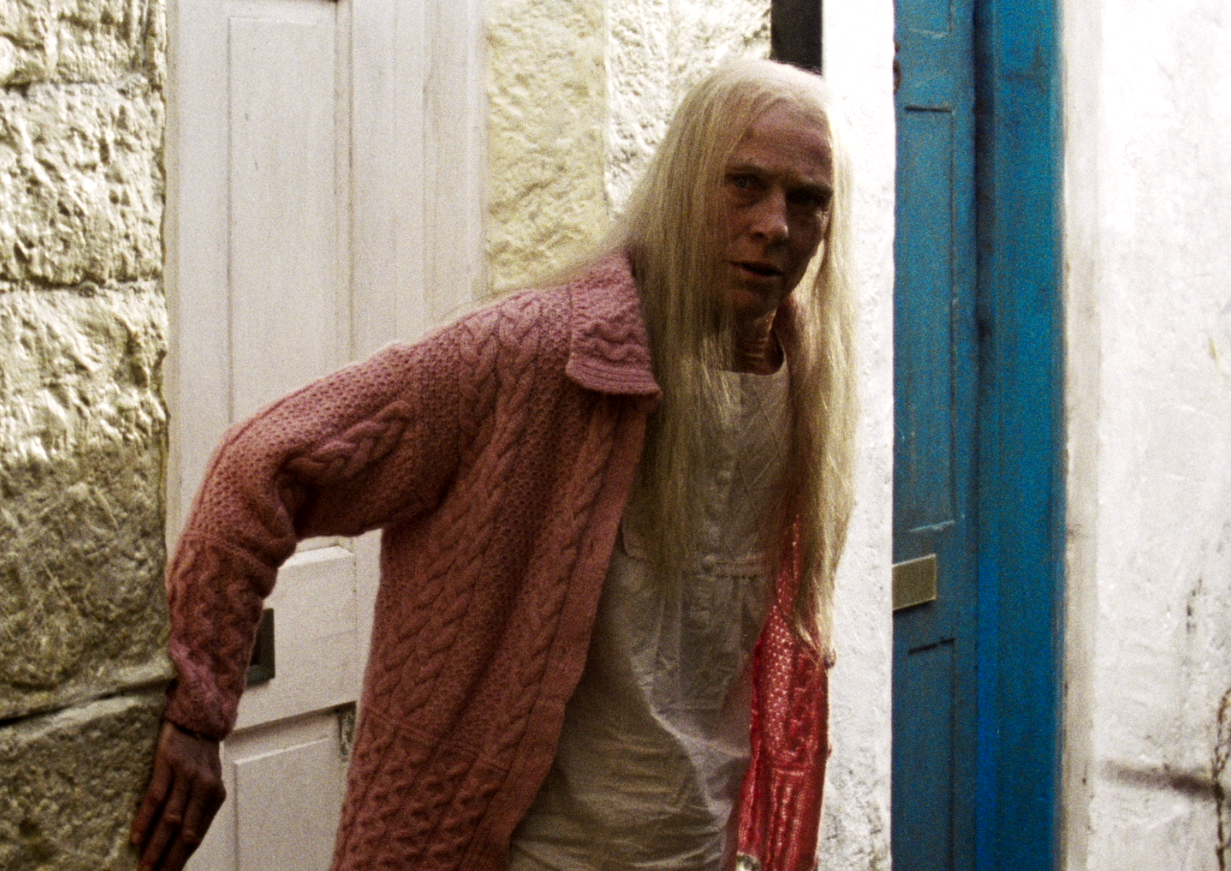
A strange neighbor’s forboding words act as an ominous warning for the experimental time-traveling voyage ahead in our exclusive clip from Rose of Nevada.
Rose of Nevada opens in New York and Los Angeles theaters on June 19, 2026.
Watch the exclusive clip below, which sees the disoriented Mrs. Richards (Mary Woodvine) accost Nick Dyer (George MacKay), suggesting she knows him from her past, before he embarks on a trip to sea that will change everything.
In the film, “Three decades ago, the Rose of Nevada vanished at sea, along with its crew. Now, it has returned. In a remote fishing village, its reappearance is embraced as an auspicious sign, with the local citizens convinced the luck of their economically devastated community may turn, if only the ship sails again. Joining the crew is Nick (George MacKay), desperate to provide for his young family, and Liam (Callum Turner), a mysterious drifter eager to escape his past. After a successful voyage, they return to harbor, only to find that nothing is as they remember it.”
Edward Rowe, Francis Magee, Rosaline Eleazar, and Adrian Rawlins also star.
Written, directed, edited, and scored by Mark Jenkin, Rose and Nevada closes out the filmmaker’s Cornish trilogy that also includes shot-on-film folk horror nightmare Enys Men and 2019’s Bait. All three films in the experimental series are set along the Cornish coast and were shot on a 16mm Bolex camera.
It’s also worth noting that Woodvine, who appears in the below clip in effective age makeup, and Rowe also starred in the trilogy’s previous installments.
The film is described as a “hallucinatory time-travel mystery.” The press release notes, “Jenkin conducts a cinematic séance, conjuring a portal into another world that forces us to confront the past and our relationship to it.”

You must be logged in to post a comment.