Interviews
“Stranger Things” Special Makeup Effects Designer Barrie Gower on Bringing Villain Vecna to Life [Interview]

Spoiler Warning: This article contains spoilers for “Stranger Things” Season 4’s villain.
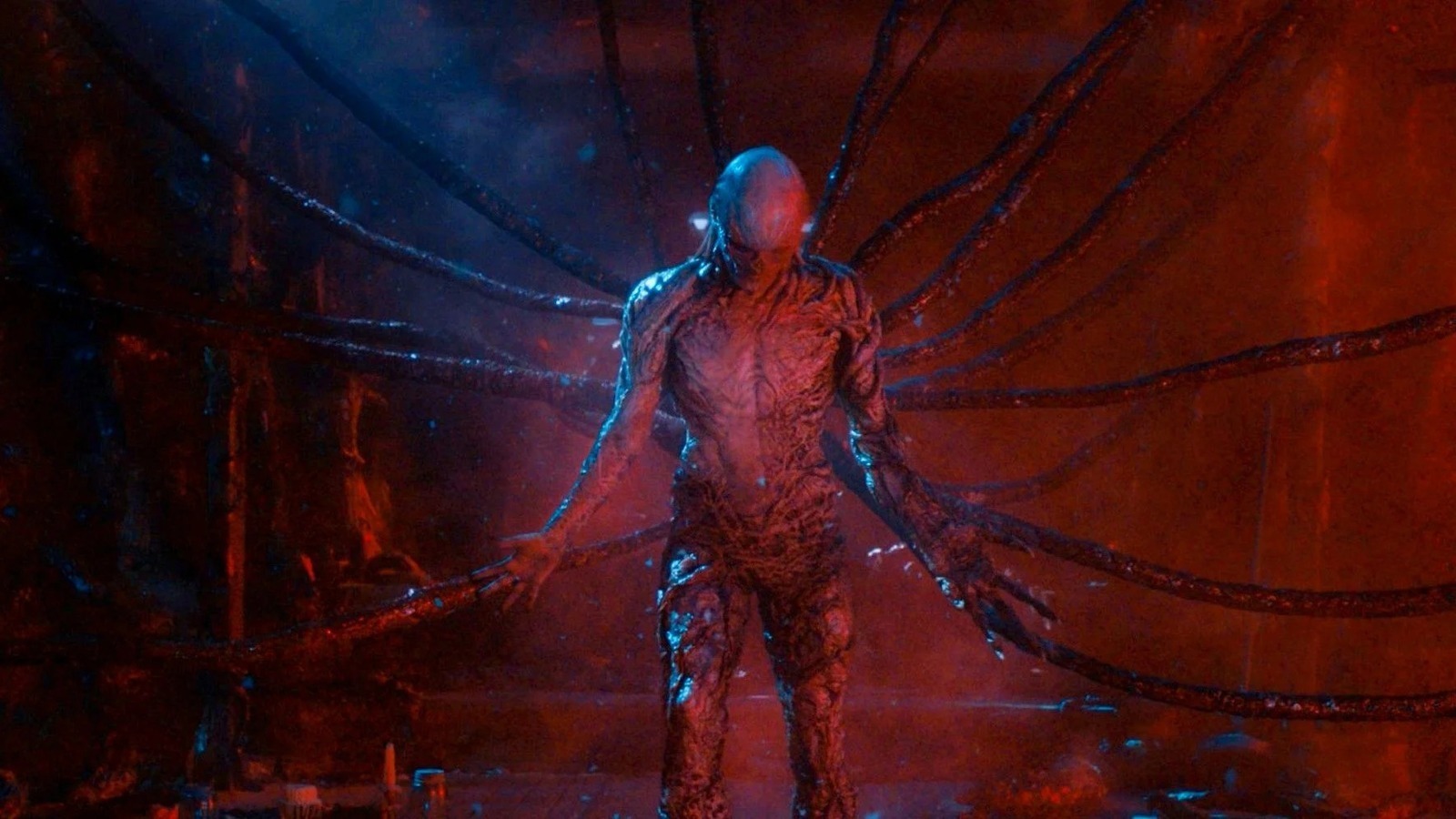
The Duffer Brothers sought to create their own Freddy Krueger for season four of “Stranger Things.” Enter Vecna, the most sophisticated and dangerous foe from the Upside Down yet. The humanoid latches onto teens harboring repressed trauma and pain, feeding on it and then murdering them to create new gates between Hawkins and the Upside Down.
The end of “Stranger Things 4: Volume I” reveals that Vecna is humanoid because he was once human.
Eleven (Millie Bobbie Brown) realizes through her unblocked memories that orderly Peter Ballard (Jamie Campbell Bower) is One, the very first gifted child that Dr. Martin Brenner (Matthew Modine) tried to control. Peter came into Brenner’s care as a child after murdering his entire family, save for dad Victor Creel (played by Robert Englund in the present). A supernatural battle between Eleven and One opened a rift and sent One careening into the Upside Down, where he began his transformation into the powerful Vecna.

The Duffer Brothers wanted brand new “Stranger Things” big bad Vecna to be almost entirely practical from the outset. They turned to the Emmy award winner behind Game of Thrones’ Night King, special makeup effects artist Barrie Gower.
In a chat with Bloody Disgusting, Gower explained how he got involved with the series. “My wife, Sarah, and I run our company, BGFX, which has been going since about 2010. We’ve been really lucky to be part of many big franchises, but our ten-year-old daughter Lottie is a massive Stranger Things fan. Then to get the call from the Duffers, just regarding season four. I think they were fans of our work on Chernobyl, with all the radiation burns, but they were huge fans of our work on Game of Thrones, the Night King.
“I think going into season four; they were looking to create a villain, an iconic villain, which I think they were like, ‘Well, we kind of want our own Night King.’ So I think they were saying, ‘Well, who better to contact but the guys who created the Night King?’ When we got the call, we were overwhelmed. I think our daughter Lottie was more excited than us, to be honest, but we were over the moon to get the call actually to come and join the Stranger Things family.”
On Vecna’s design…
Production on season four was underway when Gower came on board. That meant Vecna’s design was also already in place. Gower states, “Well, it was interesting because all the scripts were written, and a lot of production design had already been done on the show. When they approached us, they already had concept art done by Mike Maher, who was also the VFX producer on the show. He did this incredible concept work for Vecna. We had a few slightly different iterations of it, but we knew he was going to be humanoid in form. Initially, the idea from the get-go, from the Duffers and Mike, was saying, ‘We want this character to be practical, pretty much practical.’ He would have an on-set presence every day, and he would be able to interact with the cast. They also made it clear that we would be working very closely with the VFX department.
“There would be a little bit of VFX augmentation in post, but it’d be things we couldn’t necessarily achieve practically, like giving a subtle movement to Vecna’s vines on his body. They would be removing the nose of the actor and his pupils as well, even though he wore contact lenses. We knew there would be quite a nice collaboration with VFX, but it was interesting to join the show, and they already had this blueprint of how they wanted Vecna to look.”

While Gower and his team created Vecna from Maher’s design, they also looked to nature to enhance his look and ground it more in reality. “Obviously, we had the original concept art, but we always use sources of real reference from the real world. We used a lot of photos of sea life, all kinds of different kinds of fish, lots, lots of things to do with trauma reference, like bruising to the skin, anemic skin tones, and looking at vines and all kinds of things. Just literally, the texture and the quality of the surfaces, his skin was very pitted and very smooth in areas. We used all kinds of references from the real world, as well as fantasy. But I think what aided us from the get-go was the initial concept art by Michael Maher.”
On Vecna’s makeup application…
Not only is this season’s villain almost completely practical, but it’s actor Jamie Campbell Bower beneath the extensive Vecna prosthetics throughout “Stranger Things 4.”

Gower details the painstaking process of bringing Vecna to life: “We life cast Jamie. We started modeling him in modeling clay back in London at our studio. There were a few little nuances and compromises we had to make here and there to make sure it fits over the human form correctly. But on the whole, it stayed pretty true to those original pieces of concept art by Michael.
When asked if there were stages for Vecna considering his transition from human to monster, Gower answered, “There is a transition. Yeah. There is a transition in between. At the end of the first volume, you’ll see a transition from Jamie turning into his Vecna form. Then the transition obviously will go further. From a different stages point of view, I mean, from the build point of view, it was a huge build for us because it was a full-body prosthetic makeup.
“We decided not to go down the route of having a guy in a monster suit, a guy in a rubber suit because we knew there would be an awful lot of interaction with him and the cast, a lot of dialogue, quite a lot of strenuous work. He did all of his stunt work, his own stunt work. There was not a stunt Vecna on Stranger Things. When you do a character like this, you would usually have a stunt guy of a similar frame who would also be put in the makeup. Jamie did all his own stunts for this show.“
That detail is important in highlighting Bower’s stunt work as Vecna and hinting that Vecna will take a more active role in his bid for control in “Stranger Things 4: Volume II.”

STRANGER THINGS. Vecna Cr. Courtesy of Netflix © 2022
Gower breaks down the lengthy makeup process, “We went from the sculpture over his lifecast. We had to separate the sculpture up into many parts, making molds. Then we just injected a couple of different materials into the molds. His makeup consists of silicone appliances and foam latex appliances. The foam latex pieces are the larger, heavier pieces on the body, which foam is naturally a lighter material; it was about 24 to 25 prosthetic appliances in total of his makeup. We could only use them once. At the end of each day, we would remove the makeup, and they would be trashed because we’d be using mineral oil to remove the appliances, and they would destroy all the edges.
“We’d have duplicate appliances for every single shoot day, and we shot for maybe 20 days with Jamie in total, including two makeup tests. We made something like about 25 sets of appliances for him, but we made those all back at our studio in the UK. They are painted to the nth degree because it’s full-body coverage and all these pieces overlap. They’re glued with a medical adhesive directly onto his skin. You need all the artwork done as near as dammit to get the application time down. That still didn’t change. The first time we glued him into the makeup was about eight and a half hours for the test.“
Gower recently shared Vecna’s makeup test look on Instagram:
“It used to be like a marathon, and it was like this well-orchestrated pattern of four of us in the team. It’d be myself, Duncan Jarman, Mike Mekash, Eric Garcia, and then Nix Herrera joined us towards the end of the shoot. But we’d have this very orchestrated sort of dance we’d do around Jamie. He would start sitting down, and we’d stand him up. Then we’d lie him down on his front, on a massage table, flip him over onto his back, stick his front pieces on, stand him up, put his legs on, put his right arm on, and put his left arm on. The quickest that we got the application time down to six hours, 21 minutes. We would spend the best part of five hours just purely gluing the appliances onto his skin. Then we’d have an hour and a half of airbrushing and joining all the dots together with the paintwork and airbrushing veins and blending everything.
“Once he was finished in his makeup, we’d take him down to set. He had a tent just adjacent to the set. The four of us would use, essentially, a lube to cover his entire body, to give him this glossy, shiny finish. Then he would then step onto the set and play for the rest of the day. The derig at the end of the day would take about an hour and 30 minutes to get him out of makeup. You have to bear in mind that we had an incredibly patient actor who was the fifth member of our team basically, and everybody got on incredibly well. We were super lucky to work with Jamie Campbell Bower. He had the patience of a saint, and he had an incredible sense of humor. We just got on so well, and it just became like a well-oiled machine in the end.”

Expect to see much more of Vecna when “Stranger Things 4” Volume II releases on Netflix on July 1.



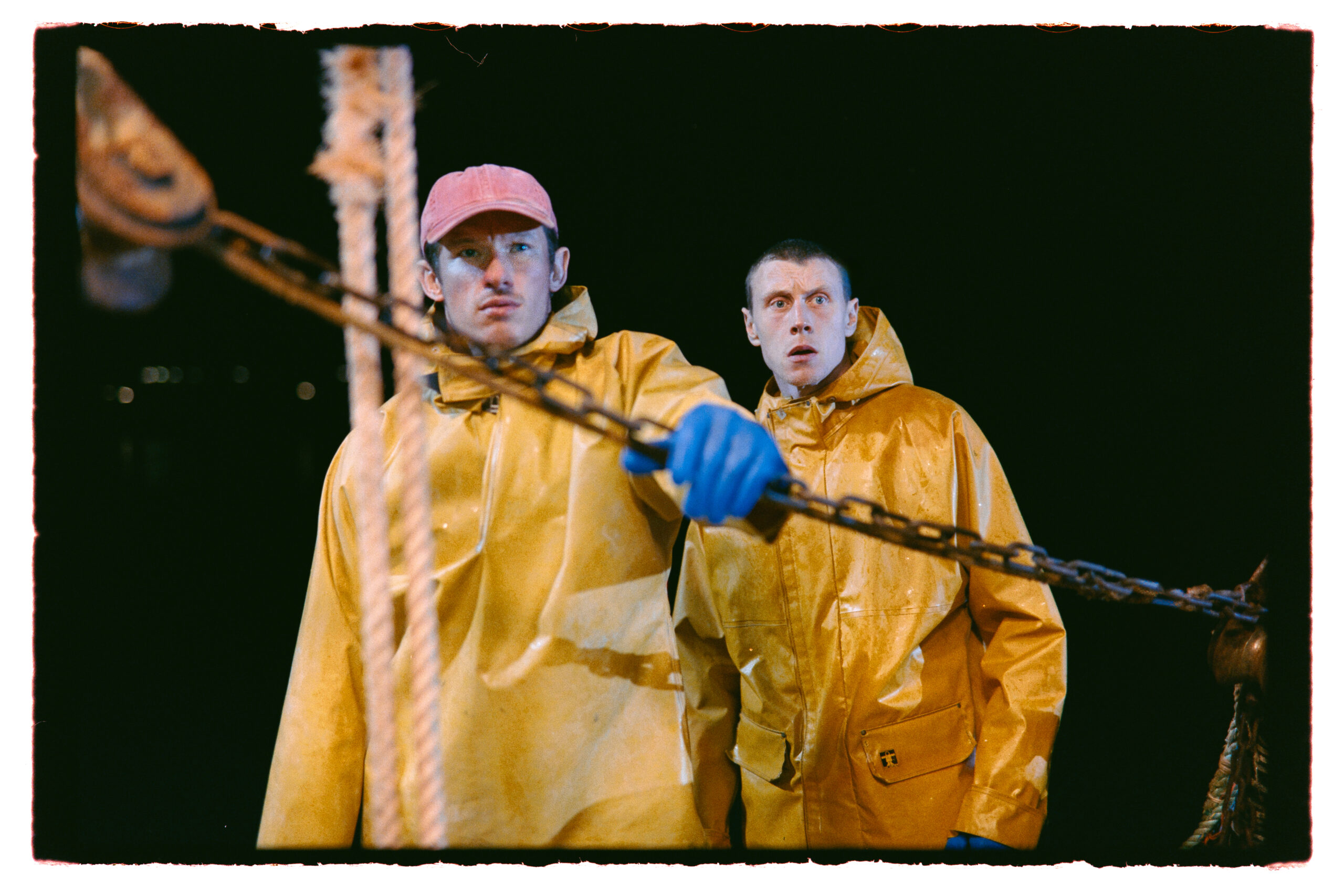
Nothing is the same when two crewmates return to shore in Rose of Nevada, the latest by Enys Men filmmaker Mark Jenkin.
Time and reality blur for stars George Mackay (Wolf, 1917) and Callum Turner (Green Room, “Neuromancer”) in the hallucinatory time travel mystery releasing in New York and Los Angeles theaters on June 19, 2026.
But this isn’t your standard time travel movie.
Rose of Nevada bends time and genre in its exploration of Cornish identity and community, upending the lives of Nick (MacKay) and Liam (Turner). There’s a listless, dreamy quality to the time travel, and for inspired reason: Jenkin approaches it like a haunting.
While time travel was on his mind early in the writing process, Jenkin’s partner and collaborator asked a question that unlocked Rose of Nevada and inspired the filmmaker.
Jenkin explains, “I remember saying to Mary [Woodvine], my partner, who’s in the film, I said to her, ‘God, it really seems like I’ve fallen into this thing of either making films about ghosts or films about time travel,’ and then she said to me, ‘Yeah, but aren’t all ghost stories just time travel films, and aren’t all time travel films just ghost stories?’ And then I thought, ‘Oh, great. So I’m not making two types of films. I’m actually always making one type of film.’ But that was ultimately liberating because I thought there’s a nice gap or a crossover in the perception of genres, there’s a lot of room to play and to be free within that.”

“Once I’d abandoned the idea that I was going to master quantum physics in any academic sense,” the filmmaker continues, “It was incredibly freeing because I thought, ‘Well, I can just set my own rules here,’ and it really doesn’t matter what the rules are as long as you stick to them. You can’t bend them for the sake of the plot or for the sake of a character arc or something. You have to establish those rules upfront and stick to them, which made me really think I’ve got to limit the time travel element. This film can’t be about time travel.“
Bearing the brunt of the time travel disruption is Mackay’s Nick, a man struggling to support his family before the ill-fated voyage upends his entire world. It’s the type of role that was an easy yes for the actor, simply because of the filmmaker behind it.
“I saw Bait at the cinema when it was first out a few years ago and was so struck by it,” Mackay tells BD. “I just hadn’t seen a film like it. I want to work with the best directors. I want to work with the best directors and people who have a singular vision. As an actor, the process of work is almost my biggest draw, as well as what a story’s saying, but I think you learn by doing, and if I can do my bit in as many different ways as possible. The physicality and the discipline of Mark’s filmmaking, how that is so entwined in the DNA of the film, and therefore in the way that I work within it, that was the biggest draw. I’m just a fan of Mark’s. I was just very pleased to be involved.”
That reflects in Rose of Nevada‘s unique casting; Mackay initially was eyed for Liam.
“When I first got the call to meet Mark at the audition stage,” Mackay said, “We didn’t wind up reading scenes, but they said, ‘There’s a project. There are two roles in it that you could be right for, and Mark is leaning towards you for Liam.’ So, I had a look at Liam, Callum’s role, and had my interpretation of the script ready to talk about it and what I thought that character was, who he was, and how I’m thinking about how I might inhabit that or what I saw in him. And when we met, we didn’t talk about the film at all. We spoke about everything else. But following that meeting, I got the message, said, ‘Mark would like you to be part of the film, but he thinks you’re definitely more of a Nick,’ which I think I just may be a complete sheep because I went, ‘Of course I’m Nick.’

Mackay continued, “But it’s funny, I do have in my own life, I just started a family, and so much of my last few years of being has been trying to figure that balance and what that means and how you navigate that. So with family being at its core and all the kind of conundrums that come with staying level with that, that rang true. So I felt like I understood objectively, I have my interpretations of what both men mean to each other and within the story, but then once I was playing Nick, I just became about a very present focus on who he was and what his situation was. What I liked about him is that he’s a very straightforward bloke. In the best possible way, he’s quite a simple man. It’s just he’s in an extraordinary situation.”
Jenkin wrote Rose of Nevada during the pandemic lockdown that had forced a halt in production on Enys Men. He’d return to rewrite once Enys Men had been completed, creating overlap between films. “They are even more in conversation than you’d think because the first draft of Rose of Nevada was before I’d made Enys Men, and then everything I learned through the making of Enys Men, I fed into Rose of Nevada. But also the reaction to Enys Men, all the critics and writers and audience members who are telling me what Enys Men was about. I’m always the last to realize what I’ve done, I think like most filmmakers. You don’t really know what you’ve made a film about until the audience tells you. I was able to feed that into Rose of Nevada and also scale it up a little bit. So, yeah, in some ways it predates Enys Men, and in some ways it follows on from it,” he said.
Jenkin’s latest caps what’s unofficially been dubbed his Cornish trilogy, a moniker that initially surprised the filmmaker, but he’s come to embrace it. A recent revisit of Bait made it even clearer. “I can now understand why people are linking the three films together. I’d forgotten how linked they are, which is amazing, really, considering the first draft of Bait was written in 1999. So, most of my adult life has been one way or another making this trilogy. I am quite looking forward to starting the next chapter.”

You must be logged in to post a comment.