Editorials
[Based on the Hit Film] Looking Back on “The Nightmare Before Christmas: Oogie’s Revenge”

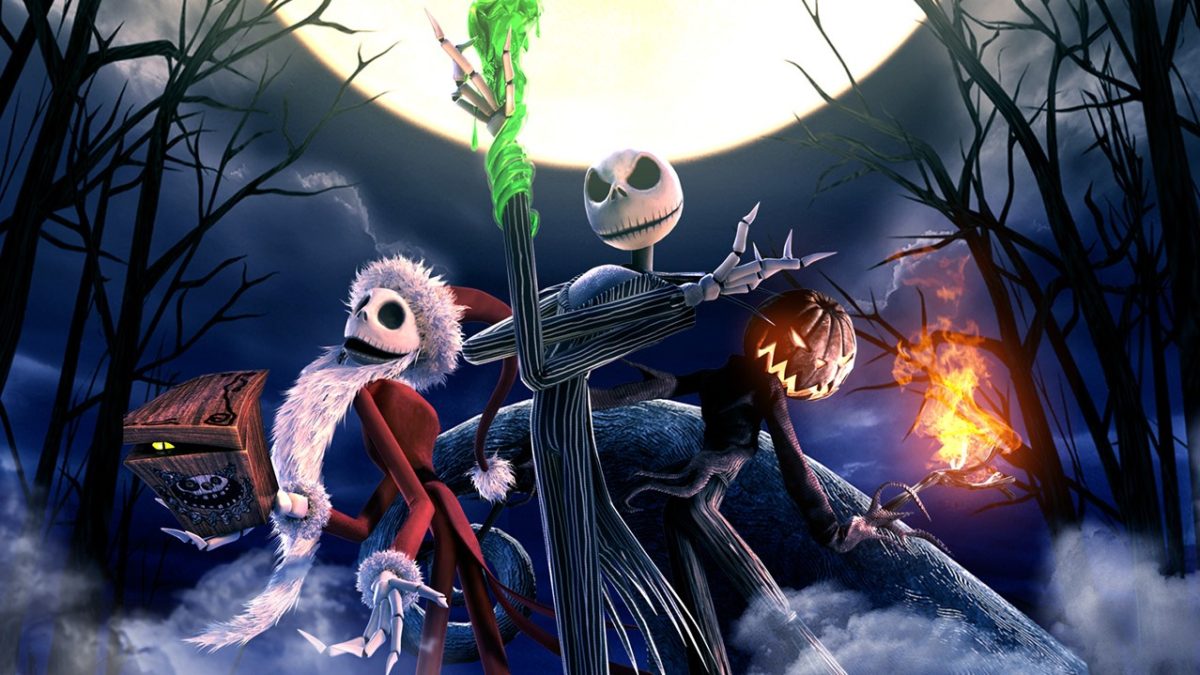
Based on the Hit Film is a series of articles looking at the video game spin-offs and adaptations of popular horror and movies.
From Gremlins to Goosebumps, gateway horror is one of the most underappreciated niches of the genre. These movies might not be loved by all, but some directors like Henry Sellick seem to have specialized themselves specifically in creating entry-level scary movies meant to introduce newcomers to spooky new worlds while also entertaining veterans looking for less-extreme thrills. The Nightmare Before Christmas is arguably the most famous of these gateway productions, having developed a massive following that only seems to grow as the stop-motion classic is seasonally introduced to new generations.
Fans of the film, which was based on a poem and illustrations by Tim Burton (who, contrary to popular belief only produced the feature), have long been clamoring for a return to the spooky world of Jack Skellington and company. What most folks don’t realize is that we technically did receive a fully-fledged sequel, though not exactly in the manner which we were expecting.
Back in the early 2000s, the developers over at Capcom were gifted with the license to Burton and Sellick’s vision and tasked with creating a videogame that would serve as a successor to the wildly popular film. While Sellick would unfortunately not be involved with the game, Burton would occasionally be consulted by the Japanese developers as they came up with new characters and situations. Deane Taylor, the film’s original art director, would also join the project in the hopes of keeping the visuals consistent with the movie.
The end result of this unholy union of filmmakers and game developers would be The Nightmare Before Christmas: Oogie’s Revenge, an action-adventure title released between 2004 and 2005 (depending on the region) on Xbox and PS2. While the game wasn’t exactly a commercial failure, most critics agreed that the gameplay was far too simple and the supposedly new story wasn’t anything more than a rehash of the film. More recently, however, Oogie’s Revenge has developed something of a cult following, with fans claiming that it was unfairly maligned at the time of release simply for being a licensed children’s title.
The game itself plays like a simplified hack’n slash with light platforming and puzzle-solving elements (think of it as a child-friendly God of War or Devil May Cry), mostly taking place in a surprisingly large recreation of Halloween Town. Sporting the gooey Soul Robber, a new weapon created by Dr. Finkelstein, Jack Skellington must fight his way through evil minions and occasional giant monsters as Oogie Boogie unleashes a devious new plan to become the Seven-Holidays King.

Still impressive for a PS2 game.
During most of the game, you’ll be running around familiar environments with a fixed camera, fighting evil toys and creatures in impromptu combat arenas with the whip-like Soul Robber. Over time, players will complete fetch quests, boss battles and even take part in rhythm-game-like musical sections. While the chosen formula works, it’s quite clear that Capcom was aiming for a very young demographic here, as most of the game’s mechanics are heavily simplified and there isn’t much depth to these mechanics.
Paradoxically, however, Oogie’s Revenge is also insanely obtuse with some of its systems, giving you little to no explanation on how to progress through certain puzzles and even requiring repetitive treks towards the same town square every time you wish to replenish your health. The platforming and combat can also be a bit of a pain due to the fixed camera angles, which is kind of a big issue in an action-adventure title. These details add up after a while, which is why I mostly understand why critics at the time didn’t take too kindly to the game.
That being said, there is a lot to love here, especially if you’re a fan of Sellick’s film. Most of the original voice actors reprise their roles and the game oftentimes looks gorgeous with its creepy-cute designs and faithful recreations of iconic locations from the movie. Judging from the detailed rendering of Jack’s house and the iconic hills of Halloween Town, it’s quite clear that, despite the limited time and resources, the developers were dedicated fans of the source material.
The story itself might not be ground-breaking, serving more as a nostalgic coda than a true sequel, but these characters are as lovable as ever and the new songs are (mostly) entertaining. The new additions to the mythology are also very welcome, with Oogie’s plan to kidnap every Holiday leader serving as an excuse to dish out some more amusing designs and situations in an already fun setting.
It feels great to revisit this spooky world after all these years, and despite some of the minor frustrations, I admit that there’s a lot of fun to be had in simply wandering around the levels and taking in the carefully crafted sights. It’s kind of a shame that this much work went into the game’s visuals when the story and mechanics are so barebones, but I’d still recommend this title to die-hard fans. Having grown up with the film, I’m fairly certain that if I had played this as a child, it would have quickly become one of my favorite games, warts and all.

But wait, there’s more!
Curiously, another Nightmare Before Christmas game was released alongside Oogie’s Revenge, only this one was a prequel and a Gameboy Advance Exclusive. Tose’s The Nightmare Before Christmas: The Pumpkin King is a side-scrolling Metroidvania adventure chronicling Jack Skellington’s first encounter with Oogie Boogie, taking place long before he became known as Halloween Town’s scariest resident.
Like its home console counterpart, reactions to The Pumpkin King were rather mixed, with critics praising the designs but condemning the lackluster gameplay and story. In all honesty, despite the handheld hardware limitations, I might have had more fun seeing Jack setting up his relationship with characters like Lock, Shock and Barrel (not to mention a freshly-stitched Sally) in this prequel rather than in Capcom’s attempt at a sequel.
While both of these games have their merits, they were clearly hurt by a focus on making money off of a license rather than polishing up the gameplay and developing new ideas. Fortunately, licensed games are no longer doomed to fail like they often used to be, as smaller developers like Illfonic and Behaviour Interactive have found success in passionately returning franchises like Friday the 13th, Halloween and others to the world of videogames. While Disney was reported to have been developing either a stop-motion sequel or a (heaven forbid) live-action remake of the original film, maybe it would be more interesting to see another interactive return to Jack Skellington’s eerily compelling realm.



The problem with filming sequels back-to-back is that, unless you can afford expensive reshoots, there’s no easy way to adjust course in between movies if fans react badly to where the story is headed. That’s why it’s important to have a complete narrative thought out well in advance lest you accidentally kill a budding franchise.
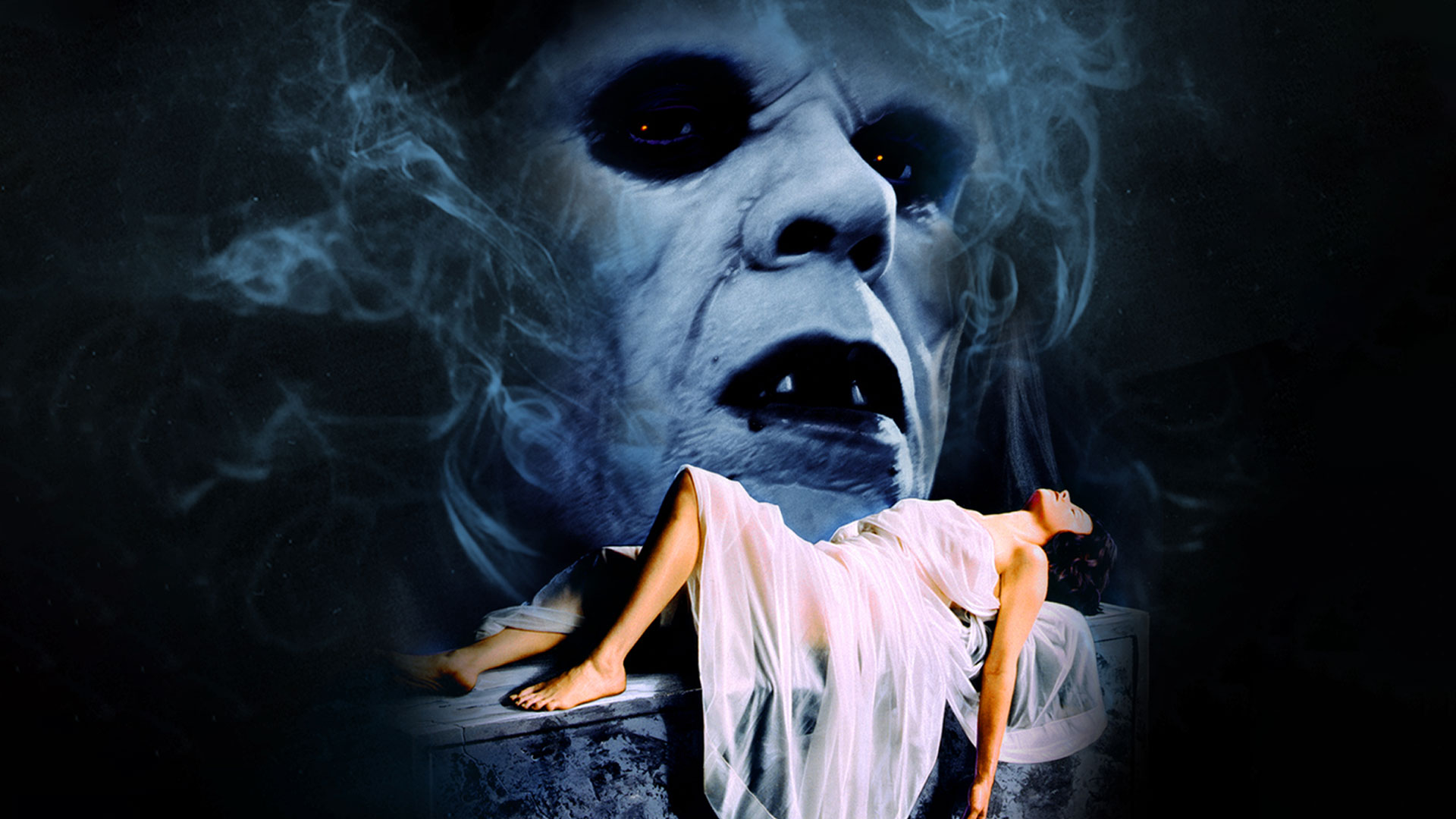
However, this isn’t always the case. Every once in a while, it seems like the cinema gods smile upon certain chaotic productions and gift moviegoers with complete franchises that feel like more than the sum of their hastily produced parts. Ted Nicolaou’s Bloodlust: Subspecies III is precisely one of these miraculous pictures, with the raw talents of the artists involved (as well as the continued support from Romania) turning the feature into an effective conclusion for a series that kind of made things up as the filmmakers went along.
That’s why I’d like to invite my fellow readers to join me on this third part of our journey through the Subspecies franchise as we look into Bloodlust and talk about how it remains a surprisingly satisfying finale to the original trilogy.
A Trilogy Planned on the Fly

Released only a year after Bloodstone found plenty of success in rental stores and mail-in VHS catalogues worldwide, 1994’s Bloodlust was produced at the same time as its predecessor in (mostly) the same locations and with the same team. This means that the movie benefited from all the same upgrades as Bloodstone, with the crew now being more experienced with the ins and outs of surviving a low-budget Romanian production and the cast really settling into their characters.
At this point, everything from location scouting to the makeup process had been streamlined, with Wayne Toth and Norman Cabrera, the main duo behind special effects, even switching out time-consuming prosthetics for latex gloves in order to speed up Anders Hove’s monstrous transformation. The titular “subspecies” demons were also once again relegated to a mere cameo appearance due to the laborious puppetry required to bring them to life.
The only real hiccup came from the fact that actress Denice Duff had replaced the first film’s Michelle (Laura Mae Tate) and was immediately expected to portray the character as both an innocent victim in part II and as a secondary villain in part III. According to behind-the-scenes interviews, the hectic production schedule that blended two different movies meant that Duff would often find herself having to alternate between two incredibly different versions of Michelle during the same shooting day – though it’s obvious that she’s having more fun with Bloodlust’s more traditionally vampiric version of her character.
In the finished film, we pick things up immediately where the previous entry left off as Rebecca (Melanie Shatner) is forced to leave her vampire sister Michelle (Duff) behind in the dungeons of Castle Vladislav due to the rising sun. This allows Mummy (Pamela Gordon) to use Michelle’s blood to revive the vicious Radu (Hove) so that he may continue his quest for the coveted Bloodstone – a magical artifact that perpetually drips the Blood of Saints.
Meanwhile, the dreamy US embassy agent Mel (Kevin Blair) agrees to help Rebecca plan a rescue mission, though they’re unaware that Radu has become infatuated with Michelle during his attempts to guide her growing bloodlust. This all culminates in a climactic confrontation meant to tie up all of the series’ loose ends in one of Full Moon Pictures’ most ambitious productions.
The Evolution of Radu

Like its predecessor, Bloodlust: Subspecies III was also warmly received by fans who argued that the series was an even bigger success than Full Moon’s other major horror franchise, Puppet Master. This praise wasn’t unanimous, however, as 1994 had seen the rise of a more modern breed of sexy vampire popularized by Anne Rice, with old-school Nosferatu like Radu being viewed as obsolete when compared to the likes of Lestat and Gary Oldman’s take on Dracula.
In a way, one might argue that Nicolaou’s film is something of a swan song for the classic vampire story, as Bloodlust combines all of the traditional elements we tend to associate with these tales into a single tragic yarn that ties a neat little bow on Radu’s story as well as the old-fashioned monster movies that he represents. The finale remains shocking despite the fact that this is the third time we see Radu get brutally killed onscreen, with the brief tease that he may one day return feeling more like a nod towards the nature of evil rather than sequel bait.
The film dabbles a bit in gothic romance and even explores the inherent power fantasy behind transforming into an immortal creature of the night, but the filmmakers never lose sight of Radu as a demonic force even when he’s willing to betray his beloved Mummy for Michelle’s sake. In fact, his twisted “love” for his fledgling makes him even creepier as we get the feeling that his passion comes from a dark and disturbing place.
Anders Hove is at his absolute best in this film, with the effects department boosting his moments of what the younger generation would call “aura farming” whenever Radu emerges from shadows like a 90s version of Count Orlok. There are even a couple of surprisingly effective jump-scares here, which is why I’d argue that Bloodlust cements Radu as one of the most memorable cinematic vampires of all time despite his humble origins.
Subspecies Saves Its Best For Last

Nicolaou and Vlad Panescu also saved the best for “last” (more on that in a bit) regarding the film’s visuals, with the cinematography and overall atmosphere of Bloodlust absolutely surpassing what we saw in the previous films. Everything feels appropriately climactic this time around (including the wonderful soundtrack that was co-composed alongside an authentic Romanian orchestra), and I appreciate how this is the fastest-paced entry in the trilogy since the film doesn’t need to waste time setting anything up.
Bloodlust still suffers from some of the same low-budget blemishes as its predecessors, but there’s so much creative passion here that no amount of wonky effects work or stilted dialogue can get in the way of appreciating the flick’s gothic grandeur. That’s why it’s not surprising that the movie’s definitive(-ish) ending would later be retconned as fans begged for more Radu.
Of course, the next entry in this series would be a different kind of vampiric endeavor altogether, with the filmmakers attempting to engage with the same trends that ultimately killed Radu and his antiquated kin. That, however, is a story for another time. For now, I’ll merely insist that Bloodlust: Subspecies III remains a highlight of Full Moon’s expansive catalogue and is definitely worth seeking out today.
You must be logged in to post a comment.