Quantcast
Connect with us

Interviews

Karl Urban Talks “Failure” of ‘Dredd’ and Possibility of ‘Dredd 2’

Published

on

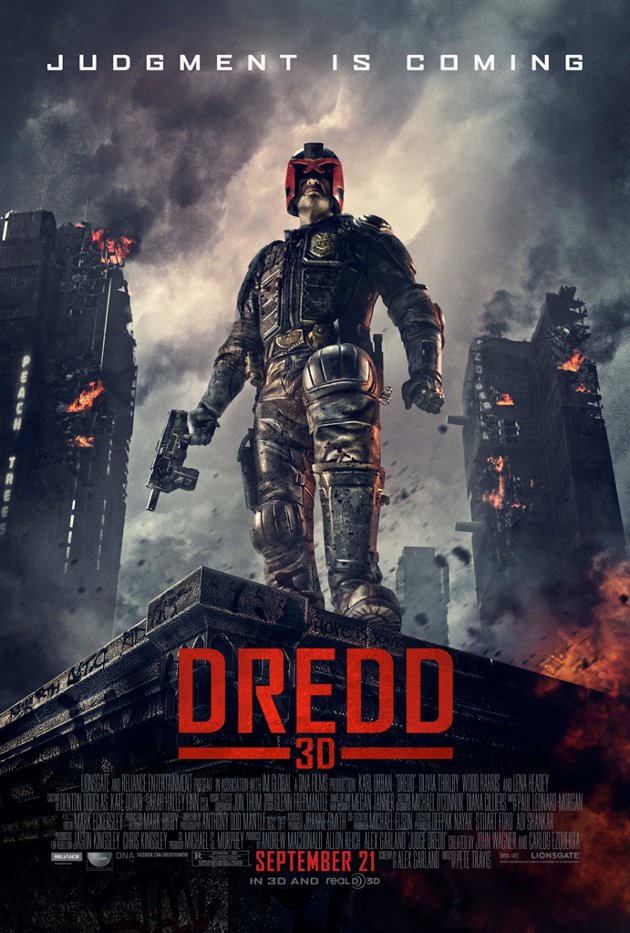
Alex Garland’s Dredd suffered a terrible blow upon its theatrical release. With a budget of $50 million, it only generated $13.5 million domestic and took in a grand total of $35 million worldwide, making it a flop. Well, on paper at least.

Karl Urban, who played the Judge himself, explains in a new interview with Den of Geek, “Alex Garland has gone on record to say that Dredd was a Failure. I disagree. The movie itself was not a failure, in fact it was a critical success, it just failed to perform at the box office. How does a movie with a 78% approval rating on Rotten Tomatoes fail? Through zero audience awareness. Nobody knew the movie was being released. ‘Dredd’ represents a failure in marketing, not filmmaking.

Urban continues to explain that the film, “…sold 750,000 units, in North America, the first week it went on sale on DVD“, which shows that there is significant interest. Furthermore, word-of-mouth probably helped a great deal as the movie really was a fantastic experience, at least in my opinion.

Originally planned as a trilogy, the box office failure of Dredd ensured that we wouldn’t be seeing a second, much less a third film any time soon. But that doesn’t mean that people should lose all hope.

But the success it has achieved in all post-theatrical mediums has definitely strengthened the argument in favour of a sequel. But it’s not an easy sell. I’m constantly blown away by the fan support and love for Dredd,” explains Urban. “I get stopped and asked about Dredd most days, I find it strangely ironic that to get recognised and associated with a character whose face is largely obscured behind a helmet.

There’ve been rumors swirling around that both Netflix and Amazon were in conversations for a Dredd original series. When asked about this possibility, Urban stated, “I’m amenable to being involved in any legitimate and worthy follow up to Dredd, whether it be another theatrical release or a Netflix/Amazon targeted production. I think the best thing that fans can do is to continue be vocal about their support. Organise more fan screenings of ‘Dredd’, that’s one of the key factors that helped ‘Blade Runner’ find its true audience.

No matter what the path is for more Dredd, Urban’s enthusiasm for the character and his view of the devoted fanbase is exactly why he was the perfect choice for the role.

I would be blessed and it would be a privilege to make another Dredd. I feel so incredibly grateful to the fans of this movie.

Dredd-poster

Managing editor/music guy/social media fella of Bloody-Disgusting

36 Comments

Interviews

‘Rubberhead’ Director Nick Taylor on FX Maverick Steve Johnson, Practical Effects, and Seven-Year Journey

Published

on

Rubberhead interview Nick Taylor
Steve Johnson in the documentary RUBBERHEAD: THE LIFE AND MONSTERS OF STEVE JOHNSON, an American Nightmare Studios release. Photo courtesy of American Nightmare Studios

Horror journalist, producer, and podcast host Nick Taylor moves into the director’s seat for his feature debut with illuminating documentary Rubberhead: The Life & Monsters of Steve Johnson.

It chronicles the wild life and career of SFX maverick Steve Johnson, based on the multi-volume book series Rubberhead: Sex, Drugs and Special FX, and those familiar likely already know Rubberhead isn’t your standard horror documentary.

Johnson is responsible for so many memorable movie monsters, having worked on Fright Night, Poltergeist II, An American Werewolf in London, A Nightmare on Elm Street 4: The Dream Master and Night of the Demons, to name a few. He’s also extremely candid in ways that feel atypical in this industry, open about his failures as much as his successes.

“It was a natural progression for sure,” Nick Taylor tells Bloody Disgusting of his transition into filmmaking ahead of Rubberhead‘s world premiere next week at the Fantasia Film Festival on July 23. “I think with my podcast, I got adept at interviewing people and pulling creative lessons out of them, which was the point of my podcast. I wanted this movie to be sort of a creativity pill for artists where if they’re starting a project or feel creatively stuck, they could watch this movie and be inspired and get actual practical creative lessons.”

Taylor’s background in PR and marketing also organically led him down this path.

He charts the course from book promo to documentary director: “But also Bloody Disgusting had a lot to do with this movie because in the very beginning when I first met Steve, I was helping him promote his book and I said, ‘Hey, I got a marketing background and a journalism background. Let me help you promote this book. I’ll just pitch stories from your life to the media, and we’ll see what happens.’ And John Squires wrote an article about Steve making Slimer under the influence of tons and tons of cocaine, and that went fairly viral.”

“For a week, it was story time with Steve,” Taylor continues. “He would tell me a story from his life, and every story was about a major movie, a major director, lots of drugs and alcohol and insanity. I would write them up, and I think John published about three or four of them. So huge shout out to John Squires because that was really great. So yeah, there were definitely a lot of outgrowths of my journalism background that definitely contributed to this movie.”

Rubberhead condenses the multi-book series into a cohesive feature film with a breezy runtime, sparking the obvious question as to how Taylor approached condensing Johnson’s life down to an under 2-hour documentary film.

That was one of the more difficult parts of all of this, because we had enough for a series or an epically long six-hour fan documentary,” he answers. “But from day one, I did not want to make a fan documentary. I love them. They’re a lot of fun, but I did want the movie to stand on its own two feet as a character-driven portrait of an artist and a time period and a technology, that being practical effects. I did want to be objective. I didn’t want to make this too long. I wanted to make it re-watchable. So I think we just really had to focus on what the narratives were that we wanted to tell. So there were some basically almost cliché archetypical mythic narratives present in Steve’s life. We could have made this way longer, but we wanted to keep it short. But luckily that’s why you have special features.”

Rubberhead trailer

Johnson quickly proves to be an engaging subject thanks to his self-effacing wit and frank self-reflections; expect no shortage of stories about how drugs factored into the height of his career or the failures it wrought. 

That rare quality was an asset for Rubberhead, Taylor confirms. “He does not shy away from anything about the drugs, the addiction, the bridges burned, the mistakes made, the lessons learned. He just is honest about all of it. He’s had a lot of time for reflection, and he’s done a lot of reflection, so he doesn’t shy away from any of it, which is huge because it’s very refreshing. I don’t think a lot of people are that way, at least in this industry from what I can see. So I think it was hugely beneficial. We wanted to lean into that, and we wanted to make this sort of a gonzo Hunter S. Thompson sort of wild tale through Steve’s overall life.

Condensing his life into this doc was a slow and steady process for Taylor, too. “It’s been almost seven years. It’s been a labor of love. We’ve been as indie as it gets. We would shoot what we could when we could, and then we would edit when we could. Then after a while it all came together.”

In a way, making Rubberhead brings Taylor’s horror fandom full circle. It turns out that the very film that sparked his interest in the genre and practical effects also comes with an amusing Steve Johnson anecdote.

Taylor explains, “My gateway for sure was Beetlejuice. I saw that at a very young age; I think I was four or five. I felt somebody had shown me, my soul. I get a little emotional thinking about it. There was something about that movie that felt so strange and unusual, but also felt so familiar. It was spooky, but it was fun, and it was lighthearted, and it had humor, but it also had this macabre celebration to it that I just really got into as a kid. I felt somebody had shown me my own soul. And funny story, Steve got fired from Beetlejuice because Tim Burton gave him his hand-drawn designs and Steve’s like, ‘Oh my God, these look like kids did them. This is not what you want. I know what you want. I’m going to redesign these for you.’ And Tim Burton was like, ‘Yeah, no, you’re not.’ So yeah, funny story.”

Continue Reading