


Film festivals are a hectic time for both the critics covering them and the readers reading about them. It can be alienating for readers to read a non-stop barrage of reviews for films that they themselves are unable to see and may not be able to see for months. It can also be easy to lose track of these films in the months following a festival’s end. So rather than have you track down all of the different reviews for these films, we’ve put them all in one handy article for you to bookmark. The following 10 films were all of the horror films present at the SXSW Film Festival this year, and they have been ranked from worst to best.
The Worst
10. Blood Fest
It’s a shame that the meta horror comedy Blood Fest doesn’t work nearly as well as it should because the premise is so great. In the film, teenage Dax (Robbie Kay) sneak into Blood Fest, a horror lover’s wet dream of an event in which several acres of land are divided into sub-genres for guests to traverse like a haunted house, with his friends. Once there, the gates are locked and electrified as the emcee (the film’s writer/director, Owen Egerton) announces that the guests will all be murdered by Blood Fest’s costumed employees by sunrise.
From my review:
“Unfortunately, nothing about Blood Fest is witty. You can practically feel the film winking at you every time a character utters a one-liner or makes a comment about the rules of horror. Watching it, you imagine Egerton and Co. patting themselves on the backs after every take…There is a passion behind Blood Fest that is somewhat endearing, and you can’t help but admire Egerton for his efforts. If only the movie wasn’t a complete failure at what it tries to do: be fun. “

Blood Fest will be released on Rooster Teeth. No release date has been set.
9. The Ranger
How do you make a slasher movie about a psychotic park ranger killing a bunch of punks boring? Look no further than The Ranger, which manages to do exactly that.
From my review:
“The Ranger is ultimately a missed opportunity for the punk horror sub-genre. It may seem like I’m criticizing it for not being what I wanted it to be, but I would be okay with it being something different if it was good. What could have either been a ridiculously fun time or a suspense-filled slasher is instead reduced to a boring slog of a film. Filled with obnoxious characters and an unmemorable villain, there isn’t much to recommend about The Ranger. Fans of ’80s slashers might want to check it out if it gets distribution, but all others need not apply.”
I may not have liked The Ranger very much, but our own Justin Yandell offered up a more positive take on the film, writing:
“The Ranger isn’t going to be for everyone. But it’s not trying to be. At all. It’s an unapologetic movie fully confident in its own identity and central themes of self-acceptance and empowerment. This probably isn’t the correct nomenclature but, in that way, The Ranger is one of the most punk horror movies that has ever punked. It’s like a hot pink mohawk – if you’re not into it, it’s not meant for you anyway.”

The Ranger is currently seeking distribution. No release date has been set.
The Good
8. Upgrade
Upgrade is more of a sci-fi thriller than a straightforward horror film, but the fact that it is written and directed by Saw and Insidious scribe Leigh Whannell immediately makes it eligible for coverage. In this highly entertaining combination of Her and The Stepford Wives, a tetraplegic named Grey Trace (Logan Marshall-Green) is offered an experimental paralysis cure in the form of an implanted computer chip called STEM. Grey soon finds that the chip has a voice and a mind of its own.
From Meredith Border’s review:
“Upgrade is more fun to watch than a lot of low-budget sci-fi movies we see in festival or VOD settings. It’s really visually interesting, with warm and colorful tech replacing the sterile blues and greys typical of films like this. Upgrade looks more expensive than it almost definitely is, and that’s to Whannell’s credit. He does a lot with a little and crafts a really cool look at the near future. It’s a good-natured film that will never bore you, but don’t enter into it thinking you’re about to find a thoughtful, mature treatise on the dangers of over-reliance on technology. Upgrade is not that movie – even though it might think it is.”
I actually liked Upgrade more than Meredith did (it’s a 4/5 for me), but to each their own!

Blumhouse Tilt will release Upgrade on June 1, 2018.

7. What Keeps You Alive
Colin Minihan’s (Grave Encounters, It Stains the Sand Red) next feature is a tense and sometimes humorous survival horror film about a couple (Jigsaw‘s Hannah Emily Anderson and Brittany Allen) who learn some harsh truths about each other during a vacation to a remote cabin in the woods.
From my review:
“What Keeps You Alive is a solid thriller that works more often than it doesn’t thanks to the performances of Anderson and Allen. Those, combined with Minihan’s skilled direction, make for one of the better survival horror films to come out recently. Just don’t watch it with your spouse as it may plant a few seeds of doubt about who they really are.”

What Keeps You Alive is currently seeking distribution. No release date has been set.

6. Wildling
Word of advice: don’t watch the trailer for Wildling before you see it as it pretty much gives away the big reveal. Just wait a few weeks for IFC Midnight to release it, because it’s best watched knowing as little as possible.
From my review:
“Wildling is a solid debut feature for Böhm and features a magnetic performance from Bel Powley as well as some excellent creature and gore effects. The film loses its way a bit towards the end, but its heart is in the right place, making for a rather endearing viewing experience. If anything, the film leave you with a strong desire to see Böhm’s next film, whatever that may be.”
IFC Midnight will release Wildling in theaters and VOD on April 13, 2018.
The Best
5. Unfriended: Dark Web
Viewers who found the characters in the first Unfriended to be too insufferable will want to give its sequel Unfriended: Dark Web a chance, as the characters are much more likable this time around. In the film, a 20-something (Colin Woodell, Unsane) finds a cache of hidden files on his new laptop and is thrust into the deep waters of the dark web. Just like the first Unfriended, this thriller unravels in real-time, entirely on a computer screen.
From my review:
“Unfriended: Dark Web manages to simultaneously address and fix a lot of the problems that Unfriended had while still managing to have some problems of its own. Flaws aside, this is a sequel that is better than anyone could have hoped for and practically demands to be seen with a crowd. This isn’t high art, but it is a clever little sequel that aims to do more than just duplicate the original.”

Unfriended: Dark Web will be distributed by Universal Pictures. No release date has been set.

4. Ghost Stories
Jeremy Dyson and Andy Nyman adapt their stage play of the same name with Ghost Stories, a horror anthology that centers on Professor Phillip Goodman, who covers three incidents of supernatural ghost sightings. These include a night watchman in an old factory, a teenage driver whose car breaks down and a businessman who is awaiting the birth of his child
From Meredith Border’s review:
“Ultimately, Ghost Stories examines what’s behind our fear, the ways that our history and emotional makeup condition us to be afraid – and what’s behind our cynicism, our fierce determination to believe that the world is black and white and mundane. There are some serious jump-scares in here, but none of them feel cheap, despite the fact that “cheapness” is sort of the defining characteristic of a jump-scare. Instead, Ghost Stories is playing with our expectations and instincts, revealing a little more of what’s behind its clever curtain with every fright.”
IFC Midnight will release Ghost Stories in theaters and VOD on April 20, 2018.
3. Profile
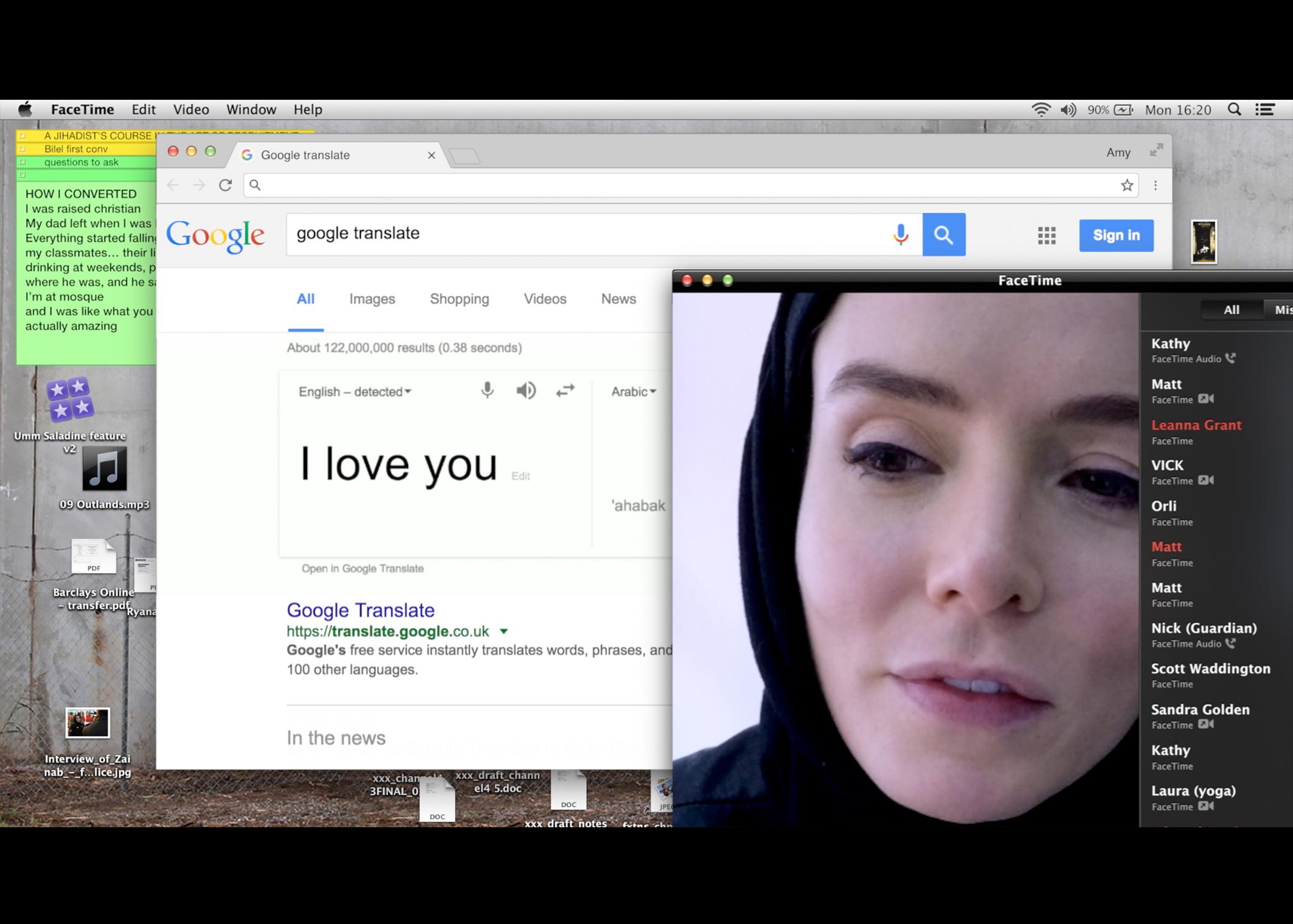
In Timur Bekmambetov’s (Night Watch, Abraham Lincoln: Vampire Hunter) Profile, freelance journalist Amy Whittaker creates a fake Facebook profile of a Muslim convert in order toto investigate the recruitment techniques used by ISIS to lure women into Syria as Jihadi brides. When an ISIS recruiter contacts her online character, Amy comes across an opportunity to experience the process first hand.
From Ari Drew’s review:
“Profile taps into very real fears tied up in technology, terrorism, and the unknown in novel ways. Moreover, Bekmambetov’s ability to elicit nail-biting tension simply via alerts, keystrokes, and clicks while simultaneously maintaining an engaging, character-centric story on a computer screen makes Profile especially noteworthy for a film of its ilk. Ultimately, Profile is proof that the truth can indeed be far more terrifying than the fiction we create.”
Profile is currently seeking distribution. No release date has been set.
2. A Quiet Place
John Krasinski proves himself to be adept at directing a horror film with A Quiet Place, a mostly silent film that will have viewers jumping out of their seats (or at least that’s what happened at the screening at SXSW). The film follows a family fighting to survive in a future where blind creatures hunt using sound.
From Ari Drew’s review:
“While audiences may be drawn in by the promise of monster-filled mayhem–which A Quiet Place no doubt delivers–many are sure to be pleasantly surprised by the genuine emotional beats the film hits amidst the scares. Ultimately, A Quiet Place succeeds because it transcends its core premise of a family struggling to simply survive, emerging instead as an equally engaging story of a family working every day to salvage meaning and hope in one another in a world where such concepts are all but lost.”
Paramount Pictures will release A Quiet Place in theaters nationwide on April 6, 2018.
1. Hereditary
What more can be said about Ari Aster’s debut feature Hereditary that hasn’t already been said? There’s no doubt about it: it was the best horror film screened at SXSW this year. Rather than hype the film up even more than it already has been, I’ll just leave you with this tidbit from my review:
“I can’t get the damn thing out of my head. Images from the film frequently pop up in my mind. I can’t stop hearing one particular sound effect from the final act (you’ll know it when you hear it). I’m seeing things in the shadows. I didn’t think the film had scared me, but I was very, very wrong. Hereditary will stick with you long after you’ve left the theater. You will want to talk about it. You will want to see it again (I most certainly do). It is a film that will no doubt reward the viewer on repeat viewings, that is if you can stomach it.”

A24 will release Hereditary in theaters nationwide on June 8, 2018.


