Reviews
[Review] ‘BloodbornePSX’ Shows the Cosmic Horror Classic in a Whole New Light

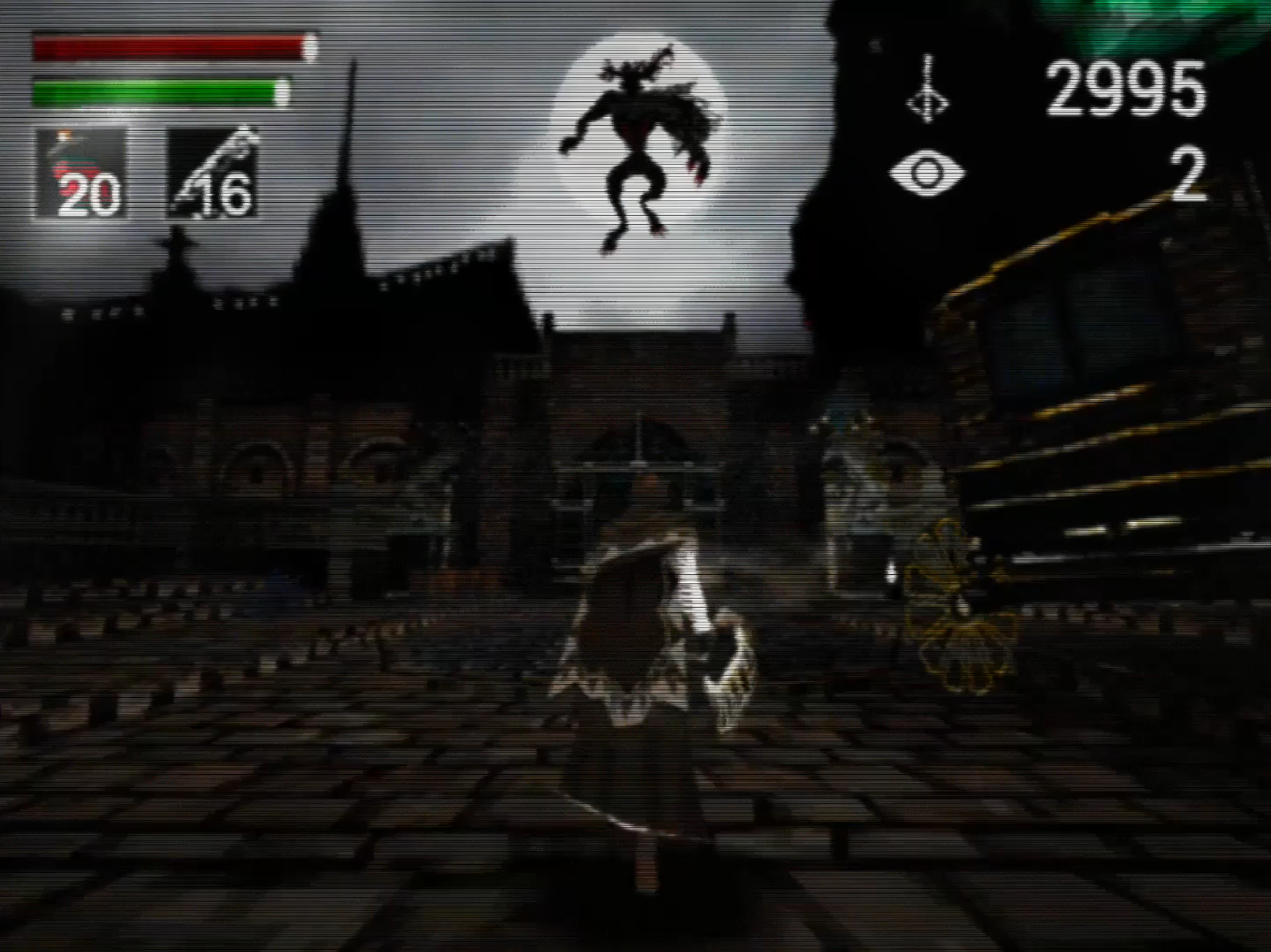
In our BloodbornePSX review, Bloody Disgusting takes a trip back to Central Yharnam for a demake of From Software’s Cosmic Horror classic.
People have been begging for Sony to finally bring Bloodborne over to PC, and thanks to developer Lilith Walther we’re one step closer. BloodbornePSX manages to transform the PS4 classic into a game reminiscent of a game right out of 1997. It’s a clear labor of love that manages to hold onto the core of what made Bloodborne great in a completely different style.
Right off the bat, the game hits you with nostalgia by opening with that iconic PS1 logo, complete with that lovely startup sound. Not only do the chunky character models and muddy textures scream PS1, but the controls have also been “updated,” for lack of a better term, to be able to work on an older controller. You activate the target lock with the X button (or A if you’re using an Xbox controller like I was), move with the D-pad, and turn the camera with the back shoulder buttons. There are definitely moments where I reflexively tried using the analog sticks, but the remapping helps sell the illusion that this could have existed in the late 90s. You even have to go into the redesigned old-school menu to manually transform your trick weapons, which is clunky in all the right ways.

The new visual style isn’t just for nostalgia either. Having the less distinct visuals gives everything a bit more of an uncanny nature, letting your brain fill in all the details. This works especially well for a world that’s so Lovecraft-inspired, replicating the feeling of trying to gaze on something that your mind cannot fully comprehend. Despite having less detail, enemies are still readable enough that you always know what you’re up against, a key element for a Soulslike. Even the lower draw distance gives Yharnam a more oppressive and dark atmosphere.
Despite the changes to the controls, it still feels great to play. I was easily able to fall back into my old muscle memory, tearing through hordes of enemies as I made my way through the streets of Yharnam. It’s not as tight as the original, but it’s still easy to get quickly killed if you’re not paying enough attention. Even the boss fights feel appropriately exciting, giving me the same palm-sweating tension that I get from a full-sized soulslike. By keeping the scale small, Walther was able to polish this demake to an incredible level of quality.
BloodbornePSX isn’t a recreation of the full game, which would be an unfathomable undertaking to be done in the 13-month development cycle of this project, instead focusing on just Central Yharnam, including the Cleric Beast and Father Gascoigne boss fights. Interestingly, the recreation isn’t one-to-one, as Walther sprinkles in plenty of surprises throughout the levels to really make it her own. As someone who’s put over 200 hours into the original Bloodborne, it was nice to revisit the game in a new way that was able to surprise me. One moment that remixes the first appearance of the troll was particularly inspired. Even with these changes, it still retained the authenticity of the Bloodborne experience through a new lens.

Lots of other small changes help it forge its own identity as well. The insight mechanic is now used to gate areas in the Hunter’s Dream, slowly unlocking it as you progress through the game. Loading screens break up areas of the level, giving the player a way to escape from hordes of enemies and gain a small moment of respite. You’re also given a large amount of control over the PS1 style effects for the game. By default, you can have a more authentic 20 frames per second, or you can unlock it and let the game run as fast as it can.
So many demakes have a hard time getting out of the shadow of the original and being anything more than just a fun little gimmick. Instead of just being something that you load up to show your friends for novelty’s sake, BloodbornePSX is something I can find myself playing for hours on end, exploring one of my favorite worlds with fresh eyes. If you’re itching to get your hands on Elden Ring later this month, head over to the itch.io page and pick it up to help tide you over, as this is a quality Soulslike experience in its own right.
BloodbornePSX review code provided by the author.
BloodbornePSX is available now on PC via itch.io.




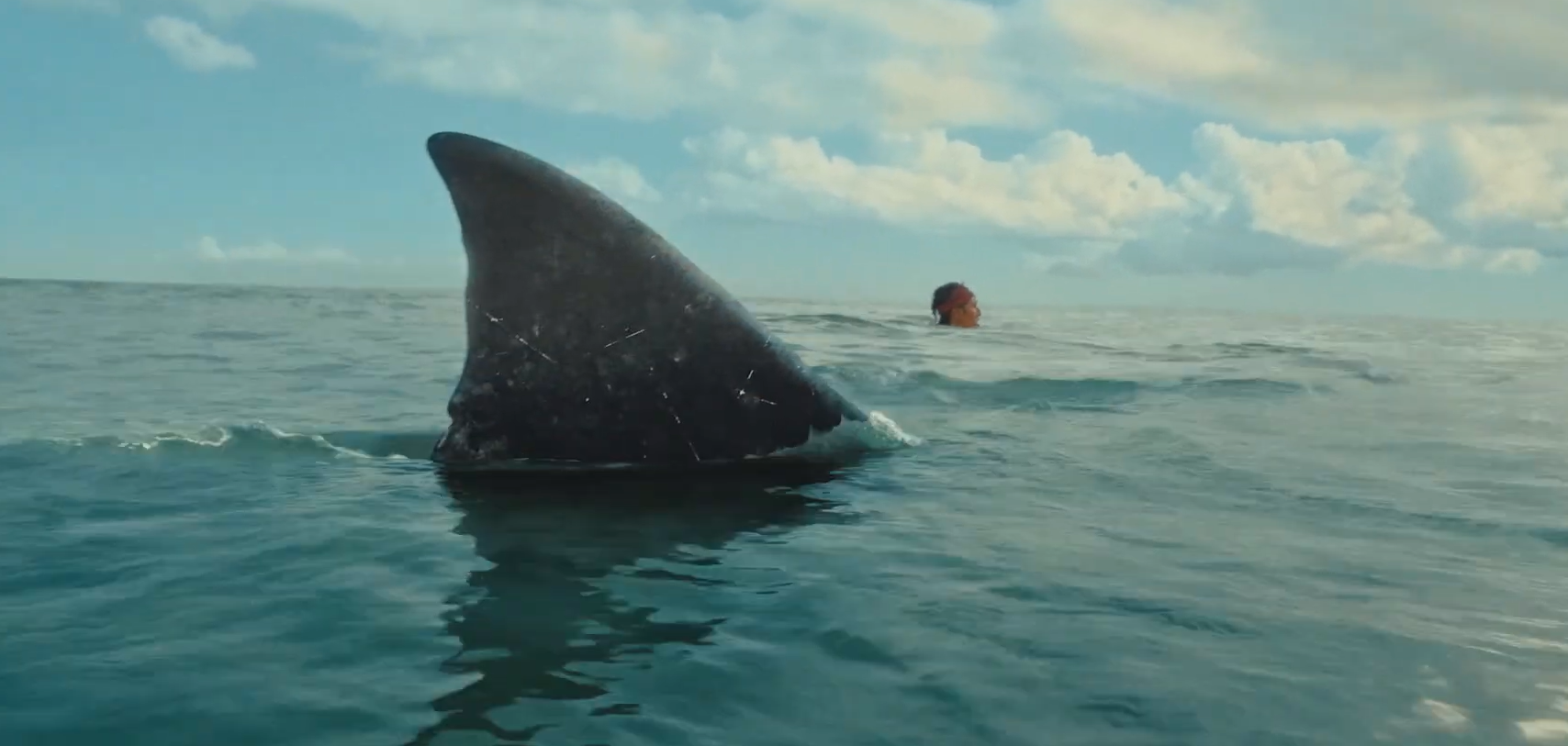
It’s a day of the month ending in Y, and that means it’s time for another killer shark film. Why? Because they’re inexpensive to make, play into an easy fear, and keep finding audiences willing to give them a spin. The Bay is the latest entry in the shark attack subgenre, and while it’s noticeably better than last month’s Chum, it still struggles to barely stay afloat.
Emma (Francesca Eastwood) and Lani (Dani Oliveros) are best friends who’ve traveled to Thailand for a destination wedding, and a chance encounter at the buffet table leads to an unexpected adventure. Mandal (Alexander Wraith) is a friendly, knowledgeable transplant who connects with nature and makes a living by offering boat tours through the area’s scenic waterways. The trips culminate with the opportunity for tourists to witness a shark feeding with local tiger sharks. The tourists aren’t meant to be the food, obviously, but sometimes accidents happen.
The Bay checks off most of the subgenre’s expected beats – an attractive location, an iffy ensemble of characters, a series of poor choices – but it does a few things differently along the way. For one thing, while we see plenty of sharks in the build-up, the first attack doesn’t happen until past the film’s midpoint. Writer/director Phil Volken fills the time leading up to that attack with engaging enough character beats, some genuine suspense, and an abundance of dialogue about how sharks aren’t typically a threat to people – or threats like people. “Sharks hunt,” says Mandal, “humans kill.”
It’s a bit of foreshadowing, perhaps, but it’s also the film’s presiding theme. Sharks don’t want to hurt or kill humans, but “mistakes happen.” Mandal offers up numerous eco-friendly spiels about the role sharks play in the environment, how overhunting could lead to disaster, and how humans are the ones invading their territory. “Don’t act like prey,” and you won’t be bitten, eaten, digested, and shat out by a shark. Pretty simple, if you think about it.

Trouble starts when they toss a chunk of meat into the water attached to a chain and a large female tiger shark gets caught up in it. Mandal’s sidekick, a local man named Ruhan (Ta’imua), panics and starts stabbing at the thrashing creature. He has a history of being bitten by a shark and is clearly frightened, and as the situation worsens, he becomes a far more active threat to the others’ safety than the actual sharks. That character type is pretty common in these films, but it’s a curious choice to make the film’s sole indigenous member of the ensemble the morally weak link.
To be clear, Ta’imua is playing a local but isn’t actually Thai. He is, however, Hawaiian, and The Bay was filmed off Oahu, meaning he’s the only indigenous representation on both counts. The other three characters, all Americans, are brave and willing to risk their own safety for the group, leaving only Ruhan to put a face to the cruel, selfish humans mentioned earlier in the film. It’s certainly a choice!
His performance is somewhat stifled by the desire to make him seem menacing, but it’s passable. The others are equally okay as performers, but it’s only Oliveros’ Dani who stands apart as a spirited individual worthy of viewer fist pumps. Cinematographer Helge Gerull delivers some attractive landscape shots destined to make you consider a Hawaiian vacation, and composer Gad Emile Zeitune finds some effective aural backdrops for the film’s teasingly emotional moments.
Then there’s the sharks. A major drag on the subgenre these days is the use of cheap CG effects (including the abysmal use of A.I. in Chum), but The Bay sidesteps that problem for the most part. There are real sharks here, lots of them, but they appear to be solely present via stock footage edited into the film. Some CG is used here and there, too, with shots being comped together to tighten the proximity between humans and sharks. Most effective, arguably, are the practical effects used to create fins cutting through the water near the characters.

There’s a sense of grounded reality to the shark kills, and while they’re less showy, they’re weightier as a result. Wounded bodies drift away, and the moment where shark nibbles turn into ferocious feasting feels more inevitable and affecting than sudden or scary. The sole exception to the general quality of those kills is the film’s final shark encounter, which doubles down on the poor choices by pairing a silly CG beat with some poorly matched stock footage.
Pretty much every shark attack movie lives or dies on its presentation of the sharks themselves. There are exceptions, of course, with Steven Spielberg’s Jaws being chief among them – everything about that film, from the writing and acting to the directing and editing, helps make it a masterpiece despite the mechanical shark looking goofy as hell outside of the water – but The Bay isn’t Jaws. It’s not even Jaws: The Revenge. Its live sharks are mildly effective, though, and give it a subdued realism that will likely appeal to viewers averse to CG intrusions. Will that be enough to win them over, though?
“When you enter the ocean, you enter the food chain… and not necessarily at the top,” says an opening onscreen quote from Jacques Cousteau, and something similar could be said for shark attack movies in general. When you make one of these movies, you enter a well-trodden and densely populated subgenre… and you’re all but guaranteed to not be at or even near the top. The Bay is closer to the ocean floor than the water’s surface, and while that still puts it above the bulk of the genre, it’s probably not enough of a reason to step foot in these waters.
The Bay opens in theaters and on demand on July 17, 2026.


You must be logged in to post a comment.