Movies
Plague Town (V)
“To say that Plague Town is a film without flaws would overlook the idea that several viewers will likely find the film dull and flat until the killing starts. It’s a film that requires commitment and in many ways, a base love of late 60’s horror films, to fully appreciate.”

David Gregory must have the longest IMDB listing as a Director to ever be making his “directorial debut”. But, the genre Documentarian who has spent most of the decade giving us behind the scenes glimpses into a multitude of Euro-horror and grindhouse films— through his work with Blue Underground and his own label Dark Sky Films—has finally taken the opportunity to deliver a piece of horror fiction to sit along side those copies of The Texas Chainsaw Massacre and Kill Baby, Kill.
Plague Town appears outwardly to be a very traditionalist survivalist horror film, almost cut from the cloth of The Hills Have Eyes. It’s a tale about a dysfunctional family’s road trip through the English countryside that turns horribly wrong. The cast of characters lend instant dynamic drama to the situation based on their own internal conflicts. The father (David Lombard) has brought along his two daughters, the caustic and emotionally scarred Molly (Josslyn DeCrosta) and the brash and self-centered Jessica (Erica Rhodes). Jessica has her own tag-a-long in the form of a British boy toy by the name of Robin, who’s only goal it would seem is to get laid. The wedge driving the family’s tense relations even further apart is the inclusion of Dad’s girlfriend Annette (Lindsey Goranson) in their getaway plans. But, when the family misses the last bus home from a lazy afternoon picnic they’ll find out that their British holiday has just turned into a nightmare.
The film features most of the requisite staples of the backwoods subgenre that Gregory is mining. Locals who appear to be outwardly dangerous are always misunderstood and innocuous. The ones who offer help are those that should be feared. And, the least likely to kill will be the ones that inflict the most damage. It’s this premise that Gregory has built his film on.
Plague Town is a film about killer children. A town—featured in the opening credits prologue—that is suffering from a terrible curse—a curse of deformity and the infection of evil on all the children of the town. In Plague Town the children play with you…to death!
Movies about killer kids are hardly a new idea, but Gregory’s film is far more Who Can Kill a Child than Children of the Corn or Village of the Dammed—despite the glittering generalities of the plot points. It’s a nasty, 1970’s son of the great Euro-grindhouse-epics that Gregory has spend the bulk of his career chronicling. In fact, the film is so authentic to its roots that perhaps with the tweaking of a performance or two and the exclusion of a few anachronistic details, it would be hard pressed for most—if any—neophyte genre fans to tell that this film was shot in 2008. Pushed up next to films like The Living Dead at Manchester Morgue the styles are virtually indistinguishable.
Much of that cohesion in aesthetics is due to the fact that Gregory shot the production on film and cast unknown actors in the roles. The film—as noted before—has a prologue that takes place years earlier, establishing a back story that will play out much later. The family is introduced and then the film takes a leisurely stroll through the narrative until all hell breaks loose and the chase begins. In truth, Plague Town is a blueprint for virtually all of the minor genre productions that were begat between 1965 and 1975. What makes the film so impressive is that Gregory and his cast and crew managed to capture that vibe so absolutely, when—as it’s been fashionable in the past few years—so many other filmmakers have failed.
To say that Plague Town is a film without flaws would overlook the idea that several viewers will likely find the film dull and flat until the killing starts. It’s a film that requires commitment and in many ways, a base love of late 60’s horror films, to fully appreciate. If you’re looking for a visceral thrill ride of hacked off limbs and hillbilly hell, then this isn’t the film for you. It’s an exacting production, designed to creep you out and it features one character whose terrifying visage will, I promise, interrupt more than a few nights of pleasant dreams.
So, if you’re a fan of the kind of projects that David Gregory help unleash on the public though Dark Sky Films and his tenure at Blue Underground, than Plague Town should be right up your alley. For me, it’s a fascinating look at how a true student of the genre would go about making his very own genre film. If the high production values that Robert Rodriguez employed in his homage Planet Terror left you—like it did me—scratching their heads about big budget grindhouse movies—then you should defiantly take a trip to Plague Town and check out what a new classic horror film should look like.



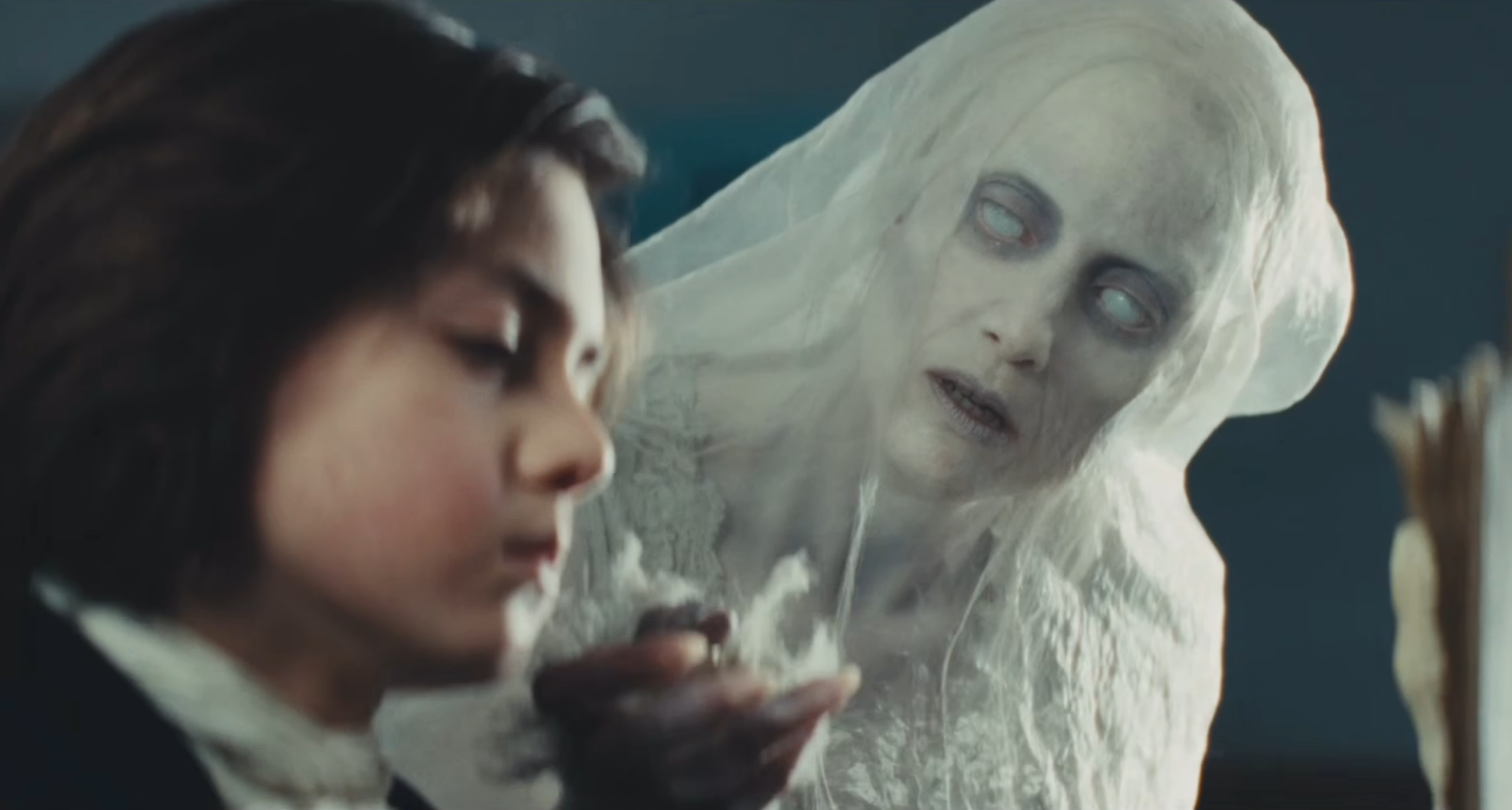
The trailer for Ti West’s upcoming adaptation of A Christmas Carol raised a lot of eyebrows when it dropped earlier this week. While plenty of folks initially dismissed Ebenezer as a derivative project meant to cash in on the recent wave of unnecessary prequels that expand the backstory of beloved characters (such as 2023’s Wonka), Charles Dickens’ original novel already made a point of exploring Ebenezer Scrooge’s origins in detail – meaning that this new film is likely just a particularly faithful adaptation of the source material under a different name.
Couple that with the fact that the movie is being helmed by a genuine horror auteur and I think it’s safe to say that the latest iteration of the first modern ghost story is in good hands.
That being said, one detail that immediately jumped out at me during the brief teaser (other than a blink-and-you’ll-miss-it nod to Johnny Depp’s iconic bedroom death scene from the original A Nightmare on Elm Street) is the fact that many of Ebenezer’s ghosts appear to have been directly lifted from the iconic John Leech illustrations that accompanied the first edition of Dickens’ novel.
Here are a couple of stills from the trailer compared to the original artwork:

The Ghost of Christmas Yet to Come in ‘Ebenezer’ and ‘A Christmas Carol’

The Phantoms in ‘A Christmas Carol’ and ‘Ebenezer’

Marley’s Ghost in ‘Ebenezer’ and ‘A Christmas Carol’
Mainly working with old-school wood and steel engravings that would later be transferred to print, Leech was instrumental in crafting the iconic look of history’s most influential phantoms – especially since Dickens is said to have been deeply involved with the creation of these so-called “comic illustrations.”
And since the novel is commonly said to have popularized spiritualism in Victorian England, much of the ghostly iconography that we still see in genre media to this very day (including some of Ti West’s previous films) can be traced back to the author’s partnership with Leech.
Ebenezer won’t be the first A Christmas Carol adaptation to borrow heavily from these designs, but I can appreciate how Ti West is incorporating an important part of horror history into his latest film.
Ebenezer will be available in theaters starting November 13.

You must be logged in to post a comment.