Movies
The Last Horror Film (V)
“Perhaps one more time world would have had the opportunity to see Joe Spinell slice up the silver screen. But, since that day never came, genre fans will have to settle with essentially, the last horror film, the great Joe Spinell ever made.”

Shot on location at the 1981 Cannes Film Festival, The Last Horror Film was originally designed as a free for all production to cash in on the success of 1980’s Bill Lustig film Maniac. By reuniting that film’s stars Joe Spinell and Caroline Munro, Munro’s husband, Judd Hamilton—who co-wrote the film, if you could call the improvisation that occurred here writing—hoped to see a big return on his investor’s cash. What he got instead was a ballooning budget—increasing from a reported $500,000 to an estimated $2,000,000—and a final production that despite a few festival screenings never saw an actual theatrical release (finally appearing on VHS in 1984).
The back story behind The Last Horror Film is one that is really more fascinating than the actual production, which—like so many other forgettable films of the era—is more or less a standard stalk and slash film. Spinell who spent most of his life as a minor character actor (He appeared in The Godfather I and II) was cast in Martin Scorcesse’s 1976 hit Taxi Driver (Spinell himself had been a New York cabbie). That film later inspired John Hinkley Jr. to attempt the assassination of Ronald Reagan, to impress actress Jodie Foster. Just one month after the assassination attempt of Reagan’s life, cameras rolled on The Last Horror Film. The inspiration is crystal clear.
Vinnie Durand is a New York City cab driver with a major obsession of horror film actress Jana Bates (Caroline Munro). Durand is convinced that Bates is the only performer that can star in his directorial debut The Loves of Dracula. Delusional, the ridicule of his friends, and, under constant debasement from his mother (played by Joe’s real-life mother Mary)—Vinnie heads to France to attend the annual Festival International du Film where he intends to shoot the production in a guerilla style and convince Bates to star in the film. But, someone is killing off all of Bates’ associates and Vinnie’s obsession is turning more and more bizarre as the boundaries between fiction and reality steadily begin to blur.
If the Last Horror Film had nothing else going for it, it’s would have production value that is off the chart. Like Brian DePalma’s 2002 Cannes-set film Femme Fatale, Director David Winter basically unleashed his cast and crew at the Festival, and the screen is littered with celebrity cameos (Isabelle Adjani, Cathy Lee Crosby, Karen Black & Marcello Mastroianni) and peppered with billboards promoting films as varied as Cannibal Holocaust, Excalibur, Polyester and the Oscar winning foreign film Mephisto. Jana Bates character is staying at the legendary Hotel Martinez and the action taking place of The Croisette is all the glitz and glamour that Cannes has to offer.
In terms of story, The Last Horror Film is as nightmare inducing and schizophrenic as Vinnie Durand’s tragic character. The film is so busy with the nightlife and celebrating the excesses of celebrity that occur during the festival, that it’s hard pressed to find any time for character development. All we get is that Bates is the queen of horror—apparently in an alternative universe where she could wind up winning best actress at the most prestigious film festival in the world for starring in a slasher film! Durand is totally and completely obsessed and may or may not be the killer that is cutting the throats of Bates’ friends. When Durand finally meets Bates (by climbing into the bathroom window of her hotel room, with a bottle of Moet in hand, we can see just exactly how little Spinell’s Maniac character has progressed. Everyone else in the film is exactly the kind of cardboard cut-out late 70’s disco dancing schmuck that you’d assume them to be. In many ways, the film’s dated nature almost feels fabricated and satirical—and it must have been quite a shock to audiences when the film was finally released in 1984, who, only 3 years after the events in the film took place, must have been quite embarrassed by the characterizations on display.
In the end, The Last Horror Film is really just a movie about discovering who the killer is. No different than a dozen or more Giallo’s that came before it. As the last film (of three) that Spinell and Munro made together, the production has a melancholy feel to it that the final moments make almost unintentionally bittersweet. The performances are varied all around. Spinell’s excessive scenery chewing is corny, Munro does little more than scream a lot, look far too tan to be healthy and sport some of the most terrifying highlights in her hair since Elsa Lanchester. But, some how, some way, it all managed to work inside the context of the production.
The Last Horror Film really marks the end of Joe Spinell’s short-lived career as the star of feature films—he’d go on to play dozens more supporting characters (and one final major role in 1988’s The Undertaker) before passing away unexpectedly in 1989 at the age of 52. When Spinell died, rumor has it that he was about to begin production on a sequel to Maniac (in fact he had shot a 10-miute short film titled Mr. Robbie—which is included on the new DVD release of The Last Horror Film, from Troma). Perhaps one more time world would have had the opportunity to see Joe Spinell slice up the silver screen. But, since that day never came, genre fans will have to settle with essentially, the last horror film, the great Joe Spinell ever made.


The home video market used to be a chaotic industry wedged neatly between theatrical releases and television productions. It was where indie filmmakers could experiment with and profit from low-budget bangers while big studios could also squeeze extra money out of beloved properties without necessarily investing in blockbuster sequels.
There were plenty of cinematic duds during this time, and you never really knew whether you had just picked up a legitimately fun low-budget endeavor or a quick cash-grab from the rental store, but I’d argue that the good outweighed the bad because these flicks were allowed to be weirder than their big-budget counterparts – especially where sequels were concerned.
In honor of these home video hidden gems, today I’d like to recommend five underrated direct-to-video horror sequels that are still worth tracking down!
For the purposes of this list, I’ll be defining direct-to-video productions as films that were exclusively released on video/DVD, so no limited theatrical releases or TV movies that later made it big on home video. That means avoiding popular recommendations like Curse of Chucky and Wrong Turn 2 in order to focus on less-discussed horror flicks.
That being said, don’t forget to comment below with your own favorite sequels if you think we missed a particularly thrilling one.
With that out of the way, onto the list!
5. Tremors 4: The Legend Begins (2004)

The success of Ron Underwood’s original Tremors was lightning in a bottle that can’t ever be replicated, so as much as I understand the love for the second film and its campy thrills, Tremors 4 remains my personal favorite sequel simply because it dares to do something different with the franchise.
Directed by series co-creator S.S. Wilson, The Legend Begins is a surprisingly effective prequel that tells the story of how the town of Perfection earned its name after a terrifying 1889 encounter with the graboids. This horror western may not live up to the original, but it doesn’t really have to, with the period aesthetic and fresh story making it one hell of a standalone adventure.
4. Children of the Corn III: Urban Harvest (1995)

There are those who argue that there are no good Children of the Corn films, but I think the series has something to offer for every kind of horror fan if you’re willing to deal with low budgets and strange creative decisions. In fact, I’m of the opinion that the initial trilogy of Children films only got better over time, with the third entry being the most entertaining despite having the least to do with Stephen King’s original story.
In this urban horror romp, we follow a pair of siblings who enter foster care after their abusive father is transformed into a scarecrow by He Who Walks Behind the Rows. What follows is an effects-heavy descent into madness as the kids bring their particular brand of religious fury to 90s Chicago – with deadly results.
If that’s not enough to convince you to give this flick a try, you should know that this is the only entry in the series that King himself has admitted to liking. Not only that, but it also marks Charlize Theron’s feature film debut.
3. Boogeyman 2 (2007)

Jeff Betancourt had his job cut out for him when he was first contacted to helm the sequel to 2005’s Boogeyman. Not only was the first film a critical bomb, but the sequel was set to be produced for a mere $4.5 million – less than a fourth of the budget of the original flick.
Yet, Jeff decided to use this direct-to-video sequel as an opportunity to improve on the generic aspects of the flick’s predecessor by making the monster more uncannily human and focusing more on the script than elaborate set pieces. The best part is that Boogeyman 2 isn’t limited by a PG-13 rating, meaning that the deaths are more interesting in spite of the lower budget.
2. Maniac Cop 2 (1990)

The original Maniac Cop is a legitimately entertaining slasher even if it can’t compete with some of the other great franchises from the 80s, but fans know that the direct-to-video sequel is way more fun to revisit despite its shoddy production value and rushed script.
In fact, this rental store hit features more elaborate death sequences while also exploring more of what it means for a community when a police officer goes rogue. Director William Lustig also looks back on this project fondly, claiming that he considers it his personal favorite film of his career and a “terrific B-movie”.
I couldn’t have said it better myself.
1. Bloodstone: Subspecies II (1993)

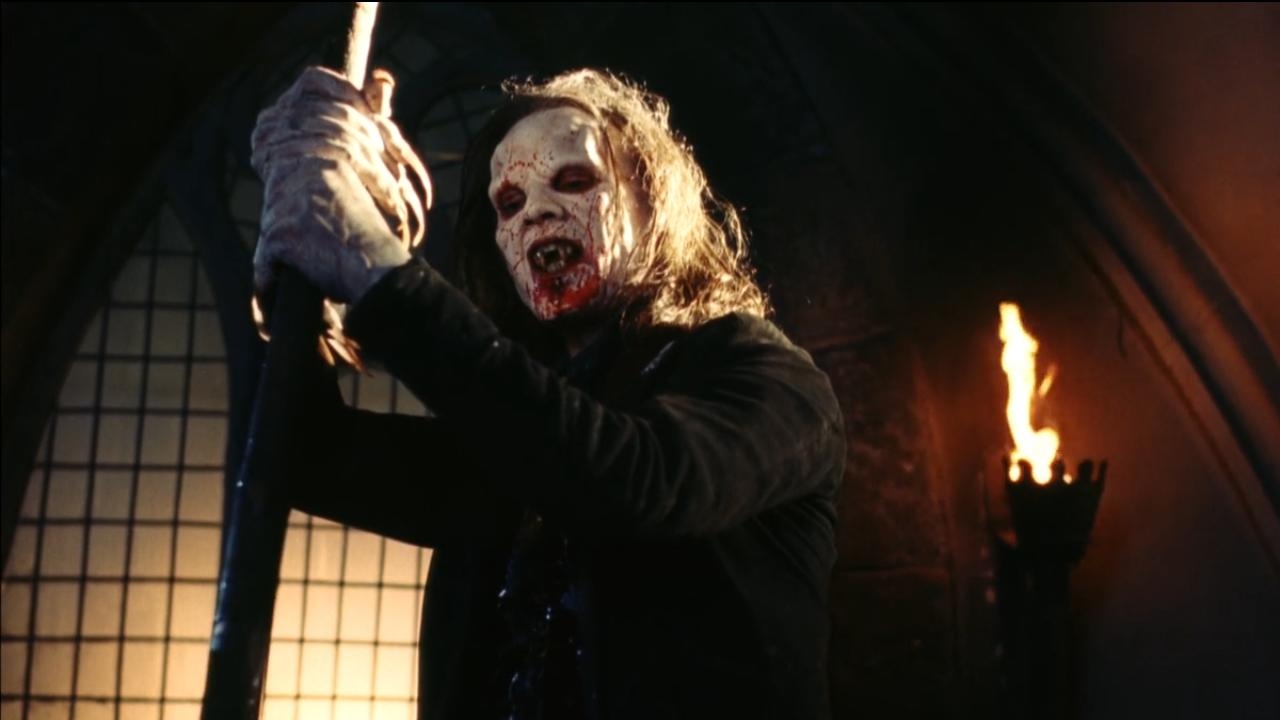
More of a middle part of a sprawling trilogy than a standalone horror romp, Ted Nicolaou’s Subspecies II is still the pinnacle of the auteur director’s vampire series and a great example of why it was often worth diving into the bargain bin in order to pick up a Full Moon Features VHS tape.
This fast-paced sequel takes place immediately after the events of the 1991 original, meaning that Subspecies II wastes no time in getting to the lovable practical effects that likely motivated you to purchase the flick in the first place. Nicolaou and Anders Hove (who plays Radu, the iconic vampire) are also much more sure of themselves in this sophomore effort, and that’s why I’d argue that it’s worth watching even if you’re not a fan of the first movie.
You must be logged in to post a comment.