Movies
Dark and Stormy Night (V)
“Similar in tone with Clue and Haunted Honeymoon, Dark And Stormy Night proves that Blamire is the master of parody films in this day and age. Like The Lost Skeleton Of Cadavra and its sequel, the film manages to be the perfect love letter to the genre; one that is both fun and funny.”

With the glut of ridiculous parody movies that have come out over the past decade, it’s amazing that Larry Blamire has been living on the edge of obscurity. Cutting his teeth as an actor in the Boston area during the 1980s, he quickly moved into writing and directing his own plays, many of which had sci-fi/horror elements – with a dash of dark humor thrown in for good measure. Moving to LA to work on an animated interactive adventure called The Wise-Eye Guys, Blamire soon after shifted his focus to feature film directing, starting with The Lost Skeleton Of Cadavra in 2001. Incorporating elements from his play Bride Of The Mutant’s Tomb, about an Ed Wood-like character making a schlocky sci-fi movie during the 1950s, Lost Skeleton was an expertly made parody of nuclear era sci-fi cult classics – and it was filmed in ‘Skeletorama,’ no less. Featuring the rare element atmosphereum, rock scientists, people being horribly mutilated and a psychic skeleton, the film has gone on to be quoted in my home since it premiered on my TV in 2004.
Attempting to recreate the magic of the skeleton, Blamire wrote and directed Trail Of The Screaming Forehead in 2005 – a film that has yet to appear on DVD, but went VOD in early 2009. Listening to the cries of fans, he began work on a sequel to The Lost Skeleton, filming it back-to-back with Dark And Stormy Night, a parody of the old dark house movies of the 20s and 30s, which are murder mysteries that take place in… um, old dark houses. Essentially a precursor of the slasher film, directors such as James Whale and William Castle have both tackled the genre – the same film even; Castle remade Whale’s The Old Dark House. Everything about the genre is overly obvious, so it’s easy to see why Blamire saw the appeal of lampooning these gems of yesteryear.
On a particularly dark and stormy night (of course), newspaper reporters, family members, and random passersby gather to hear the will of Sinas Cavinder. As the lawyer is about to read the addendum to the will, the lights go out and as one character aptly puts it, “I’d say from the position of the knife he’s been stabbed.” And so begin the macabre events of the evening.
There’s a lot about Dark And Stormy Night that really works. The comedy is innocent and uncrude, which makes it a perfect send-up of the source material. In particular, there’s a good bit involving a “You Will Be Next” note the killer leaves next to a corpse that’s reminiscent of Abbott and Costello’s famous “Who’s On First” sketch. While those with an appreciation for classic humor will greatly enjoy the film, those who strictly enjoy modern – i.e. banal – comedy will find themselves disappointed. Blamire and Co. do a stellar job of mimicking the wooden acting featured in these sorts of films, bringing me to the verge of tears more than once. What really impressed me more than anything else is that the amount of love for the source material is extremely apparent throughout, right down to the soft lighting used in Anthony Rickert-Epstein’s cinematography, the exaggerated period costuming, and the laughable miniatures used to establish the exteriors. This film was made by people who love the genre for people who love the genre.
While I appreciate Blamire’s sense of humor, he sometimes lets jokes run on a bit too much, bringing the film to a screeching halt along with the overabundance of characters. Old Dark House movies usually have a rather large cast, so it’s perfectly understandable why Dark And Stormy Night does too, but spending that much time with characters that don’t advance the plot and are merely there for one or two gags seems like a waste of time.
Similar in tone with Clue and Haunted Honeymoon, Dark And Stormy Night proves that Blamire is the master of parody films in this day and age. Like The Lost Skeleton Of Cadavra and its sequel, the film manages to be the perfect love letter to the genre; one that is both fun and funny. Filled with gorilla encounters, witty one liners and Black Dynamite-esque outtake gags, I’d be surprised if Dark And Stormy Night didn’t achieve minor cult classic status in the coming years.


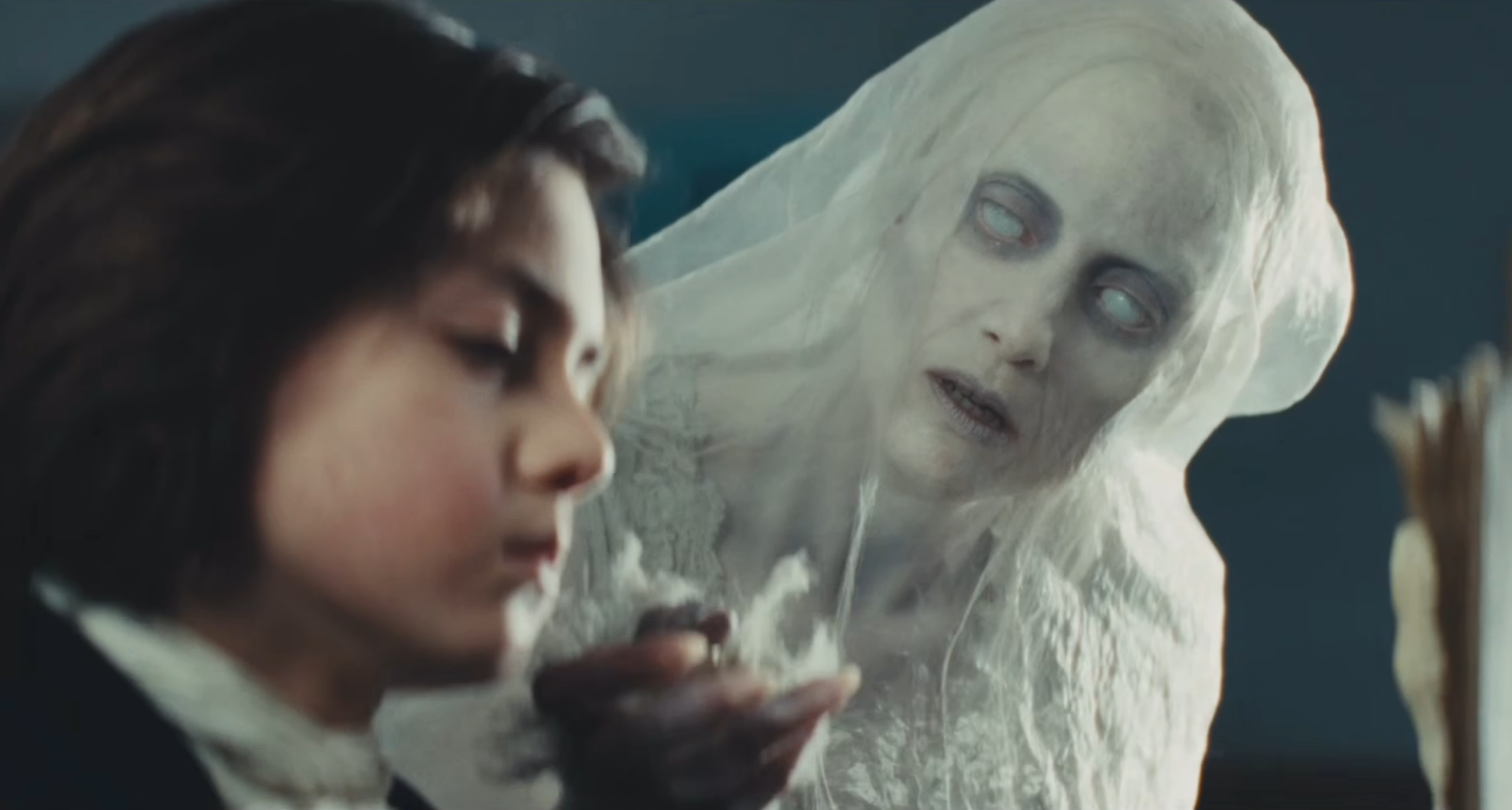
The trailer for Ti West’s upcoming adaptation of A Christmas Carol raised a lot of eyebrows when it dropped earlier this week. While plenty of folks initially dismissed Ebenezer as a derivative project meant to cash in on the recent wave of unnecessary prequels that expand the backstory of beloved characters (such as 2023’s Wonka), Charles Dickens’ original novel already made a point of exploring Ebenezer Scrooge’s origins in detail – meaning that this new film is likely just a particularly faithful adaptation of the source material under a different name.
Couple that with the fact that the movie is being helmed by a genuine horror auteur and I think it’s safe to say that the latest iteration of the first modern ghost story is in good hands.
That being said, one detail that immediately jumped out at me during the brief teaser (other than a blink-and-you’ll-miss-it nod to Johnny Depp’s iconic bedroom death scene from the original A Nightmare on Elm Street) is the fact that many of Ebenezer’s ghosts appear to have been directly lifted from the iconic John Leech illustrations that accompanied the first edition of Dickens’ novel.
Here are a couple of stills from the trailer compared to the original artwork:

The Ghost of Christmas Yet to Come in ‘Ebenezer’ and ‘A Christmas Carol’

The Phantoms in ‘A Christmas Carol’ and ‘Ebenezer’

Marley’s Ghost in ‘Ebenezer’ and ‘A Christmas Carol’
Mainly working with old-school wood and steel engravings that would later be transferred to print, Leech was instrumental in crafting the iconic look of history’s most influential phantoms – especially since Dickens is said to have been deeply involved with the creation of these so-called “comic illustrations.”
And since the novel is commonly said to have popularized spiritualism in Victorian England, much of the ghostly iconography that we still see in genre media to this very day (including some of Ti West’s previous films) can be traced back to the author’s partnership with Leech.
Ebenezer won’t be the first A Christmas Carol adaptation to borrow heavily from these designs, but I can appreciate how Ti West is incorporating an important part of horror history into his latest film.
Ebenezer will be available in theaters starting November 13.

You must be logged in to post a comment.