Movies
SXSW: New Raving ‘Drag Me to Hell’ Review!

While I was lucky enough to be one of the first audiences to see Sam Raimi’s big return to horror in Drag Me to Hell (read the review), both Tim Anderson and David Harley had a chance to check the film out this past weekend at the SXSW Film Festival in Austin, Texas. Anyone who has been snooping around the web would see that everyone is raving about Raimi’s film that takes on the curse of one Alison Lohman. Beyond the break you can now read David Harley’s thoughts on Universal’s latest horror pic hitting theaters this May. I think it’s safe to say this will be one of the year’s best.
(Note: The version I saw was a work in progress)
 The idea of the comeback is always great in theory, but rarely does it ever deliver on what it promises. George Romero, dubbed the “King of the Zombies,” delivered the lackluster Land of the Dead and the hugely disappointing Diary of the Dead – which was supposed to be his true triumphant return, considering the low-budget nature of the project – after leaving fans waiting 20 years for another zombie film. John Carpenter, who consistently made great films from the late 70s to the early 90s, has only managed to crank out one kinda fun film since In the Mouth of Madness, his love letter to H.P. Lovecraft. Dario Argento, the Italian maestro who’s influenced countless directors worldwide, finally completed his Three Mothers trilogy in 2007 and while it was the bloodiest film of his career, it was definitely one of his dumbest. In other words, as horror fans, we’re constantly let down by once great directors who have just flat-out lost their golden touch.
Now, Sam Raimi hasn’t exactly fallen from grace as much as he’s been making our spider senses tingle rather than our spines. He’s been wetting his beak in other genres, from crime capers to sports dramas, but aside from The Gift, a southern gothic tale that is more of a supernatural mystery than anything really, he hasn’t made any thing that could be considered a horror film since Evil Dead 2. But, watching everything he’s made in-between, you can see his proclivity towards horror. Doc Ock’s surgery room scene in Spider-Man 2 should instantly remind everyone of the Evil Dead series: the action is fast, the cameras are invasive and the atmosphere is ominous. After Spider-Man 3, I think everyone was pleasantly surprised that he wanted to return to the genre that permanently engraved him into the hearts and minds of film geeks everywhere. Drag Me To Hell is THE horror comeback of the decade. For a director who’s been out of the horror business for so long, it’s incredible to see him jump right back into the game with that much gusto and knock it out of the ballpark. It’s almost like he never left.
Alison Lohman plays Christine, a loan officer on the verge of a promotion. In order to prove to her boss that she can make “the tough decisions” and deserves the assistant manager position, she decides to deny the extension on Mrs. Ganush’s (Lorna Raver) home. Feeling like she was shamed for groveling and still not getting anywhere, Mrs. Ganush exacts revenge on Christine and curses her with the mother of all curses, which causes a goat-like demon called the Lamia to follow her around for 3 days before dragging her to hell. The plot doesn’t attempt to be complex or metaphorical; it’s essentially Thinner meets Poltergeist and at a brisk 96 minutes, it has about 15 minutes of setup, 81 minutes of non-stop horror-comedy insanity, and absolutely no filler whatsoever.
Right from the beginning, you know Drag Me To Hell is a Raimi film. The opening sequence has a small boy being taken to Shaun San Dena (Adriana Barraza), a powerful medium who attempts to de-curse him. Then, BAM, people are being tossed around like ragdolls by an unseen force and Peter Deming’s cinematography goes to work, full force. Deming hasn’t worked with Raimi since Evil Dead 2 and considering that the nature of many of the scenes in Drag closely mirror those from the classic ’87 film, this was the perfect project for them to collaborate on again.
The scene where Christine is attacked by Mrs. Ganush in her car is a great example of how well Raimi can utilize horror and comedy in the same scene. Staplers are slammed into foreheads, rulers are crammed down throats, faces are gummed – as opposed to bitten – and the use of shadows manages to cloak a hideous face just long enough to elicit a jump, maybe even a scream, from those watching. These are ideas that seem ordinary on paper but when you have someone who knows what they’re doing in the director’s chair, even the simplest things turn into something special with the right visual interpretation. This scene is the equivalent of Ash warding off his possessed decapitated hand in Evil Dead 2 – which, in turn, means that it’s influenced by Crimewave since that’s where Raimi hit his stride with slapstick humor – or fighting himself and skeleton hands in Army Of Darkness. Drag even goes full-on Looney Tunes in one scene involving an anvil. The pure horror moments are also exceptionally executed. The séance scene, in particular, is pure Evil Dead, with the Lamia possessing different bodies and turning them into cackling deadites.
There’s a lot of really cool influences on display in Drag, the most interesting being a scene where Christine does a little bit of digging in a cemetery. Upon opening up a coffin, heavy rain begins to fill the grave while she tries to crawl her way out of it and push off the floating dead body. It’s a well-executed modernization of the scene in Poltergeist where JoBeth Williams is stuck in her emptied, muddied pool. The film prominently displays its Asian influence by having this powerful malevolent force that keeps on coming no matter what measures are taken against it, which makes sense considering the work Raimi has done with the Pang Brothers and The Grudge series through his Ghosthouse banner. The film culminates in a Twilight Zone inspired third act that is one of the ballsiest things I’ve seen a major studio allow to be in a horror production in quite a while.
Boasting great performances, a well-used mixture of practical and CGI effects and a fun, but familiar, story, Drag Me To Hell is a film that’ll have you jumping out of your seat and laughing simultaneously. I think it’s going to change a lot of people’s minds about the worth of a PG-13 horror film (an argument I never really understood to begin with, since it’s the quality and not the rating that makes something a worthwhile watch), based on its ability to use goo instead of blood effectively and create an atmosphere that makes what’s on-screen feel much worse than it actually is – the mark of an excellent filmmaker. But, above all else, Drag Me To Hell is going to stop people from whining about a new Evil Dead whenever Raimi announces his next horror film.
Score: 4.5/5




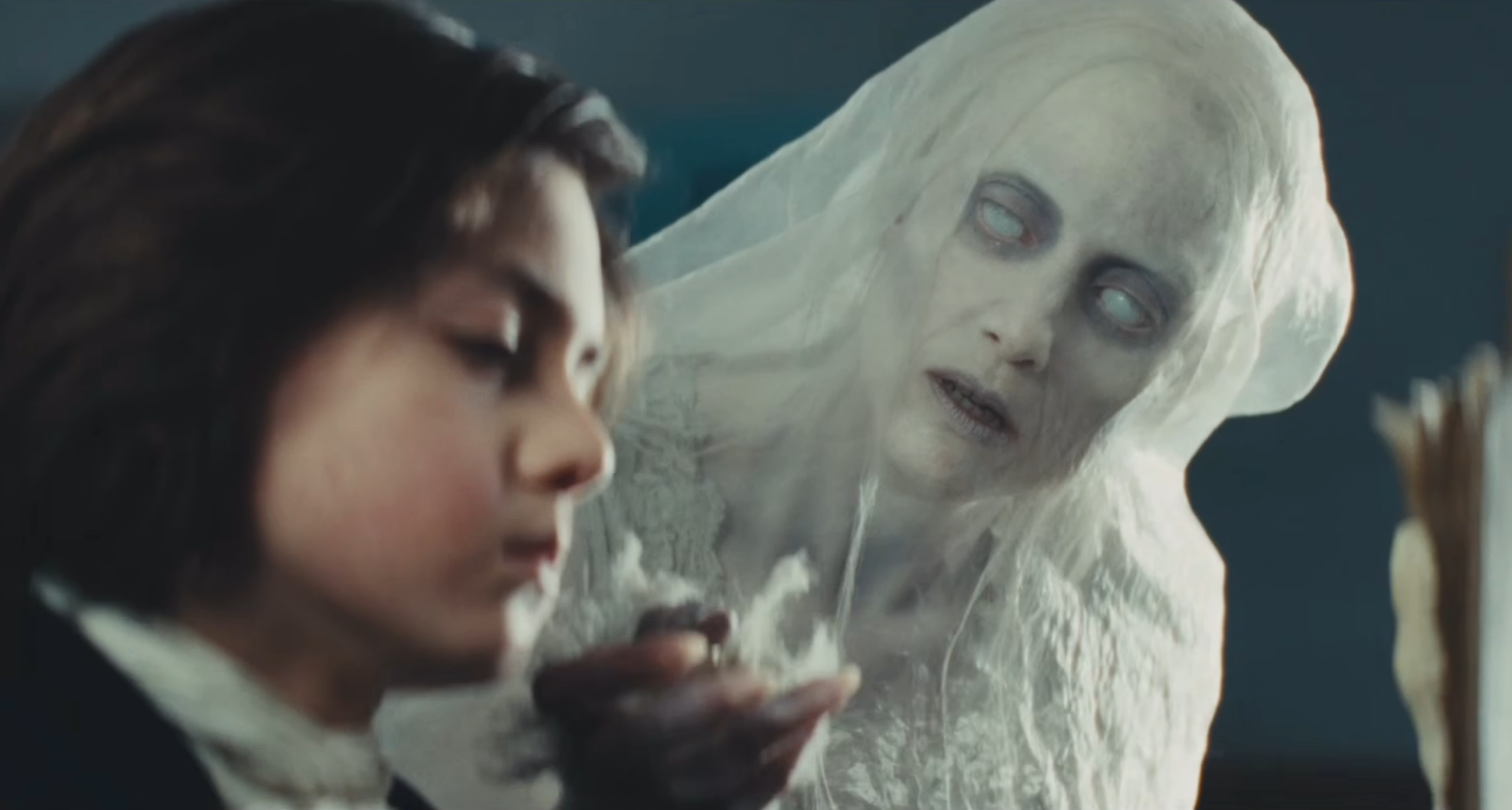
The trailer for Ti West’s upcoming adaptation of A Christmas Carol raised a lot of eyebrows when it dropped earlier this week. While plenty of folks initially dismissed Ebenezer as a derivative project meant to cash in on the recent wave of unnecessary prequels that expand the backstory of beloved characters (such as 2023’s Wonka), Charles Dickens’ original novel already made a point of exploring Ebenezer Scrooge’s origins in detail – meaning that this new film is likely just a particularly faithful adaptation of the source material under a different name.
Couple that with the fact that the movie is being helmed by a genuine horror auteur and I think it’s safe to say that the latest iteration of the first modern ghost story is in good hands.
That being said, one detail that immediately jumped out at me during the brief teaser (other than a blink-and-you’ll-miss-it nod to Johnny Depp’s iconic bedroom death scene from the original A Nightmare on Elm Street) is the fact that many of Ebenezer’s ghosts appear to have been directly lifted from the iconic John Leech illustrations that accompanied the first edition of Dickens’ novel.
Here are a couple of stills from the trailer compared to the original artwork:

The Ghost of Christmas Yet to Come in ‘Ebenezer’ and ‘A Christmas Carol’

The Phantoms in ‘A Christmas Carol’ and ‘Ebenezer’

Marley’s Ghost in ‘Ebenezer’ and ‘A Christmas Carol’
Mainly working with old-school wood and steel engravings that would later be transferred to print, Leech was instrumental in crafting the iconic look of history’s most influential phantoms – especially since Dickens is said to have been deeply involved with the creation of these so-called “comic illustrations.”
And since the novel is commonly said to have popularized spiritualism in Victorian England, much of the ghostly iconography that we still see in genre media to this very day (including some of Ti West’s previous films) can be traced back to the author’s partnership with Leech.
Ebenezer won’t be the first A Christmas Carol adaptation to borrow heavily from these designs, but I can appreciate how Ti West is incorporating an important part of horror history into his latest film.
Ebenezer will be available in theaters starting November 13.

You must be logged in to post a comment.