Editorials
Best & Worst of 2009: David Harley Picks His Top 10!

The year is winding down and we’re about to say goodbye to both 2009 and the decade. Helping us look back at this past year is David Harley, one of Bloody Disgusting’s long-time contributing writers who resides in Orlando, FL with Tex Massacre and Horror Guy Keenan. Beyond the break you’ll find Harley’s picks for the 10 best films of 2009. Watch for Mr. Disgusting’s list tomorrow.

David Harley (Best/Worst) | Ryan Daley (Best/Worst)
DAVID HARLEY’S TOP 10 OF 2009
There are a lot of things to look forward to in the coming year. We’ll finally get to see if The Wolfman is really worth the delay or if it’s been sitting around for a reason – I hope it’s the former and becomes the next Bram Stoker’s Dracula. Maybe Piranha will finally come out? I’m disappointed that it wasn’t shot in 3-D but I’m optimistic in hoping that Aja makes a comeback from his last outing. Is that release date for Case 39 going to hold? I’ve consulted the tea leaves and I’ve still got nothing. Will A Nightmare On Elm Street be satisfying in breathing new life into an undeniable horror icon? I’m keeping my fingers crossed. Daybreakers, The Lovely Bones and a new Adam Green movie coming out within a month of each other? Color me excited. Here’s to a new year and a new decade of the red stuff!
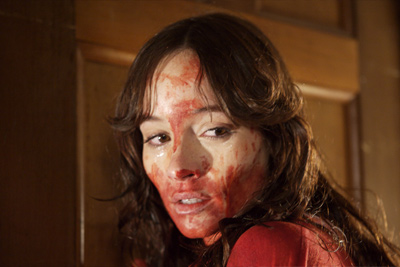
House Of The Devil is easily Ti West’s best film to date, harkening back to the slow-burn atmospheric horror films of the late 70s and early 80s. One of the things I really dig about the film is that it isn’t self-referential at all. It could really be a film from another era, right down to the aesthetic appearance. The ominous, bizarre house owner (Tom Noonan) sets everything up with some off-kilter dialogue that really pays off later on. And as Samantha (Jocelin Donahue) takes her babysitting gig and begins to wander around the house and listening to her cassette player, we’re given exposition that really develops the character and gives way to some dark, great moments later in the film. House is all about setup, with a giant, explosive payoff at the end.
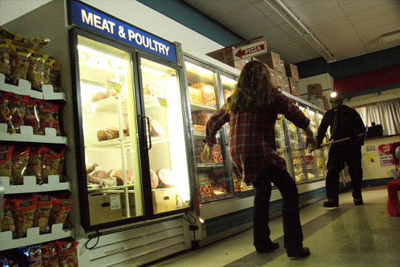
I don’t think anyone is ever going to accuse My Bloody Valentine 3-D of being a great film. It certainly has a fun, schlocky sense of humor – it has miner puns in the opening exposition scene – and features well-integrated 3-D effects, which I thought showcased some of the best gimmicky death scenes to date, and Tom Atkins (!).And even if the melodramatic, plodding story is a bit hard to swallow, its great sense of humor and flares of personality make for an entertaining night of gore and mayhem.

Trick `r Treat is the exact opposite of most films that sit unreleased on a studio shelf: it’s actually good and worth watching. It was really satisfying to see Sam on-screen since I’ve had a giant toy of him sitting on my shelf for almost a year prior to seeing the actual film. The stories in Dougherty’s directorial debut don’t exactly set the world on fire but, as a whole, they’re fun and the film is really beautiful looking, capturing the season perfectly.
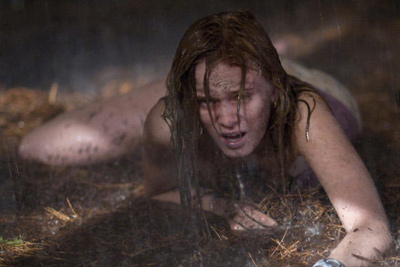
Last House On The Left was a film I really had no stake in at all and it completely surprised me in the best way possible. The original is not really a film I ever cared for too much; I understand its importance and everything but I prefer Bergman’s The Virgin Spring myself. Regardless, Dennis Illiadis’ remake could’ve been derivative torture porn nonsense. However, it defied all odds and was actually a good take on the story. No elaborate, gross deaths (well, save for the last one); just pure suspense and terror. And count me in as someone who appreciates what they were trying to do with the end, but doesn’t necessarily think it’s great.
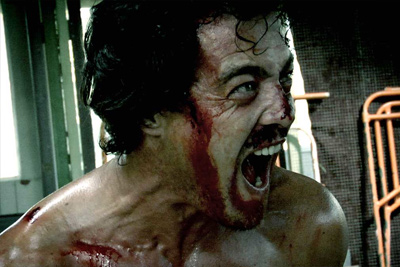
The Horseman reminded me of Paul Schrader’s Hardcore in a lot of ways, but is that really a bad thing? The films feels really raw and gritty but, on a second viewing, I realized that it doesn’t really show ANY of its cringe-inducing acts – many of which will have men grabbing themselves to make sure they’re still safe – and that’s really the highest compliment I can give the film: it’s so intense that it actually makes you think you’re seeing stuff that’s far worse than what’s actually on screen. What I really love about the main character, Christian, is that you actually see his character develop on-screen. When he first starts his quest of revenge, he’s uncoordinated and he screws up a lot. But he learns from his mistakes and slowly becomes a lean, mean killing machine. Nothing is rushed here, the character is actually given room to breathe and develop on his own.
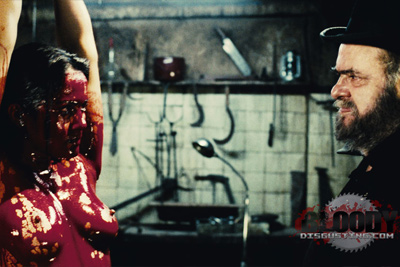
Like many franchises that have been revived as of late, the latest Coffin Joe film had the daunting task of following up an already classic line-up of films that had already made their mark in the film industry – more specifically, in Brazil where the film was made and banned in several states because of the violence and blasphemy within. Coffin Joe is an iconic character, appearing in numerous films, songs, music videos and comic books. In other words, he’s the foreign equivalent of Jason, Michael or Freddy. Director, writer and actor José Mojica Marins had his work cut out for him but, in the end, he pulled through and made one of the most ferocious horror films in recent memory. I thought a lot about Argento’s Mother Of Tears during the film, simply because they have similar ideas behind them. A storyline with a cult following, left completely unvisited for years, is revisited by (most of) the minds that brought us the originals, to result in their bloodiest incarnations yet. But, where Argento fails, Marins completely succeeds. The film retains the feel of the originals, while introducing new ideas and making them still feel relevant. Coffin Joe is back and as brutal as ever and, hopefully, this will be a stepping stone for people to delve into a really fascinating filmography of one of horror’s more unmentioned superstars.

A documentary about the greatest awful movie ever made? Who wouldn’t love this? Troll 2 is one of those rare flicks that consistently gets it wrong in the best way possible but manages to be genuine in its intentions. Originally scoffed at as a terrible in-name-only sequel to the somewhat well-known Troll, the film eventually nosedived the number one spot on IMDB’s Bottom 100 and people became taken with it. Revival screenings started turning up all over the country with some of the actors in attendance and soon after, star Michael Paul Stephenson decided to document the film’s cult following, interviewing many of the people involved with it and even visiting conventions and screenings. And it works. Completely. Best Worst Movie is basically the best DVD extra you’ve never seen, giving you almost everything you ever wanted to know about the film and it’s following.
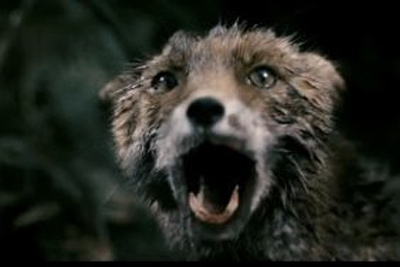
“CHAOS REIGNS!” Enough said.

Marytrs left me with such a strange and uncomfortable feeling, something I haven’t really felt since May. I think the reason a lot of people were more than slightly put off by it was because of the strange direction the film takes during the second half, going from an ultra-violent French revenge take on Heavenly Creatures – complete with sexual tension and a pretty in-depth look at the motivation and relationship between the two girls – to something completely unrelenting and, on some levels, thought provoking. I really believe that this is one of those films whose enjoyment is based on what you want to get out of it. If you’re looking for something misogynistic and vile, with crackpot views on philosophy and religion, and only want to see a girl getting her face beaten until it’s unrecognizable as such, then that’s what you’ll get out of Martyrs. If you’re willing to look at the film as an experiment and realize that the film took on a life of its own, morphing into a commentary on religion, relief from suffering and transgression from a familiar horror riff, then that’s what you’ll take away from it. But, regardless of what you think, the performances and incredible effects work definitely elevate it from blatant exploitation to something more.

Drag was easily the best theatrical experience I had this year. And unlike some films on my worst of list, it’s inclination to be on the more predictable side never really stopped it from being non-stop fun. Instead of cobbling the film together as a “best-of” of his oeuvre, Raimi makes little nods to his older films in this love letter to E.C. comics. And much like those comics, the ending doesn’t come as a surprise and I think a lot of people who dog on the film aren’t taking that into consideration. I can sit through ANY episode of Tales From The Crypt and know the ending a few minutes in; that doesn’t stop me from watching them over and over again. And I think the same fate will befall Raimi’s return to horror in a lot of people’s eyes.


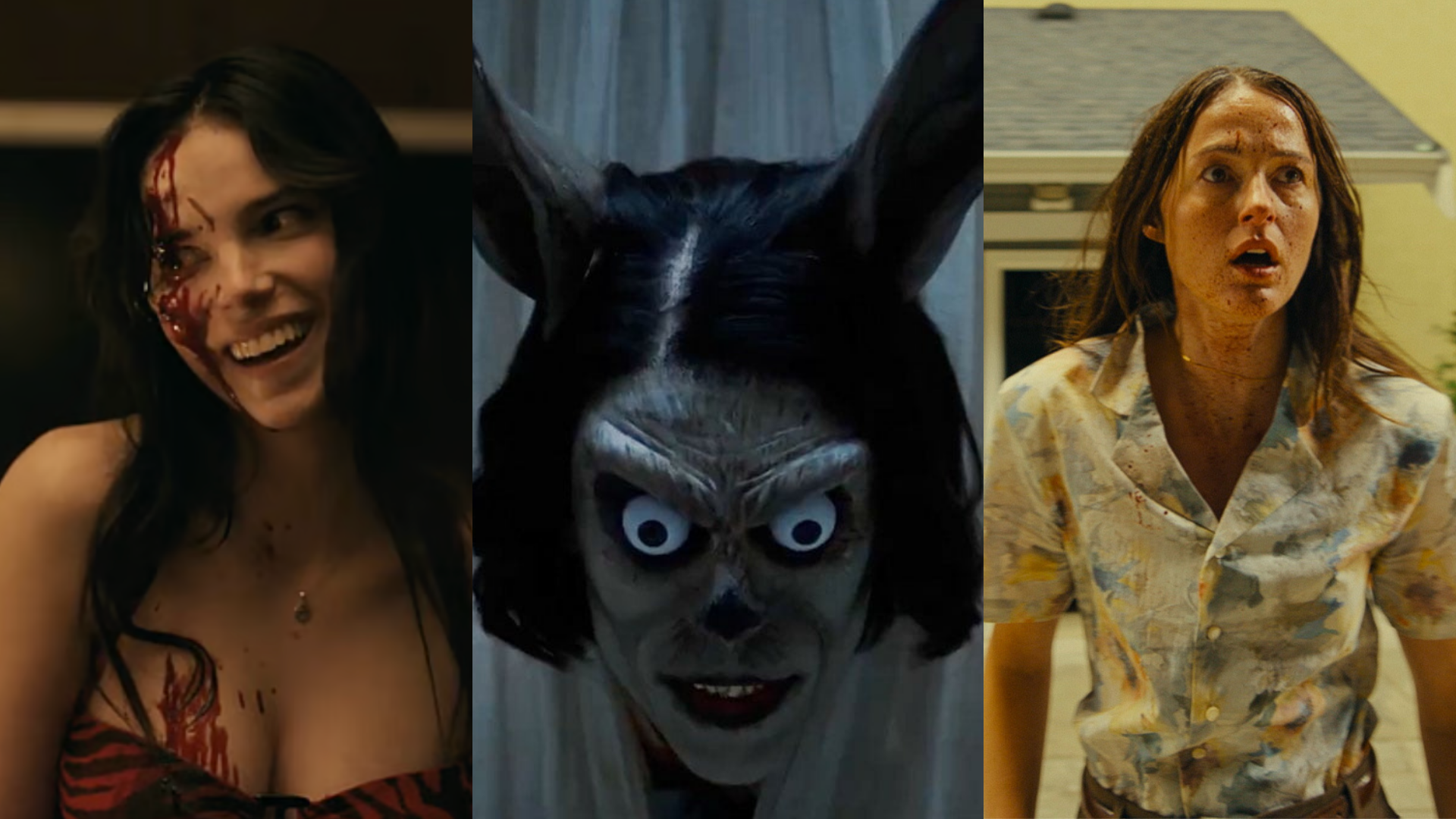
We’re now officially in the back half of 2026 now that July is here, but what a year it’s been for horror so far. The sequels and reboots are still holding strong at the box office with films like Scream 7 and Scary Movie, but it’s also been a year where new voices are shattering records in unexpected ways.
Markiplier eschewed conventional production and distribution channels with his feature adaptation of Iron Lung, for example. We’re also still in the midst of Backrooms and Obsession-mania, with the former back in theaters with bonus footage and the latter extending its box office reign. Liminal horror has exploded, and low-budget indie horror is seeing just as much, and sometimes even more, success as big studio-backed fare.
All of which to say that 2026 has been a hell of a year so far for the genre, and it’s only getting warmed up. Still on the way are Evil Dead Burn, Insidious: Out of the Further, Resident Evil, Clayface, Whalefall, and Werwulf, just to name a few.
Also catch up with the Best Horror Books and Best Horror Games of the year so far.
Here are the ten best horror movies of the year (so far).
10) Chime

Horror master Kiyoshi Kurosawa is back with one of his most haunting yet, though one that’d likely be higher on this list if it were more accessible. The 45-minute feature was initially produced and distributed as an NFT before receiving a theatrical run earlier this year, with no plans to distribute digitally or on home media. It spins a somewhat cryptic tale, introducing a culinary teacher, Takuji Matsuoka (Mutsuo Yoshioka, Never After Dark), whose classroom becomes disrupted by a strange sound that leads to violence. It’s a quiet but haunting unraveling, one that leaves no aspect of Matsuoka’s life untouched, in true Kiyoshi Kurosawa style. That it defies any easy explanation also ensures Chime embeds itself under your skin.
9) Send Help

Sam Raimi’s splatstick return to form is a delightfully deranged two-hander that doubles as infectious catharsis for anyone who’s ever had a bad boss. Rachel McAdams (Doctor Strange) and Dylan O’Brien (The Maze Runner) face off when their characters are shipwrecked on an island, prompting a bid for survival in more ways than one. While O’Brien often matches her, It’s McAdams who shines as she deftly handles everything that Raimi, working from a script by Damian Shannon & Mark Swift (Freddy vs. Jason), throws at her. Send Help is full of vibrant personality, packed with all of Raimi’s signatures, making for one of the most entertaining films of the year.
8) Mārama

New Zealand filmmaker Taratoa Stappard’s gothic tale begins in familiar fashion, with Mary Stevens (Ariāna Osborne) arriving in Yorkshire upon invitation to learn more about her parents, only to find the remote manor haunted. Just when Stappard’s period horror story feels doomed to succumb to familiar gothic trappings and jump scares, though, its true horror emerges. The more Mary uncovers about her heritage and her Māori culture, the clearer it becomes that this grim home is built on violence and exploitation. Stappard’s vision comes into its own when it leaves behind its gothic influences and embraces its Māori identity; few scenes are as powerful as when Osborne’s Mary performs a haka in response to her vile oppressors, heralding in a righteous bloodbath.
7) Touch Me

Writer/Director Addison Heimann draws from retro Japanese horror, exploitation cinema, and perhaps even hentai for his campy, psychosexual sophomore feature. A toxic friendship plagued by trauma, codependency, and addiction gets tested to the extreme when Brian (Lou Taylor Pucci), a hip-hop-loving, tracksuit-sporting alien, gets between them. Olivia Taylor Dudley and Jordan Gavaris have an easy rapport and play off each other well as directionless, depressed Millennial besties prone to ignoring their problems until they become insurmountable. But it’s Pucci’s inspired, childlike take on the chicken nugget-loving extraterrestrial with tentacled secrets of his own that steals the show. Heimann has a lot on his mind with his sophomore feature and neatly condenses it all into a quirky, eccentric psychosexual camp odyssey that leans heavily into humor.
6) Backrooms

Director Kane Parsons translates the vast liminal labyrinth of his web series to the big screen in his feature debut, one that instills existential dread with its atmospheric horror and narrative. The ‘ 90s-set horror movie introduces a protagonist with a serious chip on his shoulder over life’s many disappointments, who then discovers his furniture store harbors a hidden door that leads to an endless labyrinth. It’s not just the incredible production design that instills a disorienting sense of doom and terror, but the lead characters’ palpable and profound sense of loneliness and isolation. Parsons exudes impressive confidence and control as he methodically entrusts his quiet worldbuilding and talented leads to carry the dramatic weight. While Backrooms does deflate by the film’s cryptic, cliffhanger-y end, it’s arguably the most effective and scariest yet at capturing the uncanny valley of generative AI.
5) Leviticus

Writer/Director Adrian Chiarella uses an It Follows-like supernatural entity that relentlessly stalks its prey as a launchpad to immerse audiences in the horror of constantly living in fear for simply existing. A conversion therapy ritual among a deeply conservative community plunges a pair of erstwhile lovers into a nightmarish bid for survival when it summons a force that takes the shape of those whom the afflicted desires most. Chiarella refines the horror mechanics and metaphor with much sharper precision, ensuring that the scares and emotional gravity of the young couple’s terrifying predicament reach their intended impact. It’s the central layered performances by Joe Bird (Talk to Me) and Stacy Clausen (Thrash) that clinch emotional investment in their heartbreaking plight, ensuring that the social horror cuts deep.
4) Redux Redux

The McManus Brothers, writer/director duo Matthew and Kevin McManus (The Block Island Sound), dials up the intensity of a classic revenge story by setting it within a multiverse, where Irene Kelly (Michaela McManus) seeks to snuff out every single iteration of her daughter’s murderer, Neville (Jeremy Holm). The more she stalks and slays every world’s Neville, the more she risks losing her humanity entirely. Through a narrative foil in Mia (Stella Marcus), Redux Redux smartly bypasses repetition as it explores the moral complexities and vulnerabilities of Irene’s extremely violent quest. Holm becomes utterly terrifying in the climax, ensuring that no matter whether Irene loses herself to vengeance for good or not, it’s justified if it means ridding the world of this sick maniac.
3) 28 Years Later: The Bone Temple

Director Nia DaCosta takes the reins in the second entry in writer Alex Garland and original director Danny Boyle’s trilogy, picking up from the previous conclusion that saw Spike (Alfie Williams) fleeing from the infected straight into the welcoming arms of Sir Jimmy Crystal (Sinners’ Jack O’Connell). From here, DaCosta presents a stark contrast between humanity’s best and worst. The former sees the tender studies of Dr. Kelson (Ralph Fiennes) make poignant strides toward humankind’s future, while the latter unleashes more pain and bloodshed courtesy of the Jimmies. The dual paths of light and dark collide in one epic conclusion, an inspired confrontation between good and evil on a stunning set piece of heavy metal insanity. Yet it’s DaCosta’s handling of both extremes that impresses most, teeing up one epic conclusion to this trilogy.
2) Obsession

Sketch comedian turned horror filmmaker Curry Barker (Milk & Serial) wrings blood-curdling terror from a classic Monkey’s Paw wish fulfillment scenario in a way that no one could have ever anticipated. To say that it’s taken the box office by storm would be a massive understatement; Obsession is the top horror movie of the year in terms of gross. It’s not hard to see why, either. While Monkey’s Paw scenarios often yield predictable outcomes, and this outcome is practically telegraphed from the start, Barker manages to surprise with the journey itself. And it’s one insane journey paved with blood-soaked violence and no shortage of nightmare fuel. What truly sets it apart, though, is leads Michael Johnston and Inde Navarrette as the central pair undone by one vicious wish. Expect to see a lot more from breakout Navarette.
1) Hokum

A surly, traumatized writer must break free from his self-imposed shackles of guilt when confronted by a wicked witch haunting a quaint Irish inn in the latest by writer/director Damian McCarthy (Oddity). Adam Scott’s Ohm makes for an atypical but rewarding protagonist, and his complicated emotional journey gives way to a deeply moving story of a man so thoroughly broken by personal trauma that he constantly dwells in darkness. In true McCarthy style, expect the creepy as hell witch to dole out some supernatural retribution for crimes committed, but never in the way you’d expect. The filmmaker has a way of making whimsy pure nightmare fuel; Hokum distorts a kids’ show into eerie, uncanny valley-induced terror in its torment of Ohm. Channeling Stephen King, this creeper plays like a traditional campfire tale in mood and style, infusing genuine scares with a sense of magic and heart.
You must be logged in to post a comment.