Interviews
Why John Carpenter’s ‘The Fog’ Still Matters, With Richard Christy!

Almost midnight. Enough time for one more story. One more story before just to keep us warm.
In five minutes, it’ll be the 21st of April.
One hundred years ago on the 21st of April, out in the waters around Spivey Point, a small clipper ship drew toward land. Suddenly, out of the night, The Fog rolled in.
For a moment, they could see nothing, not a foot ahead of them. And then, they saw a light.
My God, it was a fire burning on the shore. Strong enough to penetrate the swirling mist. They steered a course toward the light. But it was a campfire, like this one.
The ship crashed against the rocks. The hull sheared in two. The mast snapped like a twig. And the wreckage sank with all the men aboard.
At the bottom of the sea lay the Elizabeth Dane with her crew, their lungs filled with saltwater, their eyes open and staring into the darkness. And above, as suddenly as it had come, The Fog lifted, receded back across the ocean and never came again.
But it is told by the fishermen and their fathers and grandfathers that when The Fog returns to Antonio Bay, the men at the bottom of the sea, out in the water by Spivey Point, will rise up and search for the campfire that led them to their dark, icy death.
Twelve o’clock.
The 21st of April.
Story inside.

The moment a stone falls from a church wall, revealing a one hundred year old journal, one can tell The Fog is a far superior film than most. The scare does not rely on a strong modern day music cue – a theme which runs through the entire film. Ringing pay phones, shaking bottles, unruly gas pumps, and a television with a mind of its own give us a taste of what is to come.
If you haven’t seen The Fog, then you’ve obviously been living under a rock – and I guess I can forgive you.
Quick rundown: As the coastal town of Antonio Bay, California, gears up for its centennial celebration, the above portentous events strike at the witching hour. Town priest, Father Malone, reads the journal of his grandfather which reveals the true history of Antonio Bay, and its six founders.
In 1880, a clipper ship named the Elizabeth Dane crashed against the rocks during a foggy night. Blake, a wealthy man with leprosy, owned the ship. His desire was to establish a colony near Antonio Bay.
As Father Malone’s grandfather states in his journal, “I must balance my feelings of mercy and compassion for this poor man, with my revulsion at the thought of a leper colony only a mile distant.”
Greed and disgust overcome the six founders, and the death of Blake and his colony is planned. With the gold plundered from the ship, Antonio Bay and its church are established.
One hundred years later – as a glowing fog encompasses the town – bodies begin to drop.
In the immortal words of a very brilliant man (whom you will have the pleasure of reading about later in this piece) – the only way I can describe The Fog is – “It’s my favorite.”
Why?
Simple.
The striking truth of The Fog‘s plot is what begs for it to be reconsidered every year. My personal admiration for the film is that it is based on facts.
Historically, we can look into two things. Leprosy and shipwrecks.
Blake and his colony are affected by Leprosy – a chronic disease caused by the bacteria Mycobacterium leprae and Mycobacterium lepromatosis. Leprosy affects nerves and the upper respiratory tract yet it is most primarily recognized by skin lesions. Left untreated, leprosy can be progressive, causing permanent damage to the skin, nerves, limbs and eyes. Infection can result in tissue loss, so fingers and toes become shortened and deformed as the cartilage is absorbed into the body. Contrary to folklore, leprosy does not cause body parts to fall off.
Leper colonies have existed for centuries. Normally, they were located on mountains or in remote locations in order to quarantine those affected. Thought to have been grim and neglected places, it is clear why Malone and his town were concerned on having the colony so close to Antonio Bay.
As Carpenter has stated, most recently in the Tales From the Mist – Inside `The Fog‘ documentary on the 2002 special edition dvd, the Elizabeth Dane was based on a real shipwreck that occurred near Goleta, California, in the 1800’s.
The Frolic was a two masted clipper ship commanded by Captain Edward Horatio Faucon. On The Foggy night of July 25, 1850, the Frolic crashed against the rocky reef near Point Cabrillo Light. Six of the crew stayed with the ship – which carried goods for gold rush California – until she ran aground amongst the rocks. The wreckage was rediscovered in 1984.

However, documented history is not the only factual beauty of the plot of The Fog. A normal every day emotion is what really adds strength to this film and proves why it still matters.
Guilt.
Arrogant fools not dealing with their guilt. Later generations having to battle the consequences of choices made in the past.
Perhaps The Fog is skipped over because it doesn’t rely much on gore. It does, however, reveal a hideous horrific monster.
“Our celebration tonight is a travesty. We’re honoring murderers.”
The true monsters are Malone and the founders of Antonio Bay.
Human beings.
This is something that we can relate to on many levels. Think of the actions we are putting forth right now. Be it bullying the weird looking kid – or invading a foreign country – whatever the scale. We, as human beings, are the most terrifying monsters of all.
Therein lies the beauty of The Fog. The past coming back to bite you in the ass. Killing innocent people because you don’t want to deal with their differences!
In regards to modern filmmaking, and overuse of CGI, the subtle splendor of The Fog shoots down today’s atrocities. I personally feel my heart flutter when the DANE plank begins to flood with sea water, causing Stevie Wayne’s tape recorder to warp and Blake’s voice to come through – “Something that one lives with like an albatross round the neck. No, more like a millstone. A plumbing stone, by God! Damn them all!”
Be it the DANE plank, the reveal of a silhouette or rusted hook in the glowing fog, ominous hands busting through church windows – and of course, one cannot ignore Carpenter’s score – The Fog is a glorious masterpiece that still has meaning to be found and celebrated every year.
I had the pleasure of speaking with Richard Christy (drummer extraordinaire, horror aficionado, and integral, multi-talented crew member of The Howard Stern Show) about The Fog and celebrating The Fog Day – a little known holiday that devoted fans commemorate (and he is quite possibly the founder) on the 21st of April.

When did you first see The Fog?
I saw The Fog on television in 1981 when I was 7 years old and it scared the hell out of me! My parents were really cool when I was growing up and they always let me watch horror movies, I remember my mom waking me up at 4am on a school night when I was 10 years old to watch Lucio Fulci’s Gates of Hell!
When did you first celebrate The Fog Day?
I’ve probably been celebrating The Fog Day for about 10 years now. The film happens on a very specific date, the 21st of April, so it’s perfect to have a holiday centered around it!
Do you have any special rituals you do on The Fog Day?
I definitely wake up and start listening to the soundtrack, I LOVE the music from The Fog and I make sure that day that I listen to the soundtrack all day. I make sure I drink beer, because Tom Atkins’ character drinks throughout the movie, although I don’t need that for an excuse but it helps!
Which has been your favorite The Fog Day?
Two years ago on The Fog Day it was actually really foggy in New York City and about halfway through the film my fiancé and I looked out on our balcony and fog was creeping across Manhattan and up onto our balcony! We paused the movie and went out onto our balcony and just watched The Fog creep across Manhattan and over the Queensboro Bridge, it was awesome!
Why did this movie stick with you as it is unpopular/not one that is remembered/not Carpenter’s best known work?
Because I saw it when I was so young and I’m very attached to movies that I loved as a kid. I also love John Carpenter’s music and The Fog soundtrack in particular. I think the music is so subtle and frightening. I’m also a huge fan of Tom Atkins and Adrienne Barbeau and I think they’re amazing in The Fog.
Did you see the remake? Thoughts on it compared to the original?
Comparing the remake to the original is like comparing a glass of Urine to a glass of Dom Perignon! I had high hopes for the remake and needless to say my dreams were crushed! The remake was so silly, the part where the ghost is kicking the guy, it was all just so bad, and not even funny bad, just bad. Plus it makes me angry that the DVD cover for the remake looks very much like the original and I pity anyone who accidently buys the remake when they’re looking for the original.
Did you see The Mist? How do you feel about people comparing it to The Fog?
I think both The Mist and The Fog are heavily influenced by H.P. Lovecraft. I absolutely LOVED The Mist. I’m a HUGE Stephen King and Frank Darabont fan and I thought The Mist ruled. There were a few similarities to The Fog but it’s quite different also because of the creatures and the military experiment aspects. I’m a really big fan of large creature movies like King Kong, Godzilla, and Cloverfield, and I freaked when they showed the massive creature toward the end of the movie, it was so cool looking!
Does it sadden you that women who look like Jamie Lee Curtis are no longer hitchhiking the roads of the U.S.?
Haha, well I think it’s good that they don’t hitchhike anymore because not every person who picks up hitchhikers is as charming and moustachingly handsome as Tom Atkins! Although I’m disappointed that Tom’s famous moustache was missing in The Fog, it was a low budget movie so they probably couldn’t afford to pay both Tom AND his Moustache!
Adrienne Barbeau plays a radio host/dj. When you first watched The Fog, did you ever think that you’d one day host your own radio program – the Jack `N’ Rod show – as Rod Stiffington?
No I never thought that, I guess you never know what will happen in life! I wish I had the chest that Adrienne Barbeau has, although I probably wouldn’t be in radio because I’d never leave the house!

Would you ever consider taking The Fog Day to the next level – perhaps by chartering a boat and screening the film on deck out in the water?
Well I have actually taken it to the next level by visiting the Point Reyes Lighthouse and all of the surrounding The Fog locations 3 different times in 2000, 2002, and 2009! It really is the most beautiful place in the world. The whole Point Reyes area is just unbelievably beautiful and the fact that they filmed The Fog there makes it that much more awesome! Every time I’ve been there I’ve listened to The Fog soundtrack while driving down the same road to the lighthouse that Adrienne Barbeau drives!
In conclusion, I encourage everyone to watch The Fog on the 21st of April as a learning experience. Dig up your own meanings from it. And from both Richard and I, we hope that you have a wonderful The Fog Day this year and whatever you do, when you hear the knock, don’t open the door!
Special Thanks to Mr. Richard Christy. Check out more from him here:
www.RichardChristy.com
www.CharredWallsoftheDamned.com
www.twitter.com/CWOTD
You can learn more about me and my special relationship with the horror genre at:
www.thelaurentaylor.com
www.twitter.com/strickenlauren


Interviews
Paul Tremblay on Fighting AI with Horror in New Novel ‘Dead But Dreaming of Electric Sheep’

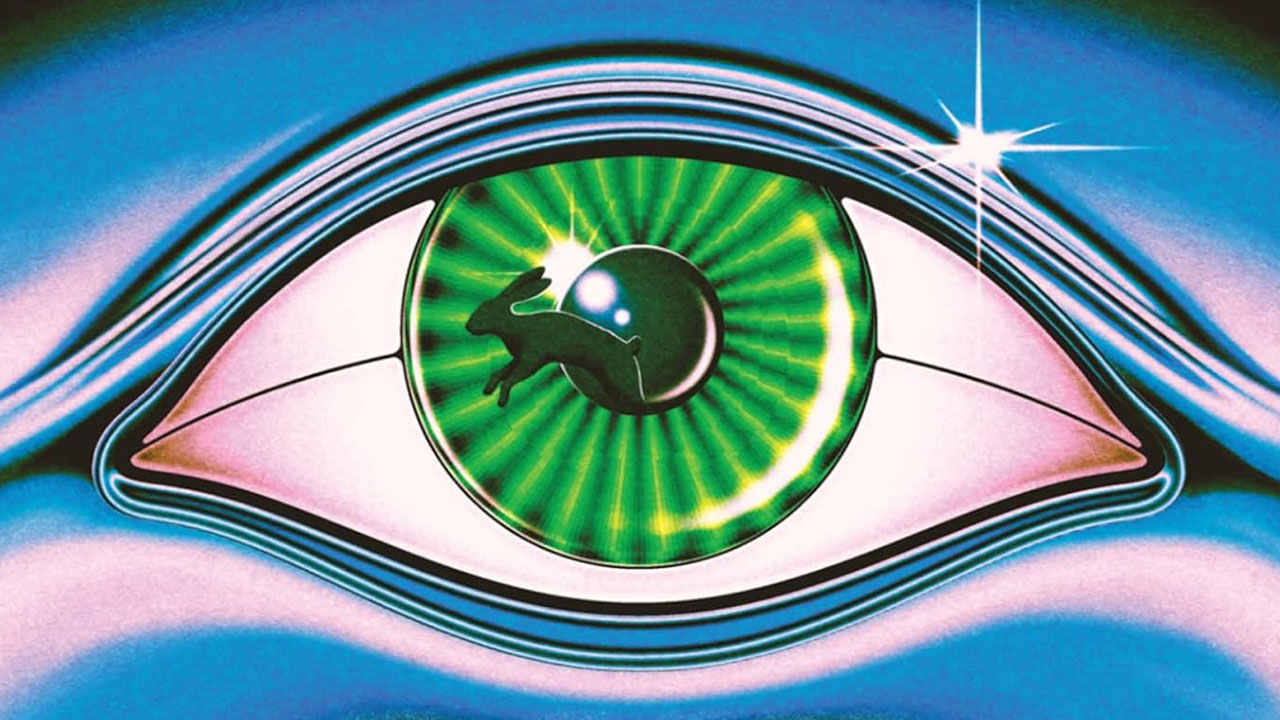
Paul Tremblay didn’t start his writing career believing he’d be battling machines over the sanctity of his job, but like so many writers of his generation, the battle found him. In the years since Large Language Models (LLMs) and neural networks started gaining traction as an advertised shortcut to creativity, Tremblay has been active in lawsuits to prevent the use of his works in training AI models, and he’s found that, with each new project, he has to consider the possibility that some LLM, somewhere, is going to latch on to what he’s creating.
“Now I feel like I’m thinking about, ‘Man, how am I going to write things that would be really hard or impossible for an AI to replicate?’,” Tremblay told me, speaking by Zoom from his home in Massachusetts. “Maybe some of that is ego. I’m sure every writer thinks, ‘Oh, an AI could never write what I write.’ Yes, I’d be lying if I said that wasn’t part of the thought process.”
While that’s something Tremblay might consider with any new work at this point in his career, the Bram Stoker Award-winning author of A Head Full of Ghosts, The Cabin at the End of the World, and many other novels and short stories tackled it in a more direct way with his latest book. Inspired by Philip K. Dick, Harlan Ellison, and the quirky humor of the Coen Brothers, Dead But Dreaming of Electric Sheep is Tremblay’s attempt at a sci-fi-horror mash-up that’s both darkly funny and existentially nightmarish. It’s also, in his own words, a screed against the movement by AI companies to supplant human artists.
“I didn’t want to make it too didactic, but no, I playfully described this book as an anti-AI screed,” he said. “This book, in particular, was driven by anger and frustration, for sure. Not every book is going to be driven that way.“
Despite the emotions that fueled it, Dead But Dreaming of Electric Sheep does not read like a screed. Instead, wielding offbeat humor and tech concepts that feel both lived-in and frighteningly tactile, the book lays out tandem narratives all building to the same conclusion, each of them exploring our relationship to machine learning in a different way. One of these narratives belongs to Julia, a former gaming streamer looking for a new challenge in life, who gets a call from a California tech company with an interesting offer.

Paul Tremblay in documentary series “First Word on Horror”
The company has, it seems, implanted some new technology in a brain-dead middle-aged man which will, in theory, allow them to pilot the man’s body through a rudimentary, still-developing system of controls. Julia, with her gaming background, would be the pilot, in her own way just as much a test subject as the human vegetable she’s controlling.
Julia is a Gen Z streamer with an omnivorous pop culture appetite, inspired by Tremblay’s own adult children, who riffs on The Big Lebowski constantly and calls her strange new meat puppet “Bernie” in reference to Weekend at Bernie’s. Her wide frame of reference, and her interest in art and stories far beyond video games, is in part informed by Tremblay’s own experiences with Gen Z, and in part a response to AI companies who scrape art and culture as a means of consuming it for reference without really experiencing a story.
“I know that one of the arguments that OpenAI and other tech companies are trying to make is like, ‘Hey, you writers, you artists, you take pop culture, you take your influences, and you create something. That’s just the same thing that the bots are doing.’ And it’s just not,” Tremblay said. “I wanted to have Julia have her outlook informed by all this pop culture, and I wanted to make that feel really human as a way to show how inhuman the AI is.”
The other side of the story belongs to “Bernie,” who’s addressed in his point-of-view chapters as “You.” In these chapters, the technology in Bernie’s body starts to flicker images through his seemingly dead brain, delivering half-remembered imagery and perspective in a nod to the “hallucinations” of an AI model groping for understanding it can never reach. These chapters in particular show off Tremblay’s flair for formalist shake-ups, and echo the kind of hyperstimulated writing that Dick and Ellison made so influential.
“I think it was more just the general Philip K. Dick feeling of ‘The world is so strange,'” Tremblay said. “He’s a lot funnier, I think, than maybe a lot of people credit him. That’s definitely what I was thinking of when writing the book.“
Bernie’s chapters embody the strangeness of Dead But Dreaming of Electric Sheep, presenting imagery that’s at times puzzling, at times eerily filmic, and always unnerving. They also mirror Julia’s own journey in fascinating ways as the odd couple – the Gen Z gamer and the middle-aged vegetable – traverse the United States, and the tech in Bernie’s body wakes up to the possibilities of using his flesh for its own purposes. It’s a compelling narrative technique, but it presented some new writing challenges for Tremblay.
“I quickly realized I couldn’t write this book the same way I have in the past,” he said. “By that, I mean all my other novels I had written in the order in which it was presented, even things that are nonlinear, which is most of them. I knew I couldn’t do that in this book. It’s not a spoiler, but hopefully the readers figure out pretty early that the Bernie chapters are a little bit of a preview of the next chapter from Julia, what’s actually happening with Julia. It’s all refracted from him.”

Mary Roach’s Stiff
Dead But Dreaming of Electric Sheep began with a simple image, inspired by Tremblay’s reading of Mary Roach‘s book chronicling the history of our treatment of corpses, Stiff. As he read, Tremblay imagined a body sitting on an airplane, remote-controlled by someone else. At the time, it was a “silly what-if” concept, filed away in his head. Years later, when he became an author suing a tech company to keep AI from scraping his work for ideas, it started to feel frighteningly plausible, taking the “silly what-if” into the territory of a high-concept horror show about what happens when we try to exploit and commodify uniquely human aspects of consciousness.
“It stuck with me,” Tremblay said of that what-if imagery. “And then a few years later, when I was a part of the case suing OpenAI on behalf of writers, that what-if suddenly didn’t seem as silly. The more I learned about how that corporation operates and without really any sort of ethical thought to anything, I was like, ‘Oh, I’m going to play with that. That’s actually happening.”
So, what if someone actually in favor of generative AI picks up Tremblay’s self-described “anti-AI screed?” He hopes that, at the very least, he’s made the ride enjoyable in a distinctly human way that might begin to reshape the conversation.
“I think that was another reason why I wanted to have the humor,” Tremblay said. “If people are reading this book who aren’t on the side of like, ‘Hey, LLMs taking authors’ books is bad,’ maybe if they read something that’s cut with some humor, that maybe they’ll be more easily swayed.”
Dead But Dreaming of Electric Sheep is now in bookstores everywhere.

You must be logged in to post a comment.