Editorials
Mini-Review, [Interview] ‘Vampires’ Director Vincent Lannoo

Vampires, written and directed by Vincent Lannoo, is a fresh and new take on the classic icon. Shot documentary style, it follows a family of vampires in Belgium as they take a film crew through their everyday lives.
The moment mother vampire, Bertha, grabs the cover off a boom mic – not once, but twice – cackling with fangs displayed – I knew Vampires was a unique film.
I just didn’t realize how special it would be.
I had the absolute pleasure of speaking with Vincent Lannoo about what he calls “a mirror movie”. See the interview/review below!

 While Vampires is being marketed as a horror comedy, it is much more than that.
Sure, there are elements are both genres within the film – and as Vincent explains – in everyday human life. What is so unique about it is that the movie has a steady stream of reality that goes well beyond what designer Kim Kardashian is wearing this week. It is the stream of joyous celebration of life that hit me hard – and that I haven’t felt since films like Sofia Coppola’s Lost in Translation or Roberto Benigni’s blatantly titled Life is Beautiful. Both of which are more or less drama pieces, so comparing a mock documentary about vampires seems silly. Truth be told it Vampires is closer to these films than `Spinal Tap meets The Munsters‘.
To call it a horror comedy simply does not do it justice.
Vincent Lannoo set out to make a vampire movie, but wanted to do something different. Something beyond Twilight. He wanted a different point a view – which was the documentary style. At first it was just to be funny, but it became more. It became an “exploration of human frustration”.
The characters come off so authentic due to Lannoo’s relationship with the actors. Each one was written for their true human characteristics. Even Grace – played by Fleur Lise Heuet – and her love of the color pink. He used what the actor had in real life to push the fictional counterparts further. With each little detail, it made the vampire equivalents perfect and natural.
There are so many moments where I had to stop and remember this was just a movie. The film is brilliantly real. It was important to Lannoo to keep the real documentary construction. The movie was shot at night, and the crew’s life began at 8PM. Their lives reflected those of the vampires. Which Lannoo says was very funny. “Sometimes shooting was so crazy because we were in that world. It was completely different. People outside of our shoot came to the set and they didn’t understand. For us, we mastered it. It was the key to success.”
The love and passion behind the film completely shows. Lannoo strived to have the film explore the depths of human contradictions. “Am I good? Am I bad? A lot of our movie exposes that.”
A great example is teenage son Samson’s bad streak. While the family is indeed exiled to Canada due to Samson’s romping with the wife of Belgium Vampire Leader `Little Heart’, his actions earlier in the film painfully echo real life and the cruelty of humiliation. Under the peer pressure of his friend, the two feed on a handicapped mental patient, then proceed to laugh at the poor man as he struggles with his own vampire transformation.
Now, don’t get me wrong – there are moments of laughter. As mentioned before, as the documentary crew enters the home and proceeds to attempt to interview Bertha, she grabs the cover from the microphone, laughing while doing so. A moment Lannoo said was not in the script. Vera Van Dooren had arrived on set on the second day of the shooting. The sound engineer was unaware that she was going to do it. “It was a joke for her.”
Later in the film, Samson has to travel by train. Making a face, he sniffs the car and proclaiming it stinks of humans. After they are exiled to Canada, we then see him playing a guitar in the subway for money – complete with a plaid shirt and Canadian flag cowboy hat.
Daughter Grace, on the other hand, is disgusted by vampire life. Immediately upon waking she pulls out her compact to put on a tan. She parades around in pink clothing while her family lives in dark colors. She even gets a human boyfriend. Humorous dialogue of hers can be seen in the trailer, but her character is by far the most compelling in the end. Her transformation in the film is what left me inspired.
Going into the film expecting a Christopher Guest-esque mockumentary will probably leave you unhappy. Going in open minded will perhaps unveil that underlying theme of the frustrations in human life. Because, as Vincent Lannoo himself said, “The subject of vampires is really perfect that.” If you pull that from it, perhaps it will leave you as in awe as I.



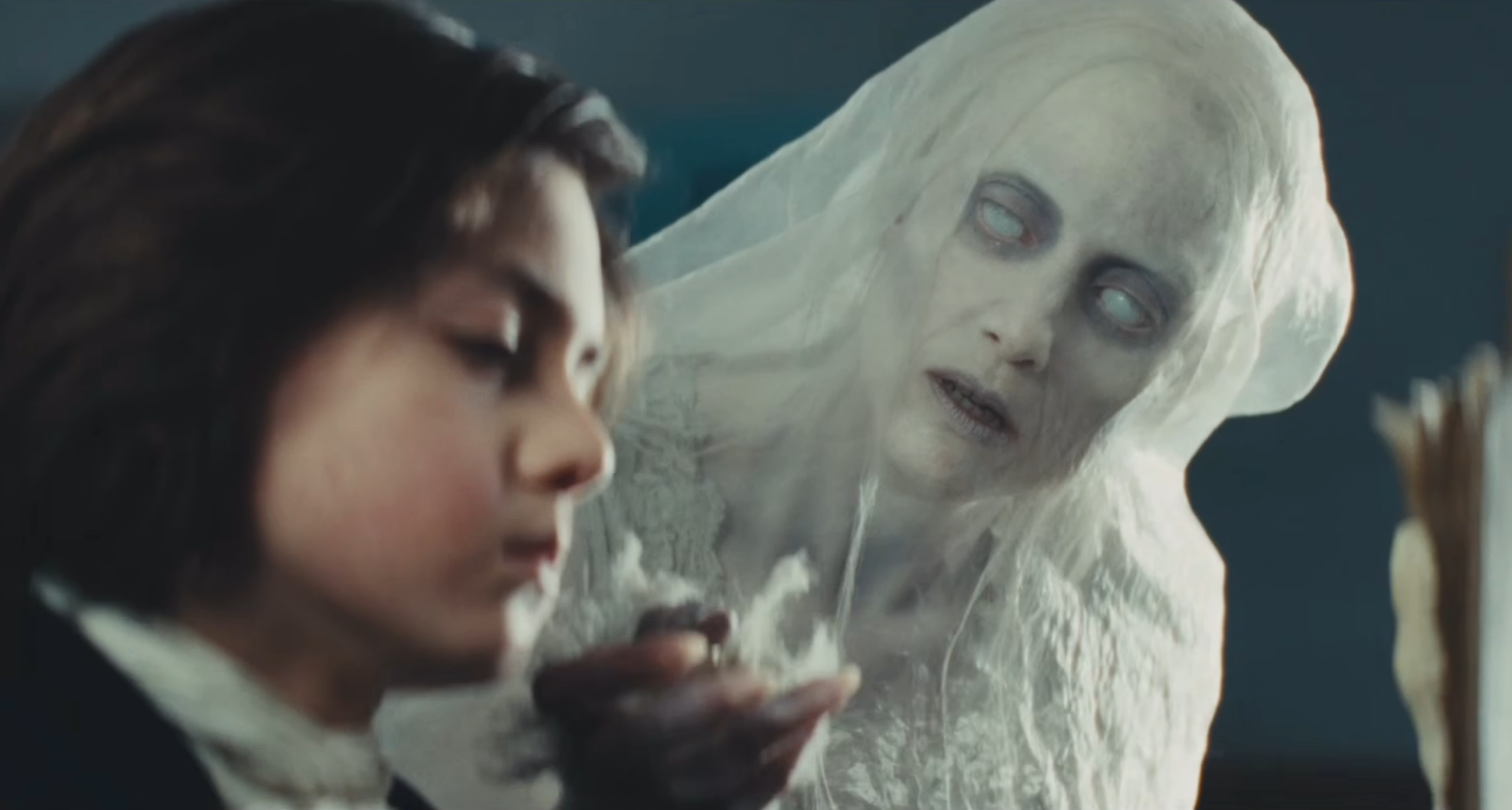
The trailer for Ti West’s upcoming adaptation of A Christmas Carol raised a lot of eyebrows when it dropped earlier this week. While plenty of folks initially dismissed Ebenezer as a derivative project meant to cash in on the recent wave of unnecessary prequels that expand the backstory of beloved characters (such as 2023’s Wonka), Charles Dickens’ original novel already made a point of exploring Ebenezer Scrooge’s origins in detail – meaning that this new film is likely just a particularly faithful adaptation of the source material under a different name.
Couple that with the fact that the movie is being helmed by a genuine horror auteur and I think it’s safe to say that the latest iteration of the first modern ghost story is in good hands.
That being said, one detail that immediately jumped out at me during the brief teaser (other than a blink-and-you’ll-miss-it nod to Johnny Depp’s iconic bedroom death scene from the original A Nightmare on Elm Street) is the fact that many of Ebenezer’s ghosts appear to have been directly lifted from the iconic John Leech illustrations that accompanied the first edition of Dickens’ novel.
Here are a couple of stills from the trailer compared to the original artwork:

The Ghost of Christmas Yet to Come in ‘Ebenezer’ and ‘A Christmas Carol’

The Phantoms in ‘A Christmas Carol’ and ‘Ebenezer’

Marley’s Ghost in ‘Ebenezer’ and ‘A Christmas Carol’
Mainly working with old-school wood and steel engravings that would later be transferred to print, Leech was instrumental in crafting the iconic look of history’s most influential phantoms – especially since Dickens is said to have been deeply involved with the creation of these so-called “comic illustrations.”
And since the novel is commonly said to have popularized spiritualism in Victorian England, much of the ghostly iconography that we still see in genre media to this very day (including some of Ti West’s previous films) can be traced back to the author’s partnership with Leech.
Ebenezer won’t be the first A Christmas Carol adaptation to borrow heavily from these designs, but I can appreciate how Ti West is incorporating an important part of horror history into his latest film.
Ebenezer will be available in theaters starting November 13.

You must be logged in to post a comment.