Interviews
[Interview] Director and Star of ‘The Raven’ Talk ‘Saw’, Gore, Drugs and ‘Sherlock Holmes’!!


Today is the 162nd anniversary of Edgar Allen Poe’s death and to commemorate the event there’s a whole lot of The Raven action going on. While marking a death date rather than a birth date may seem macabre, considering the subject at hand it seems more than appropriate.
Earlier this morning the trailer hit and a little bit later a group of journalists was ushered onto a conference call with the film’s director James McTeigue and star Luke Evans to discuss the film.
“Evans plays a detective who partners with Poe (John Cusack) to search for a serial killer who has kidnapped the author’s fiancee (Alice Eve) and has gone on a murder spree that mimics the author’s work.”
Hit the jump to check out some excerpts from the interview interspersed with some cool Edgar Allen Poe factoids.
James McTeigue on blending the historical and the fictional – “There’s a portion of it that’s fantastical because Poe is in the middle of a murder mystery… the nice thing about the film was taking facts of Poe’s life and taking his stories and melding them together in this fictional tale“.
Fact: Poe was deeply interested by cryptography, the creation and translation of secret codes, and was very proud of his ability to translate them. He would challenge readers of various publications where he worked to send him codes to decipher and, by all accounts, he seemed able to unlock the secrets to any he received.
McTiegue on Poe’s Legacy – “Poe’s stories in themselves are timeless stories and I think that’s why he’s still so iconic. He was the precursor to a lot of detective fiction and science fiction…”
Fact: Poe experienced periods of extreme destitution, often having to burn his furniture to keep warm during the winter.
Edgar Allan Poe was also a notorious addict, how does the movie handle it? “[Poe’s drug and alcohol use] is in the film. I don’t shy away from it. I mean that was the reality of Poe’s life. That part of his troubles was being an alcoholic, that part of his trouble was drinking opiate tinches, so that’s all in the film. It would be hard to do a movie that had Edgar Allen Poe as a character in it and to shy away from that stuff because that’s sort of what made him that man and informed his stories“.
Luke Evans on translating the violence of Poe’s macabre vision to the screen – “This film doesn’t shy away from how gory and how detailed the murder stories Poe wrote 160-something years ago [were] and how topical they are today and how shocking they are today.”
So you’re not shying away from an R rating, then? “No.”

Fact: Prior to becoming Poe’s wife at the age of 13, his female cousin Virginia acted as a courier, delivering letters to Poe’s lady loves.
McTeigue on competing with contemporary horror films that have lifted inspiration from Poe’s stories such as “The Pit And The Pendulum” – “We don’t try to live in the same space as ‘Saw’… Poe obviously had a macabre sense of humor as well as a macabre sensibility… we’re sort of more in the suspense thriller mode than a straight-out horror film like ‘Saw’.”
For the kills are you relying on practical effects or are you using GG in post? “There was a lot of real effects and plenty of prosthetics. I always find visual effects are always better if they’re based on something whether it’s prosthetics or model making or whatever you’re trying to do. There’s a good mixture in there. It’s probably about 60% practical and 40% digital“.
Fact: Edgar Allan Poe was buried in Westminster Burying Ground and had no headstone for years after his death. In 1860, Poe’s relatives commissioned a small headstone that erroneously listed Poe’s birth date as January 20 instead of January 19 and was destroyed in a train accident before it made it to the gravesite. In 1875 Poe’s remains were dug up and moved to a memorial site to be near his family and a gravestone was placed in the wrong spot and was moved around several times. This lead people to wonder not only where Poe’s original burial spot was but also if the man who was moved to the spot by the memorial is even Edgar Allan Poe.
McTeigue on avoiding the comparisons to Sherlock Holmes – “For me personally, no diss to Sherlock Holmes’ but ‘Sherlock Holmes’ is watching Robert Downey Jr. be comedic for two hours. Sometimes if Jude Law wasn’t calling him Sherlock I’d forget that I was watching a Sherlock Holmes movie. We’re a much different beast. We’re not as comedic. There’s some parallels to be drawn, we’re period and they’re period and there’s two central characters. But we’re about as close to ‘Sherlock Holmes’ as Transformers’ is.”




Interviews
Paul Tremblay on Fighting AI with Horror in New Novel ‘Dead But Dreaming of Electric Sheep’

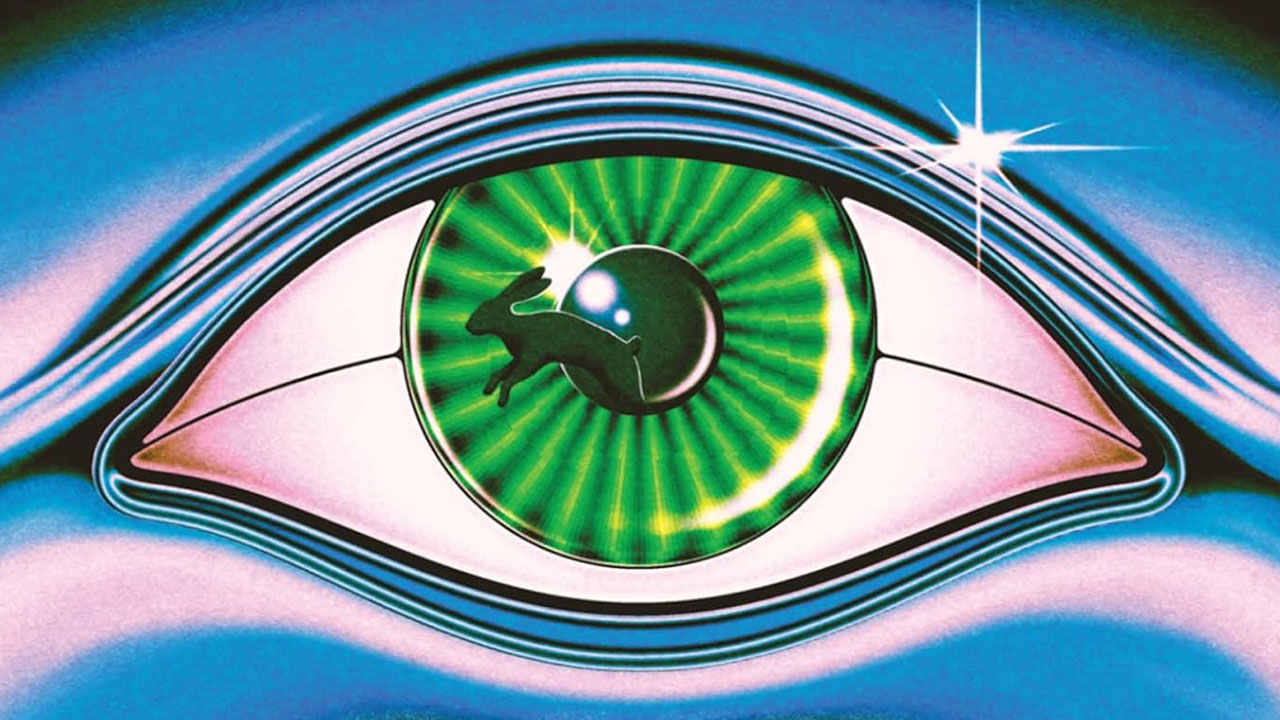
Paul Tremblay didn’t start his writing career believing he’d be battling machines over the sanctity of his job, but like so many writers of his generation, the battle found him. In the years since Large Language Models (LLMs) and neural networks started gaining traction as an advertised shortcut to creativity, Tremblay has been active in lawsuits to prevent the use of his works in training AI models, and he’s found that, with each new project, he has to consider the possibility that some LLM, somewhere, is going to latch on to what he’s creating.
“Now I feel like I’m thinking about, ‘Man, how am I going to write things that would be really hard or impossible for an AI to replicate?’,” Tremblay told me, speaking by Zoom from his home in Massachusetts. “Maybe some of that is ego. I’m sure every writer thinks, ‘Oh, an AI could never write what I write.’ Yes, I’d be lying if I said that wasn’t part of the thought process.”
While that’s something Tremblay might consider with any new work at this point in his career, the Bram Stoker Award-winning author of A Head Full of Ghosts, The Cabin at the End of the World, and many other novels and short stories tackled it in a more direct way with his latest book. Inspired by Philip K. Dick, Harlan Ellison, and the quirky humor of the Coen Brothers, Dead But Dreaming of Electric Sheep is Tremblay’s attempt at a sci-fi-horror mash-up that’s both darkly funny and existentially nightmarish. It’s also, in his own words, a screed against the movement by AI companies to supplant human artists.
“I didn’t want to make it too didactic, but no, I playfully described this book as an anti-AI screed,” he said. “This book, in particular, was driven by anger and frustration, for sure. Not every book is going to be driven that way.“
Despite the emotions that fueled it, Dead But Dreaming of Electric Sheep does not read like a screed. Instead, wielding offbeat humor and tech concepts that feel both lived-in and frighteningly tactile, the book lays out tandem narratives all building to the same conclusion, each of them exploring our relationship to machine learning in a different way. One of these narratives belongs to Julia, a former gaming streamer looking for a new challenge in life, who gets a call from a California tech company with an interesting offer.

Paul Tremblay in documentary series “First Word on Horror”
The company has, it seems, implanted some new technology in a brain-dead middle-aged man which will, in theory, allow them to pilot the man’s body through a rudimentary, still-developing system of controls. Julia, with her gaming background, would be the pilot, in her own way just as much a test subject as the human vegetable she’s controlling.
Julia is a Gen Z streamer with an omnivorous pop culture appetite, inspired by Tremblay’s own adult children, who riffs on The Big Lebowski constantly and calls her strange new meat puppet “Bernie” in reference to Weekend at Bernie’s. Her wide frame of reference, and her interest in art and stories far beyond video games, is in part informed by Tremblay’s own experiences with Gen Z, and in part a response to AI companies who scrape art and culture as a means of consuming it for reference without really experiencing a story.
“I know that one of the arguments that OpenAI and other tech companies are trying to make is like, ‘Hey, you writers, you artists, you take pop culture, you take your influences, and you create something. That’s just the same thing that the bots are doing.’ And it’s just not,” Tremblay said. “I wanted to have Julia have her outlook informed by all this pop culture, and I wanted to make that feel really human as a way to show how inhuman the AI is.”
The other side of the story belongs to “Bernie,” who’s addressed in his point-of-view chapters as “You.” In these chapters, the technology in Bernie’s body starts to flicker images through his seemingly dead brain, delivering half-remembered imagery and perspective in a nod to the “hallucinations” of an AI model groping for understanding it can never reach. These chapters in particular show off Tremblay’s flair for formalist shake-ups, and echo the kind of hyperstimulated writing that Dick and Ellison made so influential.
“I think it was more just the general Philip K. Dick feeling of ‘The world is so strange,'” Tremblay said. “He’s a lot funnier, I think, than maybe a lot of people credit him. That’s definitely what I was thinking of when writing the book.“
Bernie’s chapters embody the strangeness of Dead But Dreaming of Electric Sheep, presenting imagery that’s at times puzzling, at times eerily filmic, and always unnerving. They also mirror Julia’s own journey in fascinating ways as the odd couple – the Gen Z gamer and the middle-aged vegetable – traverse the United States, and the tech in Bernie’s body wakes up to the possibilities of using his flesh for its own purposes. It’s a compelling narrative technique, but it presented some new writing challenges for Tremblay.
“I quickly realized I couldn’t write this book the same way I have in the past,” he said. “By that, I mean all my other novels I had written in the order in which it was presented, even things that are nonlinear, which is most of them. I knew I couldn’t do that in this book. It’s not a spoiler, but hopefully the readers figure out pretty early that the Bernie chapters are a little bit of a preview of the next chapter from Julia, what’s actually happening with Julia. It’s all refracted from him.”

Mary Roach’s Stiff
Dead But Dreaming of Electric Sheep began with a simple image, inspired by Tremblay’s reading of Mary Roach‘s book chronicling the history of our treatment of corpses, Stiff. As he read, Tremblay imagined a body sitting on an airplane, remote-controlled by someone else. At the time, it was a “silly what-if” concept, filed away in his head. Years later, when he became an author suing a tech company to keep AI from scraping his work for ideas, it started to feel frighteningly plausible, taking the “silly what-if” into the territory of a high-concept horror show about what happens when we try to exploit and commodify uniquely human aspects of consciousness.
“It stuck with me,” Tremblay said of that what-if imagery. “And then a few years later, when I was a part of the case suing OpenAI on behalf of writers, that what-if suddenly didn’t seem as silly. The more I learned about how that corporation operates and without really any sort of ethical thought to anything, I was like, ‘Oh, I’m going to play with that. That’s actually happening.”
So, what if someone actually in favor of generative AI picks up Tremblay’s self-described “anti-AI screed?” He hopes that, at the very least, he’s made the ride enjoyable in a distinctly human way that might begin to reshape the conversation.
“I think that was another reason why I wanted to have the humor,” Tremblay said. “If people are reading this book who aren’t on the side of like, ‘Hey, LLMs taking authors’ books is bad,’ maybe if they read something that’s cut with some humor, that maybe they’ll be more easily swayed.”
Dead But Dreaming of Electric Sheep is now in bookstores everywhere.

You must be logged in to post a comment.