Editorials
[Special Feature] Reflect Back On the ‘Underworld’ Franchise & Its Sexy Heroines!


With Screen Gems’ Underworld: Awakening 3D hitting theaters on January 20, 2012 (which is just around the corner, practice writing that new year now so your checks are legit in a few weeks) you might be looking for a refresher on some of the events of the franchise. These films, believe it or not, have been going strong for almost a decade now – and since they focus heavily on the lineage of several specific families and clans viewed though the lens of a highly political war between Vampires and Lycans – they’re not 100% stand alone.
And one thing is certainly different this time as opposed to the prior outing – Kate Beckinsale has returned to the series, reprising her role as Selene. Also changing hands are the reigns behind the camera – the film is directed by Mans Marlind and Bjorn Stein. It also stars Stephen Rea, Michael Ealy, Theo James, India Eisley and Charles Dance.
“Kate Beckinsale, star of the first two films, returns in her lead role as the vampire warrioress Selene, who escapes imprisonment to find herself in a world where humans have discovered the existence of both Vampire and Lycan clans, and are conducting an all-out war to eradicate both immortal species.”
Hit the jump for a quick, Underworld: Awakening 3D sponsored, look back at the first three films.

For starters the entire franchise has strong shades of “Romeo & Juliet” throughout. While there isn’t one central romance that runs through all three films (there are several – with the Selene/Michael Corvin tryst being central to the first two films) the centuries long battle between the Vampires and the Lycans is imbued with dashes of the Montagues and Capulets in the sense that this is a blood feud that has not only killed countless “beings”, but has fractured the internal politics of the franchise’s central family units. A war predicated, in many ways, on secrets, misunderstandings and the vampire enslavement of Lycans.
In Underworld the accepted truth, as Selene knows it, is simply that the Lycans are a menace and that it is her duty – as a Death Dealer – to eliminate them. As she investigates their surprisingly specific targeting of Michel Corvin (Scott Speedman), she discovers that the ancient Lycan leader Lucian (Michael Sheen) is actually still alive and is plotting an attack on the Vampire clan. Not only that, but the reason the Lycans have been specifically targeting Corvin is they believe his blood genetically predisposed to give them the ability to create a half Vampire/half Lycan hybrid that is more powerful than any one species on its own. No one has ever survived a bite from both species but Corvin’s blood just might be the antidote to that little problem.
Kraven, who intends on marrying Selene and making her his queen, is none too thrilled with the investigation. Selene awakens ancient Vampire elder Viktor (Bill Nighy) despite his desire not to be disturbed for at least another 100 years, to explain the impending danger and alert him that Kraven may indeed be a traitor working with the Lycans. Viktor is having none of it, and despite his affection for Selene (he rescued her from a werewolf attack when she was just an infant) demands that she be punished.
Michael, who has been bitten by Lucian and is turning Lycan, has visions of what really happened – there was no Lycan attack on Selene’s family. Viktor was actually feeding on them and decided to spare her because she reminds him of the daughter he burned alive hundreds of years ago for falling in love with Lucian.
This lie greatly informs Selene’s decision in the film’s climax wherein Kraven’s deception is unmasked and Lucian and Michael are mortally wounded. The dying Lucian reminds Selene that since Michael has the genetic component to survive both Vampire and Lycan bites, she can restore him with her power. In doing so she makes Michael Corvin the first Vampire/Lycan hybrid and when it comes time to choose between him and Viktor in their final battle – she kills Viktor.

Underworld: Evolution uses the events and world-building of the first film to create a more contained narrative.
After Selene killed elder Vampire Viktor, only one of the three original elders remains – Marcus. Upon awakening, Marcus (Tony Curran) – who has the ability to grow huge wings with stabbing talons and fly like a bat – learns of Michael’s transformation into a hybrid. As any elder would (remember these Vampires hate Lycans – so they’re definitely not into race mixing.), Marcus goes on the hunt for Selene and Michael.
Selene and Michael visit Marcus’ father, Alexander Corvinus (no accident that Corvinus also has the root Corvin, as in Michael’s last name) to discuss ways in which to stop Marcus. But Corvinus cannot commit to killing his own son – now matter how evil he recognizes he is. Too bad Marcus doesn’t feel the same way about his own father. After arriving on the scene and causing quite the ruckus (and seemingly killing Michael), he mortally wounds Corvinus in order to obtain the key that will lead him to William, a powerful Lycan. Dying, Corvinus forces Selene to drink his blood.
Selene (Michael’s corpse in tow) goes after Marcus via helicopter. By the time she catches up Marcus is in already in process in his plan to take out William and a big tussle ensues between the three parties. Michael comes back from the not-quite dead and together they dispatch of Marcus and Michael. Bonus? That blood that Corvinus made Selene drink has now given her immunity against the sun. She and Michael can keep ‘normal’ hours together!

In some ways, Underworld: Rise Of The Lycans is the Rise Of The Planet Of The Apes of the Underworld series. Clocking in at a brief 90 or so minutes, it’s a brisk and focussed look at the genesis of the Vampire/Lycan war.
Many of the events in the film have been alluded to, shown or whispered of in the previous installments – but here they’re all laid out linearly.
When Viktor happens upon infant Lucian while wiping out a pack of Lycans, he thinks twice about firing his crossbow into the child (I guess this is a theme with Viktor – rescuing infants while out pillaging). Michael Sheen returns to play the adult Lucian, the Lycan slave of Viktor’s vampire clan who slowly moves from obedience into self actualization and rebellion. The Lycans are bred to be slaves after all, chained to guard their Vampire masters as they sleep.
Viktor’s daughter, Sonja (Rhona Mitra – who does remind one of Kate Beckinsale, a necessity outlined by the lore in the original film) takes a liking to Lucian despite his indentured nature (he literally has to wear a collar). In fact, Lucian and Sonja fall in love, a courtship that includes some fairly wild cliff-top romancing if you get my drift. As Lucian learns what it’s like to feel love and equality – his inner Che Guevara begins to take hold.
After he amasses an internal group of Lycan revolutionaries they escape Viktor’s castle and take refuge in the countryside, plotting their new life. But when Viktor discovers the secret of Sonja and Lucian’s courtship he is outrages. He all but disowns his daughter and confines her to her room. He’s also counting on her beckoning to Lucian, drawing him back in so he can exact his revenge when Lucian storms the castle.
After he has Lucian back in his grasp, Viktor chains the Lycan across the room from Sonja. It soon becomes clear that Viktor has planned on sacrificing his own daughter as part of his revenge plot – and indeed when the sun rises and peeks through the opening on the roof Lucian watches Sonja disintegrate and ember into ash.
Lucian transforms and his werewolf army storms the castle – eliminating almost all of the vampires. It’s a temporary victory that marks the beginning of the Vampire/Lycan war – Viktor and the other elders have escaped. We dissolve into the first image with which the series began – Kate Beckinsale’s Selene astride a rooftop, still unaware of the secret knowledge of the war – ready deal death to the Lycans.

Picking up 12 years after the events of Underworld: Evolution the world Selene confronts in Underworld: Awakening has changed greatly. Humans are now aware of both Vampires and Lycans – and they intend to exterminate both species to protect the human race. The key to the ongoing battle lies with Eve, the first Vampire/Lycan hybrid ever. Whomever gets the girl, wins the war. Awakening also will introduce the first ever Uber-Lycans, twice the size of normal Lycans, to contend with. Sounds like it could be a bumpy ride!


Horror was permanently changed in 1984 when Wes Craven’s A Nightmare on Elm Street unleashed Freddy Krueger on the world. This brutal boogeyman pushed horror to exciting new places, but so much of the character’s impact is the result of Robert Englund’s quintessential performance.
Englund has a long and storied career as a performer that’s covered far more than horror alone. However, there’s such a sublime, sinister synergy between Englund and this heightened genre that’s made him one of horror’s most revered names.
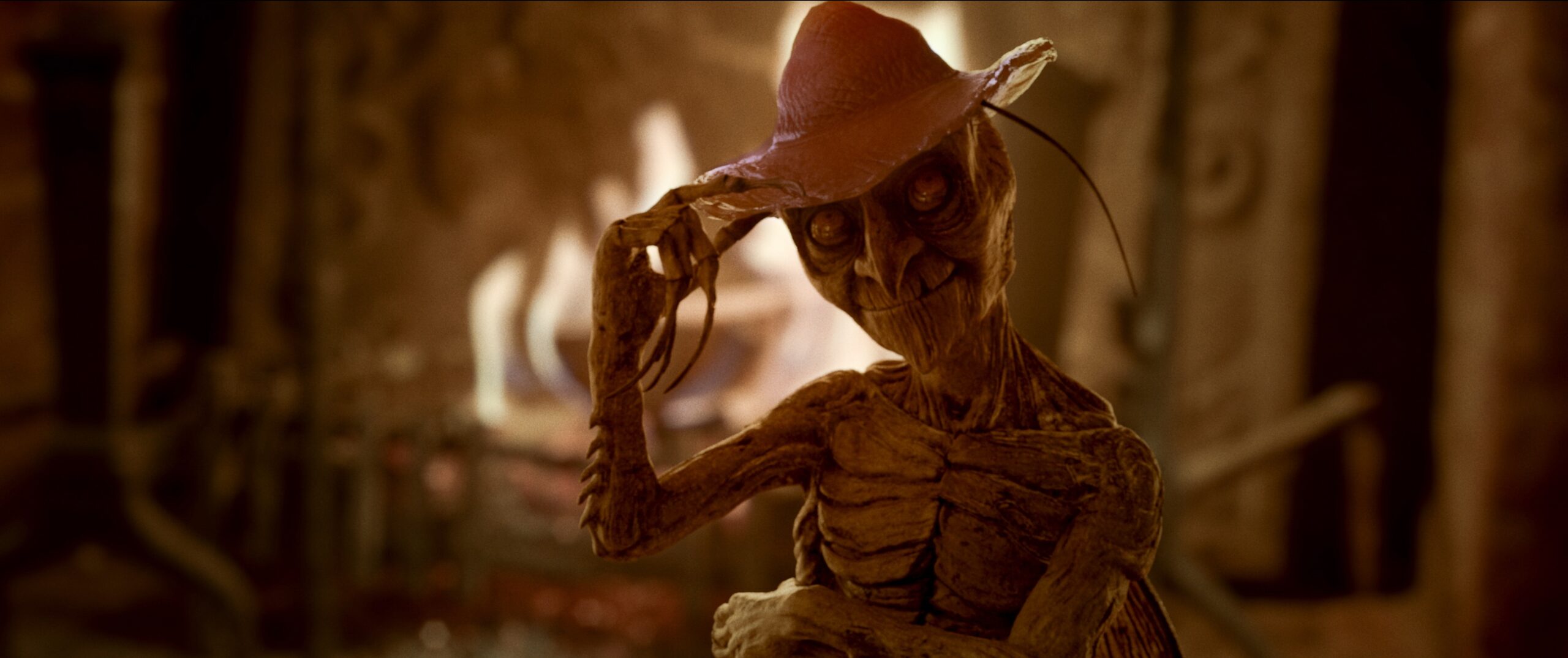
Englund is set to scare audiences again as a malevolent reimagining of Jiminy Cricket in Pinocchio Unstrung, but he’s also been responsible for many more macabre monsters.
The Cricket (Pinocchio Unstrung)

Winnie the Pooh: Blood and Honey has somehow spun a morbid experiment in public domain exploitation into its own cinematic universe, the Twisted Childhood Universe. There’s been increasing promise in the TCU’s various films, which has also led to a growing list of capable horror guest stars, such as Roger L. Jackson, Richard Brake, and now Robert Englund. Englund is by far the most impressive name to attach himself to one of these movies, and Pinocchio Unstrung certainly doesn’t squander the opportunity to have him on board as its terrifying take on Jiminy Cricket. Englund’s performance as “The Cricket” in Pinocchio Unstrung becomes a sinister subversion of the classic character who is meant to function as Pinocchio’s conscience and moral compass.
Englund’s Cricket is instead the ultimate instigator who perpetually pushes Pinocchio into greater violence that condemns humanity and its many misgivings, rather than idolizing all the “real boys” in the world. Pinocchio Unstrung is a love letter to practical effects and old-fashioned animatronics and puppetry. This means that Englund just provides the voice for Cricket, but it’s still a deeply sinister performance and one of the most unnerving characters to appear in the Twisted Childhood Universe. Once again, Englund is careful not to just repurpose his Freddy Krueger persona, and he instead develops an original voice that plays into past renditions of the character. There’s a palpable rage and disdain in Englund’s Cricket that turns him into a threatening loose cannon and makes the audience forget that he’s only a few inches tall.
The Phantom of the Opera (The Phantom of the Opera)

The Phantom of the Opera is a foundational horror story that’s still being explored over a century later. 1989’s cinematic adaptation of Gaston Leroux’s 1910 classic doesn’t always get the respect that it deserves, despite it containing one of Englund’s most nuanced horror performances. Directed by Dwight H. Little, who previously helmed the underrated Halloween 4, The Phantom of the Opera operates as a gorier take on Leroux’s source material that feels like a lost Hammer Film picture. The titular Phantom is the perfect role for Englund following A Nightmare on Elm Street, and his participation in the picture was initiated by Englund promising his agent that he’d do another horror project after Elm Street’s success.
Englund was excited to tackle an iconic character who had previously been portrayed by formative horror legends like Herbert Lom, Claude Rains, and Lon Chaney. Englund beautifully fits the mold and is sublime casting for this ‘80s take on the character. Englund taps into a powerful dichotomy between the Phantom’s brutal and tragically sympathetic nature. It’s a role that’s significantly deeper than Freddy Krueger and better explores Englund’s range as an actor, which helps get him away from cheesy one-liners. It also doesn’t hurt that Little concocts a uniquely twisted take on the Phantom’s disfigurement, which was achieved by sewing human skin onto Englund’s face. The modern-day sequences that bookend the film were meant to tie into a planned sequel, The Phantom of the Opera 2: Terror in Manhattan, which unfortunately never came to fruition.
Victor Creel (Stranger Things)

Love it or hate it, Stranger Things assembled some impressive guest stars that took advantage of their respective legacies as ‘80s genre legends, such as Linda Hamilton, Matthew Modine, Cary Elwes, and Robert Englund. Englund’s turn as Victor Creel in the streaming hit’s fourth season is one of the series’ best performances and a role that rises above the mediocrity around it. Victor Creel is an opportunity for Englund to actually subvert expectations and play against type. It’s brilliant casting that initially conditions the audience to be wary of Creel and view him as a frightening threat. This perception is reinforced when Creel is encountered in a psychiatric ward and horrifically blinded.
Creel’s disturbing eye-gouged appearance is revealed to actually be a symptom of his tragic life and the psychological torment he received from Vecna. Creel is hard to look at, but there’s nothing to fear about him. He’s led a sad life that’s filled with inescapable guilt. He’s more like one of Freddy Krueger’s victims than Freddy himself. Englund goes above and beyond as Victor Creel, and the emotional monologues that he delivers are among some of the actor’s best work and proof that Englund’s still got it.
Marquis de Sade (Night Terrors)

Tobe Hooper’s Night Terrors is a particularly forgettable ’90s horror film that faced a litany of production problems and changes that certainly didn’t do it any favors. The story is a mess, even for a Cannon Video production, but it provides the novelty of Englund pulling double duty as the cruel Marquis de Sade and his modern day descendant, Paul Chevalier. Night Terrors banked on the novelty of Hooper directing Englund as one of history’s greatest monsters, and his performance is easily the best thing about this movie.
There’s an unabashed glee to Englund’s work as the Marquis de Sade that’s reminiscent of Freddy Krueger’s twisted jubilation over his creative murders, yet it doesn’t just feel like a carbon copy of Englund’s iconic role. There’s an appreciated degree of restraint going on before the film goes off the rails and incorporates supernatural elements and abstract dream sequences. Chevalier and his modern cult worship the Marquis de Sade as a deity of torture and liberation. The nightmare sequences that involve the Marquis de Sade are the most chilling and make this figure look as frightening on the outside as he is on the inside. There’s enough to latch onto here, even if the film as a whole is a mess, and Englund doesn’t squander the opportunity to play two sides of the same creepy coin.
Scarecrow (Injustice 2)

Robert Englund is no stranger to voiceover work, and he’s voiced his share of macabre and memorable characters over the years. That being said, one of his most inspired roles is the work that he did in NetherRealm’s dark DC Comics-based fighter, Injustice 2, where he plays Jonathan Crane, better known as the Scarecrow. There’s a certain tongue-in-cheek brilliance to having Englund voicing the Batman rogue who is the self-appointed “Master of Fear.” There’s certainly a meta quality to Englund’s casting here, right down to how some of his dialogue explicitly references Freddy Krueger one-liners like “Welcome to your nightmare” and “Now I’m playing with power.”
Englund doesn’t just phone in this performance or replicate his work as Freddy. The actor cultivates a unique voice for Scarecrow that cuts to the core of this character in a menacing manner. Englund’s Scarecrow is raspy, erratic, and honestly one of the better takes on Dr. Crane. It makes one wonder what he’d be able to accomplish if he were playing the part in live-action. He takes a simple role and breathes fresh life into it. Curiously, it’s not his first time playing a Batman villain. He does comparably interesting work as The Riddler in The Batman and the more obscure sorcerer, Felix Faust, in Justice League.
Evil Bloodthirsty Brian (The Hughleys)

There’s a surprising relationship between horror icons and sitcoms, with Robert Englund being no stranger to adding a devious dose of terror to a farcical comedy. Englund shows up as a playful take on Lucifer in Married…with Children, but he also provides a genuinely chilling performance in the first season of The Hughleys. Season one’s “Storm O’ the Century” is centered around the Hughleys and Rogerses getting stranded at a seemingly haunted hotel during an intense blizzard.
“Storm O’ the Century” functions as a proper love letter to horror fans, with genre guest stars that include The Addams Family’s John Astin, The Shining’s Shelley Duvall, and Robert Englund as the comically-named Evil Bloodthirsty Brian. The episode certainly prioritizes its comedy, but it manages to also be legitimately creepy thanks to a locked-in performance by Englund. He’s used sparingly, but always to punctuate a particular scene and function as a jump scare. Evil Bloodthirsty Brian sports a ghastly scar and has a look that’s just frightening enough to be included on a ’90s sitcom. Anyone who is curious about Englund’s performance can check it out for free on Tubi.
You must be logged in to post a comment.