Editorials
[BEST & WORST ’11] David Harley’s List of the Best Horror Films of 2011!


Like my worst-of list, my best-of compilation was really easy to put together. There was quite a bit I liked this year and, unfortunately, six of the films below haven’t been released stateside yet – The Divide and Kill List are around the corner, though. Every year, I toy with the idea of not including unreleased films because it leaves little room for discussion once it’s posted, but in the end, I just wouldn’t be happy with the list- for purely selfish reasons, it’s a little easier to do it like this since I wouldn’t have to hold off on (and possibly forget to use since I saw it so long ago) films like The Loved Ones, which I used last year.
Out of the thirteen films on this list (including three honorable mentions), more than half are foreign, six are performed in a foreign language (seven if you count hood slang), one received a perfect score from me, and zero are remakes, sequels, reboots, or prequels.
Best Horror of 2011: David Harley
Micah (Best/Worst) | Lonmonster (Best/Worst) | Evan Dickson (Best/Worst) | Lauren Taylor (Best/Worst)
Posters (Best/Worst) | Trailers (Best/Worst) | Performances (Best)

It does everything Scream 4 does, but better and with a time-traveling bear.

Atmospherically shot by frequent collaborator Pablo Rosso, Sleep Tight shows a lot of growth for Balaguero, who up until now had a terrible track record for solo efforts. Marini’s script might be built upon a simple, familiar premise but the characterization is excellent, giving Tosar the ammunition needed to create one hell of a creepy villain.

Sean Durkin’s Polanski-ish tale of reintegration, family and paranoia is an intelligent slow-burn with a great vague ending. Elizabeth Olsen is fantastic as the confused and mentally-unbalanced Martha, whose reality bounces back and forth from the disturbing memories she has of living in a commune, and being under the care and supervision of her older sister Lucy (Sarah Paulson). The way the film functions, leaping from dreams and memories to “reality” is well done, and the relationships Martha has with her Lucy – who functions as her sister and mother – and Patrick (John Hawkes), a smooth talking cult leader who brainwashed her with a false sense of security and belonging, are intense and give way to some memorable intimate moments.

I can’t even begin to explain how excited I am for The Wicker Tree next year, but Kill List definitely left my folksy, religious horror appetite satisfied in the meantime. Ben Wheatley’s follow-up to Down Terrace boasts incredibly intense performances by stars Neil Maskell and Michael Smiley, and features a doozy of an ending that will unhinge even the most hardened of genre fans.

The Divide is a terrifying and bleak vision of the future whose performances and images will stick with you for days after you watch it. Xavier Gens’ direction and Laurent Barès cinematography create a moody, claustrophobic atmosphere that never feels stale despite its closed-quarters setting. The tone is vile and the characters devolve into sickening states of being (Ventimiglia and Eklund are really fantastic at being gross cavemen), but the reality-based approach to Gens’ end of days is enough to make it the best apocalyptic tale this year.

Home invasion films traditionally don’t leave you feeling good after the credits start rolling, even if there’s some sort of resolution. We like to think we’re safe in our homes, so the scenario is bleak, frightening, and kind of joyless, but You’re Next takes that expectancy and throws it out the window. Writer Simon Barrett and director Adam Wingard managed to make a bunch of guys laying siege to a house feel fresh, all thanks to some great humor and wit.

Livid is a haunted house movie about a bunch of kids that try to rob the wrong woman and it functions in that sense; it’s just that everything else has a very lucid quality to it. Rooms appear and disappear out of thin air, ghosts show up in one scene and never make their presence known again, and things that have no business being in the same movie are thrown together, but the concoction of del Toro, William Castle, Hammer, and European splatter rationale is surprisingly solid.

Pedro Almodovar skillfully throws in everything and the kitchen sink in his perverse take on Georges Franju’s controversial Eyes Without A Face without it self-combusting. Intelligent and provocative, The Skin I Live In is a beautiful, funny, weird, and shocking experiment done right.

The transition of Attack The Block‘s anti-heroes into traditional heroes is well done, the humor is spot on, and the creature design is creative and nifty. Joe Cornish’s script does a great job at reinvigorating the “kids fuck stuff up” genre, but it also gives a dose of heavy – and interesting – commentary when Moses thinks out loud about the government corruption; it’s hard out there and nobody’s making it easier. That’s one introspective kid.

Kim Jee-Woon is one of the best directors of the last decade, creating noteworthy films like A Tale Of Two Sisters, A Bittersweet Life and The Good, The Bad, The Weird, so it should come as no surprise that I Saw The Devil is an incredible serial killer opus that is without a single boring moment. Lee Byung-hun and Choi Min-sik give compelling performances as two men consumed with revenge anger and the story is as thrilling as they come, but if there’s one thing that stuck out to me, it’s the mind-blowing (and sure to be iconic) in-car fight sequence.

If you ever wondered what the really bizarre Japanese cousin of Fargo was like, Cold Fish is for you.

TrollHunter‘s tone isn’t quite straight-faced and isn’t super silly, striking a balance between the faux-realism set up by the cinema verite style and rules, and the low-budget CGI and parody of bureaucracy – a topic not explored this well since Brazil. Adding that extra layer of playfulness with the Jurassic Park references is only the icing on the cake.

Melancholia isn’t quite the rush that Anti-Christ was (there’s no “Chaos Reigns” equivalent to be found), but it is a great companion piece, continuing von Trier’s exploration of depression. Some people found Melancholia to be uplifting and a beacon of hope, but Kirsten Dunst sells her chronic condition so well that I fell into this daze afterwards. It’s a powerful performance, and easily her best since Virgin Suicides.


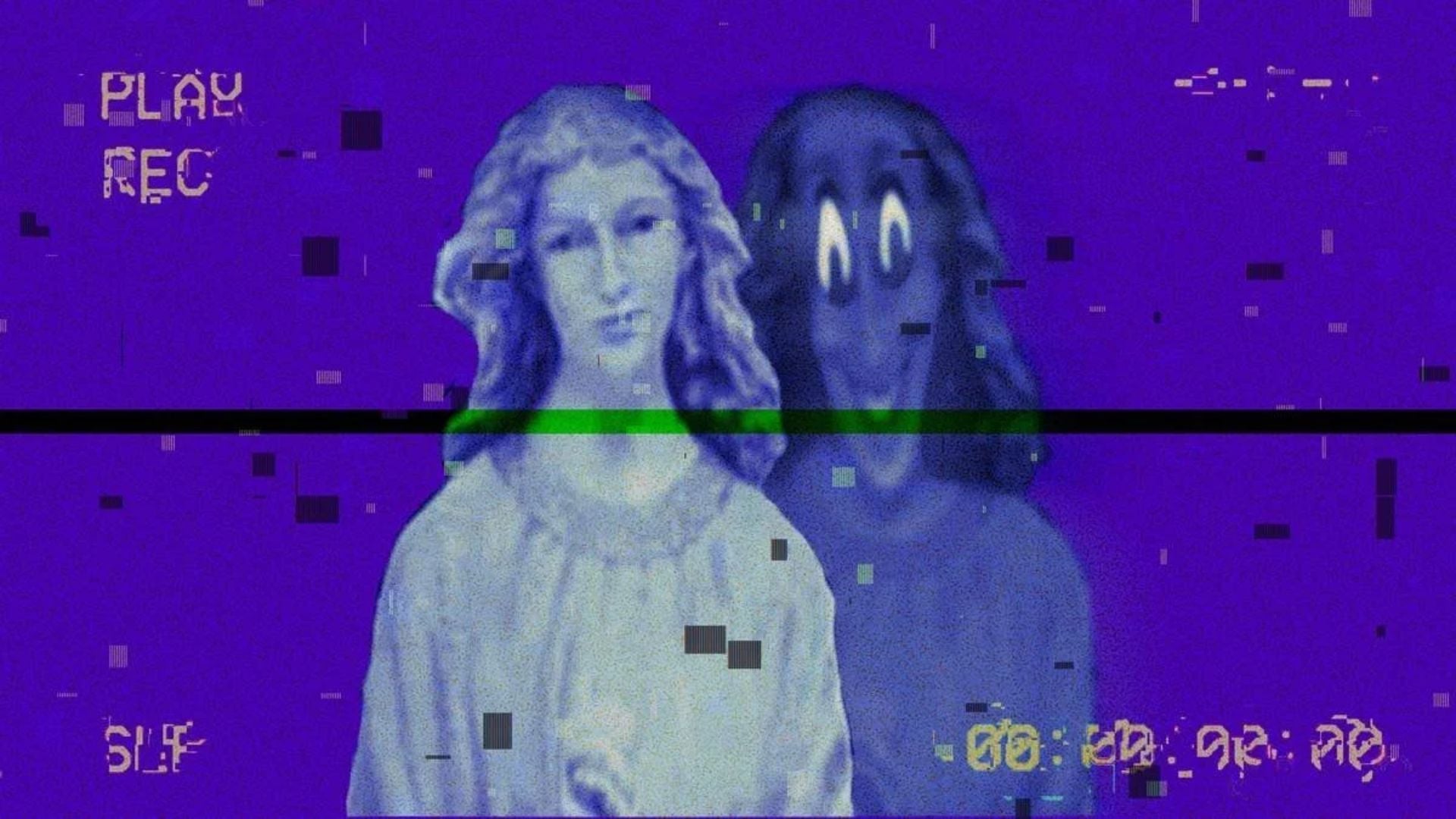
I first heard about The Mandela Catalogue through a couple of nephews who were obsessed with the ARG’s sinister mythology. It was only after watching Wendigoon’s in-depth analysis of the series that I realized just how deep this rabbit hole goes.
In fact, I’d already been exposed to the nightmarish visuals of Alex Kister’s YouTube creation for years at that point without even realizing that it was the origin of several viral “cursed images” and spooky memes that had leaked into the wider internet – with this viral element actually being a part of the Catalogue’s overarching narrative.
Flash-forward to 2026 and the unprecedented success of Kane Parsons’ Backrooms has led to Hollywood betting on horrific internet properties with existing fanbases, which means that Kister’s unique hybrid of both religious and analog horror is finally headed to the big screen with a script written by Kister himself alongside Tyler Clifton.
While this news shouldn’t be too surprising if you’ve been keeping up with the ongoing success of The Mandela Catalogue (both myself and Wendigoon having previously predicted that the series would inevitably make the jump to theaters one day), plenty of horror fans are likely confused as to why so many folks are excited for what appears to be a Hollywood adaptation of a series of creepy .jpeg images under a VHS filter.
With that in mind, today I’d like to invite fellow readers to accompany me as I explore the origins of Alex Kister’s viral hit and attempt to explain exactly why we should all be excited about the Mandela Catalogue adaptation!
From High School Writing Project to Internet Horror Phenomenon

The first seeds of The Mandela Catalogue were sown when Kister was still in high school and developed a writing project subverting religious tropes in a world where biblical history had been altered by demonic forces. A little while later, Kister came across an analog horror contest on Reddit and decided to adapt his ideas into a standalone video where he would edit a religious kids’ cartoon –The Beginner’s Bible: The Nativity, to be specific- into something far creepier. This is how the iconic Overthrone video was born, with this viral short film taking on a life of its own as fans demanded more eerie content from Kister.
Though the video was originally meant to be a one-and-done sort of affair, with Kister actually regretting some of its primitive visuals and considering the editing amateurish and “YouTube-Poop-like” when compared to his current standards, fan reaction and free time during the COVID-19 pandemic encouraged the (then) seventeen-year-old filmmaker to continue producing content set in this same world. The Mandela Catalogue name was inspired by the Mandela Effect conspiracy theory, as the series would slowly begin to explore the subtle horror of alternate histories.
Inspired by existential dread brought on by extended periods of quarantine as well as a personal crisis of faith, Kister continued to expand his alternate timeline where the rise of Christianity had been prevented by what was presumably the Devil disguised as the Archangel Gabriel. This alternate course of fictional events led to the existence of certain paranormal anomalies that had come to be accepted as “normal” by the 1990s, which is why most of the series’ supernatural horror is presented in such a matter-of-fact manner.
Most of this background information and religious lore is delivered by increasingly cryptic broadcasts and in-universe PSAs, as well as the occasional found footage video, that often have to be decoded by clever viewers. Of course, it’s the consistently disturbing imagery that made the series so popular – much of which was originally created by Kister on a smartphone!
The Alternates: Horror’s Most Unsettling Modern Monsters

The show’s early episodes mostly take place within the fictional Mandela County in Wisconsin and depict life in a world where demonic entities are capable of using media to enter our reality. This process usually involves scaring victims into killing themselves and then repurposing their bodies as horrific doppelgangers referred to as “Alternates”. This terrifying phenomenon has become so common that local police already have specialized procedures in place to deal with the issue, though this usually consists of simply ignoring calls for help so as to avoid spreading so-called “Metaphysical Awareness Disorder” any further.
Over time, Kister would expand this mythology and incorporate different kinds of Alternates into the mix, though the story never stopped deconstructing religious concepts. The series’ second volume exponentially increased both video quality and the overall narrative scope as we began to follow the lives of characters who had already grown up in this dystopian hellscape where the government is forced to prohibit religion, television, and even mirrors in the hopes of mitigating the damage done by the ongoing invasion of otherworldly entities.
The really interesting part comes into play when you realize exactly how the Alternates make use of scary media in order to spread their demonic influence, with the analog horror of it all being a diegetic part of the story and something of a memetic trap orchestrated by the false Gabriel.
I particularly appreciate how some characters begin to suspect that there’s something wrong with their version of reality and that things weren’t meant to play out this way, especially when Mark utters the haunting line “who have I been praying to all this time?” That’s why I think The Mandela Catalogue is an effective piece of religious horror even if you don’t subscribe to the Christian worldview, as the mere idea of a world where evil has already won is a universally terrifying concept in and of itself. Not only that, but the series’ uncanny analog imagery alone is already worth the price of admission, as you’ve likely already noticed by looking at the pictures accompanying this article.
Why The Feature Adaptation Could Be Horror’s Next Big Success

It’s actually been a whole year since Kister first announced that he had been working on a feature-length screenplay for a Mandela Catalogue movie since 2022, with his proposed story following an ensemble of high-school graduates who uncover a supernatural conspiracy after the mysterious disappearance of a fellow student. This premise sounds similar to narrative elements present in the series’ second volume, but I’m pretty sure that Kister is going to go the Kane Parsons route and make the movie more of a spin-off than a re-imagining of its source material.
While notable Hollywood producers like Aaron B. Koontz, Scott Stuber, and Steven Spielberg himself are backing the upcoming project, I feel like there’s no one better to adapt this deeply personal exploration of faith and the dark side of communication than the person who first came up with it. That’s why I can’t wait to see Kister’s work on the big screen, as I have a feeling that this young filmmaker is the next one on the list about to make cinematic history – especially since this is clearly a passion project that has been in the works for years at this point!
That being said, there’s always a chance that the film could end up unleashing a fresh wave of Alternate incursions, but I guess that’s just a risk we’ll have to take.
You must be logged in to post a comment.