Movies
A Brief Interview with ‘Dark Country’ Director/Star Thomas Jane!

Tom Jane is a guy you gotta love. Even a bad film (The Tripper) is pretty good whenever he’s on screen, and a look at his filmography reveals a guy who isn’t afraid to try anything. If you make a list of all the movies in any one genre, you will find a Tom Jane movie in that list (even romantic comedy!) And now you can add film noir to the lineup, as his film Dark Country is now in stores from Sony. But his acting’s not the real news here; it’s the fact that he directed the film as well (his debut in that area), and we were eager to get him on the line and chat a bit about what it was like on the other side of the camera. BD: I noticed that it wasn’t just the overall tone, but even the props in the movie (soda cans and things of the sort) had this late 50s/early 60s aesthetic to them, was that something you added as a director or was that in the script?
Tom Jane: “Definitely something I brought to the picture. I am really inspired by noir film, and by the Twilight Zone… this film felt like an extended Twilight zone episode to me. And then for film noir, particularly the cinematographer John Altman, who worked with Anthony Mann on films like Raw Deal, and He Walked By Night. I wanted to make something very modern, but also timeless, yet very steeped in film noir. I came up with a visual style that was influenced by these things but also something a little unique that I can call my own. Watching the movie, I don’t think you can say that I’m aping anyone else’s style. The type of story that it is dictated the style of the film. And also I’m a big comic book guy, I love graphic novels, I published a couple of my own through my company Raw Studios. I worked with Tim Bradstreet who is a fantastic illustrator in the comic book world – he did all of the Punisher covers – and he was the visual consultant and production designer on Dark Country. And Bernie Wrightson, who is a master horror illustrator, he did the character designs for Bloody-face. So these influences created the style and tone that you see in the film. The muted colors, the crushed blacks, not a lot of mid-tones, almost like a black and white movie. When I developed the script with Tad Murphy, that was the way I wanted to tell the story, with a unique visual structure.”
BD: Now as an actor, what was it like working with that particular director?
Jane: (laughs) “I was nervous about the whole thing. There’s no handbook on how to direct yourself as an actor, or act with yourself as a director. So I called up Mel Gibson and he talked to me on the phone for an hour, about his experiences directing himself, and he told me when he directed himself for the first time, HE was nervous, and he called up Clint Eastwood. And Clint told him that when HE made his debut, he was also nervous, and he called Don Siegel. And Don told Clint, “Don’t sell yourself short; spend as much time on yourself as an actor as you would on any other actor or any other member of the production. Don’t feel like you have to only do a take or two as an actor so that you as the director can move on to doing other things. Resist that temptation, and take as much time as you need to make it right.” Mel also told me other things, like having a strong AD and good cinematographer…. when I got off the phone with him, I felt helped. He gave me the confidence that I needed to go out there and do this job.”
BD: Talk about casting Ron Perlman.
Jane: “I’m a friend of Ron’s, and I think he FITS in the genre. The movie is made for people who like this left of center stuff. It’s a very graphic novel oriented film, with influences from film noir, Carnival of Souls, cult movie influences…. this is a movie for people who enjoy that type of stuff, and to me, Ron Perlman is the perfect actor for a movie like this. He’s got a great following, and I’ve been a fan of his for a long time, and we became pals when we did Mutant Chronicles together. So we had a blast, and Ron coming on board… he just fit the story perfectly. Very proud to have him in my first film, and he also helped give me confidence as a director, he’s very easy to work with. A fantastic guy. Damn lucky to have him.”
BD: This was shot in 3D, but it doesn’t have that sort of “Comin’ at ya!” quality that a lot of 3D films have…
Tom Jane: “Absolutely. Paradise FX is a wonderful 3D company, and I’m a member of the Southern California Stereo Club, and have been for several years. And when you really get into 3D, you find out guys who love 3D, they HATE that “Comin’ at ya” bullshit. The crap where they make shit come at you, it’s gimmicky and it’s bad 3D. If 3D is going to survive, we need to incorporate 3D into the meat of the story, and not rely on it for these silly gimmicks. My premiere of the film is this Friday at the Long Beach Comic Con. It’s going to be in 3D, we’re going to have a couple hundred people crammed in there to show the film for the first time to the public in 3D. One day when 3D becomes available in a decent way for home, like right now they’re starting to come out with 3D televisions, hopefully we will have a 3D disc of Dark Country. I shot the film for Sony and it was always intended to be a direct to video release, but having the 3D version of it to show makes it even cooler. One day we will be watching it in our home, but not now, the anaglyph red and blue glasses look terrible. It would ruin the movie. I’d much rather have a great looking 2D version and do convention screenings and stuff, live, in 3D.”
BD: Can you give us an update on Bad Planet? New issues soon?
Jane: “I just did the oversized collection, it’s bad-ass! It will be out at the end of the year with a Basil Gogos cover, which is awesome. And I just brought on Bruce Jones to write the next six issues. It’s a 12 part series, and we’ve done the first six. You can buy the black and white collection of those 6 through my website rawstudios.com, or through Amazon. Then next year we will bring out the next six issues, written by myself and Bruce Jones, I’m really excited. Me and Bradstreet just got off the phone day before yesterday with Bruce, he was a fan of the first six and now he’s going to write the next six. Very excited about the future of Bad Planet. I gotta find a new artist though; I lost James Daly to the video game world, which really sucks.”
You can pick up DARK COUNTRY at a retailer near you.


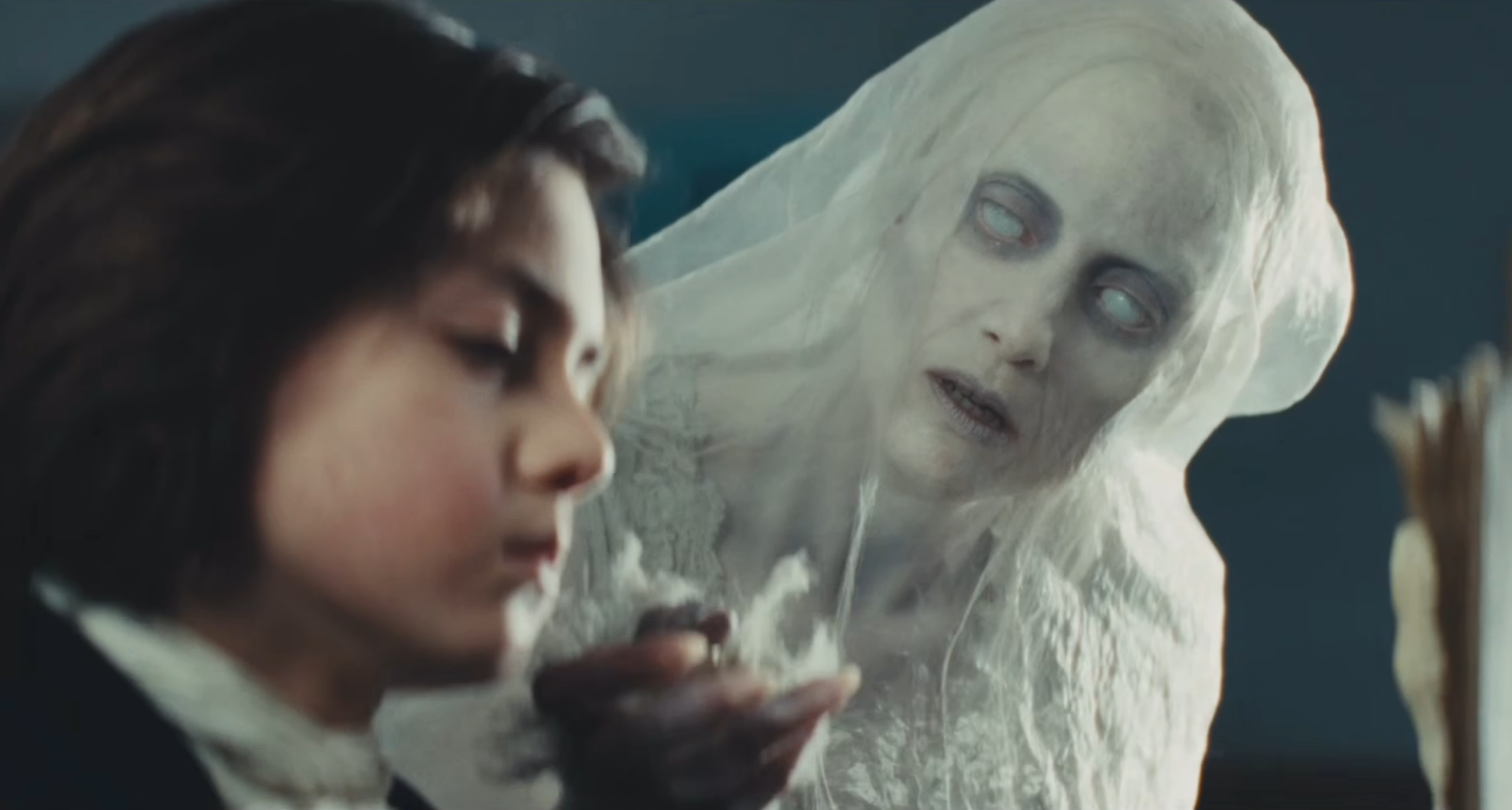
The trailer for Ti West’s upcoming adaptation of A Christmas Carol raised a lot of eyebrows when it dropped earlier this week. While plenty of folks initially dismissed Ebenezer as a derivative project meant to cash in on the recent wave of unnecessary prequels that expand the backstory of beloved characters (such as 2023’s Wonka), Charles Dickens’ original novel already made a point of exploring Ebenezer Scrooge’s origins in detail – meaning that this new film is likely just a particularly faithful adaptation of the source material under a different name.
Couple that with the fact that the movie is being helmed by a genuine horror auteur and I think it’s safe to say that the latest iteration of the first modern ghost story is in good hands.
That being said, one detail that immediately jumped out at me during the brief teaser (other than a blink-and-you’ll-miss-it nod to Johnny Depp’s iconic bedroom death scene from the original A Nightmare on Elm Street) is the fact that many of Ebenezer’s ghosts appear to have been directly lifted from the iconic John Leech illustrations that accompanied the first edition of Dickens’ novel.
Here are a couple of stills from the trailer compared to the original artwork:

The Ghost of Christmas Yet to Come in ‘Ebenezer’ and ‘A Christmas Carol’

The Phantoms in ‘A Christmas Carol’ and ‘Ebenezer’

Marley’s Ghost in ‘Ebenezer’ and ‘A Christmas Carol’
Mainly working with old-school wood and steel engravings that would later be transferred to print, Leech was instrumental in crafting the iconic look of history’s most influential phantoms – especially since Dickens is said to have been deeply involved with the creation of these so-called “comic illustrations.”
And since the novel is commonly said to have popularized spiritualism in Victorian England, much of the ghostly iconography that we still see in genre media to this very day (including some of Ti West’s previous films) can be traced back to the author’s partnership with Leech.
Ebenezer won’t be the first A Christmas Carol adaptation to borrow heavily from these designs, but I can appreciate how Ti West is incorporating an important part of horror history into his latest film.
Ebenezer will be available in theaters starting November 13.

You must be logged in to post a comment.