Editorials
10 Video Games That Were Unintentionally Terrifying

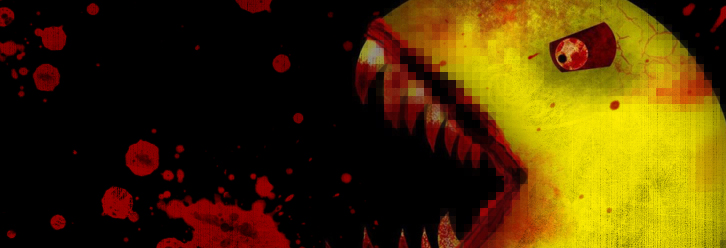
There are some who say the horror genre is dying, or that it’s lost its mainstream appeal as video games continue to force their way into the pantheon of “accepted” forms of entertainment, right alongside music and films. I say that’s a load of crap. The horror genre isn’t dying, we’re just not recognizing many games that are actually far more terrifying than the scariest Silent Hill or Fatal Frame could ever hope to be. Here are ten games that are supposedly fun, quirky, or in some cases, adorable, when they’re actually horrifying.
10. Limbo

Limbo wasn’t advertised as a “horror” game, but if the next Silent Hill were to feature a little boy with glowing eyes who’s trapped in a dark and dangerous world brimming with deadly traps and hideous monsters, horror fans would eat that shit up. Limbo wasn’t scary because it was supposed to be a quirky puzzle platformer with an eerie art style, but if it wasn’t so dark it’d be easier to see all the horrifying ways this poor kid dies while trying to save a young girl. The worst part? When he dies, almost always in a cruel and unexpected way, he has to do it all over again.
9. Any Kirby Game

I don’t think there’s a person on this planet that truly sees the horrors that lie hidden deep within every Kirby game. It’s just too darn adorable to alert our primal instinct to run from things that want to eat us. Kirby is a predator with an insatiable appetite for literally anything and everything that’s unfortunate enough to get in range of the black hole it calls a mouth. Its pink exterior is an evolutionary trait honed over years of evolution, as it’s designed to lure its prey—i.e. you—in close enough so it can suck you into its mouth, kicking and screaming, to a place where you’ll never be heard from again. Now try and shake the thought that there’s a Kirby hiding in your closet when you go to sleep tonight.
8. Bulletstorm

On the outside, Bulletstorm is an insanely addicting first person shooter that awards you with bonus points for killing your enemies in the most creative and brutal ways possible. Sounds like a solid shooter, but when you stop to think about it, what Bulletstorm is really about is a bunch of psychopaths. Now, you could say this about a lot of shooters, but where Bulletstorm decides to take an extra big slice of the crazy pie is when you realize the supposed “good guys” in the game—you know, the ones who try to be clever and/or creative with their mass murdering—don’t know about the whole bonus points for creative killing. This means they’re wrapping explosive bolas around people’s necks, kicking them into their air, and firing a firecracker into their ass to watch them explode into shower of squishy giblets just for fun.
7. Twisted Metal

Even the tamest of drivers has a bit of a road rage problem. So what if there was a world where running other vehicles off the road wasn’t just something everyone did, it’s actually encouraged? That’s Twisted Metal, where you aren’t just rewarded when you run a fellow driver into a car compactor, you’re even given the tools to make the job of transforming them into smoldering heaps of ravaged metal as easy and as fun as possible. Twisted Metal is the Bulletstorm of the racing genre.
6. L.A. Noire

Okay, stick with me for a second, because this one requires a little explaining. On the surface, L.A. Noire is a neo-noire crime video game where you step into the shoes of an up and coming investigator with an aptitude for solving crimes. Now, let’s scratch off that surface like a five dollar lottery ticket to see the real horror. On the surface, it’s just another beautifully crafted open-world game from the people who brought you innovative titles like Grand Theft Auto: Bowling With Roman and that game where you choke people with bags. In L.A. Noire, you’re a detective in a world where the entire human race doesn’t know they’re actually robots, because that’s literally the only reason I could come up with that explains the fact that every person in that game has such a realistically human face on a stiff, robotic body. At some point, whether it was the government’s doing, aliens, or both, the people of the world were unknowingly transformed into a (possibly controllable) race of cyborgs. Or something.
5. Viva Pinata

Viva Pinata has officially done for pinatas what It did for clowns. It’s a deceptively quirky and colorful little game where you, as the omnipresent pinata god, are tasked with luring in the “good” pinatas while keeping out the “bad” ones. Also, pinatas can now procreate.
I’d keep going, but I don’t think I need to.
4. Any Pokemon Game

Two words: animal slavery. All right, let’s add three more words to that: animal slavery, marketed to kids. Pokemon is one of the biggest things since Pikachu. Or rather, it’s bigger than Nimbasa City. Err, crap, do you see what Pokemon has done? It’s so big the only metaphor I can use to symbolize its size is comparing it to itself. It’s also grown so large that everyone’s totally willing to overlook all the soul-stealing monsters, ghosts, terrorists, and the worshipping of apocalyptic god-like creatures.
3. Plants vs. Zombies

You know what’s scarier than having a horde of zombies and gargantuan monstrosities in your back yard? How about fucking sentient weaponized plants? Sure, Plants vs. Zombies is like adorable gamer heroin, but that irresistible cuteness was put there to make wrapping our feeble human minds around the terrifyingly real possibility of all out war between zombies and mutant fauna a little easier. I hope it worked, because if it didn’t, you’ll be the first to go.
2. Minecraft

Look, I’ve already dedicated an entire article to the many layers of pure terror that lie in wait for everyone who comes into the game looking for a “good time.” Joke’s on them, because they’ll soon find out that there is nothing fun about that game, unless you enjoy shivering on the floor of your room in the fetal position, wondering when the sweet embrace of death will come and take you away from that horrible, awful game.
1. Pac-Man

Have you ever really stopped to think about Pac-Man? I mean really think about it, because if you do it’s actually pretty terrifying. On the surface, it looks like a simple game about a yellow partially eaten pie that eats white dots while it’s chased by four colorful ghosts. Sounds like the plot of an anime. What most of us tend to glance over is the true terror that is Pac-Man. For starters, it’s about a yellow creature that’s trapped in an infinite maze with no means of escape. The possibility of escape is even cruelly teased by allowing making the exits visible, even if there’s really no way out, because walking through an “exit” only brings that poor, tormented creature back to the entrance on the other side. There’s also the little fact that the maze is haunted, and whoever controls it has placed pellets and various fruits to keep it alive long enough to continue tormenting him.




Editorials
‘Bloodstone: Subspecies II’ Revisited: A Bigger, Bolder Follow-Up to Full Moon’s Vampire Cult Classic

Horror sequels are a peculiar thing. In most cases, follow-ups to scary movies tend to retread the same formula with different victims and more over-the-top scares. This is because audiences tend to be more interested in the antagonists of these pictures than anything else, with even main characters becoming disposable when the time comes to produce a sequel.
That’s why some of the most memorable horror sequels are the ones that actually manage to hold onto interesting survivors from previous films while also pushing the story forward instead of having the same thing happen again to a different group of people. From Scream 2 to Dream Warriors (and arguably even The Exorcist III: Legion), there are quite a few of these innovative sequels to go around.
However, if there’s one franchise that deserves more attention when discussing bigger and better continuations that make the most of episodic filmmaking, it has to be Ted Nicolaou’s Subspecies.
The Full Moon classic spawned an indie horror icon, but bizarre sequel Bloodstone: Subspecies II is even more beloved than its predecessor.
Building a Bigger Vampire Saga

While the film itself takes place almost immediately after the events of the first movie, Bloodstone only entered production a couple of years after the release of the original as both Charles Band and Nicolaou weighed the pros and cons of returning to Romania to continue the series. In an effort to maximize efficiency, the team decided to invest in a trilogy where parts II and III, now fully written by Nicolaou, would be filmed simultaneously over the course of a single grueling shoot.
Much like the first Subspecies, Bloodstone’s low budget meant that the filmmakers once again had to cut corners and re-use as many of their resources as possible. Thankfully, the process was much easier this time around as Nicolaou, with the help of Romanian cinematographer Vlad Paunescu and his wife Oana, became more acquainted with local customs and made new friends. Shooting abroad still came with its own unique set of challenges due to a lack of translators and the occasional safety concerns, but the crew managed to make things work by filming things guerrilla-style and setting up shop in abandoned caves and real medieval ruins.
The director’s newfound contacts, coupled with the relative success of the first movie, meant that he was basically given free rein over an assortment of shooting locations usually considered off-limits for indie horror. That’s why Bloodstone features insanely ambitious lighting and effects work even during scenes shot in the middle of a bustling Bucharest. The filmmakers went so far as to project Radu’s Nosferatu-like shadows over local monuments as if he were a Romanian boogeyman, an idea that was actually encouraged by local cinephiles.
In fact, many of the more elaborate scenes here had originally been planned for the first movie before being discarded due to the lack of available resources. It was only with the support of Romanian fans and filmmakers that Bloodstone was able to give Radu a chance to be even more menacing the second time around.
Michelle’s Transformation Takes Center Stage

However, when it came to the American part of the crew, not everyone was able or willing to return for another round of Romanian adventuring. That’s why Radu’s human-loving half-brother Stefan (Michael Watson) is unceremoniously killed off at the beginning of the film while the role of Michelle had to be recast. Denice Duff took over for Laura Mae Tate, with the character now being joined by her sister, Rebecca, played by Melanie Shatner (yes, that Shatner).
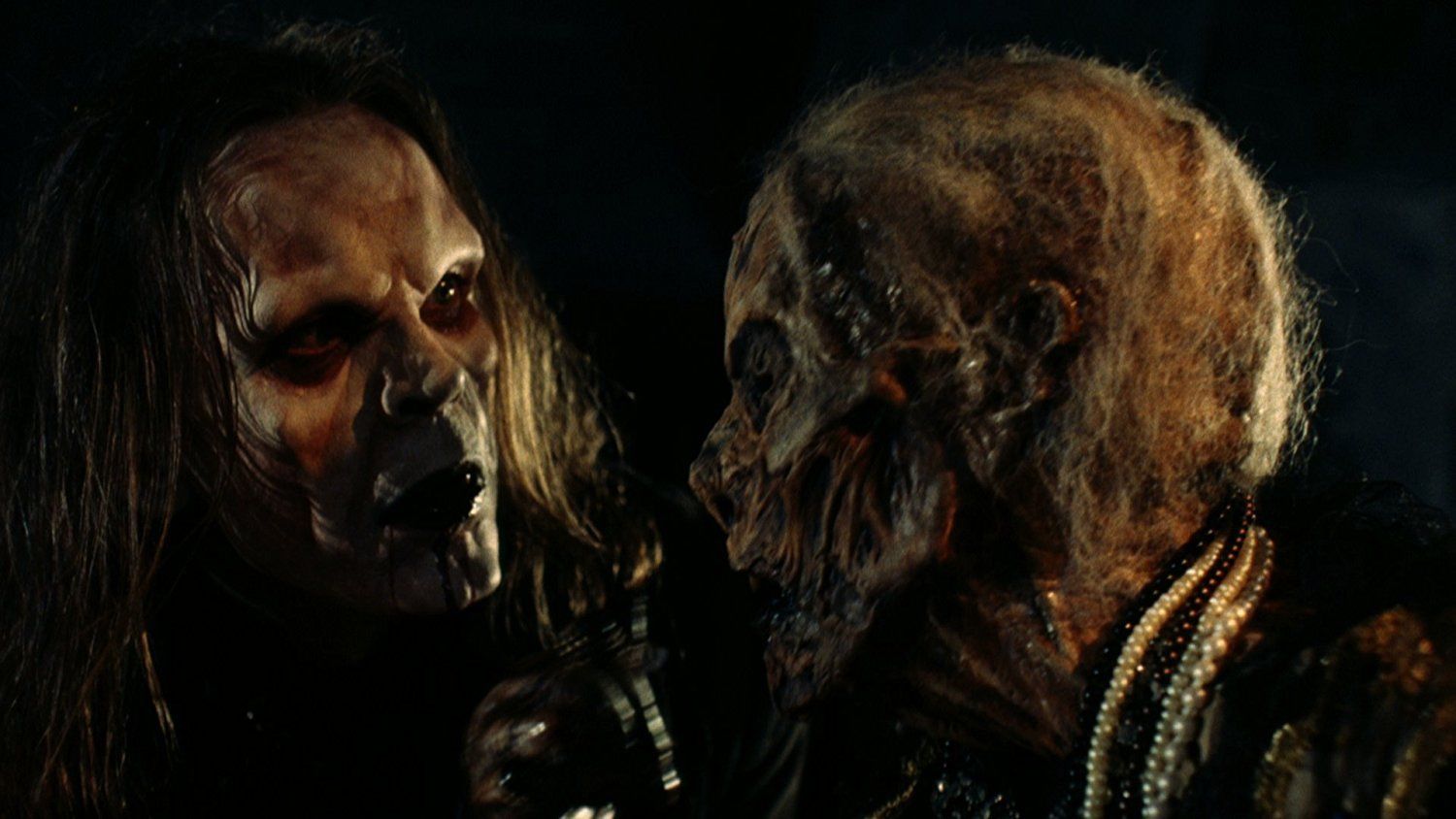
In the finished film, we follow Michelle as she awakens to her new life as a vampire and discovers that Radu has murdered her lover. Struggling with grief and her newfound bloodlust, Michelle contacts her sister overseas, with Rebecca soon travelling to Romania on an ill-advised rescue mission. Meanwhile, Radu (Anders Hove) reaches out to his undead Mummy (Pamela Gordon, underneath heavy layers of impressive makeup effects) and promises to deliver her the coveted Bloodstone artifact while also making Michelle his eternal consort.
Revisiting the movie, I was impressed with how introspective this story is when compared to the original. The sequel assumes that you’re already familiar with the previously established characters, so the story wastes no time in exploring the immediate aftermath of the previous film’s events. From Michelle’s reluctant transformation into a creature of the night to Radu’s obvious mommy issues, Nicolaou is way more interested in pushing these characters into new and uncharted territory rather than recycling existing plot points.
Practical Effects and Gothic Atmosphere Still Impress

Yet, much like the first film, it’s Romania itself that makes the movie worth watching. The ruins of Castle Vladislav are even more majestic now, and visiting the moody streets of Bucharest with its surprisingly punk-rock nightlife made for a nice change of pace when compared to the original film’s quiet village setting. Once again, the abundance of interesting locations makes the movie feel much more expensive than it really is, with the filmmakers surrounding our characters with a living, breathing environment that would be impossible to recreate in a studio.
The increased freedom also allowed Nicolaou to flex his filmmaking muscles and tackle more ambitious blocking/composition in the sequel. The low budget and tropey script mean that the visuals don’t always work, but it’s consistently clear that this neo-expressionist style could only come from a passionate team attempting to pay homage to the shadowy horror classics of yesteryear. If the retro atmosphere isn’t enough for you, there’s enough practical gore here to satisfy even the most demanding of horror hounds!
Radu himself is also far more interesting now that Hove is more comfortable working alongside an international crew, with the actor having gone on record explaining that, while he spent more time drinking vodka than working while shooting the first movie, the sequel was a much more creatively satisfying experience for everyone involved. The character’s relationship with his abusive Mummy is also a highlight of the expanded mythology, especially since the practical effects that bring her to life are just as freaky now as they were back in ’93.
My only real gripe with the horror elements of the picture comes from the glaring absence of the diminutive stop-motion minions from the first film, though I guess the surprisingly entertaining addition of Professor Popescu (Michael Denish) and his archeological antics mostly make up for that.
Bloodstone: Subspecies II is obviously the middle chapter of a trilogy, with the ending feeling a lot less definitive than its predecessor as several plot threads are left to dangle in the wind, but I appreciate how the flick explores new ground while remaining faithful to nearly all the ideas that made the original such a good time. While I don’t think it’s as big of an improvement over the first movie as some fans make it out to be, Bloodstone is definitely worth revisiting if you’re a fan of old-fashioned vampire yarns.
Tune in next time for the thrilling conclusion to this initial trilogy, Bloodlust: Subspecies III!
You must be logged in to post a comment.