Editorials
The 5 Best (And 1 Worst) Films Of John Carpenter!!!

I’m a writer/director guy. Meaning, moreso than who starred in any given film, I plan my trip to the theater based on who wrote and/or directed it. When I become invested in someone’s creative output, I’ll often follow their “voice” through all kinds of highs and lows, which means finding things to love in their lesser projects. I understand why the public at large doesn’t have the time or inclination to subscribe to this practice (though many more people seem capable of forging this kind of unbreakable alliance with sports teams), but I honestly think it’s an interesting – and compassionate – way to watch films (or listen to music).
Every career has peaks and valleys. In some careers the valleys are more severe and in others the peaks are more triumphant, but they exist. They’re unavoidable from both creative and commercial standpoints. I think it would be fun to examine this from time to time on BD (even though some of the most exciting voices in horror need another film or two under their belt to qualify), with the amount of “Bests” and “Worsts” varying each time.
First up? John Carpenter. I feel like he’s the perfect starting point. Not only does he have a large output, but he’s had one of the more interesting careers in horror, full of ups and downs (and the occasional creative triumph that he was punished for professionally).
Head inside for the 5 Best (And 1 Worst) Films Of John Carpenter.
1: THE THING

No surprise here, most Carpenter fans I talk to have either this or Halloween at the top of their list. For me, The Thing just has a better replay value. It’s an incredibly assured film, expertly paced with a perfectly dour tonal pitch. Carpenter has made several classics, but none quite as perfectly balanced. It was also his first foray into big-budget (at the time $10M was a lot for a horror film) studio filmmaking. Famously, The Thing tanked at the box office. In an alternate universe where this film was a hit, Carpenter’s post 1982 career-trajectory looks quite a bit different.
2: HALLOWEEN

Halloween has had the biggest cultural impact out of any film in Carpenter’s filmography. Without it, the slasher genre as we know and love it today wouldn’t exist (and if it did, it wouldn’t be the same – there certainly wouldn’t be a Friday The 13th). Aside from its massive popularity, Halloween is another near-perfect film. On only his third feature (after Dark Star and Assault On Precinct 13), Carpenter had mastered a sense of restraint that eludes most horror filmmakers to this day. I’m not just talking about the largely bloodless nature of the film – the decision to simply not explain how or why Michael Myers became evil incarnate is a master stroke. He just is, which is scarier than any cause and effect scenario.
3: BIG TROUBLE IN LITTLE CHINA

Initially I put Big Trouble In Little China at number four, just under Escape From New York. But, as good as Escape is, I simply don’t reach for my copy of it nearly as much as I reach for this one. China is just too much fun. It feels huge, has a great villain in Lo Pan and is more fun than the last two Indiana Jones films combined. It also plays out a neat reversal on the hero/sidekick dynamic, with Kurt Russell’s Jack Burton being way more ineffectual than Dennis Dun’s Wang Chi despite his leading man status and placement. You can really feel Carpenter spreading his wings here but, much like The Thing, his ambition went unrewarded financially.
4: ESCAPE FROM NEW YORK

Escape From New York gave birth to Carpenter’s most iconic anti-hero in Kurt Russell’s Snake Plissken in addition to an entertainingly menacing and apocalyptic vision of New York City. This film, along with They Live, really hammers home Carpenter’s mistrust of authority and actually feels a bit dangerous at times. It certainly doesn’t play it safe when it comes to its characters.
5: IN THE MOUTH OF MADNESS

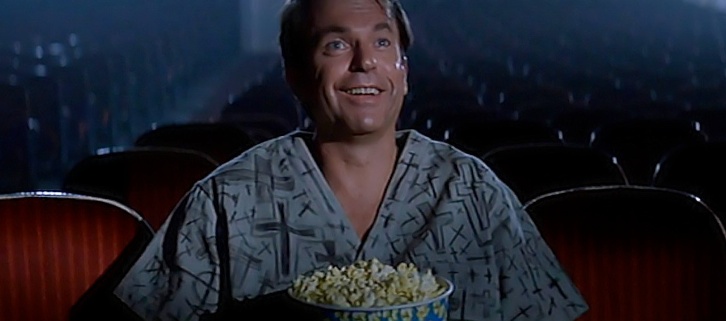
I know a lot of people would put They Live in this spot but, truth be told, that film only works for me in fits and starts (not that it doesn’t have some brilliant moments). Dark Star and Assault On Precinct 13 might be “cooler” contenders as well, but there’s something relentlessly entertaining about In The Mouth Of Madness. It has a great madcap energy, some genuinely freaky images, a great villain in Jurgen Prochnow’s Sutter Cane and a deliciously unhinged performance by Sam Neill at its center. From opening to closing credits, it’s every bit as alive as some of Carpenter’s more traditionally well regarded works.
GHOSTS OF MARS

It’s not like the five movies above are the only great Carpenter films. The tender Starman is surprisingly great and They Live works as an entertaining political statement while The Fog, Christine and Prince Of Darkness are all rock solid horror films.
While Vampires and Escape From L.A. were fairly flawed, they actually have their moments. But I can’t really say the same for Ghosts Of Mars. The red planet might be our closest neighbor, but you’d have to travel light years beyond it to find a universe in which this film actually works.
The Ward is something of an improvement, but I can’t help but agree with the general consensus that Carpenter probably feels discouraged with the film business (and with making movies in general). I can’t say I blame him, he’s made more great films than most “name” directors but has rarely attained anything resembling their commercial success. Here’s hoping he gets back in the saddle and, afforded the opportunity, makes another great film. I know he’s got at least one left in him.
What are your favorite (and least favorite) John Carpenter films?



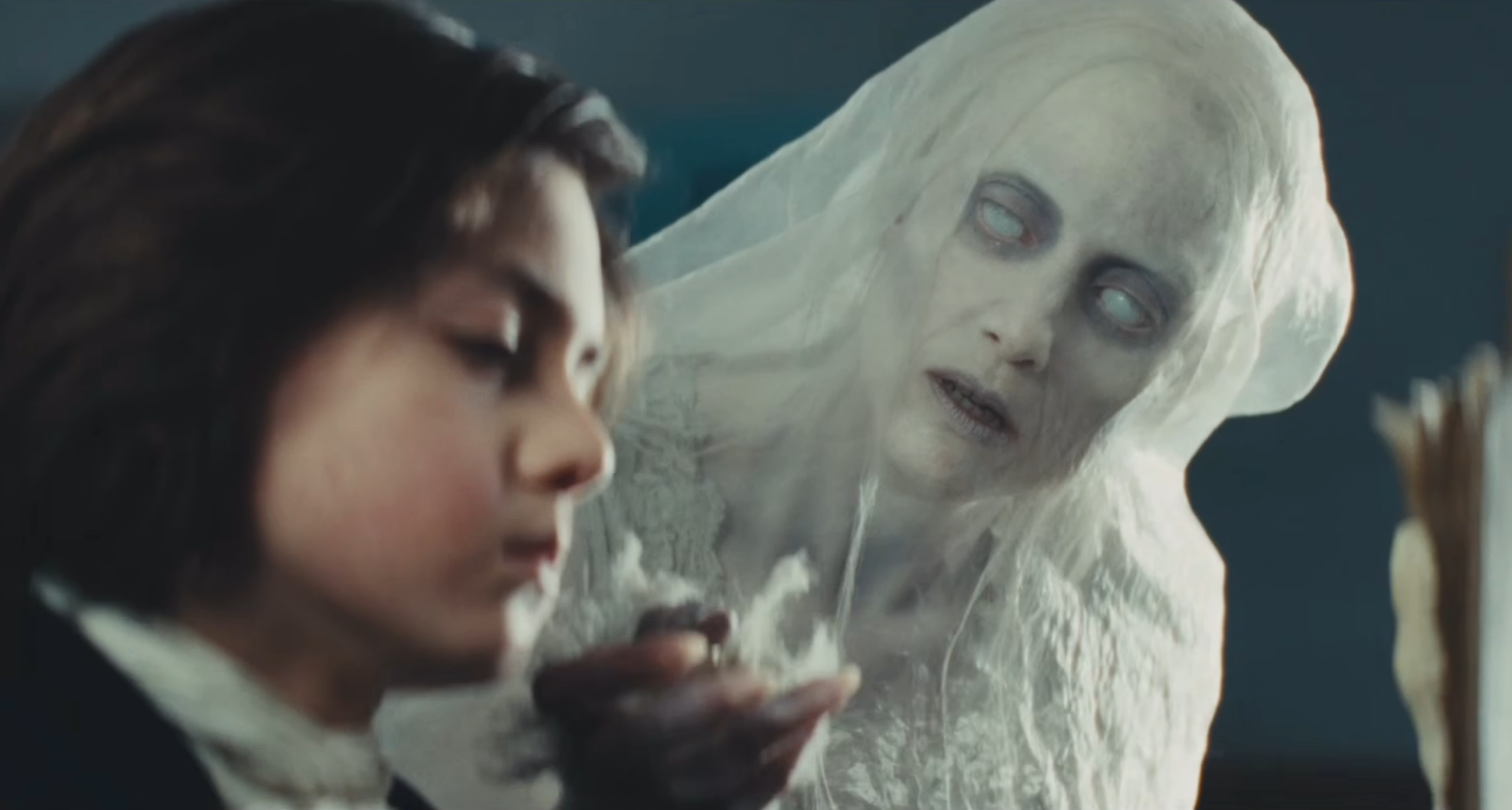
The trailer for Ti West’s upcoming adaptation of A Christmas Carol raised a lot of eyebrows when it dropped earlier this week. While plenty of folks initially dismissed Ebenezer as a derivative project meant to cash in on the recent wave of unnecessary prequels that expand the backstory of beloved characters (such as 2023’s Wonka), Charles Dickens’ original novel already made a point of exploring Ebenezer Scrooge’s origins in detail – meaning that this new film is likely just a particularly faithful adaptation of the source material under a different name.
Couple that with the fact that the movie is being helmed by a genuine horror auteur and I think it’s safe to say that the latest iteration of the first modern ghost story is in good hands.
That being said, one detail that immediately jumped out at me during the brief teaser (other than a blink-and-you’ll-miss-it nod to Johnny Depp’s iconic bedroom death scene from the original A Nightmare on Elm Street) is the fact that many of Ebenezer’s ghosts appear to have been directly lifted from the iconic John Leech illustrations that accompanied the first edition of Dickens’ novel.
Here are a couple of stills from the trailer compared to the original artwork:

The Ghost of Christmas Yet to Come in ‘Ebenezer’ and ‘A Christmas Carol’

The Phantoms in ‘A Christmas Carol’ and ‘Ebenezer’

Marley’s Ghost in ‘Ebenezer’ and ‘A Christmas Carol’
Mainly working with old-school wood and steel engravings that would later be transferred to print, Leech was instrumental in crafting the iconic look of history’s most influential phantoms – especially since Dickens is said to have been deeply involved with the creation of these so-called “comic illustrations.”
And since the novel is commonly said to have popularized spiritualism in Victorian England, much of the ghostly iconography that we still see in genre media to this very day (including some of Ti West’s previous films) can be traced back to the author’s partnership with Leech.
Ebenezer won’t be the first A Christmas Carol adaptation to borrow heavily from these designs, but I can appreciate how Ti West is incorporating an important part of horror history into his latest film.
Ebenezer will be available in theaters starting November 13.

You must be logged in to post a comment.