Editorials
10 Horror Games That Deserve Sequels!

I wish every horror game I enjoyed got a sequel. Even games like BioShock, which don’t really need sequels. If I like it, I usually want more of it, even if it’s only to see where a developer can take their series. Unfortunately, while the slate of releases might suggest otherwise (Black Ops II, Halo 4, Assassin’s Creed III, Resident Evil 6, etc.) it’s difficult for a game to get a sequel, especially in the midst of a new generation of consoles. The problem is studios need to make money, and unless the game has a substantial following or is accessible to a wide audience, potential for a sequel isn’t great.
If you’re reading this, then you’re probably a fan of the horror genre, so you’re undoubtedly aware that when it comes to accessibility, the horror genre (in video games, at least) isn’t exactly known for being welcoming to newcomers. Here are ten games that I think could actually sell well, if they’re given the second chance they deserve.
All Zombies Must Die!

All Zombies Must Die! is a top-down zombie arcade shoot ’em up that isn’t actually related to All Orcs Must Die! It’s a fun little arcade game that succeeded where Konami’s Zombie Apocalypse series failed in that it’s actually fun to play. It even has four-player co-op — the only problem is that co-op is limited to local play only. In case you haven’t noticed, zombies are huge right now and as a cheap digital release with a fun, quirky style it’s immediately more welcoming to newcomers than similar (and gorier) games like Dead Nation. If this does get a sequel, it needs online co-op.
Dead Nation

I’m a little bit surprised we haven’t heard anything about a Dead Nation 2. The first was well-received, and to my knowledge, performed well, or at least, well enough to warrant an expansion. Whereas games like All Zombies Must Die!, Burn Zombie Burn!, and Zombie Apocalypse have a more colorful take on the common zombie apocalypse formula, Dead Nation went full on gritty. It’s dark, gory, and (somewhat) realistic. There are even Resident Evil style monsters that bring with them special abilities like summoning swarms of infected to surround you. It’s a very fun game, and one the desperately deserves a follow-up.
Heavy Rain

If you have a PS3 and haven’t played Heavy Rain, I highly recommend it. It’s a gorgeous, interactive movie that plays like a spiritual successor to developer Quantic Dream’s previous project, Indigo Prophecy. It follows the lives of several people whose stories revolve around a mysterious murderer called the Origami Killer. It’s creepy, disturbing, and plays well, despite how unforgivably awkward the character movement is. They’re currently busy with Beyond: Two Souls, and they’ve said they aren’t interested in a sequel, but that won’t diminish my hope.
Lollipop Chainsaw

Okay, so this game isn’t really horror, but it does have zombies and gore, so it makes the list. For the most part, I’ve loved Suda 51’s previous work, but his latest game, the over-the-top Lollipop Chainsaw didn’t win me over when it released this past summer. It’s a fun and often funny game — my main complaints revolved around its controls and the numerous ways you could die instantly. It can be a damn frustrating game, but that doesn’t mean they can’t make a Lollipop Chainsaw 2 that fixes all that jazz.
Deadlight

This is another game that ended up being fairly underwhelming., and for many of the same reasons that kept me from warming up to Lollipop Chainsaw. It’s a gorgeous game, but it’s also intensely frustrating. That middle part that had you aimlessly wandering a sewer system, solving some crazy dude’s puzzles stood out as one of the most annoying parts of the game. So for the sequel, I suggest focusing on what that made the first third of the game so great: the thrill of exploring a zombie-infested city.
Deadly Premonition

This was a moderately polarizing game, and for good reason. On one hand, the writing is clever and humorous, there’s a lot to do in its massive world, and there were actually a few good scares. It’s many comparisons to Twin Peaks have been rightly earned. Unfortunately, it’s also a moderately ugly, clunky game that can be more than a difficult to get into. With the sequel, unless the budget matches the scope, I say we scale things down a bit. I also suggest a total overhaul of the controls, because they were bad.
Cold Fear

I am a huge supporter of Cold Fear. Sure, it was an obvious cash-in on Resident Evil 4’s popularity with one of the worst endings in recent memory, but it was still a visually impressive and often terrifying game. Not enough games take place on ghost ships, and fewer still on ghost ships lost in rough seas during particularly powerful storms. The way they used the rocking of the boat as a gameplay mechanic (where you could lose your balance, or worse, slide off the edge to an icy death). A sequel to this game could be a hit, especially if they take a page out of Dead Space’s book and set it on an even bigger sea-faring vessel (with an obligatory return to one of the ships from the original game, of course).
Clive Barker’s Jericho

After Clive Barker’s Undying, Jericho had a pretty high bar to live up to. Did it? Not really, no. I had fun when I first played it, back in 2007. I’m sure if I played the game today I wouldn’t be as fond of it’s unusual difficulty spikes and shoddy level design. Unsurprisingly, the one thing Jericho did really well was introduce to us a bunch of terrifyingly awesome monsters. Those Corpse Behemoths look as cool as their name sounds, spewing acidic blood from their gnarly, metal mouth cages. Or at least that’s how I remember them. There’s really no chance this game will ever see a sequel, but if it somehow does, I’d like it to be developed by Monolith, the team behind the F.E.A.R. and Condemned franchises.
Eternal Darkness: Sanity’s Requiem

Every year we go without an Eternal Darkness sequel is a year I desperately want to forget. Silicon Knights needs to get their shit in gear and bring us this game. There’s really nothing else that needs to be said.
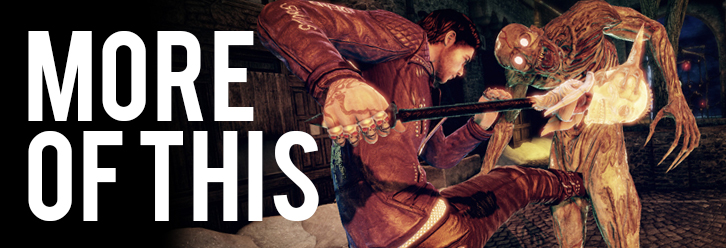
Shadows of the Damned

This might actually happen, and if it does, I’ll be one happy camper. Developer Grasshopper Manufacture has already expressed interest in making this a series, even though it didn’t sell well. The ingredients are there: it’s hilarious, plays well enough (though the controls could benefit from some fine-tuning), and visually, it’s one of the coolest looking games I’ve played this generation. I need more Garcia Hotspur, and preferably sooner rather than later.
Feel free to angrily tell me what games I missed in the comments below!
Have a question? Feel free to ever-so-gently toss Adam an email, or follow him on Twitter and Bloody Disgusting.



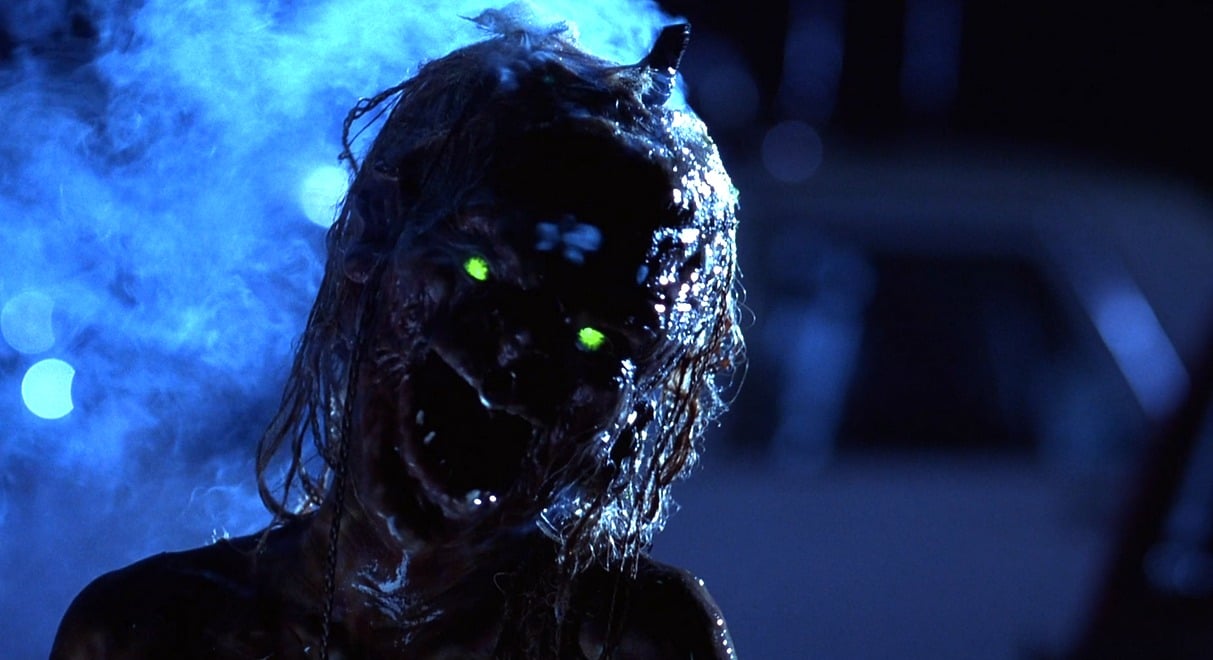
The great Ernest Dickerson turns seventy-five years old this month, so we’re looking back at his most memorable contribution to the horror genre – 1995’s Tales from the Crypt: Demon Knight!
The film hit screens while the Tales from the Crypt series was winding down its run on television, and it stands apart with a story that feels a step or two removed from the franchise norm. That was the smart play, though, as the show’s stories – and those from the original EC comics – work best in short bites. The result is a film that holds up beautifully as a gory good time.
Now keep reading to see what I heard on the commentary for…
Tales from the Crypt: Demon Knight (1995)
Commentator: Ernest Dickerson (director), Michael Felsher (moderator)

1. Dickerson was in post-production on Surviving the Game when he got a call from his agent saying that producer Gil Adler wanted to meet about a Tales from the Crypt feature film. It went well, so Dickerson met with Joel Silver next and secured the job.
2. The original screenplay for the film came to the producers as a spec script wholly detached from the Tales from the Crypt brand. They added the Crypt Keeper (voiced by John Kassir) bookends to make it fit.
3. Dickerson was more familiar with the original EC comic books having read them as a kid, but he had watched a few episodes of the HBO series, so he knew what the current vibe was for the project.
4. Adler directed the film’s wraparound segments, meaning Dickerson never actually got to work with the creepy puppet. “Gil and the Crypt Keeper had a great relationship,” he adds, “they worked together for years.”
5. While he was new to the Tales from the Crypt family, Dickerson had previously worked as a director of photography on the Tales from the Darkside anthology series. That show is underappreciated in my humble opinion, and I will go to bat for both it and the equally underloved Monsters.
6. A big appeal of the horror genre for Dickerson is the idea of dark mysteries that challenge our imagination. For this film, that came down to the mythology being created between the characters.
7. Five executive producers are listed in the opening credits, but Dickerson says the only two he had dealings with were Silver and Richard Donner. The other three were Walter Hill, Robert Zemeckis, and David Giler.
8. Dickerson had only ever seen Billy Zane in movies with a full head of hair, so he was surprised when Zane showed up on the first day with a bald head. “He had this case, and he opened up the case that he had all these hair pieces in, and he says, ‘So which one of these do you think I should use?’” Dickerson looked at him and suggested he just go bald for the character.
9. While the bulk of the opening exteriors were filmed in a desert just outside Los Angeles, the shot of the old church at 11:26 was created on a warehouse hangar soundstage where the film’s interiors were shot.
10. When he had read the script, Dickerson pictured the character of Jeryline (Jada Pinkett Smith) “as a little, tough lady.” He had recently seen Smith in Menace II Society, and while the producers had someone else in mind for the role, he fought to get her instead.
11. Just as Zane surprised Dickerson with his hair (or lack thereof), Smith arrived on the first day with her hair dyed platinum white. He “liked the idea” but asked her to please get it tweaked so it looked more yellowish blond. “It’s definitely a statement.”
12. He had seen Brenda Bakke in the 1989 sci-fi/action film from Japan, Gunhed, and thought she’d be great here as Cordelia. The rest of us might recognize her from Death Spa or Trucks.
13. Felsher comments that the film’s setup does a good job not telegraphing who’s going to live or die, and he uses the “nice guy” (Charles Fleischer) and “the kid” (Ryan O’Donohue) as examples. “You don’t play by those rules here,” he says, and Dickerson replies that he wanted to subvert those rules. That extends to Smith as well because she’s Black, “and usually in movies like this they’re the first folks to die.”
14. Dickerson says they had forty days of filming, “which, the way I’m used to working, was a very generous schedule.” It was budgeted at around $10 million.
15. This probably won’t surprise you, but Zane improvised the bit at 26:25 after he jumps out the window and says, “Fuck this cowboy shit! You fuckin’, hodunk Podunk, well, then, motherfuckers!”
16. In the original script, the demons that The Collector (Zane) raises from the dirt actually looked more like the people they used to be. “They were more human,” but the very smart decision was made in pre-production to make them look far more unique instead.
17. The demons are killed by shooting their eyes, but Dickerson felt there should be one more element to it. “Shoot out their eyes, you gotta duck because the souls come shooting out, and if it hits ya, boom, it can kill ya.” This is a fun touch.
18. He’s been asked more than once if these demons are where Peter Jackson got the idea for how the orcs would look in his Lord of the Rings movies. “They do look like orcs.”
19. He recalls having seen Ronny Yu’s The Bride with White Hair shortly before going to work on Demon Knight, and he hoped to bring some of that staged style into his own film. An example of that in practice is Brayker’s (William Sadler) brief flashbacks to Christ on the cross.
20. Character deaths were mostly based on the idea that “each person’s downfall was going to be predicated by their weakness.” The Collector discovers someone’s weakness and then uses it against them. Cordelia wants to be loved, Jeryline wants to travel, Uncle Willy (Dick Miller) is a horndog for both liquor and ladies, Danny loves horror comics, etc.
21. Dickerson says that plenty of genre classics were in the back of his head while making the film, including Assault on Precinct 13, Alien, Aliens, and more.
22. Cordelia is possessed into a demonic form, and Dickerson’s idea for how she’d look was originally a bit different. “Since Cordelia was a prostitute, I thought that her mouth should actually be a vertical slit that was in her stomach… which would open up with teeth and a tongue.” It was nixed, he says, when “the wife of one of the producers read that and said ‘no way you’re putting that in the movie.’”
23. The key makes an appearance in the followup, Tales from the Crypt: Bordello of Blood, but it wasn’t originally meant to. Apparently, early test audiences expected it to be a more connected sequel to Demon Knight, so the filmmakers added it in to appease them. This is where I go on record saying that Bordello of Blood is a fun time. Can’t touch Demon Knight, obviously, but it’s more entertaining than its reputation suggests.
24. They had to film Uncle Willy’s bar scene “dream” twice, once with the women topless and once with them in bikinis, to have versions for both theaters and television broadcast. “Dick’s a pro.” (To be fair, Dickerson says this in regard to Miller having to endure the makeup application, but the sentiment fits both situations, so…)
25. Dickerson says he’s “always amazed at the love that people show this film,” and adds that fans bring it up to him incredibly often. This is great to hear, as we should always be telling artists how much their work means to us while they’re still alive and able to hear it.
26. Zane also suggested the gag at 1:08:21 with the sponge coming out of his mouth. The beat reminds Dickerson to praise the actor even more, adding that he was an “ally” to the director when “bad ideas” came down from the studio suits.
27. He didn’t get any pushback on killing little Danny. He did insist on one added element, though, as he wanted to immediately follow the boy exploding in the air with a shot of his bloody and torn sneaker hitting the ground below. “And the sneaker had to be a hightop.”
28. Dickerson says there’s “something kinky sexy about” Smith being covered in blood, and then the two commentators go quiet for almost two minutes out of respect for the scene. It’s a good opportunity to reflect on how Dickerson had previously mentioned Alien and Aliens as films being in the back of his head during filming, and how two scenes here reflect that – Jeryline stripping down to her underwear for the final confrontation feels like a nod to Ridley Scott’s film, while an earlier scene with Irene (CCH Pounder) and Dep. Bob (Gary Farmer) realizing they’re surrounded and choosing to blow themselves up alongside some of the demons is something of a callback to the air vent sacrifice in James Cameron’s film.
29. Asked about the film’s critical reception at the time of release, Dickerson says it received good reviews from horror-loving critics and then talks about the importance of horror in general. “Horror has always been a great way of putting out ideas, of talking about some of the things that affect us as people. Some of the best horror, like the best science fiction, talks about what it’s like to be human. Some of the best horror gets very political.”
30. The original ending would have featured The Collector showing “his true self, which is a demon made of fire.” They spent a lot of time trying to make it work, but it was “extremely difficult… back in the day of analog effects.” It was rewritten into the faceoff between him and Jeryline featuring the dancing, the crotch fire, Zane’s attempts at saying “love,” and his eventual demise from her bloody spit.
31. They both agree that a direct sequel to Demon Knight could be a lot of fun, but Dickerson says he’s unaware of any talk on the possibility.
32. Dickerson was super excited about this new Scream Factory Blu-ray in 2015, and he mentions that before its release, he had imported a Blu-ray from Germany presumably to enjoy the film in HD. He’s just like us! (Or am I the only one here who’s imported a German Blu-ray of the much maligned werewolf flick Big Bad Wolf…)
Quotes Without Context

“I was so happy to get Dick Miller for this movie.”
“There was a time when guys used to put ketchup on everything.”
“I’m a big student of Hitchcock, and the best way to make a moment of horror work is to lull the audience into a false sense of security.”
“A villain should always be the most interesting person in a movie.”
“They were a really great bunch of performers who were performing on these little leg-extension stilts wearing a diaper that had a radio-controlled tail that was being manipulated by a special effects tech right out of the frame.”
“It’s hard to direct air; it doesn’t do what you want.”
“The only censorship problem came from the producer’s wife, who didn’t want the vagina dentalis [sic] in the movie.”
“One of the executives wanted to know why the devil didn’t try to have sex with Jada.”
“It always starts with the script.”
Keep up with more horror commentary breakdowns here.
You must be logged in to post a comment.