Editorials
6 Horror Games And The Studios That Should Make Them!


Sometimes a fresh set of eyes can bring new and interesting perspectives. When you look at the same thing for so long, it can get difficult to see its flaws, and while this can be said for many things, it’s especially true for video games. Getting a fresh perspective can be a great way to make sure a series stays engaging, to keep it from becoming stale and predictable. Franchises like Resident Evil and Silent Hill have each had games developed by studios other than the one that created them, and while the results have been a mixed bag, some of these partnerships have led to incredible games.
With this in mind, I’ve compiled a list of six game developers that I think are universally great and matched them with a horror franchise I feel they could make an incredible game for. Check out my picks after the break, and feel free to comment with your own dream matches!
Ninja Theory – Silent Hill

I wish Vatra, the studio that developed the fantastic Silent Hill: Downpour could return to the franchise, but I can’t see that happening any time soon. I also don’t see Konami picking up the reins again, so that leaves us with the only other option: a new studio. My pick? Ninja Theory, of course, and here’s why.
When you think of the staples of the Silent Hill franchise, the visuals, music, and characters are the first things that come to mind, right? If games like Heavenly Sword, Enslaved, and DmC: Devil May Cry have proven anything, it’s that these departments are areas in which Ninja Theory excels. They’ve brought us some of the most beautiful games of this generation, colorful games that aren’t afraid to be vibrant and different.
I’m also a huge fan of their ability to create emotional, realistic characters.. Nariko and Kai, Monkey and Trip, Dante and Kat — their characters are unique and the relationships are genuinely interesting to follow. Of course, a Silent Hill game isn’t a Silent Hill game at all without twisted, nightmare-inducing creatures for you to fight, or perhaps more often, to run away from. Some of the enemies from DmC look like they could’ve been starred in a SH game. There’s one boss in particular that’s essentially a giant, bulbous baby monster with its mom attached to it by an umbilical cord. It’s gross, and awesome.
Naughty Dog – Resident Evil

This was a difficult pairing to make. I mean, on one hand, I’d like to see Capcom develop a good Resident Evil game, because they’ve proven more than capable of successfully rebooting their franchise before with Resident Evil 4. Unfortunately, I don’t think Capcom understands horror as well as they did ten, or even five years ago. The “scares” in Resident Evil 6 are sloppily set up and the characters aren’t interesting enough for me to care about them.
This is why I believe Naughty Dog could very easily be the dream studio to breathe new life into Capcom’s ailing franchise. For one, as they’ve proven over and over again in the Uncharted trilogy, they understand action. They understand spectacle. They also know how to make simple characters interesting. Nathan Drake isn’t particularly deep, I mean, he’s supposed to be a likable guy, and I might’ve been able to fall for that if he didn’t spend a majority of the game murdering hundreds of men. The Uncharted games are serious, but they have a light side, and adventurous side. Resident Evil needs that.
Arkane Studios – Condemned

First off, if you haven’t played Dishonored, you should really get on that already, because once you do you won’t even need to read this to know why Arkane would make an intensely good Condemned game.
In case you didn’t know this already, Arkane already has some experience in the horror genre, as they were the studio behind the cancelled Half-Life 2: Episode 4, better known as Return to Ravenholm. When I imagine what RtR could’ve played out like, the images that come to mind are very similar to Condemned. Dark alleys, tall buildings obstructing a night sky, visceral in-your-face combat, an ear-piercing scream that comes from somewhere, but you can’t tell where… that would’ve been great, right?
Arkane made one of the best first person games of the year; they understand how your character should move, how they should fight. At its core, Condemned is a first person brawler. Whether you’re beating down crazed hobos, malevolent ink monsters, whatever — if it didn’t feel good to slam that guy/thing’s face into the wall before you curb-stomped it (for good measure), then it wouldn’t have been a good game. Dishonored has many of the same mechanics, and more than that, it had a brilliantly crafted world that was full of details and stories that only the most observant players would’ve noticed.
Grasshopper Manufacture – F.E.A.R.

Admit it, F.E.A.R. is wacky as hell. It started out serious and gruesome, but that was back in 2005, and since then, you could say it’s gone off the rails. A pregnant psychic chick whose contractions send shockwaves throughout an entire city? Your dead, superpowered brother who helps you out even though with that velvety voice of his he’s be better suited as a radio host? The weird hell monsters that enter the real world via some sort of hell dimension? The soldiers who have technology that allows them to use lightning to teleport in reinforcements? If you had listed those back in 2009 and told me they’d appear in the next F.E.A.R. game, I would’ve asked if you had F.E.A.R. confused with a Platinum Games title before burning you at the stake for being a time witch.
The whole “creepy unkillable little girl with the black hair draped over her face” bit was inspired by the Onryō, a terrifying legend taken from Japanese folklore, so why not give it to a developer that understands those legends better so we can try and make Alma scary again? Now she’s just a creepy rapist — yeah, in case you forgot or your mind tried to block it, she forces herself on you in Project Origin. Grasshopper loves making strange, yet somehow brilliant games, and they’ve even tackled the horror genre, albeit lightheartedly with Shadows of the Damned and Lollipop Chainsaw.
Telltale Games – Alone in the Dark

Telltale Games made The Walking Dead: The Game, and while I’m sure you’re well aware of this by now, I loved that game. I don’t know what they’re planning on digging into next, outside of an all-but-confirmed second season of TWD, but I’d very much like to offer an idea: how does an old-school Alone in the Dark game sound? The last game wasn’t very good, but I don’t want to see the forefather of the survival horror genre to fade into obscurity (though, sadly, I think that’s already happened) and I know a studio like Telltale would do amazing things with the series.
I imagine it’d play much like their Walking Dead game. Hell, I’d even prefer a digital-only episodic structure, the latter of which the failed reboot introduced to the series back in 2008. There wouldn’t be an emphasis on combat, it’d be more about story, survival, and exploration — all things Telltale does extraordinarily well.
Honorable Mention: A Telltale developed Clock Tower, and much like Alone in the Dark, I’m talking about the original Clock Tower. You know, the one where you’re helpless and being chased by a mad man with an horrifying pair of shears.
Remedy Entertainment – Fatal Frame

Honestly, what I want from Remedy is a sequel to Alan Wake, and I want that right now. However, I’d also take a Remedy-developed Fatal Frame. Remedy did something really interesting with its Alan Wake series by turning something as simple as light and making that the basis for a video game. Light plays an important role in every aspect of Alan Wake, from the story (light vs dark/good vs evil) to the combat (flashlights, flares, the darkness shrouded possessed townfolk, etc.). If any studio can turn Fatal Frame’s major element, the camera obscura, and make it interesting, it’s Remedy.
But seriously, Remedy: give me Alan Wake 2.
Have a question? Feel free to ever-so-gently toss Adam an email, or follow him on Twitter and Bloody Disgusting.




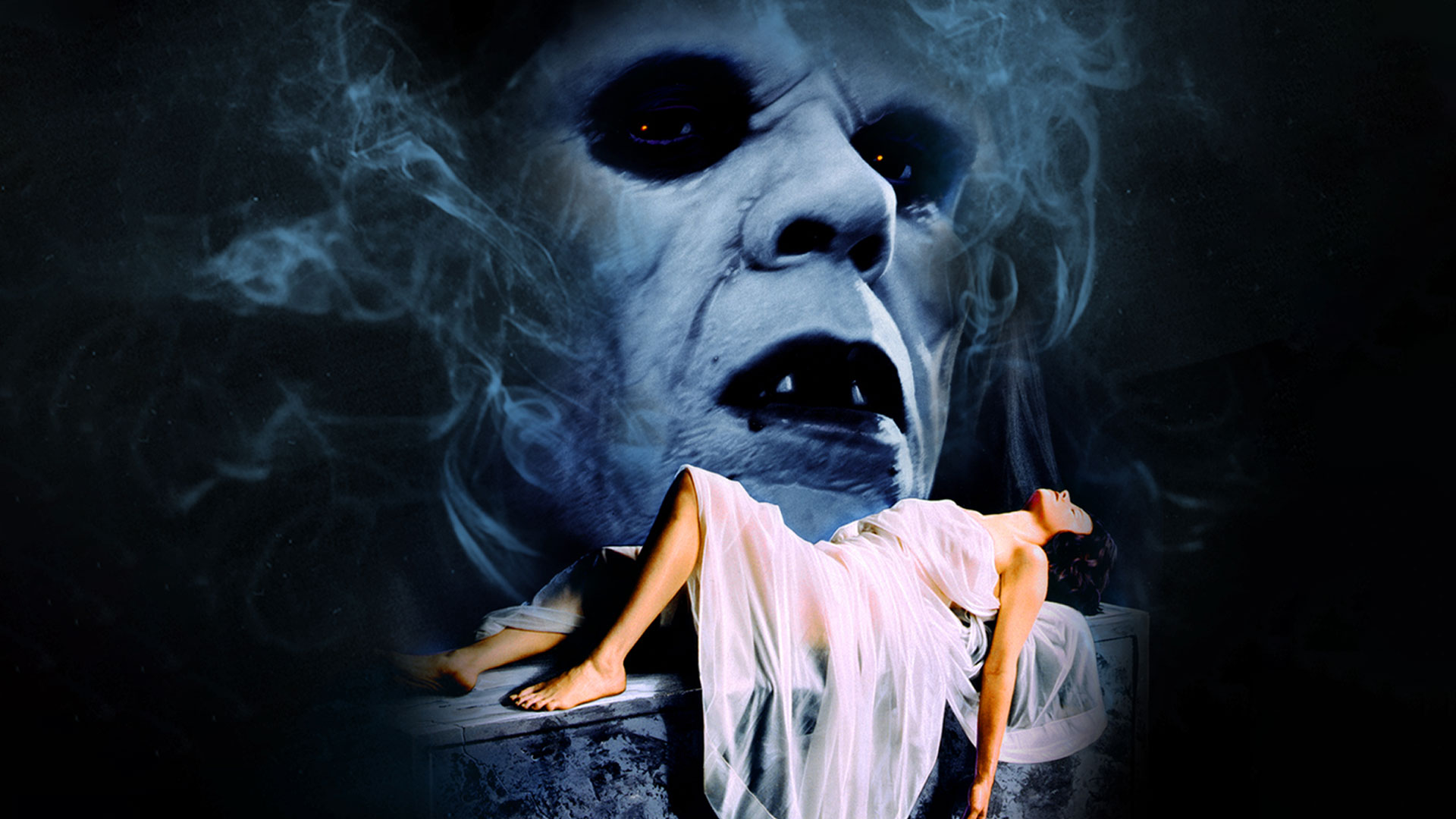
The problem with filming sequels back-to-back is that, unless you can afford expensive reshoots, there’s no easy way to adjust course in between movies if fans react badly to where the story is headed. That’s why it’s important to have a complete narrative thought out well in advance lest you accidentally kill a budding franchise.
However, this isn’t always the case. Every once in a while, it seems like the cinema gods smile upon certain chaotic productions and gift moviegoers with complete franchises that feel like more than the sum of their hastily produced parts. Ted Nicolaou’s Bloodlust: Subspecies III is precisely one of these miraculous pictures, with the raw talents of the artists involved (as well as the continued support from Romania) turning the feature into an effective conclusion for a series that kind of made things up as the filmmakers went along.
That’s why I’d like to invite my fellow readers to join me on this third part of our journey through the Subspecies franchise as we look into Bloodlust and talk about how it remains a surprisingly satisfying finale to the original trilogy.
A Trilogy Planned on the Fly

Released only a year after Bloodstone found plenty of success in rental stores and mail-in VHS catalogues worldwide, 1994’s Bloodlust was produced at the same time as its predecessor in (mostly) the same locations and with the same team. This means that the movie benefited from all the same upgrades as Bloodstone, with the crew now being more experienced with the ins and outs of surviving a low-budget Romanian production and the cast really settling into their characters.
At this point, everything from location scouting to the makeup process had been streamlined, with Wayne Toth and Norman Cabrera, the main duo behind special effects, even switching out time-consuming prosthetics for latex gloves in order to speed up Anders Hove’s monstrous transformation. The titular “subspecies” demons were also once again relegated to a mere cameo appearance due to the laborious puppetry required to bring them to life.
The only real hiccup came from the fact that actress Denice Duff had replaced the first film’s Michelle (Laura Mae Tate) and was immediately expected to portray the character as both an innocent victim in part II and as a secondary villain in part III. According to behind-the-scenes interviews, the hectic production schedule that blended two different movies meant that Duff would often find herself having to alternate between two incredibly different versions of Michelle during the same shooting day – though it’s obvious that she’s having more fun with Bloodlust’s more traditionally vampiric version of her character.
In the finished film, we pick things up immediately where the previous entry left off as Rebecca (Melanie Shatner) is forced to leave her vampire sister Michelle (Duff) behind in the dungeons of Castle Vladislav due to the rising sun. This allows Mummy (Pamela Gordon) to use Michelle’s blood to revive the vicious Radu (Hove) so that he may continue his quest for the coveted Bloodstone – a magical artifact that perpetually drips the Blood of Saints.
Meanwhile, the dreamy US embassy agent Mel (Kevin Blair) agrees to help Rebecca plan a rescue mission, though they’re unaware that Radu has become infatuated with Michelle during his attempts to guide her growing bloodlust. This all culminates in a climactic confrontation meant to tie up all of the series’ loose ends in one of Full Moon Pictures’ most ambitious productions.
The Evolution of Radu

Like its predecessor, Bloodlust: Subspecies III was also warmly received by fans who argued that the series was an even bigger success than Full Moon’s other major horror franchise, Puppet Master. This praise wasn’t unanimous, however, as 1994 had seen the rise of a more modern breed of sexy vampire popularized by Anne Rice, with old-school Nosferatu like Radu being viewed as obsolete when compared to the likes of Lestat and Gary Oldman’s take on Dracula.
In a way, one might argue that Nicolaou’s film is something of a swan song for the classic vampire story, as Bloodlust combines all of the traditional elements we tend to associate with these tales into a single tragic yarn that ties a neat little bow on Radu’s story as well as the old-fashioned monster movies that he represents. The finale remains shocking despite the fact that this is the third time we see Radu get brutally killed onscreen, with the brief tease that he may one day return feeling more like a nod towards the nature of evil rather than sequel bait.
The film dabbles a bit in gothic romance and even explores the inherent power fantasy behind transforming into an immortal creature of the night, but the filmmakers never lose sight of Radu as a demonic force even when he’s willing to betray his beloved Mummy for Michelle’s sake. In fact, his twisted “love” for his fledgling makes him even creepier as we get the feeling that his passion comes from a dark and disturbing place.
Anders Hove is at his absolute best in this film, with the effects department boosting his moments of what the younger generation would call “aura farming” whenever Radu emerges from shadows like a 90s version of Count Orlok. There are even a couple of surprisingly effective jump-scares here, which is why I’d argue that Bloodlust cements Radu as one of the most memorable cinematic vampires of all time despite his humble origins.
Subspecies Saves Its Best For Last

Nicolaou and Vlad Panescu also saved the best for “last” (more on that in a bit) regarding the film’s visuals, with the cinematography and overall atmosphere of Bloodlust absolutely surpassing what we saw in the previous films. Everything feels appropriately climactic this time around (including the wonderful soundtrack that was co-composed alongside an authentic Romanian orchestra), and I appreciate how this is the fastest-paced entry in the trilogy since the film doesn’t need to waste time setting anything up.
Bloodlust still suffers from some of the same low-budget blemishes as its predecessors, but there’s so much creative passion here that no amount of wonky effects work or stilted dialogue can get in the way of appreciating the flick’s gothic grandeur. That’s why it’s not surprising that the movie’s definitive(-ish) ending would later be retconned as fans begged for more Radu.
Of course, the next entry in this series would be a different kind of vampiric endeavor altogether, with the filmmakers attempting to engage with the same trends that ultimately killed Radu and his antiquated kin. That, however, is a story for another time. For now, I’ll merely insist that Bloodlust: Subspecies III remains a highlight of Full Moon’s expansive catalogue and is definitely worth seeking out today.
You must be logged in to post a comment.