Editorials
[Editorial] The Wolfman Takes On Remakes!!

By The Wolfman (@TheWolfmanCometh – on the boards).
You’re sitting there in the movie theater with your Junior Mints, or in the case of psychopaths, sitting there with Dots, waiting for the movie to start. You have a terrifying debate with yourself for ten seconds while you try to determine whether the lights in the theater are actually dimming or maybe you’re having a stroke. Once that bright green screen pops up, proving that your brain does indeed have enough oxygen, you catch a glimpse of some of Hollywood’s newest garbage. Between romantic comedies and animated adventures starring pop singers, it all looks like the same old stuff. Unexpectedly, a trailer pops up that seems to be pretty creepy, have some decent actors in it, and the credits tell you it’s from people who helped make other horror movies that you absolutely love. When the title is revealed, the entire audience groans, followed by nudging the person next to you and saying, “Can you believe they’re even making that movie?” Or maybe you went to this movie alone and angrily took out your phone to post your disdain on Twitter for everyone (read: not really anyone) to see. No folks, the title didn’t reveal that the trailer you just enjoyed was an M. Night Shyamalan joint, but instead, the movie is a remake, adaptation of, or sequel to something else. No matter what the source material is, nothing seems to cause fanboys to angrily roll their eyes more then finding out their favorite movie/book is getting a remake/adaptation/sequel. My advice to all of you is to quit your complaining about something you had absolutely no involvement in making and should focus your energy on revisiting the source material.
More inside…

Before you guys all start getting cranky, yes, there are HUNDREDS of terrible movies that get made that are remakes/adaptations/sequels. I’d like to also point out that there are just as many horrible movies being made that aren’t direct remakes/adaptations/sequels. I don’t think the problem that people have with remakes/adaptations/sequels is that they typically aren’t very good, but rather that these movies seem to be an acknowledgement of the lack of ideas that Hollywood has when it comes to the horror genre. That’s another point that I’m certainly not arguing with, as even something like Nosferatu, which is 80 years old, was a loose adaptation of Bram Stoker’s Dracula. Obviously the past 30 years have seen far more remakes/adaptations/sequels than the previous 50 years, so yes, I can see the amount of remakes/adaptations/sequels being a stronger indicator of Hollywood’s recent lack of inspiration. That’s another point that I’m not going to argue, as I feel that there’s a much bigger issue at hand, which is the sense of entitlement among most subcultures.

Before I go any further, let’s get you guys in the right frame of mind. I recently went to a 35mm screening of John Carpenter’s The Thing, which is one of my absolute all-time favorite films of any genre. In fact, if you ever want me to hang out with you, all you have to do is say we’re going to watch The Thing and I’ll come over. Not only is Carpenter’s version a remake of the 1951 film The Thing from Another World, but it’s also an adaptation of the novella “Who Goes There?” from 1938. Okay, well, that’s the obvious example of a remake that’s arguably better than the original. What about David Cronenberg’s The Fly from 1986, which is a remake of a film of the same name from 1958, which happens to ALSO be based on a short story from 1957? FINE. Those are like, the ONLY two examples of good remakes, right? Even though I’m not a huge fan of the film, I know that 1978’s Invasion of the Body Snatchers is highly regarded in the horror community, if not for surpassing the original from 1956, but at least for coming pretty close to it. Seeing as those examples are all at least 25 years old, and I acknowledged the more recent trend of remakes for the sake of Hollywood cashing in, I should cite more recent examples. I know I’m not the only person who enjoys Alexandre Aja’s The Hills Have Eyes 2006 remake more than Wes Craven’s 1977 original. Also, Aja’s 2010 loose remake Piranha 3D might have been a more campy, humorous remake of the 1978 film Piranha, but it’s definitely a loving tribute to the horror genre and the absurdity of creature features. Even some lesser appreciated remakes like House of Wax (2005) or Dawn of the Dead (2004) did some things that were more original than horror films that weren’t remakes. And even though I think it’s an absolutely worthless attempt to reinvent something that doesn’t need reinvention, some people think that Rob Zombie’s Halloween (2007) is worth watching. Things are also looking up in 2013 with a remake of Evil Dead that is doing 100% practical effects and completely avoids even casting anyone to replicate Bruce Campbell’s genius portrayal of Ash, as well as a remake of another one of my all-time favorite horror films, Maniac (1980). I’ve seen the remake already and even though I didn’t enjoy it as much as I enjoy the original, it was much more ambitious, unique, and entertaining than most other horror films of the past year.

Okay Wolfman, we get it, there are some good remakes that have been done, but they’re turning my favorite comic book/novel into a movie, and there’s no way it will be as good as the source material! Well, you might have a point. There have been some AWFUL movies based on books and on comic books. On the other hand, some of the absolute best horror movies, in my opinion, have been based on books. Movies that are regarded as classic horror films, like The Exorcist, Rosemary’s Baby, and The Shining, are all based on novels. Maybe you, like Stephen King, didn’t like The Shining. That’s fine, to each their own, but Stephen King wrote the novels that The Mist, Misery, and 1408 were based on, so you have a few other types of horror movie that are pretty well done. You also have weirder stories being successfully turned into movies, like H.P. Lovecraft’s Herbert West-Reanimator (directed by Stuart Gordon as Re-Animator) or, wait that’s right, I did mention Carpenter’s The Thing is based on a novella, right? I’d also argue the point that there are some movies that become so incredibly huge, successful, and revered that people forget it’s even based on a book. Did you know that in Peter Benchley’s novel “Jaws”, Hooper has an affair with Brody’s wife and is eventually killed? If Jaws isn’t a good enough example of movies surpassing their source material, what about the influx of superhero movies that gross millions, in some cases billions, of dollars with the medium that birthed these characters barely seeing a spike in sales? And if you think those are just blockbuster summer movies, let’s not forget that in 1991, one movie took home the Academy Awards for Best Adapted Screenplay, Best Actress, Best Actor, Best Director, AND Best Film? And that movie happened to be just this little horror movie called The Silence of the Lambs, based on the, you guessed it, Thomas Harris’ book from 1988. I’d say there are countless movies that incorporate literary references from stories spanning centuries, and it seems like some of the movies that take direct cues from books can be quite fantastic.

The only horror movie fanboy myth left to debunk is that “sequels suck”, or at least, studios focus on making A sequel as opposed to waiting to make GOOD sequels. This one is a little bit more slippery of a slope, seeing as the amount of sequels that are subjectively better than the original is an incredibly short list. In my opinion, the first example of a horror movie that comes to mind that surpassed its predecessor would be Rob Zombie’s The Devil’s Rejects. Despite the previous film, House of 1000 Corpses, having some really good stuff in it, I think Zombie spread his creative juices too thin and the film suffered from cuts and edits because of all the issues with the MPAA. The Devil’s Rejects took the three most engaging characters from the first movie, Otis (Bill Moseley), Baby (Sherri Moon Zombie), and Captain Spaulding (Sid Haig), and just followed their trail of death and destruction. As if that wasn’t enough, it added some other horror heavyweights like Ken Foree and Michael Berryman to add even more fuel to the fire. Again, in this Wolfman’s opinion, Evil Dead II more seamlessly blends horror with comedy than the movie that came before it, despite my love for the whole trilogy. The idea of all of society being in shambles due to a zombie outbreak is more terrifying to me than just trying to survive one night in a farm house surrounded by zombies, so I enjoy Dawn of the Dead more than Night of the Living Dead, and there are even others who prefer the third film, Day of the Dead, out of the entire franchise. Even though it’s only been a recent passion of mine, I’d also happily say that the story is a little bit more concise in Phantasm II than it is in the original, and I also enjoy the pacing of it more. This isn’t even to begin breaking into some of the franchises with at least five or six entries. If you ask anyone to rank their favorite Friday the 13th/Halloween/A Nightmare on Elm Street/Hellraiser movies, you’re going to get answers across the board. I’d say the first four Friday the 13th movies are each as entertaining as the next, Halloween III: Season of the Witch is my favorite of those sequels, and New Nightmare is my favorite Freddy Krueger sequel. With some newer franchises, like Saw or Final Destination, I’m sure you’ll find scattered responses on which sequels are better than others. I’d also say I like Paranormal Activity 3 more than I like Paranormal Activity 2, but neither are necessarily all that great. Closer to the sci-fi/horror end of the spectrum, there are plenty of people who enjoy Terminator 2: Judgement Day and Aliens more than the moves that came before them, and the classic example, stepping completely outside of horror, is the amount of people who enjoy The Empire Strikes Back more than Star Wars. Even though there are some movies that don’t need sequels, finding out that a part 3 or 7 or 10 is being released could mean the possibility of expanding the mythology a little bit to get something more entertaining than the movie that came directly before it.

Why am I now choosing to rant about trying to justify the value of remakes/adaptations/sequels? It was recently announced that Dan Trachtenberg would be directing a movie adaptation of the comic book series “Y: The Last Man”. Right alongside “Preacher”, I’d say that “Y” is one of my absolute favorites comic book series. The project has gone through various stages of development and rumors have been all over the place, but this is the first solid piece of information anyone has released. With the source material being so close to my heart, I never saw a reason to adapt it into any other medium, especially a film that would take years to make and only tell a fraction of the story. Even though Trachtenberg is getting some positive response to a fan film he made about the videogame “Portal”, most of the reactions were incredibly negative.The negative feedback wasn’t necessarily about the choice of director, but with evidence presenting itself that solidified a studio going forward to make this movie. This is where it ties back to my original point, which is that no matter how good something might look or how excited you might get over a project, the entire thing can be discredited if it’s a remake or an adaptation or a sequel to something people already connect with. It doesn’t seem to matter to most people the talent behind something when it’s much easier to judge it quickly and harshly. It seems like most members of any subculture, whether it be horror movies or comic books or videogames or (insert any subculture here), are going to be upset to see something that they consider to be “theirs” becoming more accessible to the general public. How many times have YOU been involved with or overheard a conversation about “The Walking Dead” TV series that involved the question of “Well do you read the comics?” Or, even better, “Do you read the graphic novels?” because “The Walking Dead” ISN’T a graphic novel and has merely been collected into trade paperbacks, but I digress. For those of us who have found acceptance and entertainment in something that’s slightly off the general public’s radar, we feel the need to grasp onto it tightly and not let it escape into the hands of the dreaded general public to enjoy. I understand being upset over not being a fan of the director attached to Y: The Last Man or not enjoying any of the actors involved in the remake of Evil Dead, but it seems like just the mere existence of different incarnations of things we already enjoy causes people to feel angry. I mentioned it earlier, but I hate, no, I absolutely LOATHE Rob Zombie’s remake of Halloween. When I hear people talk about it, whether they be horror fans of just members of the general public, rather than get angry at the fact that it was made, it reminds me of all the reasons why I love the original. These are people who might not have known about Michael Myers before seeing a relatively mainstream movie who might check out the original or maybe check out some of Zombie’s other, better films.

As sad as it might be to think about, the creators of these movies/books that we love so much have sold their souls a long time ago. There was a point where John Carpenter wasn’t the legend he is today and really needed money to make his movie. he was willing to sell the concepts and intellectual properties to make Halloween, so 35 years later, there’s not much he can complain about. Even this Evil Dead remake has some support from Sam Raimi and Bruce Campbell, which isn’t something they needed to do, but felt they could do to help promote their legacy. Some directors spend the rest of their careers trying to forget about movies they wished they had never made, where others realize they have done things for paychecks as opposed to artistic integrity. If you focus all of your energy on fighting against the people who gave you the opportunity to create for doing something with the material THEY bought from YOU, you’ll just turn into Alan Moore. Not that there’s anything wrong with becoming a hermit/wizard creature, especially when you’re as talented as he is, but he’s more of an exception to the rule. I propose that when we see one of our favorite things being turned into someone else, instead of immediately shutting it down or calling out others for not knowing things are remakes/adaptations/sequels, we remember why we loved that original thing in the first place and hope that the people in charge of making it love it in the ways you love it. If not, don’t let a terrible incarnation soil your love for the core material and instead try to focus your energy on turning others who enjoy the more “mainstream” version towards the source material. The more people watching/reading/buying the good stuff, the more people there are taking an active part supporting what we love, the more opportunities we’ll have to be entertained by these things. Or, I don’t know, just complain about it on Twitter or something, you could do that too.




Five decades ago, Stephen King published the story of a bullied girl with telekinetic powers and forever changed the world of horror.
Carrie follows a high school misfit who seeks revenge for a hideous prank by psychically destroying her senior prom. The name Carrie White has become synonymous with the concept of a formal dance thanks to a flawless adaptation from Brian De Palma. Now fifty years after the film’s release, Mike Flanagan is putting his own stamp on the troubling story.
Rather than a feature film, the writer/director will expand King’s relatively slim debut novel into an eight-episode miniseries for Amazon Prime set to premiere on October 7.
Flanagan is no stranger to the world of Stephen King. A long-time Constant Reader, he first made waves with his daring adaptation of Gerald’s Game (2017), a novel many fans considered un-filmable. His underrated Doctor Sleep merges the disparate plot of Stanley Kubrick’s The Shining with King’s original source material, and his 2024 genre-bending tearjerker The Life of Chuck faithfully executes one of the author’s most metaphysical novellas.
He’s currently mired in pre-production for an expansive adaptation of The Dark Tower series, keystone to King’s connected universe, and Warner Bros. recently announced that Flanagan will helm a new version of The Mist, King’s 1980 novella which sees a small Maine town overrun by otherworldly monsters.
Considering the vast array of the author’s previously unadapted material, an obvious question arises. Why reimagine Carrie in 2026? Noting the timeless nature of the content, Flanagan expressed his desire to bring the story of a bullied girl into modern times, mirroring his approach to Shirley Jackson’s The Haunting of Hill House and Edgar Allan Poe’s The Fall of the House of Usher. He explained, “The only way to approach it was to build something new out of the ingredients of Carrie. Otherwise, there’s really no purpose in trying to retread ground that’s been so beautifully walked before.”
His miniseries will maintain the novel’s bloody bookends while delivering “big surprises” along the way.
A New Prom Night Nightmare
The roughly 60-second teaser introduces Summer H. Howell as Carrie White just before the moment of catastrophe. Standing in a prom dress, she smiles at her applauding classmates with an ominous crown perched upon her head. Moments later, Carrie unleashes a rage-filled scream into the night air while promgoers rush for the exit doors. But careful examination of this scene shows Carrie wearing a different, albeit dirty dress as she seems to telekinetically punish her peers.
In an exclusive first look with Entertainment Weekly, Flanagan explains that in his version of the story, “the events of that prom are going to be completely different.” An open trunk emitting a crimson glow does hint at the pig’s blood dumped on Carrie’s head, but it’s likely Flanagan’s formal dance will be a different kind of horror altogether. Despite these changes, the series may end with the widespread destruction outlined in the source material. Unlike any previous adaptations, King’s novel ends with the near-total destruction of Chamberlain, Maine. A flaming street in Flanagan’s trailer promises similar carnage no matter what prank sparks Carrie’s deadly revenge.
The Monstrous Addition of Social Media

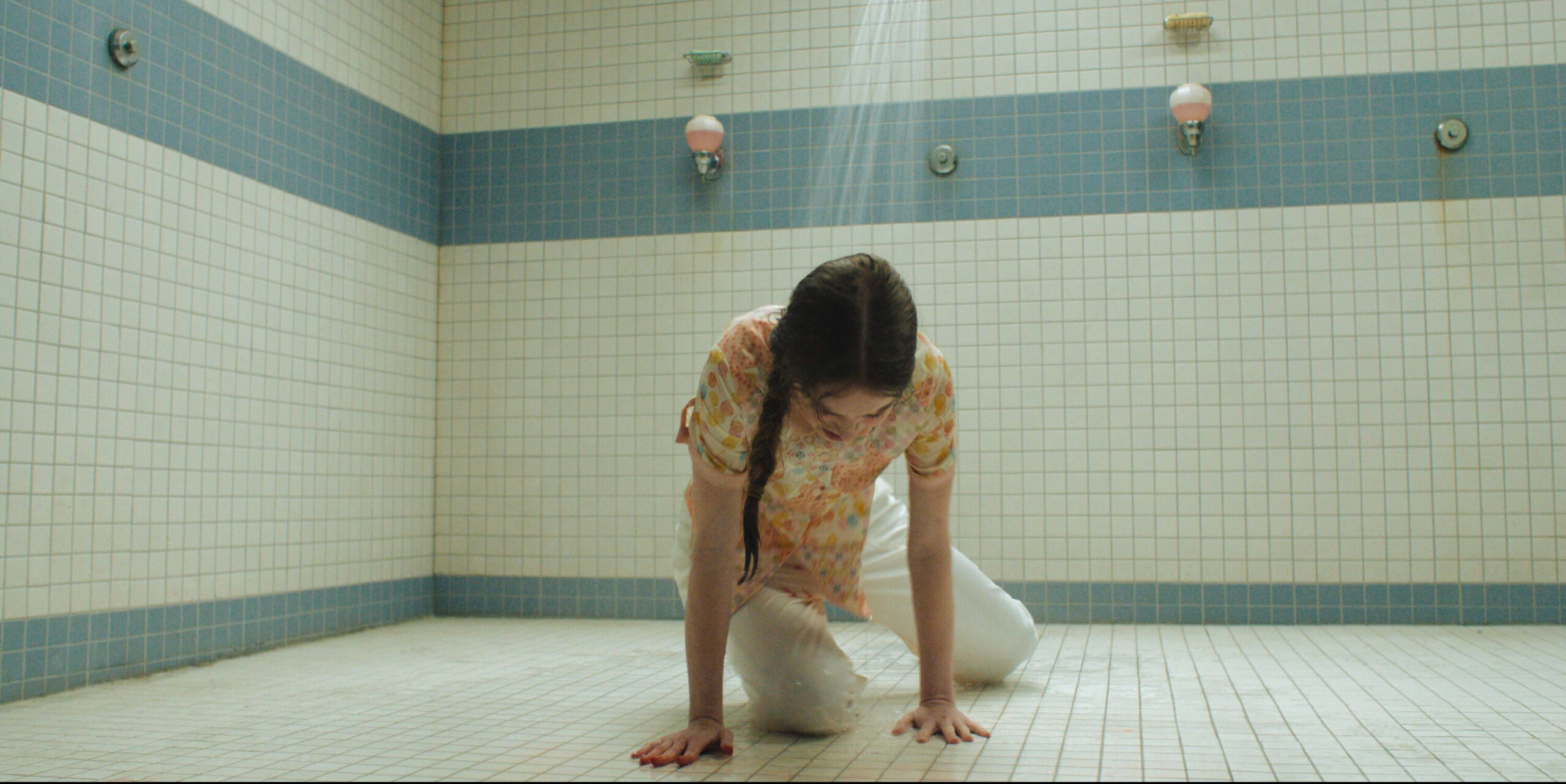
On the opposite end of this fiery conclusion is an extreme act of bullying that brings together the story’s main cast. King’s novel begins as Carrie gets her first period while showering in the girls’ locker room. Completely unaware of the concept of menstruation, the sheltered girl thinks she’s bleeding to death. Her classmates respond with vitriolic rage. Led by ultra-mean girl Chris Hargensen (Alison Thornton), they mock the terrified teen while pelting her with tampons. Glimpses of this disturbing event reveal that Flanagan has excised the scene’s nudity while adding a seismic update. As Carrie sobs in the shower stall, Chris and her friends film the breakdown with their phones.
Other scenes note the presence of social media, bringing King’s fifty-year-old story into the digital age.
Flanagan’s adaptation promises to explore the destructive power of social media, an often invisible entity with a potential for harm rivaling Carrie’s own powers. While King’s tormented heroine suffers in front of a small group of girls, Flanagan’s version of the incident will likely become a viral video, potentially circling the globe on social media. Similar to Katt Shea’s criminally underrated The Rage: Carrie 2, which includes elements of revenge porn exploitation, Flanagan’s modern retelling will distinguish itself by exploring the nebulous cruelty of online bullying, a force ten times more powerful than the irl pranks King first envisioned.
A Completely Reimagined White Family

In addition to modernizing these canon events, Flanagan hints at updates to Carrie’s oppressive upbringing at the hands of her mother, Margaret White (Samantha Sloyan). Dead before the novel begins, we never meet Carrie’s domineering father Ralph, known to carry a bible alongside his gun. Flanagan’s White household will be an altogether different beast. In his version of the story, Carrie and her mother have been hidden away in the unassuming home, forced out of hiding by Ralph’s unexpected death. Perhaps we will finally meet this elusive man whose shadow hangs over his wife and child. Considering the White family’s fundamentalist lifestyle, this reimagining hints at tradwife culture and a home ruled by staunch patriarchal control.
Whereas King’s Carrie has been tormented by her classmates since Kindergarten, Flanagan’s Carrie will be a wide-eyed newcomer to public school, eager to make friends and engage with her peers. We glimpse Carrie cozying up to Chris and the equally popular Sue Snell (Siena Agudong) as she navigates a new social scene. Of course, we know this kindness is part of an elaborate plot designed to lull Carrie into a false sense of camaraderie, setting up an atrocious act of public humiliation. These brief moments of feigned compassion put Sue’s own complicity into question. Will Flanagan’s version of the character find the courage to defend Carrie from vicious bullies or will she succumb to peer pressure and join in the mob mentality?
Perhaps the biggest deviation from King’s original text is the relationship between Carrie and her mother. King’s Margaret White is a horrifically abusive religious zealot whose worldview has been hardened by internalized misogyny. She shames Carrie for menstruating, locks her in a closet to “pray,” and regrets not killing her child in infancy. She’s also responsible for Carrie’s social ostracization. Known to berate her neighbors for their “sins,” Margaret forces her daughter to live by an extreme code of conduct and disallows any potential friends lest they corrupt the girl with their worldly ways.
Flanagan’s version of the character is perhaps just as much a victim as Carrie herself. Also trapped inside her home, his Margaret is overly vigilant, her own trauma manifesting as strict control. Describing a more sympathetic depiction of the iconic villain, Flanagan explains, “Our Margaret White is a woman who fiercely loves her daughter and wants to protect her from this world … [She] doesn’t know how to do that and thinks the way to protect her is to close her off; not punitively, but to create this private utopia.”
Despite this potential softening, Sloyan’s Margaret may still have a sharp edge. Though she has appeared in many Flanagan projects, from Hush (2016) to The Fall of the House of Usher (2023), she is best known for her role as the abhorrent Bev Keane in the poignant saga Midnight Mass (2021). Perhaps inspired by King’s Margaret White, Bev is pious and sadistic, willing to punish anyone who does not adhere to her warped approximation of Catholicism.
Flanagan specifically wrote Margaret with Sloyan in mind, likely remembering the actress’s eerie ability to create deceptive empathy and shift our allegiances on a dime.
Expanding Stephen King’s Telekinetic Universe

While most of King’s story deals with an unthinkable prom night in Chamberlain, Maine, large sections of the semi-epistolary novel see experts debating the nature of telekinesis. Do Carrie’s frightening abilities represent a new phase in human evolution or is the prom night carnage merely a fluke? King settles the debate with a shocking denouement in which a young mother recounts her infant daughter’s ability to dangle her crib toys in midair. We’re left to wonder if she will become another tormented girl who surprises the world with metaphysical strength.
Flanagan plans to build out this brief scene while amplifying themes of female empowerment. After introducing our main cast of characters, episode two will open with an unrelated story in which we meet another girl with the TK gene. Each subsequent chapter will expand this world, building out a roster of telekinetic young women. Considering King’s fondness for stories about powerful kids, often described as possessing “the shining,” Constant Readers will no doubt have their eyes peeled for various Easter Eggs nodding to the author’s vast catalogue.
Giving Carrie Her Own Voice

Perhaps the most striking distinction in Flanagan’s new trailer is the extent to which we hear Carrie’s voice. The sneak peek is fully narrated by the titular prom queen as she demands accountability. “I want to know why,” she explains while detailing Chris’ elaborate plan. Aside from the aforementioned coda, King’s book essentially ends with the aftermath of the prom night tragedy, leaving little time for Carrie to reflect. His shifting narrative does bring the reader into her fragile mind, though not before she’s been cowed by relentless cruelty. We watch Carrie sink into bloodthirsty revenge, but never hear a considered desire for justice or repair.
Flanagan’s original monologue allows Carrie to voice her pain and mourn the life she could have had. We’re also treated to a mug shot-style photo of Chris with a bruised and bandaged face, implying that the mean girl will have to answer for her senseless sadism.
Flanagan is known for filling his series adaptations with heartwrenching speeches that cut to the heart of his thematic intentions, and this teaser seems to follow suit. After years of fans, critics, and scholars analyzing Carrie’s pain, perhaps his modern retelling will offer the titular anti-hero a chance to finally speak for herself.

You must be logged in to post a comment.