Interviews
[Interview] Composer Jason Graves On Scoring ‘Tomb Raider’ And Where He’d Like To Go Next


I recently had the opportunity to chat with one of my all-time favorite video game composers, the truly one-of-a-kind Jason Graves. He’s the man behind the amazing Dead Space soundtracks, and his latest project is the Tomb Raider reboot, due March 5th. After the break Graves talks about designing a brand new instrument for the soundtrack, the benefits of scoring a reboot, and more.
BD: How did you get started composing for video games? Was it something you always wanted to do?
I actually started in film and TV – scoring games never really occurred to me until someone who knew someone who knew me needed music for a game. It was a fairly quick turnaround and I quickly discovered the creative possibilities inherent in the world of games. After that first title I never looked back!
BD: Because Tomb Raider is a reboot, developer Crystal Dynamics is essentially starting with a fresh slate. Anything is possible. Did this make composing for the game more attractive, more intimidating, or both?
Most definitely more attractive. When you’re talking about a series as iconic as Tomb Raider, a clean slate for a composer is literally a dream come true. I get the legacy and history of the series along with the freedom to truly make it my own, themes and all. It’s the best of both worlds!
BD: You’re perhaps best known for your incredible work on the soundtracks for the Dead Space franchise. What is it like transitioning from the haunting, strings-heavy style that series is known for to something like Tomb Raider?
Each project needs to have its own vibe to it, at least to my ears. The heavy use of strings in the Dead Space games is a result of all the fantastic textures and effects a large string ensemble can provide. It fit the game’s atmosphere and really branded the entire series through music.
The first piece I submitted for Tomb Raider was Lara’s theme on solo piano. I wanted to focus on the melody – I didn’t want orchestral mockups or bombastic percussion distracting from the essential, core elements of the piece. This was, after all, to be the new theme for Lara and any subsequent games! I thought it best to start simple and work my way up from there, especially given Lara’s younger age and inexperience.

BD: Do you have a specific process you go to when composing a soundtrack? Is it better to be really familiar with and have seen or played the game you’re composing for, or can that get in the way?
The more I know the better. I visit the developer on bigger, more long-term projects. Nothing can immerse me in the world of a new game like literally sitting in the middle of the developer’s studio and soaking in the atmosphere. Music is so specific – it immediately generates our primal instincts. The more artwork, story structure and gameplay I see the better idea I have of what would work, and more importantly, what would NOT work, in a new game.
BD: With the help of sculptor Matt McConnell, a new and almost alien-like instrument was created exclusively this game’s soundtrack. Can you tell us a little more about that and how you came up with the idea and how long it took to construct something like that?
I wanted sounds unique to Tomb Raider; the kind of sounds that could be identified immediately and make you think of the game. Matt’s shop is around the corner from my house, so I stopped by to see if he would be interested in helping me out. We ended up spending more than a year designing and planning The Instrument, which is built with glass and metal and can be bowed, rubbed and struck with different materials to provide an amazing variety of sounds. The entire purpose of building a custom instrument was to give the island in the game its own unique voice.
BD: Do you have any other ideas for custom instruments like the one you came up with for Tomb Raider? Is that something you might consider doing again with a future project?
I think this is the beginning of something, yes. I can’t really say exactly what I would come up with in the future – it’s just so project dependent! But I really did enjoy the process of finding those sounds and peppering them throughout the score. I’ve found I’m the most satisfied when I’m trying new things and discovering sounds I haven’t heard before.
BD: In the past you’ve said you enjoy music that tells a story, without the aid of anything visual. What story would you like to tell with your soundtrack for Tomb Raider?
I hope players walk away with Lara’s theme stuck in their heads. Her theme undergoes the same transformation as Lara – from an inexperienced, frightened girl to a hardened warrior protecting her friends. That’s the story I tried to tell through the music. I even wrote a nine minute suite of music with all the character themes illustrating that arc, and this was before I started on any of the music in the actual game.
BD: If you could work on any video game after this, do you have one you’re particularly interested in?
Anything by Naughty Dog. I love their games and really appreciate the way they emphasize story and characters in every aspect of what they do.
Big thanks to Jason Graves for taking the time to chat with us!

Have a question? Feel free to ever-so-gently toss Adam an email, or follow him on Twitter and Bloody Disgusting.




Interviews
‘Rubberhead’ Director Nick Taylor on FX Maverick Steve Johnson, Practical Effects, and Seven-Year Journey

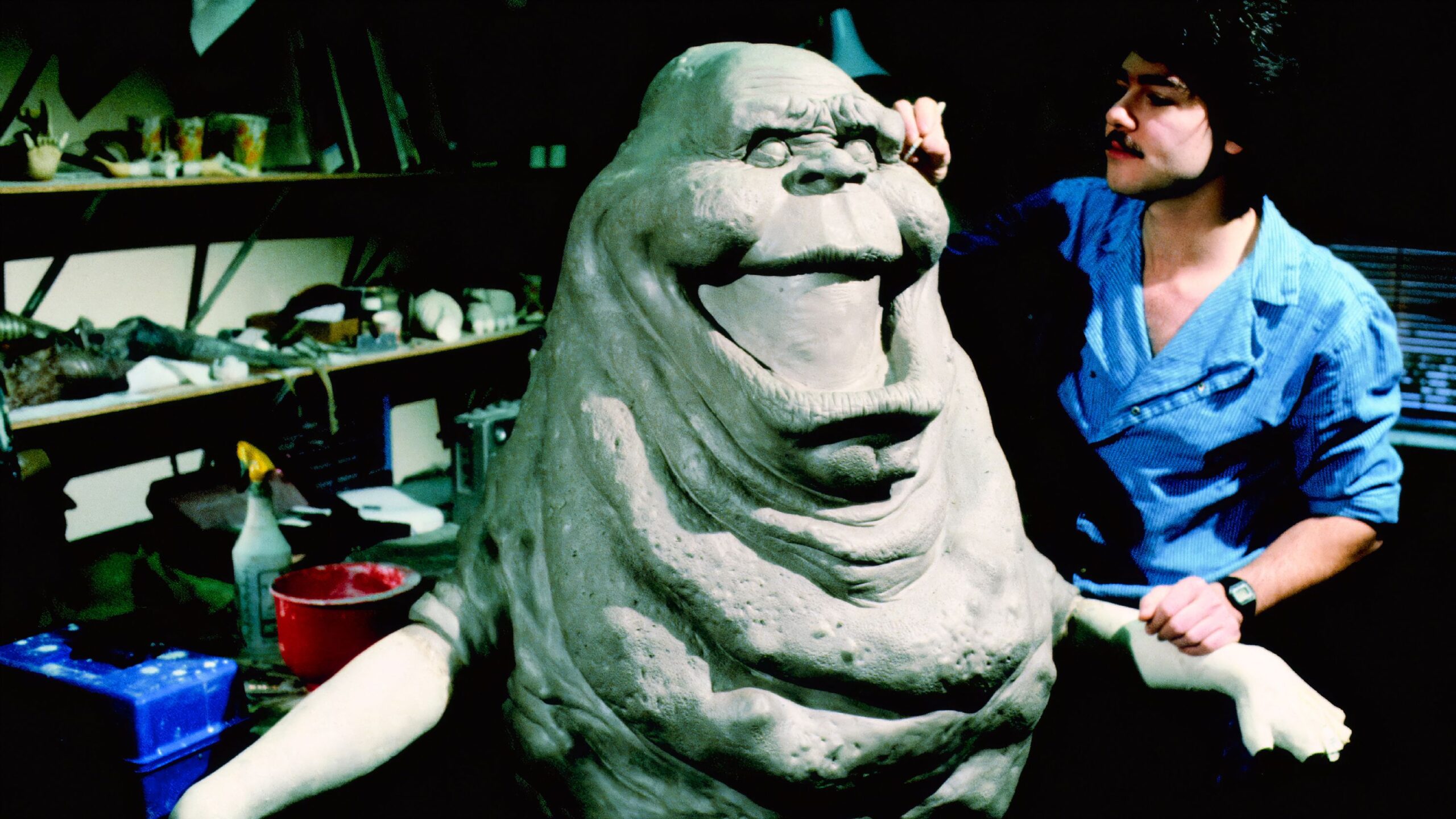
Horror journalist, producer, and podcast host Nick Taylor moves into the director’s seat for his feature debut with illuminating documentary Rubberhead: The Life & Monsters of Steve Johnson.
It chronicles the wild life and career of SFX maverick Steve Johnson, based on the multi-volume book series Rubberhead: Sex, Drugs and Special FX, and those familiar likely already know Rubberhead isn’t your standard horror documentary.
Johnson is responsible for so many memorable movie monsters, having worked on Fright Night, Poltergeist II, An American Werewolf in London, A Nightmare on Elm Street 4: The Dream Master and Night of the Demons, to name a few. He’s also extremely candid in ways that feel atypical in this industry, open about his failures as much as his successes.
“It was a natural progression for sure,” Nick Taylor tells Bloody Disgusting of his transition into filmmaking ahead of Rubberhead‘s world premiere next week at the Fantasia Film Festival on July 23. “I think with my podcast, I got adept at interviewing people and pulling creative lessons out of them, which was the point of my podcast. I wanted this movie to be sort of a creativity pill for artists where if they’re starting a project or feel creatively stuck, they could watch this movie and be inspired and get actual practical creative lessons.”
Taylor’s background in PR and marketing also organically led him down this path.
He charts the course from book promo to documentary director: “But also Bloody Disgusting had a lot to do with this movie because in the very beginning when I first met Steve, I was helping him promote his book and I said, ‘Hey, I got a marketing background and a journalism background. Let me help you promote this book. I’ll just pitch stories from your life to the media, and we’ll see what happens.’ And John Squires wrote an article about Steve making Slimer under the influence of tons and tons of cocaine, and that went fairly viral.”

“For a week, it was story time with Steve,” Taylor continues. “He would tell me a story from his life, and every story was about a major movie, a major director, lots of drugs and alcohol and insanity. I would write them up, and I think John published about three or four of them. So huge shout out to John Squires because that was really great. So yeah, there were definitely a lot of outgrowths of my journalism background that definitely contributed to this movie.”
Rubberhead condenses the multi-book series into a cohesive feature film with a breezy runtime, sparking the obvious question as to how Taylor approached condensing Johnson’s life down to an under 2-hour documentary film.
“That was one of the more difficult parts of all of this, because we had enough for a series or an epically long six-hour fan documentary,” he answers. “But from day one, I did not want to make a fan documentary. I love them. They’re a lot of fun, but I did want the movie to stand on its own two feet as a character-driven portrait of an artist and a time period and a technology, that being practical effects. I did want to be objective. I didn’t want to make this too long. I wanted to make it re-watchable. So I think we just really had to focus on what the narratives were that we wanted to tell. So there were some basically almost cliché archetypical mythic narratives present in Steve’s life. We could have made this way longer, but we wanted to keep it short. But luckily that’s why you have special features.”

Johnson quickly proves to be an engaging subject thanks to his self-effacing wit and frank self-reflections; expect no shortage of stories about how drugs factored into the height of his career or the failures it wrought.
That rare quality was an asset for Rubberhead, Taylor confirms. “He does not shy away from anything about the drugs, the addiction, the bridges burned, the mistakes made, the lessons learned. He just is honest about all of it. He’s had a lot of time for reflection, and he’s done a lot of reflection, so he doesn’t shy away from any of it, which is huge because it’s very refreshing. I don’t think a lot of people are that way, at least in this industry from what I can see. So I think it was hugely beneficial. We wanted to lean into that, and we wanted to make this sort of a gonzo Hunter S. Thompson sort of wild tale through Steve’s overall life.“
Condensing his life into this doc was a slow and steady process for Taylor, too. “It’s been almost seven years. It’s been a labor of love. We’ve been as indie as it gets. We would shoot what we could when we could, and then we would edit when we could. Then after a while it all came together.”
In a way, making Rubberhead brings Taylor’s horror fandom full circle. It turns out that the very film that sparked his interest in the genre and practical effects also comes with an amusing Steve Johnson anecdote.
Taylor explains, “My gateway for sure was Beetlejuice. I saw that at a very young age; I think I was four or five. I felt somebody had shown me, my soul. I get a little emotional thinking about it. There was something about that movie that felt so strange and unusual, but also felt so familiar. It was spooky, but it was fun, and it was lighthearted, and it had humor, but it also had this macabre celebration to it that I just really got into as a kid. I felt somebody had shown me my own soul. And funny story, Steve got fired from Beetlejuice because Tim Burton gave him his hand-drawn designs and Steve’s like, ‘Oh my God, these look like kids did them. This is not what you want. I know what you want. I’m going to redesign these for you.’ And Tim Burton was like, ‘Yeah, no, you’re not.’ So yeah, funny story.”

You must be logged in to post a comment.