

Editorials
The Three Faces of ‘Carrie’s’ True Villain, Margaret White

In 1974 Stephen King published not only his first novel, but a story that would weave its way into the tapestry of the horror landscape for all time. There is something that continues to resonate about “Carrie”– the tale of an outsider teenage girl being bullied and exacting revenge on her tormentors. We sympathize with the outcast, Carrie White, and yet we still recoil in horror as she lashes out at the prom attendees after her infamous crowning. Over the course of three film adaptations, the plot has remained more or less constant and unchanging, but one particular element of the story has seen surprisingly different iterations – Carrie’s mother.
Margaret White is one of the most memorable horror movie villains and she plays a vital role in the story of “Carrie.” Carrie’s world is shaped by Margaret’s influence, and it is Margaret to whom she must answer day in and day out. As humiliating as the insults from Chris Hargensen and the other girls are, as horrifying as the falling cascade of pig blood is on prom night, they are nothing compared to what Carrie has to come home and face every single day from her overbearing, religious zealot of a mother.
Margaret is a terrifying woman – harsh and unyielding. Fanatical at times, her faith is the force that drives her and motivates all of her actions. She is controlling and manipulative, ever desiring Carrie to remain close to god and out of the reach of the modern world. Throughout every iteration of this material, though those traits must remain a constant, Margaret is allowed a certain amount of flexibility, and seeing the way in which different filmmakers and actresses bring her to life is fascinating.

Piper Laurie
The role originated with an unforgettable performance from Piper Laurie in Brian De Palma’s 1976 adaptation. She is dominating physical presence – strong and formidable, with a powerful voice. Though she does have the occasional quiet moment at dinner, or singing softly as she sews, her mood can turn on a dime, and a pleasant interaction can quickly become an intimidating one, as Carrie (Sissy Spacek) is ever under her watchful eye.
Laurie’s performance in this film is transcendent, and her interactions with Carrie are profoundly tense. She is a powerful and aggressive character, driven by her belief system and inflexible to the world around her. When Margaret comes home to discover that Carrie had gotten her period, she immediately begins judging and chastising her, demanding that she beg forgiveness for her sins. Even as Carrie sobs and swears that she committed no sin, Margaret continues bellowing scripture and commanding Carrie to repeat the words. When Margaret feels that Carrie is not getting the point, she effortlessly drags her across the room and forces her into her prayer closet, all the while continuing to quote Bible verses as Carrie screams and begs to be let out.
This version of the character emphasizes Margaret’s control over Carrie’s life. Laurie (along with De Palma’s direction) gives Margaret a physical presence that is much larger and more imposing than the actress herself. Margaret towers over Carrie, both physically and emotionally, and her daughter understandably shrinks in her presence. Laurie plays Margaret as a woman not to be trifled with as she physically personifies the fire and brimstone that she preaches to Carrie on a daily basis.

Julianne Moore
In her 2013 adaptation, director Kimberly Peirce cast Julianne Moore in the role, and the result is a version of Margaret that is a bit softer and plays up the maternal angle of her character. In this film, we see Carrie’s birth, and Margaret’s desire to kill the baby since she believes her to be born of sin. But she can’t do it. Margaret’s love for her child overrides her religious instinct this one time, and she lets Carrie live. This moment is alluded to in De Palma’s film, but here, we actually see it happen, and it drives some of the interactions that we see between Mother and Daughter throughout the film.
Moore’s version of Margaret is still incredibly strict and unbending with her religion, but we do see a mother’s love come into play at times. Though she does see Carrie’s (Chloe Grace Moretz) desire to go to the prom as wicked, she also seems genuinely concerned about her daughter’s well-being. Her reaction after the incident in the locker room at the start of the film is fueled by equal parts religious rage at the thought that her daughter’s sins have brought about menstruation, and the protective instinct to keep Carrie safe from the cruelties of the outside world.
She periodically calls Carrie “little girl” and has moments of tenderness, despite her controlling nature. We see more of an actual relationship between these two characters than we do in De Palma’s film. As much as Margaret is driven by the judgment of her religious beliefs, she also has the drive of a mother seeking to protect her daughter. This change ultimately makes Margaret a bit less harsh and terrorizing, but the interactions between Margaret and her daughter are a little more complex. Though this wouldn’t necessarily categorize Margaret as a sympathetic character, we do see that her motivations are fueled, in small part, by her love for Carrie, as well as by her will and her focus on her faith.

Patricia Clarkson
In the 2002 television adaptation (written and produced by Bryan Fuller), Margaret is portrayed by Patricia Clarkson. This version is a bit of a midpoint between Laurie and Moore’s renditions of the character. Though she is still controlling and driven by her strict belief structure, this Margaret has a softness that comes through not as maternal, but more like a teacher to Carrie (played here by genre fave Angela Bettis). As always, Margaret will, of course, turn violent when pushed, but Clarkson seems to be taking the approach of “I’m doing this for your own good” as she rigidly guides Carrie through her faith. She is not nearly as harsh as Laurie is in her performance, but she is uncompromising, all the same. Her softness does not translate to love, as it does in Moore’s portrayal, but more like a distanced concern.
Throughout Carrie’s determination to try to be a part of the world outside her mother’s house, Margaret tries to plead with her and to make her understand the sins and dangers that she believes surround her. When Carrie begins making her prom arrangements, Margaret is resigned and saddened by her decision. She demands her daughter read specific bible verses about unclean and prideful women and when Carrie refuses, Margaret sadly says,
“You’ve gone so far astray, I fear for you.”
She cares about what she perceives to be Carrie’s spiritual well-being and tries to guide her in that regard, but even though her approach is not necessarily as forceful as Laurie’s, she is not guided by the sense of love that Moore’s Margaret exhibits.
When Carrie returns home after the prom, Margaret greets her with a softness, but a softness completely devoid of any warmth.
“I told you your sin would find you.” She says softly, as they kneel down to pray together before Margaret forces Carrie underwater in the bathtub.
And at the center of every great story is a great villain, and Margaret White has more staying power in this tale than perhaps anyone else. Even after Carrie vanquishes everyone at the dance and lays waste to the town (depending on what version you are watching), back at home, her ultimate adversary awaits her. Seeing how different performers can bring out different aspects of the character without changing what lies at her core is a fascinating examination of storytelling and just how we connect with characters in film. Making small changes to how Margaret is portrayed and bringing out different elements in her personality can alter how the story is told, without making any drastic changes to the heart of the story itself.




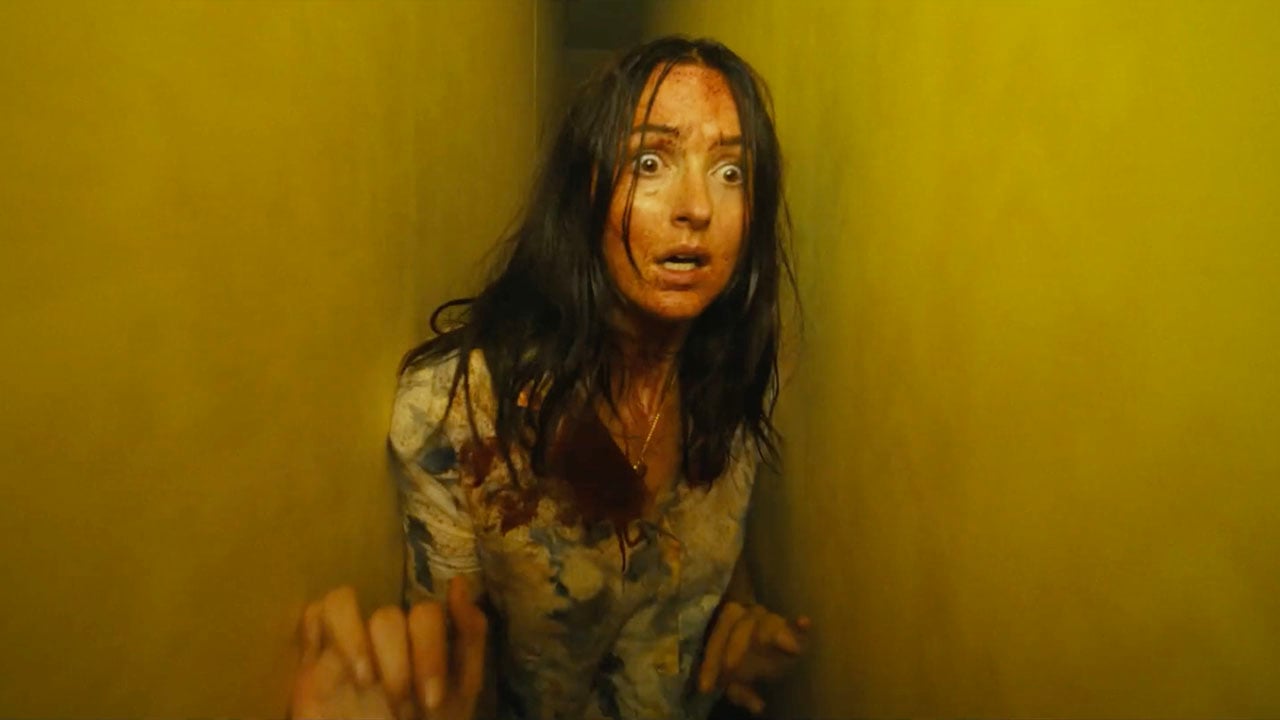
Judging from the unprecedented box office success of Kane Parsons’ Backrooms adaptation, you’ve likely already seen the liminal horror hit that managed to make audiences afraid of empty hallways and bad wallpaper. And now that so many of us have already entered the yellow labyrinth (some of us more than once), the time has come to discuss the spoiler-filled details that make the movie so fascinating in the first place.
And if there’s one element here that makes the Backrooms movie stand out from any previous lore/mythology, it has to be the genius addition of the Still Life entities. Warped recreations of real people that somehow wandered into the Complex, these misremembered creatures are responsible for some of the most disturbing imagery of 2026 – as well as laugh-out-loud memes created by one of the film’s very own concept artists.
However, true to Parsons’ word that the movie would rely heavily on practical effects, each of these distorted monsters was brought to life by real actors under heavy layers of makeup and prosthetics (with the occasional splash of CGI enhancements). While Anora and If I Had Legs I’d Kick You actress Ivy Wolk wasn’t among these performers, despite what Letterboxd might have you believe, the creature cast did benefit from veteran players with plenty of genre experience.

For starters, Alien: Romulus alumni Robert Bobroczkyi (who previously brought that film’s horrific Offspring to life during its most memorable sequence) plays the flick’s main antagonist, the Still Life version of Captain Clark. And though there was some obvious CGI involved in making the character’s peg-leg and nightmarish face more believable, Bobroczkyi’s monstrous performance and his natural 7’7″ frame helped to make that final chase sequence a clear highlight among this year’s genre offerings.
The film’s Texas-Chain-Saw-inspired “dinner” scene also features a freaky collection of less-aggressive Still Life creatures in the form of the Bearded Man, the Red-Headed Woman and, strangest of them all, the cheekily named “Archibald Leland Sutter Still Life” (who earned this title among fans and crewmembers as a reference to his apparent affinity for lamps).
While this was the first major horror outing for both Patrick Baynham (The Bearded Man) and Dana Mahmood (Archibald), Rhiannon Roberts has worked as a stunt performer in everything from Yellowjackets to HBO’s The Last of Us adaptation – which is probably why The Red-Headed Woman is the most active out of Clark’s impromptu “family.” That being said, the Archibald Leland Sutter Still Life is my personal favorite of the bunch simply because his anachronistic outfit suggests that the Backrooms phenomenon might be a lot older than the Async Foundation. I also love how hard he tries to be helpful with that little light of his!

That might be it for the Still Life entities, but I think horror fans will also be pleased to hear that the film’s Found Footage prologue stars none other than Resident Evil: Welcome to Raccoon City star Avan Jogia as Naren Warne – and American Mary herself Katharine Isabelle also shows up in a blink-and-you’ll-miss-it cameo at Mary’s house party towards the middle of the story (though I have a feeling that she originally had a bigger part that was likely cut for time).
At the end of the day, Parsons’ Backrooms may have been an auteur-driven project motivated by the young director’s unique take on the classic creepypasta, but film has always been a collective artform, so it’s fun to see just how many talented performers it takes to bring this kind of supernatural nightmare to life in a way that connects with so many people.

You must be logged in to post a comment.