Editorials
SCREAMBOX Hidden Gems – 5 Horror Movies You Should Stream This Summer

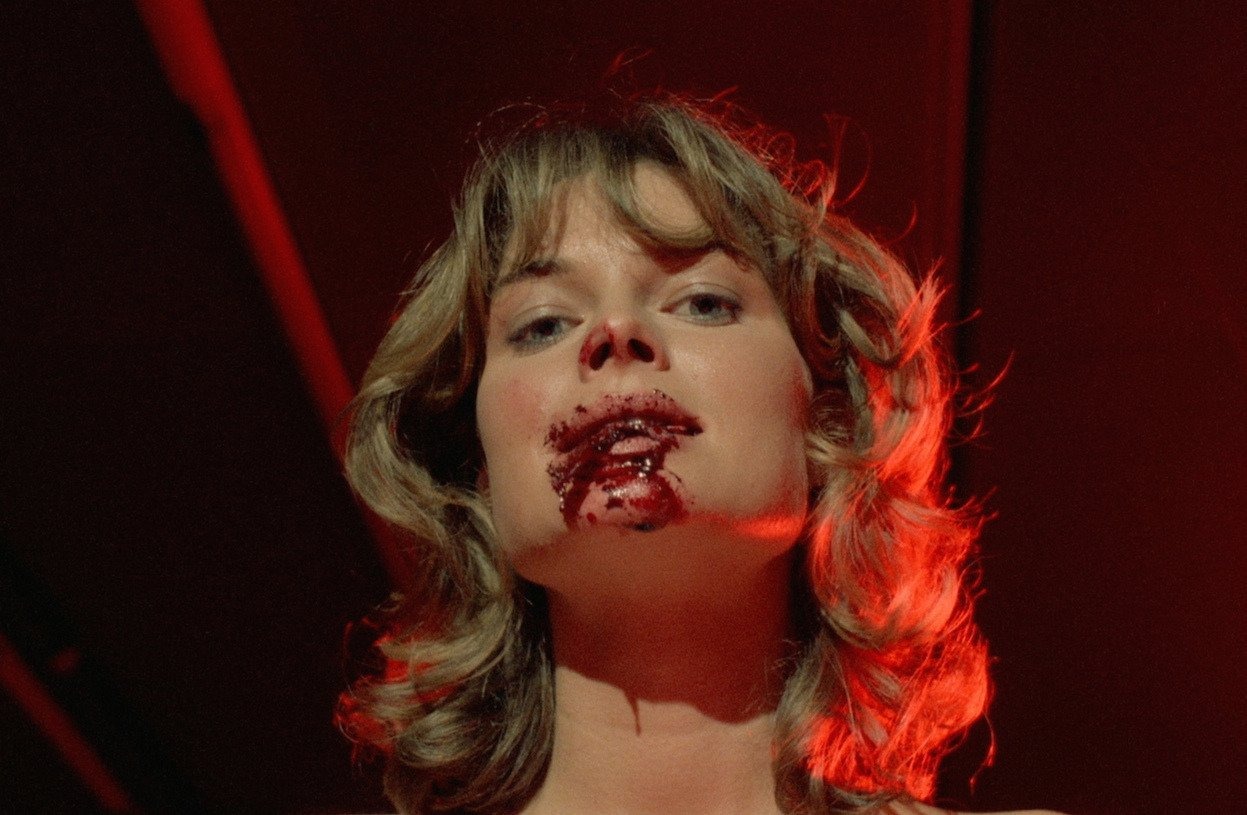
The Bloody Disgusting-powered SCREAMBOX is home to a variety of unique horror content, from originals and exclusives to cult classics and documentaries. With such a rapidly-growing library, there are many hidden gems waiting to be discovered.
Here are five recommendations you can stream on SCREAMBOX right now.

Night of the Demon
Not to be confused with the 1957 film of the same name (also on SCREAMBOX), 1980’s Night of the Demon is an unforgettable Bigfoot experience. It’s no surprise that the gory exploitation flick was prosecuted as a “video nasty” by the British Board of Film Classification upon its initial release. It’s best remembered for a scene in which Bigfoot rips off a guy’s manhood — and that’s not even the most outrageous death scene!
The cheesefest plays like an early slasher, but instead of a masked killer lurking in the woods, it’s a guy in a cheap gorilla costume. The premise follows an anthropology professor (Michael Cutt) and a group of students on an expedition into the woods of Northern California in an attempt to prove the existence of Bigfoot after a rash of brutal murders. An integral subplot introduces a recluse (Melanie Graham) who was gratuitously molested by the creature.
Night of the Demon may not be a high mark of cinema — this one falls squarely into the so-bad-it’s-good category — but I’d argue that it’s the most entertaining Bigfoot movie. Beyond the wild kills, the plot itself is just as bonkers, riddled with so many vignettes about the cryptid’s previous victims that it could be mistaken for an anthology. It culminates with a five-minute slow-motion finale in which Bigfoot mercilessly obliterates most of the cast.

Under the Bed
If you have a kid that can handle Ghostbusters and Gremlins but isn’t quite ready for the likes of Insidious or IT, Under the Bed is a great way to help them transition to full-blown horror. In terms of scares and intensity, it’s in the same ballpark as Poltergeist, Scary Stories to Tell in the Dark, and Stranger Things, albeit with enough bloodshed to earn it an R rating.
Directed by Steven C. Miller (Escape Plan 2: Hades, Silent Night) and written by Eric Stolze (Late Phases), the film stars Jonny Weston (Project Almanac) and Gattlin Griffith (Changeling) as troubled brothers who team up to defeat the boogeyman under the bed that torments them. The first half meanders a bit as an Amblin-esque coming-of-age tale, but it eventually transforms into a supernatural monster movie with a cool, practical creature. It’s surprisingly effective, spooky, and gory.

Aenigma
The Beyond (also streaming on SCREAMBOX) is generally considered Lucio Fulci’s magnum opus, and for good reason, but Aenigma is a great stepping stone if you’re looking to delve deeper into his filmography. The 1987 supernatural horror film is the Italian horror maestro’s answer to Carrie, an influence he openly acknowledged. Parallels can also be drawn to Patrick as well as the works of Fulci’s cinematic rival, Dario Argento.
In the aftermath of a humiliating prank at the hands of her cruel boarding school classmates, awkward teen Kathy (Milijana Zirojevic) is rendered comatose. Shortly after, Eva (Lara Lamberti, Red Sonja) transfers to the prestigious college and moves into Kathy’s old room. Eva shares an inexplicable telepathic link with Kathy, which she uses to enact revenge on her tormentors; killing them one by one under mysterious circumstances. Dallas’ Jared Martin receives top billing as Kathy’s neurologist who becomes embroiled in the scheme.
Aenigma is somewhat tame by Fulci standards — no eye trauma here! — but his signature style is present in the dreamlike atmosphere, elaborate cinematography, and inspired deaths. Fulci and co-writer Giorgio Mariuzzo do for snails what they did for spiders in The Beyond: turn them into nightmarish killers in the film’s most memorable sequence.

Blood of the Tribades
Looking for an outside-the-box viewing in celebration of Pride Month? Blood of the Tribades is a love letter to the 1970s Euro-horror subgenre centering on lesbian vampires from the likes of Jess Franco, Jean Rollin, and Hammer Films. It’s not a comedic send-up — although it is a tad goofy — but rather an homage to the era through a modern, feminist lens. Instead of the gratuitous male gaze associated with the sleazy trope, this one offers equal opportunity eroticism.
Writers-directors Sophia Cacciola and Michael J. Epstein’s esoteric vision — centered on a vampire culture divided by their differences in gender, race, and beliefs — may be off-putting to some, but the ambitious worldbuilding is admirable for an indie film. Exterior shots are lush, but the low-budget seams show in the cramped, bare interiors. It’s a bit slow moving despite clocking in at only 78 minutes, but a dreamy aesthetic keeps it interesting. Make it a double feature with Vampyros Lesbos, also on SCREAMBOX.

Road Head
If you’re planning any road trips this summer, Road Head will make you reconsider your vehicular activities. The 2020 horror-comedy is far more competently made than one might expect from such an explicit title, with director David Del Rio and writer Justin Xavier delivering a quirky mash-up of The Hills Have Eyes and Mad Max with a sense of humor.
The film follows three 20-something friends — cheeky technophobe Alex (Damian Joseph Quinn), his photographer boyfriend Bryan (Clayton Farris), and third-wheeling lovesick stoner Stephanie (Elizabeth Grullon) — on a fruitless road trip in which they encounter a sword-wielding savage collecting the heads of anyone who crosses his path in the desert. The characters are messy in a relatable way, and the performances are good despite some questionable story beats. There are several good laughs, practical effects, and twists along the way.
Visit the SCREAMBOX Hidden Gems archives for more recommendations.
Start screaming now with SCREAMBOX on iOS, Android, Apple TV, Prime Video, Roku, YouTube TV, Samsung, Comcast, Cox, and SCREAMBOX.com!




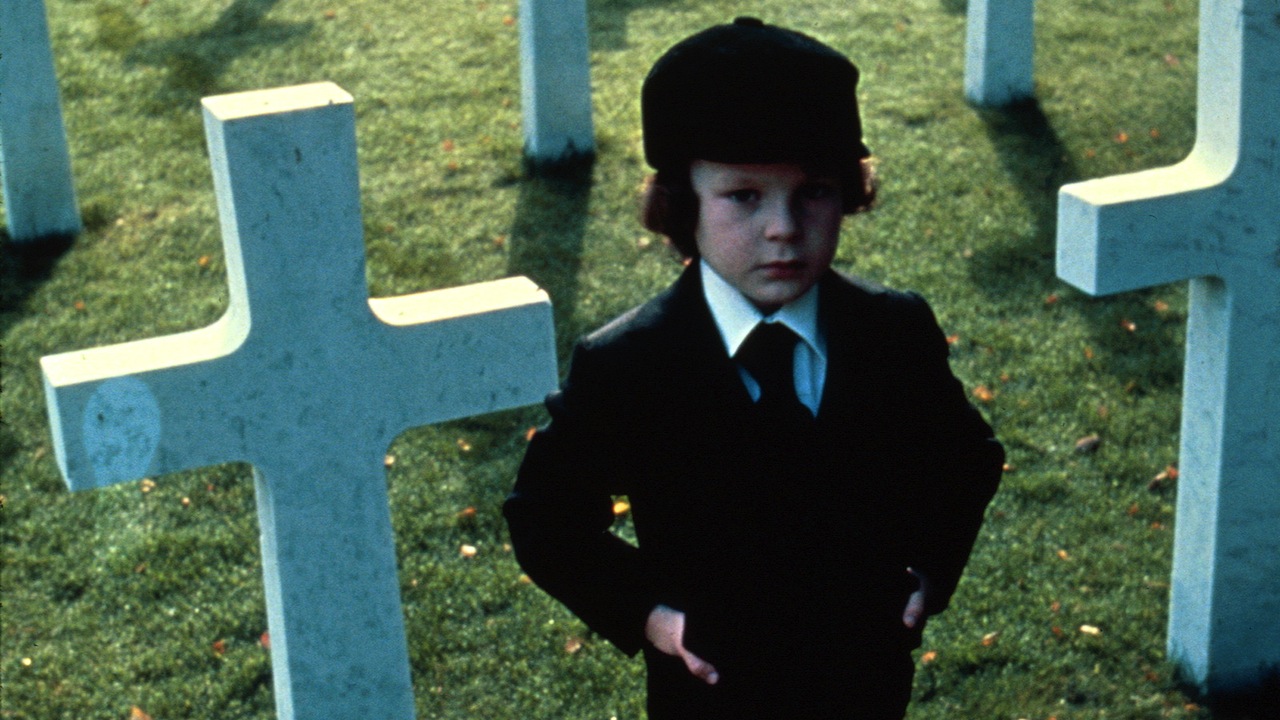
Of the three films that make up the Diabolical Trinity of classic religious horror films—Rosemary’s Baby (1968), The Exorcist (1973), and The Omen (1976)—The Omen is the most purely entertaining.
While Rosemary’s Baby digs into the societal shifts of the 60s and The Exorcist explores spiritual tensions between faith and doubt in an ever-shifting world, The Omen seems most interested in just telling a thrilling story. It achieves this by blending two major trends of the 1970s, the devil movie and the paranoid thriller, into one crackling adventure yarn. In the process, The Omen has sparked fear and curiosity about what could happen in the “end times” if such events are to occur.
After seeing The Exorcist, producer Harvey Bernhard contacted writer David Seltzer and said something along the lines of, “Hey, write me one of those.” Seltzer, having never read the Bible, thought it would be an interesting challenge, so, according to various interviews, he read the Bible and several commentaries in search of a story. Then he stumbled upon a passage in the book of Revelation, the image of a great Beast rising out of the sea, that sparked his imagination. In the commentaries, he found that the sea represented politics in some interpretations of the text, and he began building his story on that foundation.
Seltzer has told this story often, and I am inclined to believe him. However, from there, much of the theological-sounding lore of The Omen was created purely by Seltzer. Many of the ideas surrounding The Antichrist in the film appear to be drawn much more from the pop-eschatology sensation of the 1970s, The Late Great Planet Earth by Hal Lindsay, than any Biblical source.
Lindsay’s book was the bestselling nonfiction book of the 1970s and re-popularized views of the “last days” that had been dying along with fundamentalism for decades, namely Dispensationalism, Millennialism, and the Pre-Tribulation Rapture. In dispensationalism, history is broken into several epochs of time (or dispensations) that culminate in the return of Christ and his thousand-year (millennial) reign.
Before this return, a seven-year Tribulation will occur in which the Antichrist comes to power and persecutes all who oppose him, culminating in a battle between the forces of good and evil at the valley of Megiddo, usually called Armageddon. Of course, in this worldview, the true believers in Jesus will be lifted out, or raptured, before all this takes place. Since the publication and popularity of The Late Great Planet Earth, this has been the prominent belief in Evangelical and Fundamentalist Christian circles, though Roman Catholic, Orthodox, and mainline Protestant denominations largely reject it.
Lindsay also did something unique that had not been the case even in dispensationalist circles before him—he posited that the creation of the modern state of Israel in 1948 started the countdown to Armageddon. Fans of the film will immediately realize where Seltzer ran with this idea in the first line of the poem created for the movie: “When the Jews return to Zion…”
Damien Thorn and the Creation of Horror’s “Innocent Villain”

Seltzer’s next inspiration focused on the idea of the Antichrist as a child, what he would call the film’s “innocent villain.” In watching The Omen, it is readily apparent that Damien Thorn (Harvey Stephens) does not really do anything evil beyond a bit of normal kid mischief. Even the moment in which Damien knocks Kathy Thorn (Lee Remick) over a second-floor railing can be read as an accident orchestrated by Damien’s diabolically connected nanny, Mrs. Baylock (Billie Whitelaw). The film takes this idea of the innocent villain a step further by casting Gregory Peck, best known for playing arguably the greatest father in film history, Atticus Finch in To Kill a Mockingbird (1962), as Damien’s earthly father, an element that greatly satisfied Seltzer.
The New Testament itself says very little about the Antichrist and certainly nothing about his childhood. In fact, the word antichrist is used twice (1 John 2:18 and 2 John 7 for the curious) and refers to groups of people, not a particular person. There is also a passage in 2 Thessalonians 2:1-12 in which the writer (usually attributed to Paul) discusses “The Man of Lawlessness” who will “exalt himself over everything that is called God” and “proclaim himself to be God.”
Then there is the Beast of Revelation chapter 13 with “seven heads and ten horns” that Seltzer latched onto, which has been interpreted in a multitude of ways over the centuries. Powerful people throughout history, from Charlemagne, various Popes during the Protestant Reformation era, Napoleon and Hitler, to modern politicians, including Ronald Reagan, Bill Clinton, Vladimir Putin, Barack Obama, and Donald Trump, have all had the label placed on them by various circles. Even religious leaders like Billy Graham have not escaped being called the Antichrist.
Lindsay and modern dispensationalists are certain the Antichrist will be a 21st-century individual as they are equally certain that the Rapture, Tribulation, and return of Christ are imminent, likely within their lifetime. Many scholars and theologians, however, interpret these passages as symbolic representations of the Roman Empire and the first-century Caesars who persecuted, tortured, and murdered Christians and Jews who refused to submit to Imperial rule and worship them as gods. For example, that the Beast from the sea in Revelation has seven heads is symbolic of the famous seven mountains of Rome, with the 10 horns referring to rulers and magistrates of the Empire.
But this is all really of no matter to Seltzer and the story of The Omen. Instead of being concerned with any historical or theological accuracy, he instead built his own lore, which sends Robert Thorn and photographer Keith Jennings (David Warner) on a globetrotting investigation into the nature of the Antichrist and how to stop him. Some of this lore includes the child being born of a jackal, the reaction of animals, the protective cult that arises around Damien, the daggers of Megiddo, and maybe most interesting of all, the peculiar flaws in Jennings’s photographs that presage the ways certain individuals will die.
All these aspects are where the paranoid thrillers come in, as films like Blow Up (1966), Z (1969), The Conversation (1974), The Parallax View (1974), 3 Days of the Condor (1975), and All the President’s Men (1976) were all the rage at the time. Especially in the wake of the Watergate scandal, the idea of journalists (like Jennings) as ordinary heroes who could bring down the powerful, nefarious forces in the world was exactly what audiences craved. And what greater hidden evil force was there than the Devil? This is also why the device of the daggers of Megiddo is so important to a movie like this. If Damien is indeed the Antichrist, there must be a way to stop him, though in the Biblical text, the only power capable of destroying the Devil is God Himself.
The Mark of the Beast, 666, and the Film’s Most Famous Religious Symbolism

The piece of lore created for the movie with the most solid Biblical grounding is the Mark of the Beast. Revelation describes a mark on the forehead or hand of those who worship the Beast and his image. Again, this is symbolic language differentiating those who belong to the power of the Roman Empire and those who belong to Christ, who have the Mark of the Lamb. In Seltzer’s hands, the mark is very literal, a birthmark that is borne by not only the Antichrist but all his followers, meaning they are marked from before birth as belonging to Satan, and there is no escaping it. This is all rather distressing to the priest Father Brennan (Patrick Troughton), who betrays his mark by warning Thorn about Damien and pays the price by memorably being impaled by a spire that falls from a church steeple after being struck by lightning.
Why is the mark three sixes? Again, this is drawn from a passage in Revelation that states that the Beast can be identified by calculating his number. In Biblical scholarship, this is believed to be the sum of the name of a man transferred into Hebrew numerology, a practice in which each Hebrew letter also represents a number. Using this method, the number of the name Caesar Nero, which many believe to be the most logical choice, is six hundred sixty-six. In the film and elsewhere, this number is changed to three individual sixes. According to the film, this represents the Diabolical Trinity (a designation also unique to the film) made up of Satan, the Antichrist, and the False Prophet. That Damien carries this unique birthmark under his hair convinces Robert that the child is the Antichrist, and it’s up to him to destroy him.
Part of what makes The Omen great is its ambiguity. Damien could be the Antichrist, or he could be at the center of a series of coincidences. Director Richard Donner stated in interviews that he believed Robert Thorn had gone insane by the end of the film, which, to Donner, is the only explanation for why Thorn would attempt to kill an innocent child. However, that enigmatic smile in the final shot suggests that Damien does embody a spirit of great evil. The sequels, however, all but erase this ambiguity.
In audiences, The Omen sparked a renewed interest in the concept of the Antichrist and the dispensationalist interpretation of the end times that continues to echo throughout the last five decades. Around the time of the film’s release, even Elvis Presley was photographed brandishing a paperback copy of Seltzer’s novelization. Dispensationalist authors like Hal Lindsay, Tim LaHaye, and John Hagee have made millions publishing books and giving lectures about the Antichrist and the end of the world.
The Legacy of The Omen, 50 Years Later

Though A Thief in the Night (1972) preceded The Omen in initial release, it gained quite a resurgence (along with the ability to create three sequels) in the wake of the popularity of The Omen and went on to scar the psyches of Evangelical children for decades. Hal Lindsay was also able to release a film version of The Late Great Planet Earth in 1978, complete with narration and a brief onscreen appearance from Orson Welles.
In the 1990s, the Left Behind series became a cultural phenomenon, spawning twelve books in the core series, a YA spinoff series, video games, and a movie series (2000-2005) starring Kirk Cameron. A bigger studio adaptation of the first book was released in 2014, starring Nicolas Cage. 20th Century Fox and The Omen got in on the renewed “end-of-the-world” vigor by releasing a remake of the original film on June 6, 2006. The franchise was revived once again in 2024 with The First Omen, which explores ideas of the Antichrist and the motivations of those in power in our current religious, social, and political context.
But despite all the sequels, spinoffs, rip-offs, remakes, and “end times” money grabs of the last 50 years, the original version of The Omen remains untouchable. Its greatest strength is that it seeks, first and foremost, to entertain. And it does so admirably.
After half a century, its influence can be felt in horror, the culture at large, and even in various faith circles. It is a testament to the power of story and film that, consciously or unconsciously, fans of The Omen and those who have never seen it alike are, to this very day, marked by the Beast.

You must be logged in to post a comment.