Editorials
‘Shelby Oaks’ $1M Reshoots: What Changed From The Festival Cut to the Version Now In Theaters?

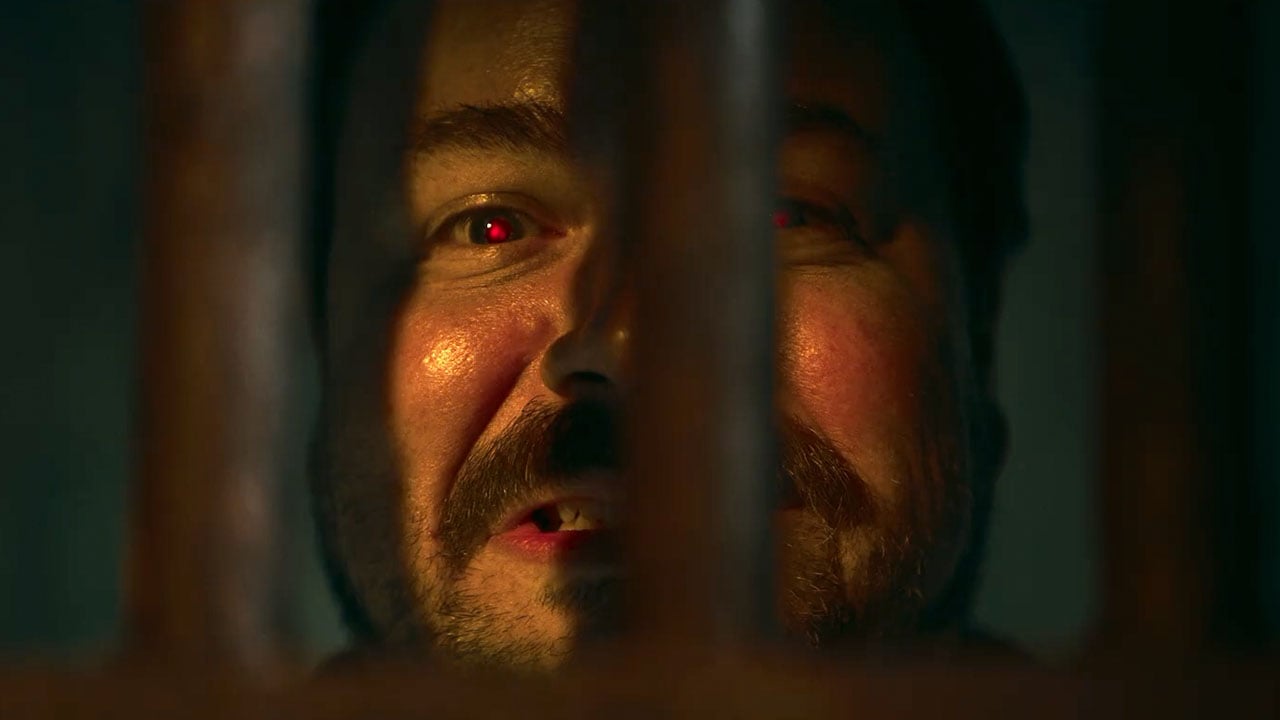
With Shelby Oaks, writer/director Chris Stuckmann made the leap from YouTube to theatrical film. But his feature directorial debut, which is now playing in theaters, doesn’t look the same as it did when it played the festival circuit in 2024.
Shelby Oaks follows Mia (Camille Sullivan), a woman who has been obsessively searching for her younger sister Riley (Sarah Durn) for more than a decade. The missing woman was the host of a popular YouTube channel called “Paranormal Paranoids” and disappeared along with her three co-hosts while filming in the titular derelict town.
While the murdered bodies of the other three hosts were eventually discovered, Mia lacks closure because Riley’s disappearance remains unsolved. As her search is captured via a documentary crew, Mia’s marriage to Robert (Brendan Sexton III) begins to buckle under the burden of her obsession. Things only get worse when a new lead thrusts Mia back into investigative mode with renewed – and dangerous – vigour.
Shelby Oaks played at a variety of festivals last year, including Fantasia Film Festival (where I reviewed it for Bloody Disgusting). Since then, however, the Kickstarter-funded film was acquired for distribution by Neon, picked up a producing credit from Mike Flanagan, and received $1M from Neon for reshoots to help realize Stuckmann’s vision.
Having watched the new cut, here’s what is different in the version now available to audiences. Warning: Some spoilers to follow.
Face Peel

The film opens with text explaining the circumstances of Riley’s disappearance and the context for how the footage was recovered. We see the young blonde cowering in a cabin bedroom before venturing off-camera into the hall.
Later, this sequence is repeated, but Mia has discovered another tape (courtesy of Charlie Talbert’s Wilson Miles), which includes additional footage that features more graphic shots of Riley’s dead co-hosts. In the original cut of the film, these murders were only briefly glimpsed, and the amount of blood and gore was limited.
In the new cut, there’s a whole new sequence featuring the film’s supernatural protagonist Tarion (played by Derek Mears, as well as David Greathouse and Jon Michael Simpson) ripping the face off one of the men. The camera lingers on the gory practical effect, which is so forceful that the body is lifted off the floor before falling back to the ground…minus a face.
In a post-screening Q&A, Stuckmann explained that reshoots for this sequence alone took a half day to complete (from set-up to clean-up to resetting for additional takes). That was a luxury (both time and money) that the production simply didn’t have the first time around.
Hellhound Action

Part of the film’s mythology includes hellhounds that protect Tarion and its progeny. While there were dogs in the festival cut of the film, Stuckmann elaborated that the additional funds allowed them to bring the dogs back for more action. Fun fact: the hounds are real, not CGI; they come from Sweden; and they were trained to perform very specific actions in the film.
Mia first spots a dog eying her when she’s out on the porch late at night, watching old videos of her sister. Later, she’s confronted by a dog at the prison outside Wilson Miles’ jail cell. It’s possible that this brief scene has been touched up because the effect of the monster’s hand resting on the dog looks better. Sullivan’s hair is also styled differently in select shots from this sequence, which matches her hair from the reshot climax (see below).
The biggest new addition, however, is the film’s final sequence. After Riley has been rescued from Norma (Robin Bartlett) ‘s cottage, Mia and Riley fight over Riley’s demon seed baby. In the climax, Riley plummets through the cracked bedroom window and, as Mia watches and screams from above, her sister’s still alive body is attacked by *multiple* hellhounds who rip her to shreds.
My memory is slightly hazy about how much of this carnage was visible in the original cut, but in this new version, Stuckmann treats us to close-up shots of the dogs ripping at Riley’s face and body. Much like the face rip from earlier in the film, this gore is much more explicit, and the camera lingers on the glorious practical FX.
Sequel Potential?

It appears that these reshoots have helped the modestly budgeted film, which has garnered mostly positive reviews from critics (67% on Rotten Tomatoes). Intriguingly, if audiences embrace the film, Stuckmann has some ideas on how to expand Shelby Oaks. In the post-screening Q&A, he confessed that he has not one, but TWO more ideas set in this world.
The first is a sequel in the vein of the original Halloween 2 that would immediately follow the events of the first film as Mia is forced to explain the brutal death of her sister.
The second pitch is a prequel that would explore Norma’s story, including how she came to worship Tarion, gave birth to Wilson Miles, and became a rapist recluse in the woods.
Shelby Oaks is now playing in theaters.



Steven Spielberg has always been conversant in the cinematic language of the horror genre, despite relatively few credits in the genre. His contributions as a writer and producer on things like Poltergeist are legendary, and films like Duel and Jaws certainly wield the horror genre in remarkable, often chilling ways. He may not be a horror filmmaker, but he knows when he needs to scare us, and he has the tools to make that happen.
I didn’t go into Disclosure Day, Spielberg’s alien epic, expecting outright horror, and indeed the film leans much more into thrilling than frightening. This is not a horror film, but for a few minutes in the middle, much to my surprise, it became one.
Spielberg has filmed more than his fair share of scary scenes over the years, but with Disclosure Day, he directed a new contender for the scariest scene of his entire career.
SPOILERS AHEAD for Disclosure Day!

Josh O’Connor in DISCLOSURE DAY, directed by Steven Spielberg.
Among the various alien secrets laced throughout Disclosure Day are a trio of palm-sized rods, the color of pencil graphite. These rods, originating from another planet, can be used for a number of things, but for the purposes of this scene, the most important is “diving,” gripping the rod in one bare hand and using its power to “dive” into the mind of another person.
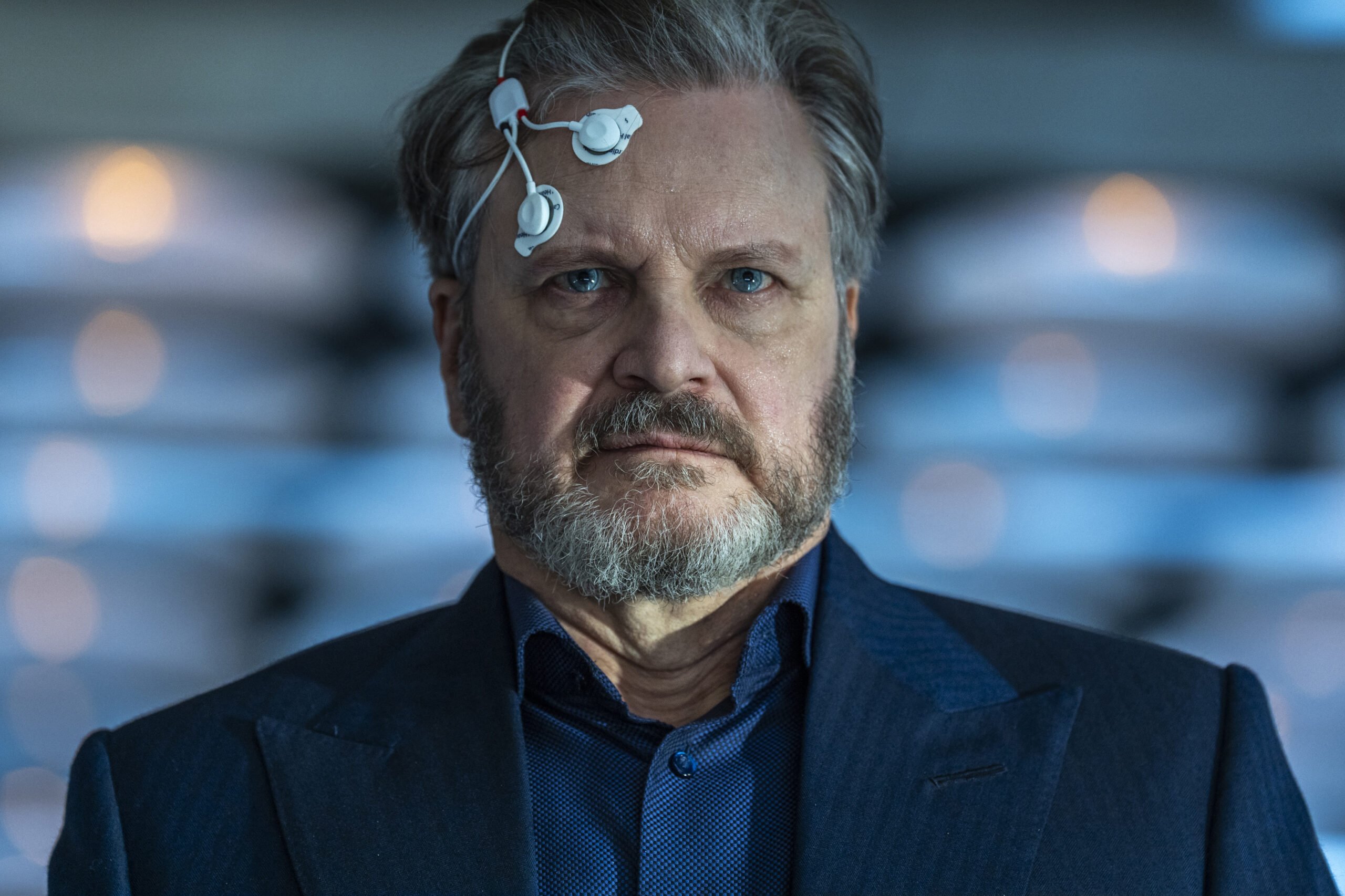
The person holding the rod in this scene is Noah Scanlon (Colin Firth), head of shadowy cybersecurity firm Wordex, who is hellbent on keeping human knowledge of extraterrestrials secret from the general public. Scanlon’s trying to find whistleblower Daniel Kellner (Josh O’Connor), who’s got all of those alien secrets tucked in a backpack while he’s on the run, and while Daniel’s more experienced mind is protected from diving, his girlfriend Jane’s (Eve Hewson) is not. So, monitored by medical personnel at Wordex headquarters (diving is dangerous), Scanlon pushes his way into Jane’s mind to find the location of Daniel’s safe house.
A telepathic invasion is scary enough on its own, but Spielberg doesn’t stop there. When Scanlon dives into Eve’s mind, he appears to her to be sitting across the kitchen table, like he’s in the room. Her bright blue eyes turn Scanlon’s dark brown, and she loses much of her control over her own body, not to mention her mind. Moments before, Daniel finally shared with her the secrets in his backpack, so Jane is shocked, conflicted, deeply vulnerable when Scanlon slips inside her head. This is not just telepathy. This is possession.
Spielberg underscores this not just through the visual language of the scene, as Jane breaks out in a sweat and struggles to sit upright as Scanlon invades her mind, but through Jane’s background. As she revealed to Daniel earlier in the film, Jane is a former novitiate nun who left her convent when she began to question her calling. She still believes firmly in God and, more importantly, believes that perhaps proof of alien life should be kept secret from the public because, in her eyes, it would upset the entire balance of faith in the world. God is a defining factor for humankind, Jane argues, and showing humanity proof of creatures from the stars would undercut that in dangerous ways.

This context, combined with the crucifix necklace Jane’s holding in her hand at the time of the dive, makes this scene the closest thing Spielberg will ever shoot to something out of The Exorcist. It’s not just a battle of wills, but a battle of faith. As an amoral technocrat worms his way into her memories, her beliefs, her faith, Jane turns the crucifix into a weapon, squeezing it until her hand bleeds when she discovers that a pain response can momentarily push Scanlon out of her head.
Of course, when you put a crucifix and a bloody hand together, it conjures images of stigmata. Screenwriter David Koepp pushes the allusion further by having Scanlon quote Christ on the cross to Jane by way of convincing her that she must be the one to stop Daniel by any means necessary.
It’s easy to see why this is scary, right?
On a very basic level, you have a powerful, wealthy man subduing and assaulting an innocent young woman, which is frightening enough. Then, the layers of the scene kick in. Scanlon doesn’t just assault Jane, but possesses her, seizes her memories, her knowledge, and finally her own free will, all while Jane literally clings to her faith in an effort to fight back. Disclosure Day is, among other things, a story about who has a right to the truth, and Scanlon believes that he should be the arbiter of that truth. Not just the truth as he sees it, but the truth as Jane sees it as well. If they don’t see eye to eye, he’ll make her.
But the possession, as it turns out, cuts both ways. Using the rod to dive is, for a normal human being, an intensely strenuous process. Scanlon admits that previous attempts almost killed him, and for some members of his time, so much as touching the rod results in a near-death experience. Even accessing an unprepared mind like Jane’s takes a lot of Scanlon, and when she kicks him out by squeezing the crucifix – again, so much meaning embedded in the details here – his team holds him back and tries to offer medical intervention. But Scanlon persists, pushing them away, and keeps diving back in.
This means that Jane can’t escape him because he just won’t stop pushing back through her defenses, but it also means that each time Scanlon enters her mind, and thus the safe house, he looks more monstrous. By the end, through a combination of lighting and makeup, Firth barely looks human, conjuring up images of the possessed Father Karras at the end of The Exorcist.

Colin Firth (center, standing) in DISCLOSURE DAY, directed by Steven Spielberg.
On a pure, visceral craft level, all of this is quite frightening, but the real trick to making this scene into Spielberg’s most terrifying lies in the more existential horror surrounding all of this. Disclosure Day is a film about the battle for the truth over extraterrestrials, but it’s also about a fight against an impossibly powerful surveillance state, the devaluing of human and alien lives in favor of some nebulous collection of assets, and the value of the individual in a world that increasingly lumps people into demographic boxes and writes them off.
In this scene, the surveillance state becomes supernatural, a human life is worth less than a piece of information, and an extragovernmental technocrat would rather sacrifice his own humanity than see reason. In 2026, few things could be more terrifying than that. Spielberg knows this and wields it mightily, proving once again that, while he’s not a strictly horror filmmaker, he can direct horror with the best of them.
Disclosure Day is in theaters now.

Eve Hewson (second from left) in DISCLOSURE DAY, directed by Steven Spielberg.
You must be logged in to post a comment.