Reviews
‘Home Bodies’ Review: A Haunting Dystopian Sci-Fi Parable [Fantasia 2026]

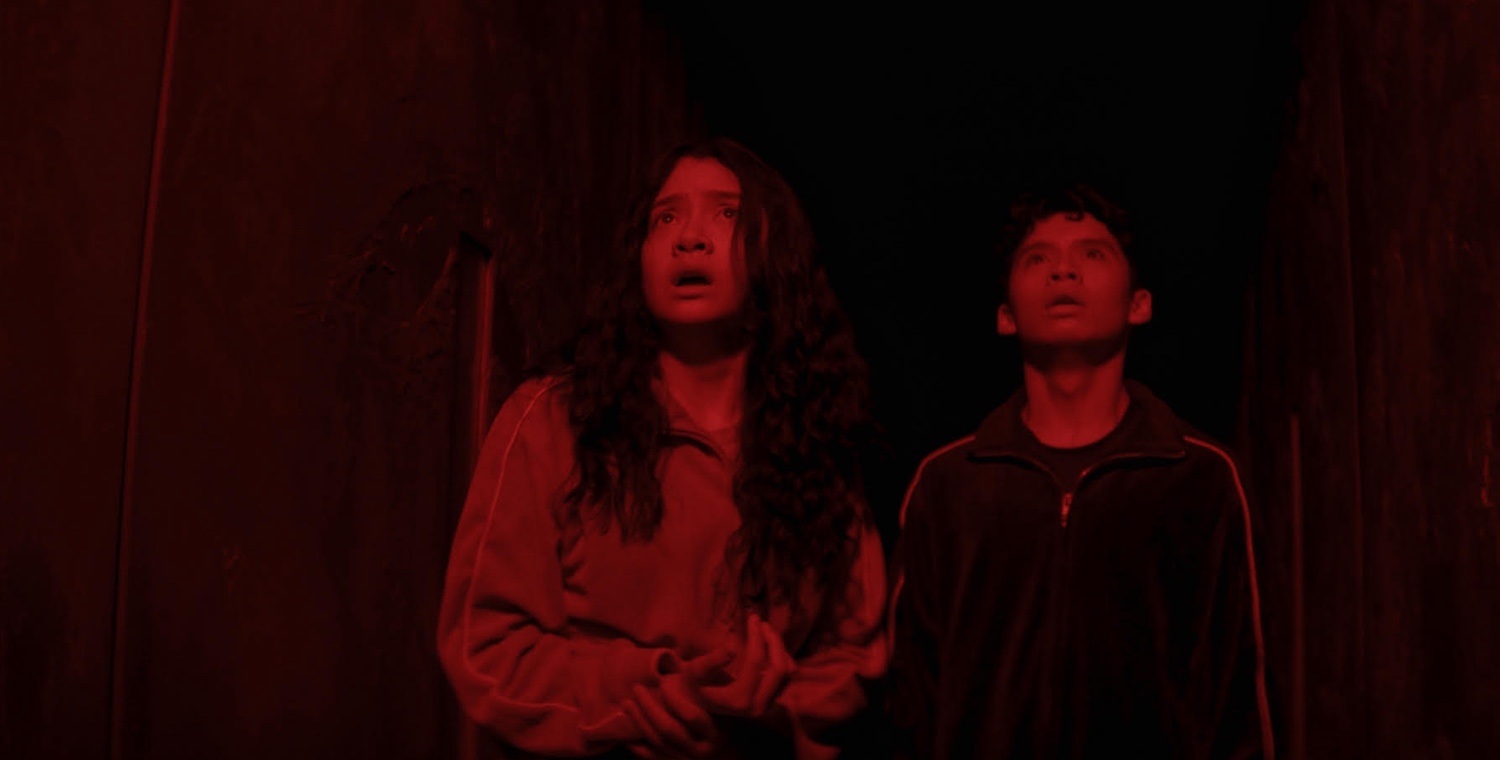
The world of Home Bodies, director Casey Walker’s dystopian sci-fi film, is all about order. The movie opens with a slow omniscient tracking shot through a semi-claustrophobic bunker-like space, which will be revealed to be the film’s sole setting, complete with motion-activated lights, retro-futuristic appliances that look dingy and obsolete but have amazing Star Trek-like powers.
Populating this environment are two babies – one swaddled in red; the other in blue – who grow up, in an immediate time jump, to become pre-teens: Red (Emma Ho) and Blue (Ian Ho). What is going on, including how these children survive, is part of the film’s central mystery.
The kids have familiar language, albeit with a few tweaks: catch becomes “ball catch”, milk becomes “milky”, and hide and go seek becomes “hide and look”, etc. They have familiar activities, such as coloring and watching VHS tapes of a puppet show called “The Barn”. Most intriguingly, they have a parental figure in Papa, voiced by the director, who is visually represented by a rectangle with a lit circle in the middle and kept secluded in a room with an intercom that Red and Blue must buzz to get into.
For the most part, however, Red and Blue’s lives are dictated by routine and the rules that Papa ominously dictates. They parent themselves, with Blue preparing three meals a day that transform in the microwave, a bun becomes a loaded hot dog, for example. They put themselves to sleep in their color-coordinated beds when it’s time for lights out. The food replenishes whenever they run low on supplies, and waste is left at the bottom of the cellar stairs, vanishing in the blink of an eye when the word “garbage” is repeated three times.
It’s a perfect, uncomplicated dystopian life that screams “social experiment.”
Their sterile, repetitious life is complicated when, on the 42nd Noel, ie: Christmas, Blue and Red are confronted by another living being lurking behind the tree. This is Pal (played by The Boys and Motherland: Fort Salem non-binary actor Ess Hödlmoser), so named by Papa because Red and Blue are in need of one, but also because they’re at the age when they can – and must – take care of something.

The introduction of Pal immediately upends the social order within the environment. Blue, the more rule-abiding and domineering of the two, is uncomfortable with Pal’s non-verbal status and tendency to lurk (Hödlmoser never speaks, but they do plenty of acting with their eyes and stiff body language). Red, meanwhile, is more open-minded: she not only has empathy for Pal, but quickly strikes up a friendship that Blue naturally finds threatening.
One of Papa’s unbreakable rules is that the children must not hurt each other. To do so is to invite punishment, which is established when they break a window playing ball catch, and Papa reminds Blue about a large scar he bears on the back of his hand from a previous infraction. So while the children have been forced to parent themselves, they still live at the mercy of the voice that controls every aspect of their environment – from the heating to the food and water supply.
If there is a weakness to Home Bodies, it is that screenwriters Adrian Murray and Marcus Sullivan establish the world of the film and its corresponding rules in such a way that it is relatively easy to anticipate where the narrative will go. In many ways, the film feels like a parable: a dystopian recreation of the Garden of Eden (with a brother/sister pair filling in for Adam and Eve) or a tweaked version of Cain and Abel. The fact that Pal’s introduction is swiftly followed by violence, distrust, and anarchy is wholly anticipated, though that doesn’t necessarily detract from the overall enjoyment of the film. It feels akin to an episode of The Twilight Zone or Black Mirror.
As the situation becomes increasingly dire, the fact that we are observing children who are being controlled and lied to also becomes harder to ignore. While the film’s half-hearted final reveal about what is happening (kind of?) doesn’t fully satisfy, it is tantalizing and brazen in a speculative sci-fi kind of way.
There are two main reasons to watch the film: the acting from the Ho siblings and the visual aesthetic. The former confirms that the brother/sister pair are ones to watch because the film lives and dies on the relationship between Red and Blue. They’re distinct, fully fleshed-out characters in their own right and the escalating tension between them, particularly following Pal’s arrival, feels extremely authentic and believable.

As for the film’s distinctive look, production designer Chareese Steinhoff and art director David-William Martel have crafted something unique. The aesthetic feels like a bunker combined with an ’80s home, complete with wood paneling, flat matte walls and a distinct blue/red colour scheme in the bedroom, mirroring Red and Blue’s costumes. Interspersed among this somewhat familiar environment, however, are thin vertical light panels, triangular throw pillows, and geometric patterns in the windowpanes. It’s striking and tactile, with a lived-in feel that contrasts with the usual antiseptic or futuristic look these films tend to employ.
In contrast to the twins, Pal has a shaved head and wears a cream/nude colored latex suit. This obviously distinguishes them from the other two, but also distinctly avoids the traditional gender binary embodied by Red and Blue. Intriguingly, in the script, Red identifies Pal as female, while Blue switches back and forth between she/her pronouns and it – which tracks due to his dislike of the interloper, but also plays into the casting of a non-binary actor in the role.
Walker’s direction toes the line between claustrophobic and innovative. He ensures the space feels restrictive in order to emphasize Red and Blue’s experiences, but finds plenty of ways to keep the film visually interesting for the audience. This includes plenty of angled shots, including some choice Dutch angles when things go to shit, as well as a 360-degree pan around the breakfast table, and a dimly lit hallway sequence that emphasizes both the literal and emotional distance between the siblings.
Then there’s the sequence in the cellar. Beginning with an extreme wide shot and plenty of echoes to emphasize how big and threatening the space is, we follow Red as she is swallowed up in piles of squelchy, maggoty garbage. It’s completely nightmarish and the closest the film comes to full-blown horror (interestingly, Natalie Erika James’ latest, Saccharine, has a nearly identical sequence; there must be something in the garbage).
Overall, despite some telegraphed narrative developments and an ending that teases rather than satisfies, Home Bodies is fascinating. Featuring two fantastic child performances and a unique production design, Home Bodies is a distinct and compelling dystopian parable.
Home Bodies had its world premiere at the 2026 Fantasia International Film Festival.





Reviews
‘The Last Temptation of Becky’ Review: Threequel Has A Blast Destroying Nazis [Fantasia 2026]
Over the course of three films, Lulu Wilson’s Becky Hooper has emerged as the unlikeliest of action heroines. What kicked off as a surprisingly brutal thriller back in 2020’s Becky evolved into a full-blown franchise with 2023’s The Wrath of Becky. Now there’s a third and possibly final film with The Last Temptation of Becky.
The latest entry hails from Jenn Wexler, the director of The Ranger and The Sacrifice Game, who co-writes the script with Matt Angel from a story by Angel and Suzanne Coote (The Wrath of Becky). Temptation opens on a now-adult Becky on her latest mission with the CIA. The caper is a complete failure, ending unsurprisingly in extremely bloody fashion.
In a post-mission debrief, CIA director Baker (Fiona Marr) explains to the young agent that she’s too much of a loose cannon, but as flashbacks to her psych evaluations and select events from the first film confirm, Becky has never truly recovered from the murder of her father by white supremacists.
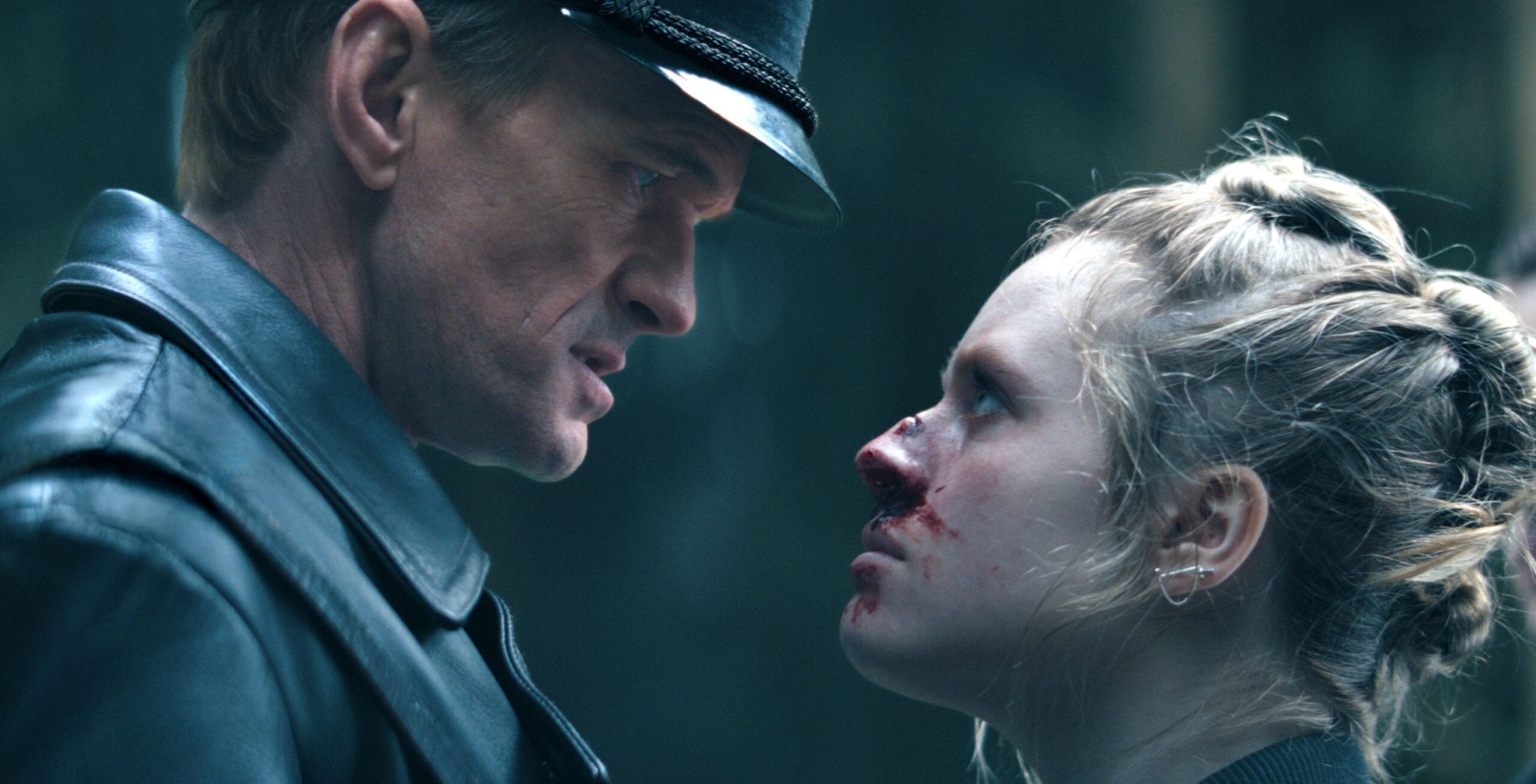
It makes sense, then, that this outing brings Nazis back to the forefront as a kind of full circle moment. Becky’s new adversary is General Wilhelm Reuss (Neil Patrick Harris), a devout member of the Reich who believes so strongly in the cause that he recently moved his family, along with enforcer Russell and Dr Friedrich Metzger (James Urbaniak), to the Wolf’s Lair in Poland.
Turns out that despite the passage of several in-universe years between films, Becky still hasn’t learned how to play well with others or follow the rules, despite the guiding touch of handler Montana (Kate Siegel, Hush) and the model set by fellow agent Rigby (Brandon Flynn, Hellraiser). When Becky is given one final opportunity to prove her worth to the CIA, it sets up a collision course between her and Reuss that is guaranteed to be an all-out bloodbath.
The series continues to get good mileage casting against-type for its villains, although it should be noted that NPH doesn’t get as much to do as either the first film’s Kevin James or the sequel’s Sean William Scott. That’s because, in part, Reuss’s family comes as an evil package. Introduced in a great comedic scene when Becky checks in – all smiles – to the family’s Nazi motel, mother Helga (Catherine Walker), daughter Luisa (Aiofe Hughes), and son Otto (Noah Leggott) are as much of a threat as the patriarch.
Of course, the main selling feature of the film is Becky, and Wilson continues to have a blast bringing the prickly, quippy, and trigger-happy character to life. Wilson remains an absolute delight, from her delicious voiceover (“Mission ‘find out what these fuckers are up to’: commence”) to her dinner table banter with the Reuss family (“Where do you heil from?” she asks them). Three films in, there’s no fear that Becky could actually die, but the film isn’t afraid to put its characters through the wringer – Becky sports a broken nose for most of the film’s last act – and there are, naturally, some extremely cathartic Nazi casualties.
While there’s a disappointing lack of rocket launchers in this entry, by employing the tropes of the spy movie, The Last Temptation of Becky does get to have its James Bond/Q moment when Montana walks her pint-sized agent through a litany of Chekhov’s items that are inevitably used to destroy Nazis later. Ditto Becky’s newfound interest in fencing with Rigby, which serves her well when she goes up against Luisa in a duel. This sequence also includes the best exchange of the film, when Becky enquires where the girl went to Hitler Youth Camp and Luisa replies: “Mississippi.”
The Nazis are rightfully portrayed as a legitimate threat and, simultaneously, the subject of complete mockery. The brownies – armed guards who do the dirty work of patrolling the woods and escorting prisoners – are comprised of men who explain they’re just following orders or they are “media and Performing Arts majors from Ohio State.” They’re idiots who are the brunt of multiple jokes and insults throughout the film, including Becky’s immediately iconic jacket emblazoned with “Fuck Nazis” on the back.
Then there’s the hilarious reveal of Reuss and Dr. Metzger’s master plan, which is simultaneously pathetic and hilariously short-lived…because even The Last Temptation of Becky understands that the only logical response to Nazis making a literal comeback in 2026 is to barf on them, punch them in the face, or blow them up. Preferably all of the above.
If there’s a misstep, it’s the film’s uneasy mix of practical FX and CGI. An early death involving a drone and a landmine would be much more compelling if the accompanying explosion and fire were real, and a decapitation winds up looking cheap because of the digital blood. Compare this to another death later when someone bleeds from every facial orifice: it’s clearly practical and, as a result, looks great.
There are a few other instances of violence that miss the mark. A potentially brutal knife in the mouth is partially obscured; some of the hand-to-hand combat in the last act doesn’t hit terribly hard. But overall, it’s impossible not to cheer on Becky as she fucks Nazis up at every opportunity.
If that’s what your heart desires, then The Last Temptation of Becky will be right up your alley. Here’s hoping that, despite the possible implications teased by the title, Lulu Wilson decides to return to the role every three years (or less!) for a new Becky film.
The Last Temptation of Becky made its world premiere at the 2026 Fantasia International Film Festival. Release info TBD.

You must be logged in to post a comment.