Editorials
‘Other Mommy’ Trailer Hints at Big Changes from Novel ‘Incidents Around the House’

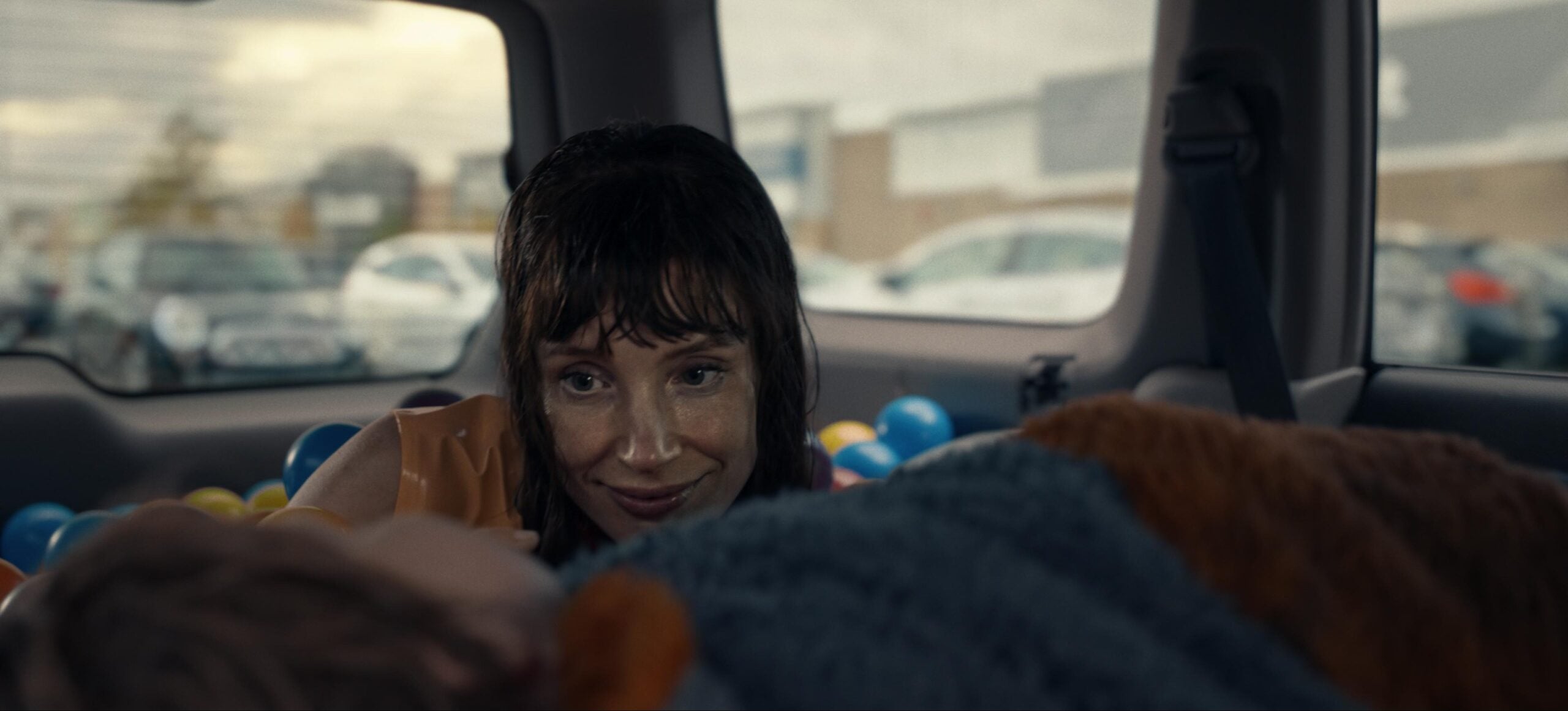
There’s been a lot of talk about how Christopher Nolan snuck in some horror elements into his epic adaptation of The Odyssey. However, even before the Cyclops began to eat Ithican soldiers and Circe subjected them to magical body-horror, cinemagoers were already witnessing supernatural terror through a certain trailer that was attached to most IMAX screenings of Nolan’s film.
It turns out that this trailer was for Rob Savage’s Other Mommy, an adaptation of Bird Box author Josh Malerman’s horror novel, Incidents Around the House. With the teaser now available online and revealing that the award-winning Jessica Chastain is playing the titular antagonist (as well as her ill-fated human counterpart), not to mention the fact that the picture is being helmed by the director of hits like Host and The Boogeyman, genre fans are understandably hyped for this upcoming thriller.
That’s why I’ve decided to take a closer look at the trailer and share four things we learned from this sneak peek at Other Mommy!
4. Rob Savage is Going Back to His Supernatural Horror Roots

I know I’m in the minority when I admit that Dashcam is my favorite Rob Savage movie, but even I understand why the filmmakers’ fans have been waiting a while for the director to get back to telling more grounded paranormal stories as he did with 2020’s Host.
Other Mommy obviously isn’t a found footage movie, but moments like the poltergeist activity on the kitchen table combined with the nature of the source material, which actually features a full-on exorcism, indicate that this adaptation is more than a simple creature feature. That’s why I think Savage is once again going to borrow from the same ghostly narratives that made his debut film such a viral hit.
3. Other Mommy is a More Convincing Doppelganger in the Adaptation

Part of the horror from Malerman’s original novel came from the fact that the entity taking on the form of Bela’s (Arabella Olivia Clark) mother wasn’t very good at passing itself off as human. This resulted in several uncanny moments where other characters began to notice that there was something visibly wrong with the family and decided to keep their distance.
Savage’s film appears to be taking a different route, with the trailer showing a version of the entity that can, at least physically, imitate Chastain’s character perfectly. This change is likely the result of the filmmakers wanting to incorporate more paranoid scenes where Bela and her father, played by Jay Duplass, are confused about which Mommy is safe to interact with.
2. The Family is Also Better Off This Time Around

Incidents Around the House featured some interesting subtext about how poverty can negatively affect American family dynamics. After all, the main characters were already feeling scared and isolated before the entity emerged from Bela’s closet and began scratching at their emotional wounds. The trailer for the movie, however, depicts the family as being relatively well off before these incidents begin to occur.
I can only imagine that this part of the story was changed so that the family’s fall from grace can be even more dramatic as the mom and dad’s pasts are revealed and Bela falls further into the clutches of the demonic antagonist.
1. Jessica Chastain is Embodying Evil Dead Rise’s Alyssa Sutherland

Mothers turning against their children is one of the most disturbing horror tropes out there (just check out classics like Hereditary and Carrie if you need proof), but it takes a remarkably skilled actress to pull off such a monstrous transformation. This is especially true when both a regular, loving mother and the Other share the screen in the same film.
That’s why I appreciate how Chastain appears to be channeling another evil redhead mother that recently traumatized audiences with her performance. It’s too early to be sure, but I’m fairly confident that Chastain’s character has at least some amount of Ellie in her cinematic DNA – Ellie being the iconic deadite brought to life by Australian actress Alyssa Sutherland in 2023’s Evil Dead Rise.
Let us know in the comments if you think we missed any important details from the trailer, and don’t forget to check out Other Mommy when it hits theaters on October 9!



Editorials
Before ‘The Odyssey’ There Was ‘Jason and the Argonauts’ and Ray Harryhausen’s Legendary Monsters

Greek mythology is the talk of the town, or at least of the internet at the moment, and with good reason. Christopher Nolan’s retelling of Homer’s The Odyssey opened this weekend in theaters and, as of this writing, is on track to rake in $120 million in the U.S. and $250 million worldwide.
That’s quite a feat for an R-rated sword and sandal epic based on a story that was first put to papyrus over 3,000 years ago. Of course, mythology has been a film standard practically since the beginning of the medium and has proven to be fertile ground for storytellers. One of the great tellers of these tales is not a writer or director but an innovative special effects master and producer, Ray Harryhausen, and among his greatest achievements is Jason and the Argonauts (1963).
The story of Jason and the quest for the golden fleece predates the Homeric period by a generation or two, and there are certainly similarities to the later works, specifically The Odyssey. Both are seafaring adventures captained by men of both strength and wit. Their crews are filled with colorful characters as well, including Hercules and Argos in the Jason tales and Eurylochus and Polites among Odysseus’s men. Both encounter the beautiful and bizarre on their journeys. The major differences are in tone and theme. The Odyssey is a more contemplative piece about men of war finding it is practically impossible to truly return home.
Jason and the Argonauts, especially in the hands of Harryhausen, producer Charles H. Schneer, director Don Chaffey, and writers Beverly Cross and Jan Read, is a tale of adventure, romance, betrayal, gods, and perhaps above all—monsters.
Strictly speaking, nearly all the Harryhausen films are fantasy films, but all are filled with some of the most incredible monster creations in all of cinema. Telling mythological stories was a way of making monster movies that parents would not object to their children seeing. That whiff of the movie-going experience being educational gave him license to bring to life dozens of indelible creations, starting with The 7th Voyage of Sinbad in 1958 all the way to Clash of the Titans in 1981. So, rather than spoil the story of Jason and the Argonauts, I will be focusing on its main attraction, its unforgettable monstrosities.
Talos: The Bronze Giant That Changed Movie Monsters

After Jason (Todd Armstrong) and his crew set off on their quest aboard the Argo, they quickly find themselves running out of food and water. Calling upon the help of his protector Hera, Queen of the Gods (Honor Blackman), Jason is guided to the Island of Bronze but warned not to take anything from the island but food and water. While chasing a herd of goats, unlikely pals Hercules (Nigel Green) and Hylas (John Cairney) discover the gargantuan bronze statues of the gods and Titans created by the long-departed Hephaestus.
In the base of the statue of Talos, they discover the treasure trove of the gods, and Hercules decides to take a giant golden needle that he intends to use as a javelin. Of course, this awakens Talos, who pursues them back to the Argo.
Talos was one of Harryhausen’s favorite creations, and he reveled in giving life to the stiff movements of the man of bronze. In one sequence, Talos blocks the narrow waterway that is the only means of escape and plucks the Argo out of the sea as though it were a toy, shaking the crew overboard and breaking the mast in two. Jason once again asks Hera for help, and she advises him to “look to the ankles” of the statue. He spots a kind of hatch on the heel of the giant and, after much struggle, removes it, releasing a flow of steaming liquid that is apparently the driving force of Talos, who weakens, cracks, and falls to the beach, breaking into pieces.
Echoes of this scene can be found in all kinds of stories from Achilles’ heel to the small vulnerable spot on Smaug’s belly in The Hobbit, to tangling the legs of the Imperial AT-AT’s in The Empire Strikes Back. Even the Death Star has a touch of Talos to it.
Harryhausen’s Harpies and Hydra Bring Ancient Myth to Life

Next, the Argonauts encounter the old man Phineas, played by Patrick Troughton of Dr. Who (he played the Second Doctor) and The Omen (1976) fame. As punishment for sins that go unnamed in the film, Zeus torments Phineas day and night with harpies who steal his food and leave him only scraps.
The harpies are flying, blue, rather demonic-looking creatures complete with bat wings and horns. They look something like living gargoyles and are masterworks by Harryhausen. The crew lures them into the ruins of a temple and covers the entire structure with a net before releasing the top and snaring the harpies. The stop-motion work in this sequence is some of the best Harryhausen ever created and is seamlessly placed into frame with the live-action elements, as was among Harryhausen’s greatest strengths.
The special effects of the film use every tool available at the time, as demonstrated by the next major effects sequence, “the clashing rocks.” The sequence utilizes stop motion, miniatures, rear projection, location and stage work with the actors all blended together, sometimes into a single shot. The clashing rocks are more-or-less a rock slide, but combined with the destruction of a different ship that tries to make passage between the rocks and the knowledge that Hera is now forbidden to interfere with Jason’s fate, real stakes are afforded to the scene. Hera pulls a fast one on Zeus (Niall MacGinnis), however, which allows Triton, king of the Mer-people, to rise from the sea and stabilize the rocks, giving the Argo safe passage.
The crew then rescues Medea (Nancy Kovack) and heads to their final destination, Colchis at the end of the world, where Jason and the Argonauts are welcomed by King Aeetes (Jack Gwillim). Eventually, after a betrayal and turn of events, Jason finds the golden fleece, which is guarded by another great Harryhausen monster, the Hydra, a multi-headed serpent. The most famous aspect of the Hydra, growing back two heads for every one cut off, is not depicted here, but the sequence is still harrowing.
Jason fights the dragon with his sword and at one point is wrapped in its tail, depicting Harryhausen’s love of intercutting and interrelating his stop-motion creations with actors and other live-action elements. The sequence also demonstrates that the artistry of Harryhausen and the craftspeople in his workshop was not limited to fantasy creatures; they were also masters of recreating believable human figures.
Why Harryhausen’s Monsters Still Feel Alive

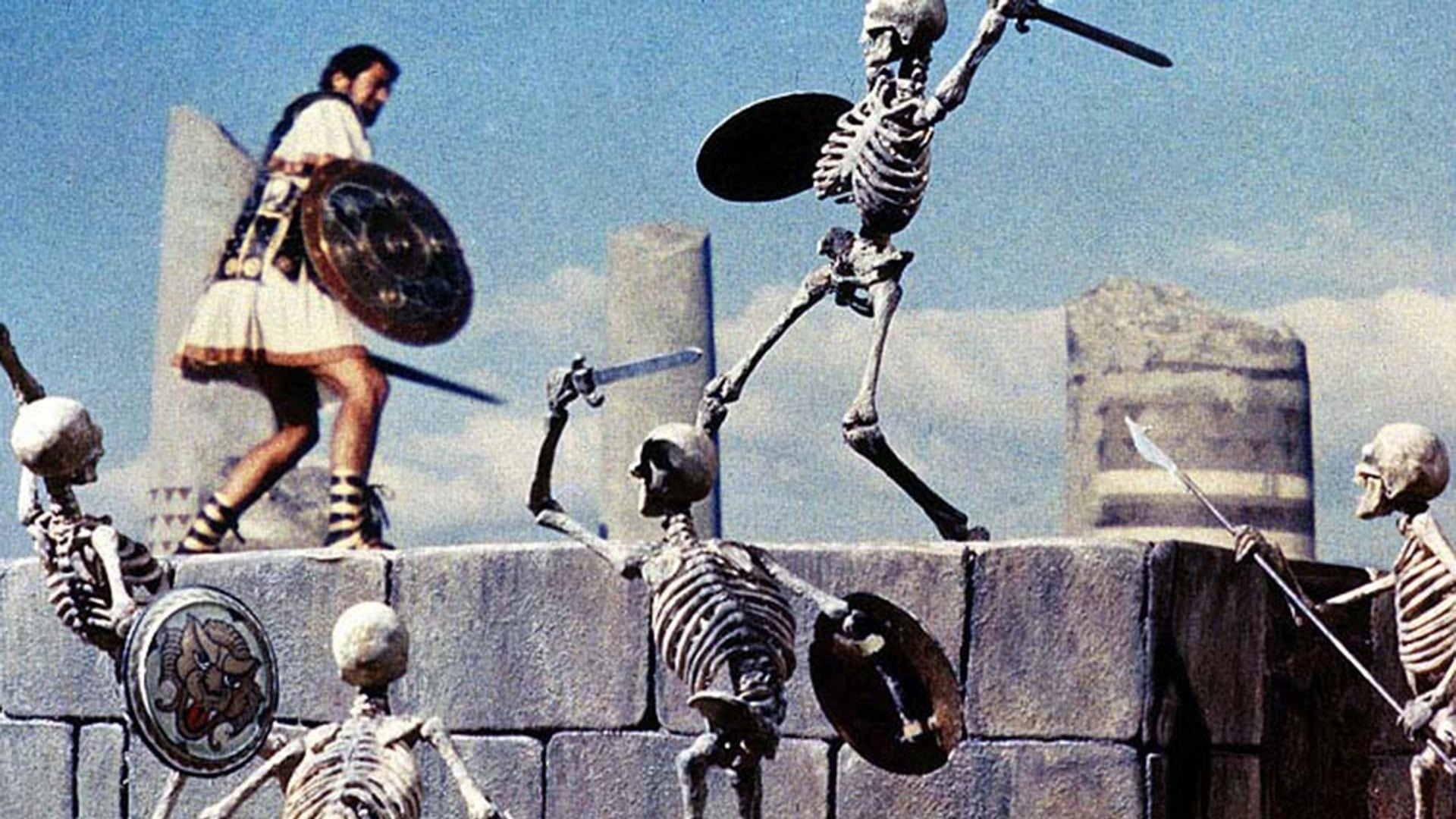
Perhaps the most famous Harryhausen creation, the one that has had the greatest lasting influence, is what is called in the film the “children of the hydra’s teeth” and the “children of the night” by Aeetes, who calls on the goddess of darkness Hecate to bring them to him. Fire rains down from the sky and reduces the hydra to a skeleton. Aeetes orders his men to gather its teeth, which he collects in a helmet and, cornering Jason and his men, sows on the ground like seeds. Reanimated skeletons of dead soldiers rise up out of the ground and attack the Argonauts in what is certainly one of the most iconic sequences in all of fantasy cinema.
It is an expansion of a similar scene in The 7th Voyage of Sinbad in which the fearless sailor fights a single skeleton, but this time there are more than half a dozen reanimated warriors complete with the famous “Harryhausen brow,” in which the empty eye sockets are given a sinister frown. Even today, the sequence is thrilling. Though our technology has given us tools that look more realistic, there is a magic in stop-motion that remains unmatched despite all our advances in CGI.
This sequence has directly influenced many movies over the years, but for the horror crowd, the clearest examples are Freddy’s skeleton fighting Donald Thompson (John Saxon) in A Nightmare on Elm Street 3: Dream Warriors (1987) and the deadite army in Army of Darkness (1992). The animators even included the slouch of the “children of the hydra’s teeth” in the Nightmare 3 scene, and Sam Raimi insisted the Army of Darkness skeletons all have the Harryhausen brow.
Beyond these films, Harryhausen’s work has had a massive influence on horror, fantasy, and science fiction films for decades, while also making an indelible mark on popular culture at large. Among his acolytes are stop motion genius Phil Tippett, and filmmakers including Joe Dante, Guillermo del Toro, Peter Jackson, George Lucas, Steven Spielberg, John Milius, Don Coscarelli, and many others. The fingerprints of Harryhausen can in many ways be seen even in Nolan’s The Odyssey, which relies on tricks from throughout film history rather than only more recent innovations like CGI.
Above all, Harryhausen was a storyteller who sought to make audiences fall in love with the great adventure stories that have been with us for thousands of years. These stories speak to the heart of our humanity in ways that will always feel fresh when told in innovative ways. Harryhausen also always had in him the true joy of creation. Bringing his monsters to life was a long, sometimes tedious, process, but Harryhausen clearly understood that all that time and attention to detail would imbue every creation with humanity that cannot be replicated by taking the easy way around.
Despite the limitations of budget, star power, and other resources that his films often lacked, that love of storytelling always shone through. Perhaps that is why his creations endure along with the kinds of ancient stories he so loved to tell.
At their heart, they are one thing above all—deeply and undeniably human.
You must be logged in to post a comment.