Quantcast
Connect with us

Books

‘World War Z’ Writer Max Brooks Returning With Sasquatch Massacre Novel ‘Devolution’

Published

on

Bigfoot movies
Image from Ryan Schifrin’s Abominable (2006)

Over 10 years ago, Max Brooks made waves with the novel World War Z: An Oral History of the Zombie War, a collection of individual accounts from within the zombie apocalypse. The novel, of course, went on to spawn a feature film and even a video game this year, and up next Brooks is returning with a similar approach in a brand new Bigfoot horror novel.

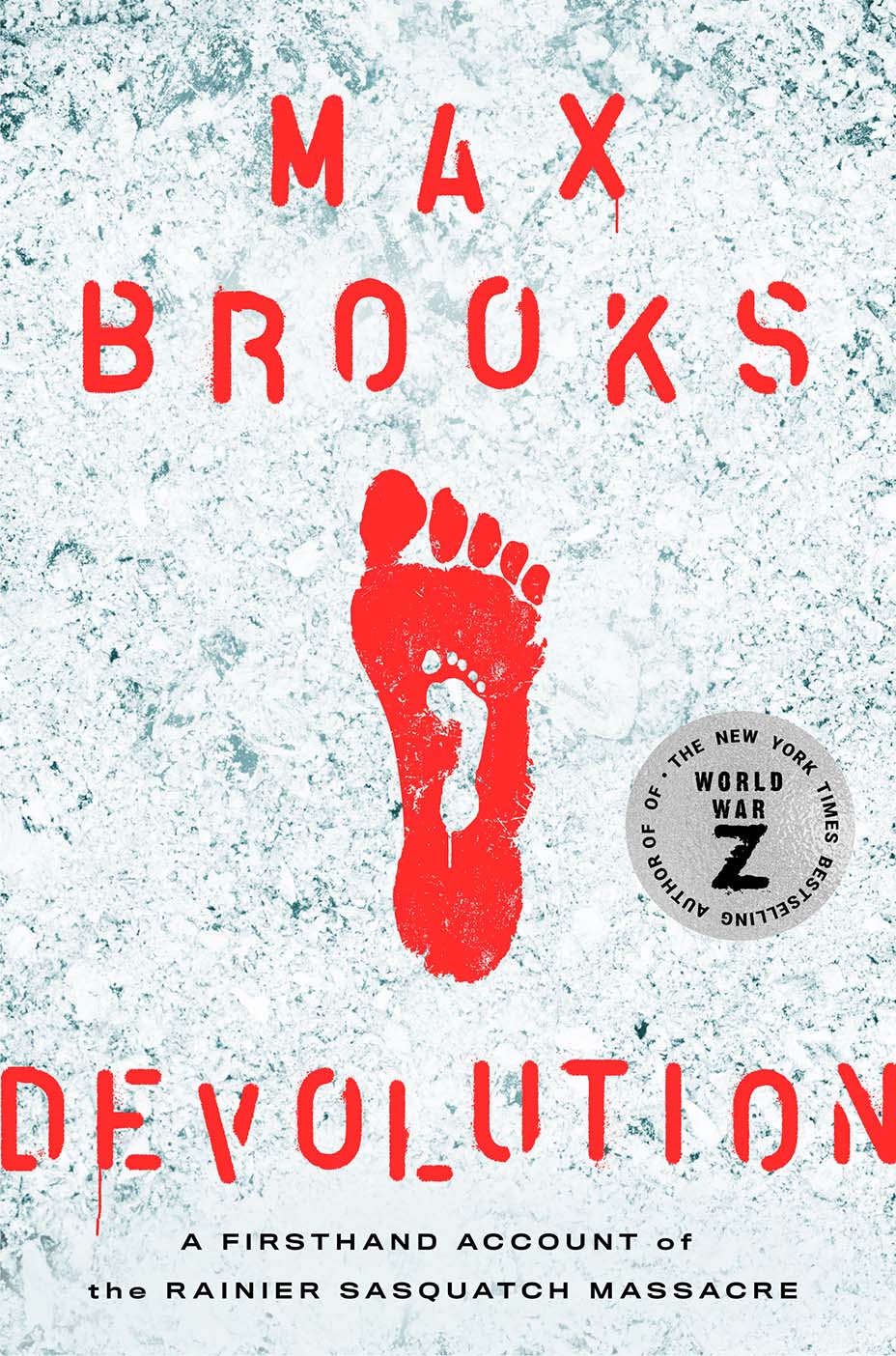
With Devolution: A Firsthand Account of the Rainier Sasquatch Massacre, “The #1 bestselling author of World War Z takes on the Bigfoot legend with a tale that blurs the lines between human and beast—and asks what we are capable of in the face of the unimaginable.”

“As the ash and chaos from Mount Rainier’s eruption swirled and finally settled, the story of the Greenloop massacre has passed unnoticed, unexamined . . . until now. But the journals of resident Kate Holland, recovered from the town’s bloody wreckage, capture a tale too harrowing—and too earth-shattering in its implications—to be forgotten.
 
In these pages, Max Brooks brings Kate’s extraordinary account to light for the first time, faithfully reproducing her words alongside his own extensive investigations into the massacre and the legendary beasts behind it. Kate’s is a tale of unexpected strength and resilience, of humanity’s defiance in the face of a terrible predator’s gaze, and inevitably, of savagery and death.

Yet it is also far more than that. Because if what Kate Holland saw in those days is real, then we must accept the impossible. We must accept that the creature known as Bigfoot walks among us—and that it is a beast of terrible strength and ferocity.
 
Part survival narrative, part bloody horror tale, part scientific journey into the boundaries between truth and fiction, this is a Bigfoot story as only Max Brooks could chronicle it—and like none you’ve ever read before.”

Devolution will release on May 12, 2020.
Writer in the horror community since 2008. Editor in Chief of Bloody Disgusting. Owns Eli Roth's prop corpse from Piranha 3D. Has two awesome cats. Still plays with toys.

Click to comment

Books

‘It Came From Neverland’ Review – A Stunning, Devastating Take on Peter Pan

Published

on

There’s a layer of the mythic in everything Cynthia Pelayo writes, whether she’s charting the little-known history of her home city of Chicago or digging deep into the pool of shared stories that’s served humanity since ancient times. Regardless of subject matter or narrative, Pelayo reads like a writer constantly in search of the threads of legend and myth that bind us all together and keep us awake at night. 

It Came From Neverland, Pelayo’s latest novel, takes that search and applies it to one of the most famous children’s stories ever conceived, J.M. Barrie’s beloved and oft-adapted tale of the Boy Who Never Grew Up. But this is not just a Peter Pan retelling, or a Peter Pan meta-sequel. Through gorgeous prose, finely drawn characters, and an iron grip on the themes that drive the story, Pelayo crafts It Came From Neverland into one of the year’s must-read genre novels, both a horrifying spin on Peter Pan and a luminous dark fantasy about the search for salvation in a cold, brutal world.

In Pelayo’s version of events, Wendy Darling and her brothers John and Michael really did travel to Neverland when they were children, drawn there by a charismatic and irresistible figure called Peter Pan. But this Neverland is far from the Disney version, and after fighting to survive in that ageless place, the children made their way home and shut Peter Pan out of their lives, refusing to so much as utter his name, lest he find them again. 

Flash forward to 1914, where Wendy’s working as a schoolteacher at Marigold House, a London orphanage growing increasingly crowded amid the outbreak of World War I. By day, she teaches and volunteers at a local hospital, reading to the war wounded, and by night, she remembers to check every window latch and keep an eye on every shadow. But lately those shadows seem to behave strangely again. Crows caw all around her. And worst of all, children are disappearing again. Peter Pan is back, and faced with memories of how no one believed her the first time, Wendy prepares to face him one more time. 

This is a remarkably well-suited atmosphere for moments of classic, chill-inducing terror, and Pelayo wastes no time weaving a world in which every bird call, every stray thought from the mouth of a child, could be evidence that this monstrous Peter Pan is near. Wendy lives a haunted existence, and as the chaos of war grips London, old fears grip her while new ones fight for position. If you come to this novel looking for something like Stephen King’s IT by way of J.M. Barrie, you’re going to get it, through flashbacks and dark lore and wonderfully well-timed scares, but Pelayo’s not done

This version of Wendy Darling, through whom we see most of the narrative, cares for children in adulthood because she did not receive the care she needed herself as a child in the aftermath of a traumatic experience. She considers it her duty to listen to them, to protect them, to understand them in a world that still views them not as human beings, but as potential locked up in tiny bodies.

Setting the book in 1914, when young men across Europe were signing up to go and die in a war they didn’t quite understand, underscores this beautifully. Children are grist for the mill in the world of It Came From Neverland, their eager spirits waiting to be crushed by a machine of war and empire and capitalism that will not relent even if an armistice eventually arrives. It’s a wider, more existential layer of horror than the storybook monster, which gets us to open the book in the first place, but the real brilliance at work here is how Pelayo ties it all together. 

At the core of all of this, the beating, icy heart of It Came From Neverland‘s horror and its search for meaning amid the narratives of war, children’s fiction, collective memory, and more, Pelayo is most interested in what it really means to never grow up. It means retaining a sense of play, yes, but it also means a refusal to move on, to embrace not just the responsibilities of aging, but the moral burdens of it.

Peter Pan is a monster not because he likes to play, but because he does not consider consequences, mortality, or even the needs and desires of others. The same is true of the leaders of Europe sending young men off to die in a war, and the same is true of leaders now, playing dice with human lives amid the rise and fall of the stock market. To never grow up is to lose something essential about being human, and Pelayo depicts that loss as both existentially terrifying and heartbreaking. That terror and heartbreak drive the novel, but Wendy’s efforts to escape that terror and to mend her broken heart make it fly. 

It Came From Neverland is available June 9 wherever books are sold.

4.5 out of 5 skulls

Continue Reading