


Be warned, this article contains spoilers for The Cloverfield Paradox, though the biggest one of all was foisted upon everyone who watched the 30-second teaser during the Super Bowl so, whoops, I guess.
Let’s back up to where this all began, 10 years ago, with the release of Cloverfield following an ‘alternate reality game’ marketing campaign that invited the curious to dig through dozens of websites looking for clues into the movie’s dense and mysterious lore. The movie was released to no small amount of acclaim and success. I loved it for doing something I’d never seen before, Godzilla by way of found footage. I’d have liked to have seen a sequel, but I’d also have been fine without it. It was a story with a beginning, middle and end, centered around some moderately interesting characters living through an extremely interesting night, and I wasn’t terribly concerned what happened beyond its nihilistic napalm dawn.
Then 10 Cloverfield Lane was released in 2016, only two months after its initial teaser. It didn’t look related to the first movie and it quickly became apparent it didn’t take place within the exact same universe. Visible technology didn’t match up, with smartphones having replaced the decade-old flip-phone tech seen in the original, and there was no mention of the time a giant sac-faced daddy-long-legs leveled Manhattan, so it was safe to assume we were looking at an anthology series.
Great. I don’t know about you, but I love a good anthology series. Black Mirror but with monsters and we watch it in theaters? Onboard.
As I read more about the project, something bothered me. It didn’t seem to vex anyone else, but I bristled when I learned 10 Cloverfield Lane was originally a script called The Cellar, and was adapted by Bad Robot into a spiritual successor to Cloverfield.
Now, I’m not naïve, I understand that sort of thing happens all the time, and sometimes we get lucky. A script called Simon Says was once repurposed into Die Hard With a Vengeance and I still consider that to be the last good McClane movie. There’s theoretically nothing wrong with this practice when done correctly. But it only takes an ounce of pessimism to see the potential for abuse here. Got a mediocre aliens-blending -on-earth comedy script almost guaranteed to pull mediocre returns? You’re one or two re-writes away from a mediocre Men in Black sequel and box office gold. And maybe it’ll be fine. Maybe you’ll even get another sequel.
Or maybe you’ll kill an otherwise perfectly good franchise.
The most egregious example of this practice is the Hellraiser series, which I periodically present as an example of how not to franchise, but only because it’s a garbage line and Dimension has it coming for perpetuating something I’m told I am not legally allowed to refer to as fraud. Almost every sequel since Hellraiser: Bloodline was a C-rate horror script shoved into a Lemarchand box until it came out covered in at least four minutes’ worth of cenobites. Time after time, for the sole purpose of retaining the intellectual property, the Weinsteins took a DVD you probably wouldn’t dig out of two-dollar bin at Wal-Mart, slapped a Pinhead sticker on it, and released a movie you still probably wouldn’t dig out of the two-dollar bin at Wal-Mart. Why would they do this? Presumably because one day they want to find the time and money to make a real Hellraiser movie, though I’m starting to think that’s the “fetch” of horror franchise dreams; it’s never going to happen. Don’t shoot the messenger, take it up with Bob and Harvey.
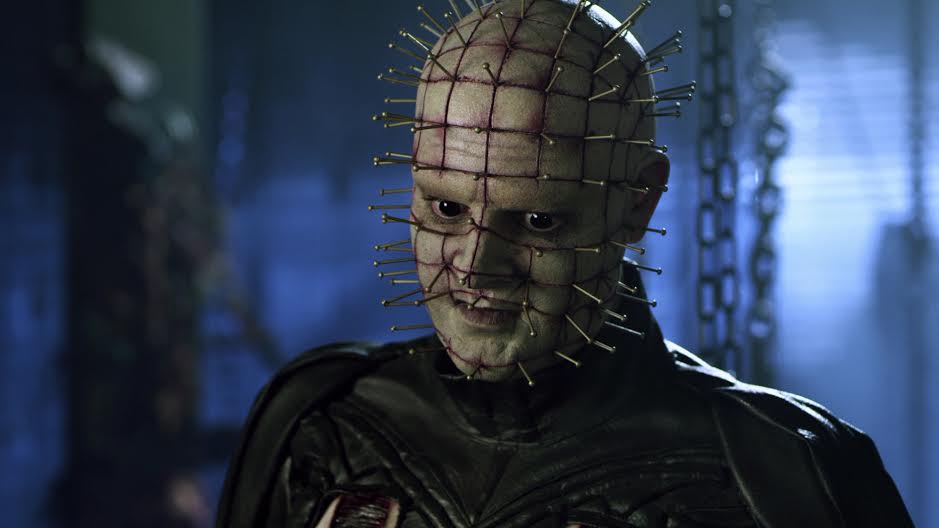
And no offense at all if you enjoy the last few Hellraisers, more power to you. There’s an audience for everything, though not always a very big one, and that’s why the series currently enjoys the production budget of your local professional haunted house.
The point is, I love – intensely – the first couple of Hellraiser movies and what they’ve done to that series over the years haunts me. And since before 10 Cloverfield Lane’s release. I’ve low-key wondered where the standard-of-quality line would be drawn. Would the line be drawn at scripts that were already brilliant but, given a slight tweak, could fit into the Cloverfield anthological universe in order to maximize its potential audience and returns? That doesn’t sound too bad. The Cellar probably would have been that movie you hear is good and eventually watch on Amazon Prime. (By the way, check out Brawl in Cell Block 99, streaming now) Instead, 10 Cloverfield Lane got a theatrical release and made $110 million dollars. And make no mistake, it deserved that. I loved 10 Cloverfield Lane. Solid script, killer performances… If this level of quality-control was hallmark of the franchise, it was in good shape.
But then, from a space in the ether somewhere between synergy and cynicism, came The Cloverfield Paradox, another adapted project formerly called God Particle. Announced to an estimated audience of 100 million Super Bowl viewers and released to the uber-popular streaming site Netflix hours later, it was the film equivalent of The Joker dumping fake money onto the unsuspecting citizens of Gotham while dancing to Prince, which – as an aside – would have been a better halftime show. The elation of Netflix’s target audience soon gave way to horror when they booted the thing up and – like the citizens of Gotham – realized with awkward smiles frozen across their faces they’d been thrown something flimsy and of questionable value.
To say Paradox is a franchise killer might sound hyperbolic, and with any other franchise, it might be. Plenty of other film series have survived worse sequels, but there are extenuating circumstances here. So far this series has been pushed along by two things…
- The movies have been pretty good.
- The ‘Mystery Box’ method of promotion, which is JJ Abrams’ way of getting instant buy-in by telling the audience as little as possible about his projects and letting the subsequent hype train bring them to the station for him.

Unfortunately The Cloverfield Paradox violently – probably irreparably – derails both of these. Unless I’ve grossly misread what the audience response to this thing will be, the series will no longer enjoy a near-spotless track record in the public eye. And again, many franchises don’t. The Elm Street series survived Freddy’s Revenge. The Aliens survived Alien 3 and Resurrection. But Cloverfield’s problems are compounded by the Mystery Box aspect. Everyone loves a Mystery Box so long as something good, or at least interesting, comes out of it. That’s why loot crate services are so popular. But the first time you open a loot crate and it contains an active beehive with a plastic lightsaber sticking out of it, you’re going to think twice before getting excited about the next one. You might even skip it altogether.
To put it very simply, the Cloverfield franchise in its current anthology form worked because of an established trust and instant Mystery Box buy-in. If those things have been burned away for a short-term spike in Netflix viewership the series may have been irreparably harmed in the process. Trust is easy to break, and harder to win back.
What really bothers me about this is it’s exactly what I feared from the outset, but it’s happened so much faster than I’d have predicted. Unlike 10 Cloverfield Lane, which felt like it was probably an excellent paranoid thriller even before being assimilated into the franchise, Paradox is slow, sloppy, B-rate, generic sci-fi with a couple of mildly interesting elements barely suitable for a subpar episode of Black Mirror. It really feels like a mediocre movie clearer heads knew had no shot at notoriety unless the Cloverfield brand was attached to it, the kind of too-easy marketing decision made by a studio when they’re desperate to keep milking a good thing with no regard for the cash-cow’s well-being.
This next part is wildly irresponsible speculation, but consider the circumstances around Paradox’s release: Paramount had a Cloverfield movie it may have suspected did not live up to the brand’s reputation thus far, and wasn’t worth the millions in marketing they’ll spend getting it to theaters. They end up passing it in whole or in part to Netflix, which is certainly a ‘get’ for the service, although they may also wonder what the general response will be, having just walked away from the critical drubbing of Bright. So they decide to both announce and launch Paradox with the Super Bowl, gambling that a large number of the Big Game’s 100 million viewers will take them up on their offer to watch a big surprise movie immediately. In effect, they get millions – maybe tens of millions – of instant views before so much as a snarky tweet goes out, let alone a high-profile negative review.
Again, that’s pure speculation, and belies the obvious mistrust I feel for anyone involved with the distribution of this product, but what takes far less imagination is understanding the mindset involved in that aforementioned spoiler in the 30-second announcement teaser – the promise of a direct connection to the original Cloverfield. This reveal, which gives away essentially the last three seconds of the movie, is absolutely, one-hundred percent unnecessary except as a means to get more instant buy-in from fans of the original. It feels like more circumstantial evidence the point of this exercise was to get as many views as possible before the inevitable swift and severe backlash began, and this time at the expense of what may have been one of the most interesting surprises for some viewers, similar to what was experienced at the end of Split. Sure, Paradox’s callback feels shoddy and tacked-on, whereas Split’s callback felt like M. Night Shyamalan had awoken from a deep slumber and pierced the veil with some heretofore unknown meta-twist, but still… Have some modicum of respect for your audience’s viewing experience.
Be certain, I’m not a fan of The Cloverfield Paradox, but it’s harmless B-rate blandness with a few interesting moments peppered in. My real ire is aimed squarely at some of the mechanisms behind its production and release, which feels like the shadiest and most cynical bait-and-switching I’ve seen in film since the Joker printed his face on the one-dollar bill. Only this time it’s not a deadly prank on the audience, just a gruesome self-inflicted blow to the fledgling Cloverfield franchise. Time – and at least one more sequel – will tell if it’s a mortal one.


