Quantcast
Connect with us

Editorials

‘Neon Maniacs’: An Underrated Gem That Deserved So Many Sequels

Published

on

If a horror movie came out in the 1980s, there’s a good chance it got a sequel or two. I’m not just talking about your Friday the 13ths or your Nightmares on Elm Street; those are obviously staples of the genre for the decade. I’m talking about House getting a Second Story. I’m talking about the Ghoulies going to college. I’m talking about Bud the C.H.U.D.

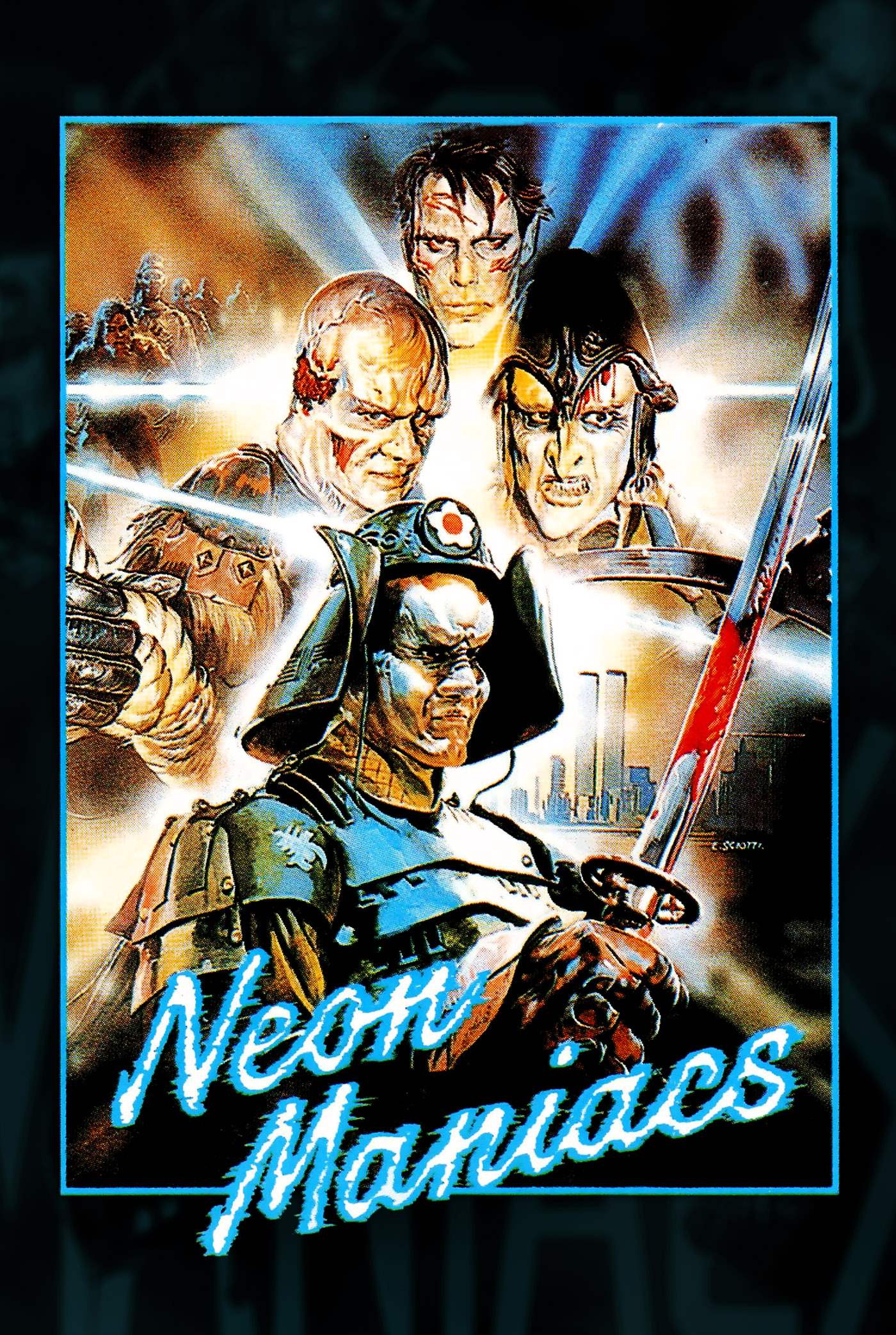
Sometimes, though, a horror movie that seemed like an obvious choice for a franchise wound up a one-and-done. One such movie is 1986’s Neon Maniacs. Despite a hook that could easily have extended through a series of sequels – mutant monsters, each with a different and specific design gimmick, appear from within the Golden Gate Bridge each night to prey on unsuspecting victims – the future of a Neon Maniacs franchise died after just a single entry. Made for a reported $1.5 million in 1984, the movie sat shelved for two years before playing in a handful of theaters; it appeared on video in 1987, where it found the majority of its audience… but even still today tends to fly under the radar.

I’m not making the case that Neon Maniacs should have had sequels because it’s a great horror movie. Frankly, it isn’t. There’s a ton of stuff to like about it, from the cool-sounding (if utterly meaningless) title to the brutal slaughter of a bunch of teenagers that basically opens the movie to a battle of the bands sequence that goes on for sooooo long to Paula, the young female sidekick who is another in a long tradition of ‘80s horror movie characters obsessed with monsters and horror movies. Neon Maniacs is the kind of horror movie that rarely makes any goddamn sense, but there’s enough cool stuff in the moment to make it stand out from the other movies of the period.

But if Neon Maniacs is such a nonsensical mess so much of the time (seriously, why would these mutants, who it turns out can only be killed by water, choose to live right on the San Francisco Bay?), why would I be surprised that it never got a sequel? The clearest answer is that lesser movies have gotten more, but that’s reductive. The next most obvious reason is that the film ends on a clear setup for a sequel. The monsters aren’t vanquished; in fact, we hardly know what happens to most of them. But the film’s final moments show a cop stumbling upon one of the surviving mutants and getting pulled into the back of an ambulance as he screams. The nightmare isn’t over. This is exactly the kind of cliffhanger that acted as the finale of a whole lot of ‘80s horror movies, many of which went on to spawn half a dozen installments.

But, of course, a cliffhanger ending does not guarantee a franchise, so it’s really the monsters themselves that ought to have created a demand for more Neon Maniacs movies. They’re part Cenobite, part Nightbreed, part Teenage Mutant Ninja Turtle, each mutant monster with its own gimmick: there’s the samurai Neon Maniac and the surgeon Neon Maniac (played by Wishmaster’s Andrew Divoff!) and maybe a cop Neon Maniac? There’s one who looks like a Native American… I think? Then there are a couple I can’t possibly identify, like one that’s just a guy covered in blonde body hair and another one that’s like a miniature Cyclops Godzilla. The execution isn’t always perfect and some of the makeups haven’t aged that well, but the idea of all these mutant monsters is really cool and such an easy way to brand a franchise. With another two or three installments, we could all be talking about our favorite Neon Maniac in 2018. Hell, the movie even opens with a guy finding a bunch of what appear to be trading cards of each of the monsters. How they have trading cards of themselves I cannot possibly speculate – maybe one of the mutants has a marketing degree and another owns a printing press – but it speaks directly to the missed opportunity of bringing these characters back in future movies. They are so easily distinguished that at least a few of them could have become iconic with the right exposure.

Point being, this is a universe that could have been played in a lot more. There is backstory to be explored and there are questions to be answered. New characters could have encountered the Neon Maniacs. New monsters could have been introduced. I wouldn’t necessarily need for any of the human characters to return, but bringing back Paula (played by Donna Locke in her sole screen credit) could have been really cool, especially if she used all of her knowledge to graduate from Monster Kid to full-on Neon Maniac Hunter. If nothing else, a couple of sequels might have given another director the chance to take the stuff that’s good in the first film and build on it by improving on all the things that don’t work.

The original was only the second (and final) movie ever directed by Joe Mangine, whose first effort, the marijuana-and-sex romp Smoke and Flesh, was made twenty years prior. Mangine worked primarily as a cinematographer, responsible for lensing classics like Alligator, Alone in the Dark and The Sword and the Sorcerer; not surprisingly, he brings a strong visual sense to Neon Maniacs, but does little for things like story consistency or logic. Why did another director never get a crack at a follow-up?  

All of the groundwork was laid for another movie or two, but it just wasn’t in the cards; Neon Maniacs is always going to be the Franchise That Could Have Been. That’s probably not something that keeps many horror fans up at night, and to be honest my own reaction is more one of surprise than disappointment. More of these movies just seems like a no-brainer, even if I don’t really need them in my life. But in a world where there are NINE Children of the Corn movies, it’s hard to believe there’s only one Neon Maniacs.
Click to comment

Editorials

Steven Spielberg Just Directed the Scariest Scene of His Career in ‘Disclosure Day’

Published

on

Colin Firth in DISCLOSURE DAY, directed by Steven Spielberg.

Steven Spielberg has always been conversant in the cinematic language of the horror genre, despite relatively few credits in the genre. His contributions as a writer and producer on things like Poltergeist are legendary, and films like Duel and Jaws certainly wield the horror genre in remarkable, often chilling ways. He may not be a horror filmmaker, but he knows when he needs to scare us, and he has the tools to make that happen. 

I didn’t go into Disclosure Day, Spielberg’s alien epic, expecting outright horror, and indeed the film leans much more into thrilling than frightening. This is not a horror film, but for a few minutes in the middle, much to my surprise, it became one.

Spielberg has filmed more than his fair share of scary scenes over the years, but with Disclosure Day, he directed a new contender for the scariest scene of his entire career. 

SPOILERS AHEAD for Disclosure Day!

Josh O’Connor in DISCLOSURE DAY, directed by Steven Spielberg.

Among the various alien secrets laced throughout Disclosure Day are a trio of palm-sized rods, the color of pencil graphite. These rods, originating from another planet, can be used for a number of things, but for the purposes of this scene, the most important is “diving,” gripping the rod in one bare hand and using its power to “dive” into the mind of another person. 

The person holding the rod in this scene is Noah Scanlon (Colin Firth), head of shadowy cybersecurity firm Wordex, who is hellbent on keeping human knowledge of extraterrestrials secret from the general public. Scanlon’s trying to find whistleblower Daniel Kellner (Josh O’Connor), who’s got all of those alien secrets tucked in a backpack while he’s on the run, and while Daniel’s more experienced mind is protected from diving, his girlfriend Jane’s (Eve Hewson) is not. So, monitored by medical personnel at Wordex headquarters (diving is dangerous), Scanlon pushes his way into Jane’s mind to find the location of Daniel’s safe house. 

A telepathic invasion is scary enough on its own, but Spielberg doesn’t stop there. When Scanlon dives into Eve’s mind, he appears to her to be sitting across the kitchen table, like he’s in the room. Her bright blue eyes turn Scanlon’s dark brown, and she loses much of her control over her own body, not to mention her mind. Moments before, Daniel finally shared with her the secrets in his backpack, so Jane is shocked, conflicted, deeply vulnerable when Scanlon slips inside her head. This is not just telepathy. This is possession. 

Spielberg underscores this not just through the visual language of the scene, as Jane breaks out in a sweat and struggles to sit upright as Scanlon invades her mind, but through Jane’s background. As she revealed to Daniel earlier in the film, Jane is a former novitiate nun who left her convent when she began to question her calling. She still believes firmly in God and, more importantly, believes that perhaps proof of alien life should be kept secret from the public because, in her eyes, it would upset the entire balance of faith in the world. God is a defining factor for humankind, Jane argues, and showing humanity proof of creatures from the stars would undercut that in dangerous ways. 

This context, combined with the crucifix necklace Jane’s holding in her hand at the time of the dive, makes this scene the closest thing Spielberg will ever shoot to something out of The Exorcist. It’s not just a battle of wills, but a battle of faith. As an amoral technocrat worms his way into her memories, her beliefs, her faith, Jane turns the crucifix into a weapon, squeezing it until her hand bleeds when she discovers that a pain response can momentarily push Scanlon out of her head.

Of course, when you put a crucifix and a bloody hand together, it conjures images of stigmata. Screenwriter David Koepp pushes the allusion further by having Scanlon quote Christ on the cross to Jane by way of convincing her that she must be the one to stop Daniel by any means necessary.

It’s easy to see why this is scary, right?

On a very basic level, you have a powerful, wealthy man subduing and assaulting an innocent young woman, which is frightening enough. Then, the layers of the scene kick in. Scanlon doesn’t just assault Jane, but possesses her, seizes her memories, her knowledge, and finally her own free will, all while Jane literally clings to her faith in an effort to fight back. Disclosure Day is, among other things, a story about who has a right to the truth, and Scanlon believes that he should be the arbiter of that truth. Not just the truth as he sees it, but the truth as Jane sees it as well. If they don’t see eye to eye, he’ll make her. 

But the possession, as it turns out, cuts both ways. Using the rod to dive is, for a normal human being, an intensely strenuous process. Scanlon admits that previous attempts almost killed him, and for some members of his time, so much as touching the rod results in a near-death experience. Even accessing an unprepared mind like Jane’s takes a lot of Scanlon, and when she kicks him out by squeezing the crucifix – again, so much meaning embedded in the details here – his team holds him back and tries to offer medical intervention. But Scanlon persists, pushing them away, and keeps diving back in.

This means that Jane can’t escape him because he just won’t stop pushing back through her defenses, but it also means that each time Scanlon enters her mind, and thus the safe house, he looks more monstrous. By the end, through a combination of lighting and makeup, Firth barely looks human, conjuring up images of the possessed Father Karras at the end of The Exorcist.

Colin Firth (center, standing) in DISCLOSURE DAY, directed by Steven Spielberg.

On a pure, visceral craft level, all of this is quite frightening, but the real trick to making this scene into Spielberg’s most terrifying lies in the more existential horror surrounding all of this. Disclosure Day is a film about the battle for the truth over extraterrestrials, but it’s also about a fight against an impossibly powerful surveillance state, the devaluing of human and alien lives in favor of some nebulous collection of assets, and the value of the individual in a world that increasingly lumps people into demographic boxes and writes them off.

In this scene, the surveillance state becomes supernatural, a human life is worth less than a piece of information, and an extragovernmental technocrat would rather sacrifice his own humanity than see reason. In 2026, few things could be more terrifying than that. Spielberg knows this and wields it mightily, proving once again that, while he’s not a strictly horror filmmaker, he can direct horror with the best of them.

Disclosure Day is in theaters now. 

Eve Hewson (second from left) in DISCLOSURE DAY, directed by Steven Spielberg.

Continue Reading