


In Bride of Frankenstein, Dr. Pretorius, played by the inimitable Ernest Thesiger, raises his glass and proposes a toast to Colin Clive’s Henry Frankenstein—“to a new world of Gods and Monsters.” I invite you to join me in exploring this world, focusing on horror films from the dawn of the Universal Monster movies in 1931 to the collapse of the studio system and the rise of the new Hollywood rebels in the late 1960’s. With this period as our focus, and occasional ventures beyond, we will explore this magnificent world of classic horror. So, I raise my glass to you and invite you to join me in the toast.
People often ask what possible relevance old movies could have for us today. These questions are almost never applied to Don Siegel’s Invasion of the Body Snatchers, a film as applicable to today as it was to 1956 when it was first released. It is the most influential paranoia film of all time, with impact that goes far beyond its official remakes. For sixty-five years, its story and images have induced nightmares, its power and craft have been celebrated, and its political themes and implications have been scrutinized. But ultimately the film endures simply because it is a great story well told. It is tightly plotted and briskly paced; well written, directed, and acted; and has a universal and chilling premise: what if the people you know and love aren’t really the people you know and love?
The film is based on The Body Snatchers by Jack Finney, originally published as a three-part serial in Collier’s Magazine in 1954. Producer Walter Wanger was so taken by the story that he bought the film rights before the third part had even run. It was then handed over to screenwriter Daniel Mainwaring to write the adaptation. Wanger discovered Don Siegel through his 1954 film Riot in Cell Block 11 and immediately sought him out to direct. Siegel brings the kind of gritty reality he became so well known for in films like Dirty Harry (1971) and Charley Varrick (1973) to the fantastical subject matter. The grounded nature of Body Snatchers is one of the reasons why it endures while so many other sci-fi/horror films of the period have faded into obscurity.
The story of Invasion of the Body Snatchers is fairly straightforward. Small town doctor Miles Bennell (Kevin McCarthy) returns home to Santa Mira to discover something strange. A number of his patients claim that their relatives are not really their relatives. Jimmy (Bobby Clark), a young boy, screams in fear that his mother is not his mother. He visits Wilma (Virginia Christine), the cousin of his old school sweetheart Becky Driscoll (Dana Wynter), who claims that her Uncle Ira is simply not her Uncle Ira. She says that he looks like him and remembers everything that Uncle Ira would down to the smallest detail. “But Miles, there’s no emotion—none. Just the pretense of it. The words, gesture, the tone of voice, everything else is the same but not the feeling.” She claims that he lacks a certain look in or behind his eyes, as though he no longer had a soul or any spark of humanity.
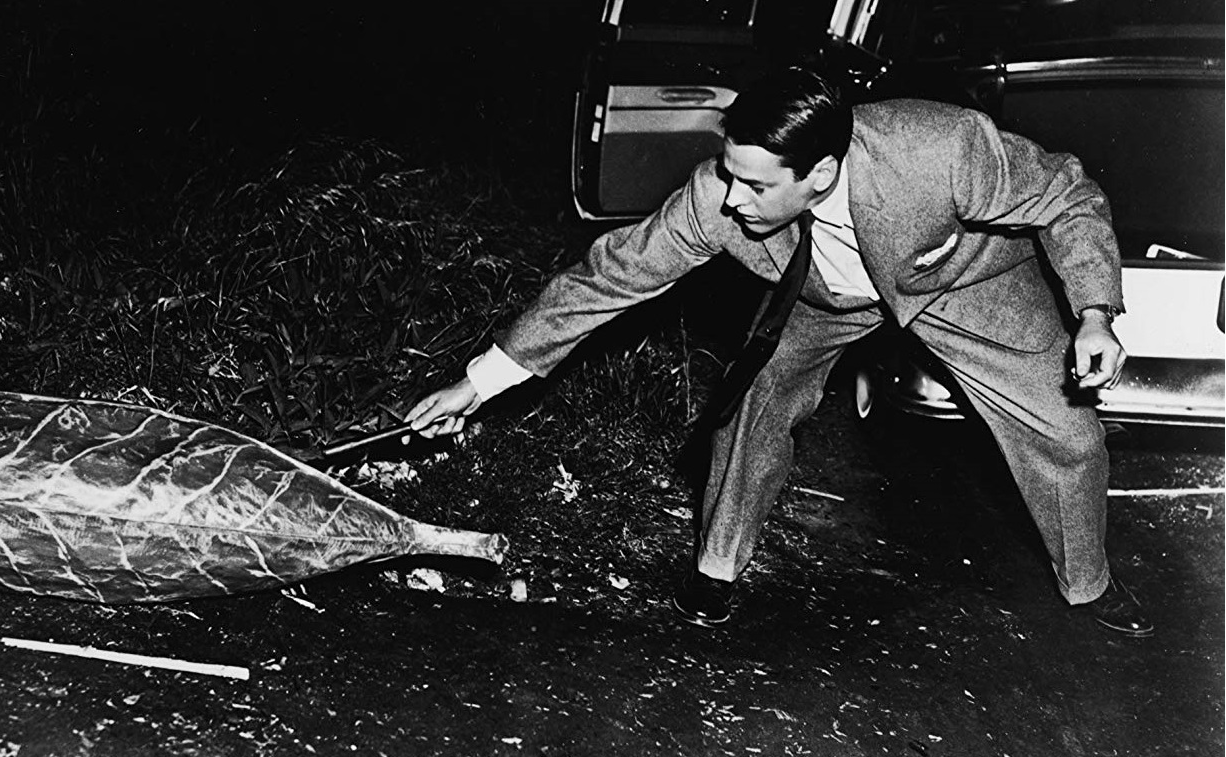
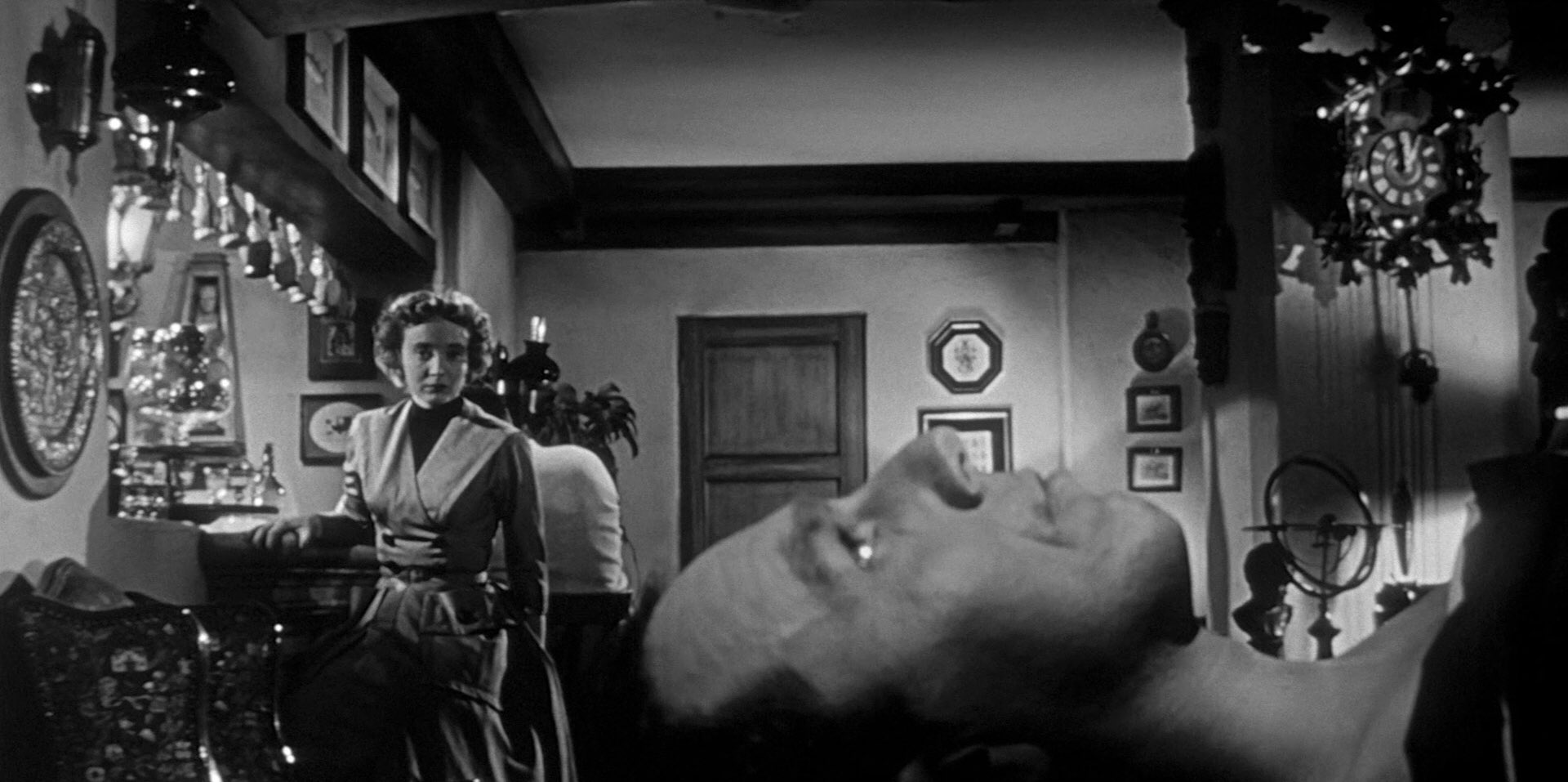
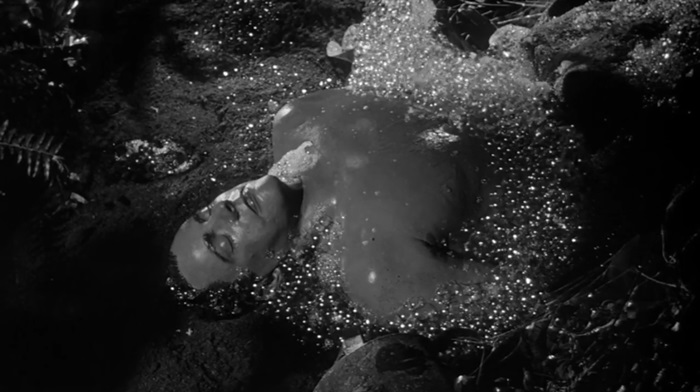
As Miles and Becky begin to rekindle their old flame after each have been through a divorce (described in this code era film as “visiting Reno”), Miles is called to the home of his friend Jack Belicec (King Donovan) and his wife Teddy, played by the future Morticia Addams, Carolyn Jones. Jack shows Miles a mysterious body laying on his pool table that has only vague features that lack any real detail and no fingerprints. Teddy is convinced that the body looks like Jack. Soon after, large seed pods are discovered in Jack’s greenhouse and more bodies emerge from them that look like Miles, Becky, and Teddy. Miles and Becky soon learn that many in the town have been replaced by these copies. The film continually builds in dread and paranoid atmosphere to its climax where Miles stands in the street shouting to unhearing ears, “they’re here already” before turning directly to the screen and the screaming to the audience, “you’re next!” If left intact, this would have been one of the greatest endings in film history.
The original cut ended there, but preview audience were put off by the bleakness and hopelessness of the film. Don Siegel at first refused to make any changes but was told that changes were going to be made with or without him. So, he and Daniel Mainwaring wrote the prologue, epilogue, and voice-over for the film. Though these elements do detract from the overall power of the film, they are not completely disastrous. Miles is ultimately believed in the final ending, but with the sheer number of pods and pod people we see in the film’s climax, it seems unlikely that a few doctors and police officers will be able to do anything about it.
Discussions of Invasion of the Body Snatchers almost invariably immediately turn to the political implications of the film. The prevailing political interpretations of the time came from both the right and the left. Conservatives saw the film as a warning against Communism, while progressives saw it as condemning McCarthyism or dictatorial fascism. The beauty of the film is that it is essentially a blank slate and both interpretations can be thoroughly argued for or against. Many of the film’s primary players insist that they had no specific subtext in mind while making it. Both Jack Finney and Don Siegel refused to participate in any political conversation about the novel or film, feeling it was better left to the interpretation of each reader and viewer. Dana Wynter is on record as feeling it was about some kind of “ism” but never gave much thought as to which one. Kevin McCarthy felt that the pod people represented the soulless advertising agents of Madison Avenue who were attempting to control the American mind, an interpretation that John Carpenter in many ways ran with for his film They Live thirty-two years later.
But Body Snatchers is much more about the loss of what makes us human than any specific political idea. It is less about “isms” and ideas than it is about the lack of them. The pod people are incapable of individuality or any form of independent thought. They have become not only soulless but mindless. The pod people are not particularly malevolent and intend to bring about what they view as a utopia, but at what cost? Theirs is a world without conflict, hatred, or strife, but also without beauty, creativity, or love.
One scene in particular makes this case strongly. Miles and Becky are cornered by pod people appearing as Jack Belicec and the town’s psychiatrist Dan Kauffman, who make their case, saying the two just need to go to sleep to be, “reborn into an untroubled world.” Miles counters, “where everyone is the same?” and “you can’t love or be loved, am I right?” Dan’s response is cold but reasonable. “You say that as if it were terrible, believe me it isn’t. You’ve been in love before. It didn’t last. It never does. Love, desire, ambition, faith. Without them life’s so simple, believe me.” Miles tells him he wants no part of their brave new world to which Dan gives the most chilling line of the film, “you have no choice.”
Invasion of the Body Snatchers has been officially remade three times, and quite effectively in most cases. The first two remakes can even be seen as continuations that build upon the mythology and situations of the Siegel film. Philip Kaufman’s 1978 version, widely hailed as the best version of the story, transplants the invasion from a small town to the big city of San Francisco and taps into prevalent 70’s fears of new age and religious cults. Abel Ferrara’s 1993 version, Body Snatchers, takes place on a military base and focuses on themes of blind trust in the government and militarism. 2007’s The Invasion is generally the least appreciated of the official remakes, but is surprisingly prescient in its commentary on fears of pandemic thirteen years before one actually hit. Considering current political uncertainty and unrest along with plenty of other concerns, the time is ripe for another telling of the story. Based on the recently announced The Changed starring Tony Todd, it appears that new version is arriving right on cue.
Even beyond these official remakes, the influence of Body Snatchers is deeply felt. The pod people have invaded all kinds of movies and popular culture over the decades in a number of forms. They can be seen in George Romero’s zombies, most poignantly in their consumerist iteration in Dawn of the Dead (1978). The interdimensional beings of John Carpenter’s They Live (1988) who placate and pacify humanity through subliminal messages and advertising certainly share some DNA with them. The Cybermen of Doctor Who and the Borg of Star Trek are essentially technological pod people who also share a collective consciousness. Even the clones of the Star Wars prequels, that can be instantly reprogramed at the whim of a maniacal leader, have much in common with the invaders.
Halloween III: Season of the Witch (1982) is set in the fictional town of Santa Mira and shares several structural elements with Body Snatchers. In Gremlins 2: The New Batch (1990), Christopher Lee as Doctor Catheter is seen carrying one of the seed pods from the film. Body Snatchers has been referenced directly in television shows as varied as Muppet Babies, Saved by the Bell, Eerie Indiana, Cheers, Night Court, Seinfeld, and The Big Bang Theory. Films like Shivers and The Stepford Wives (both 1975), Killer Klowns from Outer Space (1988), The Faculty (1998), and many others all owe at least some credit to the film.
The story and themes of Body Snatchers remain as enduring as ever. If made today, the film may well have to do with unease surrounding the rising power of big tech and social media to influence their massive audiences. It may have to do with rabid conspiracy theorizing and the ways that people we have deemed reasonable in the past now buy into “flat earth theory” or the QAnon movement.
It could even scrutinize the current need for total agreement, be it political, social, or even related to movies, music, and other facets of popular culture. Dissenting opinions are so often seen as not simply disagreement, but personal attack. Any sense of subtlety or nuance is disregarded in favor of a headline, soundbite, or thought that can be reduced to 280 characters or less. Of course, some ideas are simply wrong or evil, and worth rejecting out of hand. But in many, perhaps even most cases, discussion is a positive thing. Disagreement and debate are more often than not refining processes that draw us nearer to the real truth, though that process can be uncomfortable. In the words of ancient wisdom, “iron sharpens iron” though the process causes sparks.
The biggest reason why Invasion of the Body Snatchers endures both as a film and an idea is that it gets to the heart of what makes us human. Part of what makes life worth living is the messiness of it all. As much as we all hate and try to avoid pain and grief, would we truly feel joy or happiness without them? Can there be any kind of faith without doubt? Would we know real peace without turmoil or love without loss? At its core, that is what Invasion of the Body Snatchers is about. More than fears about Communism or McCarthyism, it is about the things that make us beings who live rather than merely survive. It is about the things that make us truly human and the fears of losing them. These are the reasons the film is consistently frightening, constantly reimagined, and more than anything else as the years pass, terrifyingly relevant.


