Interviews
[Interview] An Uncensored Zoë Bell on ‘Camino’ and Transitioning Into Acting!

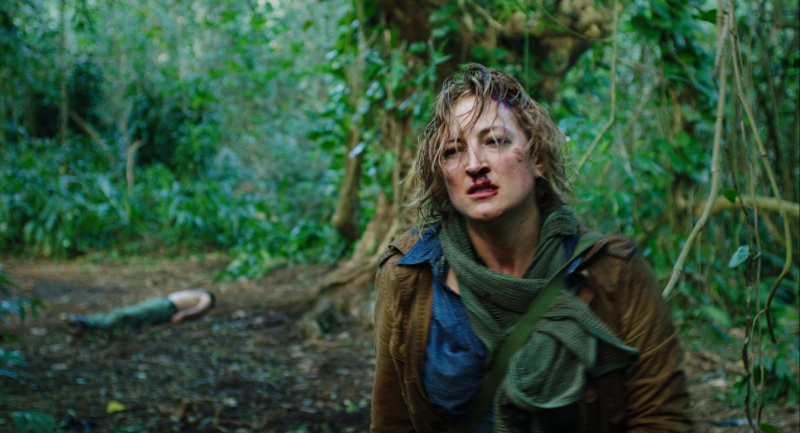
XLrator Media will be releasing Camino (read my review), Josh C. Waller’s (Raze) new survival thriller starring Zoë Bell (Raze, Death Proof) as Avery Taggert, a war photographer who witnesses the murder a Colombian child during a drug deal being performed by the leader. She is framed for the murder and must fight for her life as she is hunted down by the murderers squad.
I was fortunate enough to get to met Zoë Bell at Fantastic Fest, which takes place in Austin, TX every September. This year’s festival was housed at the newly renovated (at the time) Alamo Drafthouse South Lamar and interviews were conducted in the second-level karaoke rooms of the connecting bar The Highball. There are seven karaoke rooms at The Highball, each one with a different theme. I was able to interview Bell in the “Truly Outrageous Glam Room.”
Bell was a trooper during the interview, and she has a stream-of-consciousness to her answers that was quite endearing. Her speech reminds me of my own writing style, and since I rarely edit myself, I thought it would be hypocritical to edit her down. I’ve decided to transcribe the interview in its entirety, as lengthy though it may be. So without further ado, here is Zoë Bell: Uncensored.
Bloody Disgusting: You don’t live in Austin, do you?
Zoë Bell: No, no. But I was literally here in this very room last night. We sat by that lightning bolt [points to a spot on the wall where a lightning bolt has been painted] and we were singing last night.
BD: Whenever I come here I always get stuck in the same room with the upside-down crosses and the coffins.
ZB: I’m not going to attempt to make a theory about that…
BD: It’s really weird. Sometimes I’m just like “Can I get the Nintendo room or something else?”
ZB: And it’s like “No! You can have the Satan room!”
BD: Yeah, pretty much. Whatever. Anyway, I’ll get to the questions now.
ZB: Alright.
BD: You’ve made a very successful transition into acting from stunt-work, although you certainly do still do a lot of stunt work. Did you find that transition difficult and do you now find it difficult to be both stuntwoman and actress? I’m assuming you do most of your own stunts, of course.
ZB: Yes, generally speaking, I get to do my own stunts. Well, not “get” to do. I want to do them, but I did not find the transition to be too difficult. I find that both jobs are mutually beneficial. They sort of feed off each other and then I get the best of both worlds. It’s one of those weird things where I don’t really think it was hard as in “physically difficult,” but it was a total mindfuck. It didn’t feel real.
BD: That’s good then. It plays very naturally on screen. So when people ask you what you do, do you answer with “actress” or “stuntwoman?”
ZB: It took me about three years for me to respond with “I’m an actress” when people asked what I did. It made me very uncomfortable. I’m still nervous every time I act. I’m not when I’m doing stunts. In my performances I had to learn to tap into emotions, be vulnerable and convey all of those feelings. Doing stunts I’m always the tough guy. You never saw me cry. You never saw me scared. You never saw me broken or fearful of being broken. I was either focused and serious or I was laughing. Then as an actor I’m like: “I’M PREGNANT WITH YOUR BABY!”
[We both laugh]ZB: In all seriousness though, I think that Raze was a fundamental shift for me and my relationship to myself as an actor.
BD: What do you mean by that?
ZB: I couldn’t walk into that project not taking myself seriously as an actor. It would be a disservice to everyone who had dedicated all kinds of time to the production. All of these women who were working out and training to be totally badass. These are women who had been acting their whole lives. They’re fucking phenomenal actors but they’ve never done action stuff. Action comes naturally to me, but I realized that I have to put at least the same amount of time into my acting as these extremely talented women were into their action. And not even that, but to pay Sabrina, my character in Raze, the respect that she deserved and to be taken seriously.
BD: So how do you get in your element when you’re acting? Do you have a technique?
ZB: I like to relate everything to my personal life. For example, I’ve trained to do a double backflip but I had never actually done an entire double backflip. I was training and training and rehearsing and rehearsing to do one and could only make it to one and a half backflips. I told Josh I wasn’t ready and he said “If you give it 120%, the likelihood is you’ll probably do two-and-a-half flips. If you give anything less than 100% then you’ll probably hurt yourself.” Well, I took 2 more days before I did it because I was not ready yet. So when I act I have the same mentality. If you give anything less than 120% as an actor then you end up looking uncomfortable.
BD: That makes sense. And you never want to look uncomfortable because it comes off as inauthentic.
ZB: Exactly I was embarrassed of being emotional, which was the biggest hurdle I had to cross when becoming an actor. I was embarrassed of having that exposed. If you only give a little bit, then your performance will just make people cringe. If you watch someone who’s dishonest on screen then it’s uncomfortable. If you give over 120%, then there is no “wrong.” Technically it’s less terrifying because you no longer run the risk of it being fake. I mean, you run the risk of making choices that people don’t like, I guess.
BD: I feel like that’s the case with any performance anyway. What I found refreshing here at Fantastic Fest is that there may be a film that you didn’t like and you can tell someone that without fear. Rather than tear you down, people will respect your opinion and just go with it in a fun discussion. I think that’s what has to be done with acting too.
ZB: Absolutely.

BD: Now that you have mentioned “vulnerability,” I just wanted to mention that I saw Raze for the first time last week.
ZB: Oh yeah?
BD: I really liked it a lot. I was very impressed. I wish it had gotten a super wide theatrical release.
ZB: Yeah, me too. Me too.
BD: But your character in Camino, Avery, is your first “everygal,” I guess?
ZB: Yeah, absolutely.
BD: I mean she’s a war photographer so she has seen a lot of terrible things, but she has that vulnerability that none of your previous characters have ever had. She has to learn to survive.
ZB: The badass comes from that.
BD: Yes! Exactly. Did you find that difficult to tap into?
ZB: No, actually. When Josh first rang me and told me about this character it was first a dude. You know?
BD: Yes I remember you mentioning that at the post-screening Q&A.
ZB: Well I told him that that character just made sense to me already. I think the reality is that Avery is way more like me than Sabrina ever was. With Sabrina I had to be someone completely different than who I really am. Avery was way closer to home, you know? I’ve never had to kill someone [knocks on glass table in room]. Wait, where is there wood? We might need to amend this interview.
[Both of us laugh]ZB: But I could relate to Avery having skill sets that I’ve never had to actually put to real use. I am a stunt-woman, but I get scared. I get intimidated.
BD: Considering some of your stunt work, I mean I’m not saying that crying is “weak” or anything but it’s nice for people to see that you’re a human just like the rest of us.
ZB: I am very, very painfully human. But it’s that thing too where I think it’s part of Josh’s mission in life is to expose sides of me as an actor that people assume don’t exist. So in Raze Sabrina has the speech about her daughter where the character cracks. That was immensely important for him. And not just like “Look Zoë can cry!” But for him he knows this side of me. He knows it exists. He knows that those moments are more powerful than my badassery. And I was like [jokingly] “Uh okay I’ll do it.”
BD: I’m getting the finger wave so I’ll ask you just one more question before they kick me out-
ZB: Time limits are such shit aren’t they?
BD: I know, I know, but it’s okay! Really quickly: The shoot for Camino looked grueling. I’m not an outdoorsy person so I can’t even-
ZB: You’re just like “Gross!”
BD: Basically. That’s me! But was there a stunt or an aspect of shooting that you just really didn’t like?
ZB: Um, it’s hard to say because my job for so long was to do the shitty bits. So my job was to find ways to appreciate doing the shitty bits. Especially even now I find it easier to appreciate those shitty bits because if I’m having a really shitty time then so is my character, who is supposed to be having a really shitty time. I like being under pressure when I’m at work. I like that we were all in the element on this film. We’re fucking tired. We want to go home. It’s not so much that I enjoy it but I kind of get off on it professionally, you know what I mean? I came from telly so I’m used to being under pressure and on a time crunch. You’ve got to make it as good as you can right now because that’s all you’ve got. I respond well to that.
Check out Camino when it gets a theatrical releas on Friday March 4th! It will also be released on VOD and iTunes on Tuesday March 8!




Interviews
Paul Tremblay on Fighting AI with Horror in New Novel ‘Dead But Dreaming of Electric Sheep’

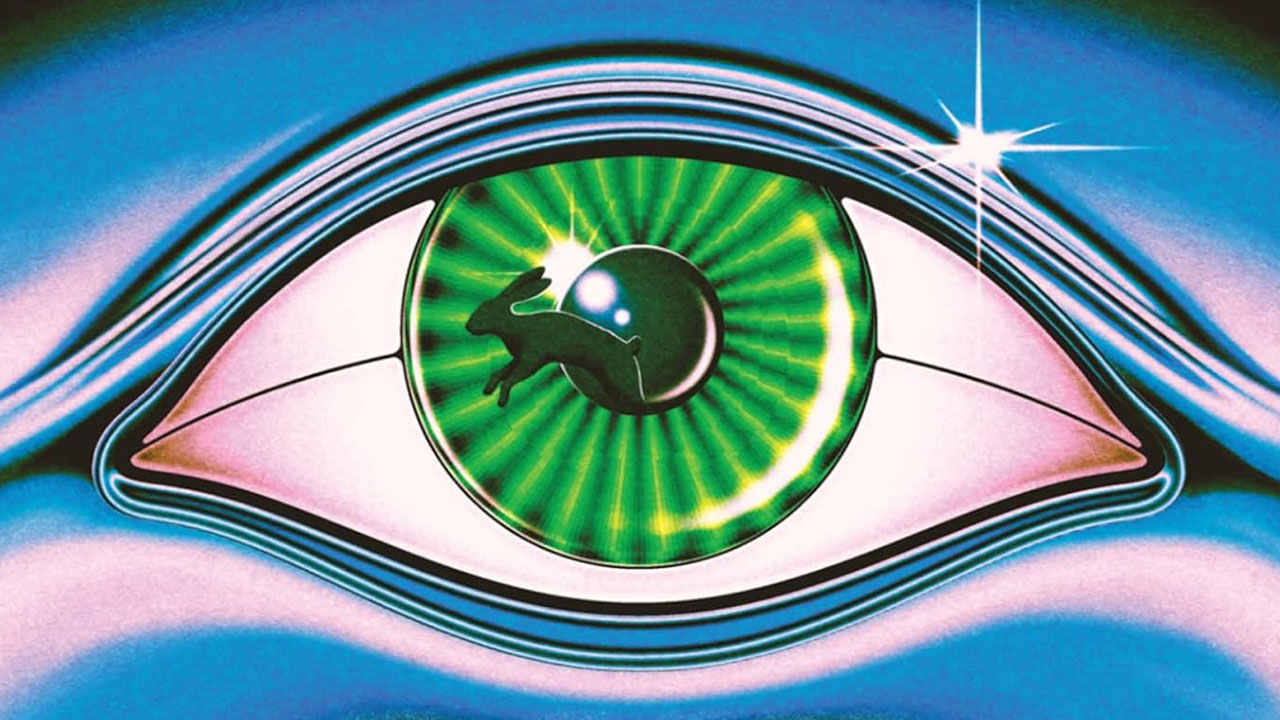
Paul Tremblay didn’t start his writing career believing he’d be battling machines over the sanctity of his job, but like so many writers of his generation, the battle found him. In the years since Large Language Models (LLMs) and neural networks started gaining traction as an advertised shortcut to creativity, Tremblay has been active in lawsuits to prevent the use of his works in training AI models, and he’s found that, with each new project, he has to consider the possibility that some LLM, somewhere, is going to latch on to what he’s creating.
“Now I feel like I’m thinking about, ‘Man, how am I going to write things that would be really hard or impossible for an AI to replicate?’,” Tremblay told me, speaking by Zoom from his home in Massachusetts. “Maybe some of that is ego. I’m sure every writer thinks, ‘Oh, an AI could never write what I write.’ Yes, I’d be lying if I said that wasn’t part of the thought process.”
While that’s something Tremblay might consider with any new work at this point in his career, the Bram Stoker Award-winning author of A Head Full of Ghosts, The Cabin at the End of the World, and many other novels and short stories tackled it in a more direct way with his latest book. Inspired by Philip K. Dick, Harlan Ellison, and the quirky humor of the Coen Brothers, Dead But Dreaming of Electric Sheep is Tremblay’s attempt at a sci-fi-horror mash-up that’s both darkly funny and existentially nightmarish. It’s also, in his own words, a screed against the movement by AI companies to supplant human artists.
“I didn’t want to make it too didactic, but no, I playfully described this book as an anti-AI screed,” he said. “This book, in particular, was driven by anger and frustration, for sure. Not every book is going to be driven that way.“
Despite the emotions that fueled it, Dead But Dreaming of Electric Sheep does not read like a screed. Instead, wielding offbeat humor and tech concepts that feel both lived-in and frighteningly tactile, the book lays out tandem narratives all building to the same conclusion, each of them exploring our relationship to machine learning in a different way. One of these narratives belongs to Julia, a former gaming streamer looking for a new challenge in life, who gets a call from a California tech company with an interesting offer.

Paul Tremblay in documentary series “First Word on Horror”
The company has, it seems, implanted some new technology in a brain-dead middle-aged man which will, in theory, allow them to pilot the man’s body through a rudimentary, still-developing system of controls. Julia, with her gaming background, would be the pilot, in her own way just as much a test subject as the human vegetable she’s controlling.
Julia is a Gen Z streamer with an omnivorous pop culture appetite, inspired by Tremblay’s own adult children, who riffs on The Big Lebowski constantly and calls her strange new meat puppet “Bernie” in reference to Weekend at Bernie’s. Her wide frame of reference, and her interest in art and stories far beyond video games, is in part informed by Tremblay’s own experiences with Gen Z, and in part a response to AI companies who scrape art and culture as a means of consuming it for reference without really experiencing a story.
“I know that one of the arguments that OpenAI and other tech companies are trying to make is like, ‘Hey, you writers, you artists, you take pop culture, you take your influences, and you create something. That’s just the same thing that the bots are doing.’ And it’s just not,” Tremblay said. “I wanted to have Julia have her outlook informed by all this pop culture, and I wanted to make that feel really human as a way to show how inhuman the AI is.”
The other side of the story belongs to “Bernie,” who’s addressed in his point-of-view chapters as “You.” In these chapters, the technology in Bernie’s body starts to flicker images through his seemingly dead brain, delivering half-remembered imagery and perspective in a nod to the “hallucinations” of an AI model groping for understanding it can never reach. These chapters in particular show off Tremblay’s flair for formalist shake-ups, and echo the kind of hyperstimulated writing that Dick and Ellison made so influential.
“I think it was more just the general Philip K. Dick feeling of ‘The world is so strange,'” Tremblay said. “He’s a lot funnier, I think, than maybe a lot of people credit him. That’s definitely what I was thinking of when writing the book.“
Bernie’s chapters embody the strangeness of Dead But Dreaming of Electric Sheep, presenting imagery that’s at times puzzling, at times eerily filmic, and always unnerving. They also mirror Julia’s own journey in fascinating ways as the odd couple – the Gen Z gamer and the middle-aged vegetable – traverse the United States, and the tech in Bernie’s body wakes up to the possibilities of using his flesh for its own purposes. It’s a compelling narrative technique, but it presented some new writing challenges for Tremblay.
“I quickly realized I couldn’t write this book the same way I have in the past,” he said. “By that, I mean all my other novels I had written in the order in which it was presented, even things that are nonlinear, which is most of them. I knew I couldn’t do that in this book. It’s not a spoiler, but hopefully the readers figure out pretty early that the Bernie chapters are a little bit of a preview of the next chapter from Julia, what’s actually happening with Julia. It’s all refracted from him.”

Mary Roach’s Stiff
Dead But Dreaming of Electric Sheep began with a simple image, inspired by Tremblay’s reading of Mary Roach‘s book chronicling the history of our treatment of corpses, Stiff. As he read, Tremblay imagined a body sitting on an airplane, remote-controlled by someone else. At the time, it was a “silly what-if” concept, filed away in his head. Years later, when he became an author suing a tech company to keep AI from scraping his work for ideas, it started to feel frighteningly plausible, taking the “silly what-if” into the territory of a high-concept horror show about what happens when we try to exploit and commodify uniquely human aspects of consciousness.
“It stuck with me,” Tremblay said of that what-if imagery. “And then a few years later, when I was a part of the case suing OpenAI on behalf of writers, that what-if suddenly didn’t seem as silly. The more I learned about how that corporation operates and without really any sort of ethical thought to anything, I was like, ‘Oh, I’m going to play with that. That’s actually happening.”
So, what if someone actually in favor of generative AI picks up Tremblay’s self-described “anti-AI screed?” He hopes that, at the very least, he’s made the ride enjoyable in a distinctly human way that might begin to reshape the conversation.
“I think that was another reason why I wanted to have the humor,” Tremblay said. “If people are reading this book who aren’t on the side of like, ‘Hey, LLMs taking authors’ books is bad,’ maybe if they read something that’s cut with some humor, that maybe they’ll be more easily swayed.”
Dead But Dreaming of Electric Sheep is now in bookstores everywhere.

You must be logged in to post a comment.