


“I probably end up looking at well over 300 films for the section.”
Horror fans who have yet to experience Midnight Madness should add it to their bucket list. It’s easily one of the most accessible genre festivals in the world held in a massive theater with over 1,000 other genre maniacs. We’ve been blessed to have been covering the Toronto International Film Festival’s genre program since Alex Aja’s High Tension premiered in 2003. We were even more blessed to have such a gracious host in Colin Geddes, who was the Midnight Madness programmer for 20 years, building it up from scratch. With Geddes moving on to work with AMC’s Shudder, he was replaced by Peter Kuplowsky, who has been by Geddes’ side for years. TIFF’s Midnight Madness is one of the most important horror events of the
TIFF’s Midnight Madness is one of the most important horror events of the year, and being that there’s have a new face behind the program, we here at Bloody Disgusting thought it would be exciting to speak to him about his rise to power.
Kuplowsky is a film curator, content producer, writer and hat enthusiast based in Toronto. Since 2005, he has established a career championing genre cinema and outsider art at various international film festivals, including Toronto After Dark, Fantastic Fest in Austin, Texas, and the Toronto International Film Festival’s Midnight Madness program. Over the past few years, Kuplowsky has helped develop and produce a number of critically acclaimed short and feature films with emerging filmmakers that he supported on the festival circuit as a programmer. His credits as a producer include Manborg (2011), the concluding segment Z is for Zygote in the anthology film The ABCs of Death: Part 2 (2014), The Interior (2015), The Void (2016), and the short film adaptation of Dave Eggers short story Your Mother and I (2016).
“Having worked with Colin Geddes on the last four editions as his programming associate, it was a very organic transition and my overall strategy wasn’t too dissimilar to how Midnight has been programmed in the past,” Kuplowsky tells us about how he approached taking the helm. “A bulk of the work is navigating the festivals and markets leading up to the summer (Berlinale, SXSW, Cannes) and tracking titles by reading trades and checking in with sales agents and Industry peers. Of course, there’s also the roughly 200 submissions that are sent to TIFF that specifically request Midnight Madness consideration (the fest overall receives thousands more). Between direct submissions and the films I am tracking, I probably end up looking at well over 300 films for the section.
“One challenge I had this year was that the submission pool for Midnight substantially ballooned with the retirement of the Vanguard programme. Some of the films that would have historically gone to Vanguard were now vying for Midnight, and I wanted to find a home for them, while still preserving a “midnight” sensibility.”

Even though Geddes has moved on, Kuplowsky still conferred with his mentor on this year’s epic lineup, which includes Downrange, The Crescent, The Ritual, Revenge and more.
“I conferred with Colin more than a few times while putting together this lineup, and it helped reinforce some of the lessons he had imparted to me as his programme associate. He taught me that it’s important to remember that as much as a programme should and will reflect a curator’s personal sensibilities, the audience’s interests and expectations should always be taken into account. When I was first pre-screening for Colin, I was sometimes quick to negatively judge a film that didn’t align with my own proclivities and Colin would often wisely remind me to put a film in the context of their intended audience. That what might not work on a small-screen by yourself might actually play gangbusters on the big-screen and in front of 1200 people. I definitely have tried to keep that in mind while arriving at my final 10 this year.”
Kuplowsky speaks to what we can expect from this year’s program:
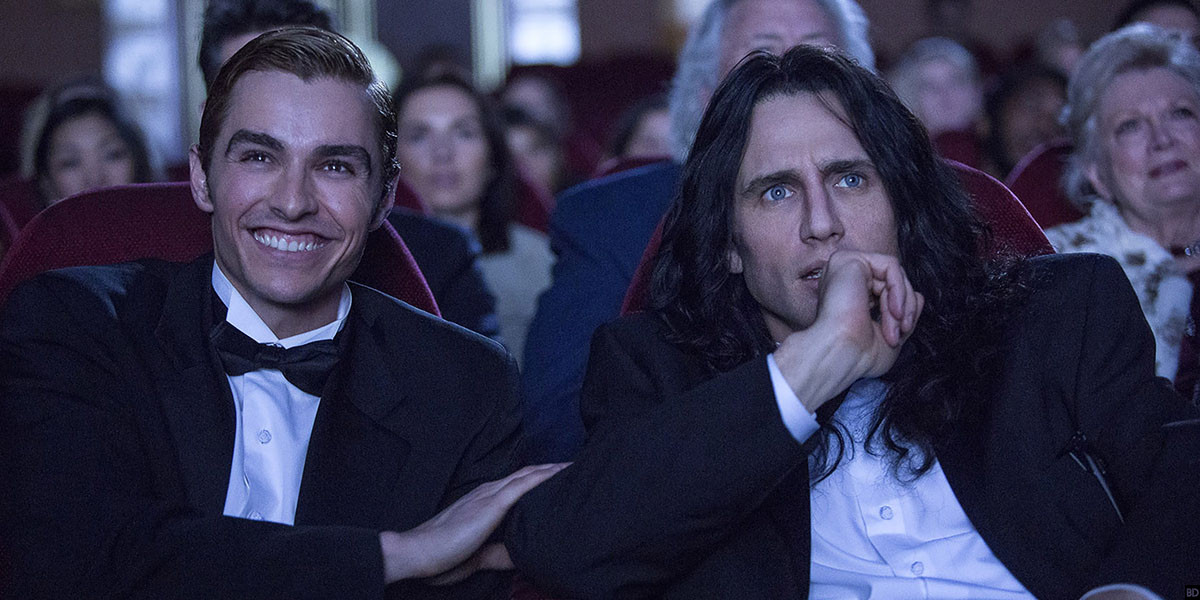
“Midnight Madness is actually not strictly a “genre” programme, and never really has been – Dazed and Confused, Dogtown and the Z-Boys, Borat are all Midnight Madness alumni,” he points out. “I decided to continue that tradition by including films about alternative subcultures and outsiders like Bodied and The Disaster Artist. The former has a transgressive, electric edge that I think will charge an artist, the latter is a hilarious, but sincere celebration/exploration of a filmmaker that the “midnight movie” community has come to embrace in recent years.
“Furthermore, when it comes to the genre films I have included, one can expect to see a lot of experimentation with form and style,” he adds. “I suppose you could describe Let the Corpses Tan as a kind of western, but directors Hélène Cattet and Bruno Forzani collide so many disparate techniques and images that I guarantee you’ve never seen anything quite like it. Ditto, for The Crescent, which applies a very unconventional approach to a traditional haunted house film.
“Also, expect a rare break in tradition: I’ll be starting ONE Midnight Madness selection before Midnight: Brawl in Cellblock 99, he reveals. “I think the film escalates to an absolutely deranged climax that’s kind of reminiscent of The Story of Riki-Oh but for the first hour it is more of a sober crime drama. In fact, I don’t think it really becomes a true “midnight movie” until the hour and 7 minute mark exactly, so, therefore, I have decided to start my intro at 10:45 PM and the film at 10:53 PM, so that that when the clock strikes Midnight, so does the movie!”
Kuplowsky also reflected back to some of his favorite Midnight Madness presentations:
“The first Midnight Madness screening I ever attended was SPL in 2005 and it remains among the most memorable screenings. I was so in awe of the audience’s energy and enthusiasm, and that Sammo Hung was actually there on stage with Colin really blew my mind.
He continued, “I’m an ardent fan of Asian cinema so The Host, Symbol, The Raid, and Why Don’t You Play in Hell? are definitely among my favourites. I also vividly remember the premiere of Stuart Gordon’s Stuck and rushing the stage with a clamshell of Robot Jox in hand. Colin saw me and generously ushered Stuart Gordon my way for him to autograph it with both his signature and the immortal motto “crash and burn”. (Thank you Colin!)”

“As I mentioned, I’m really happy with what I think is a programme that has a rather diverse range of sensibilities and aesthetics, but I’m particularly excited about the emerging filmmakers,” he says of what he’s most proud of. “Coralie Fargeat’s Revenge is a really promising debut, and I’m so thrilled for David Bruckner to finally get a crack a feature film with The Ritual after a decade of absolutely stellar anthology segments. Ditto for Sôichi Umezawa whose Vampire Clay is his first feature after years of working an FX makeup artist in Japan – genre fans might be familiar with his amazing segment in ABCs of Death 2: Y is for Youth.
“I have a lot affinity for Seth A. Smith’s The Crescent too. I think it is among my biggest risks in the section since it is a slow-burn horror that forgoes traditional shocks for an eerie atmosphere and psychedelic imagery. In an earlier iteration of TIFF it would probably have been a Vanguard, but then again Eraserhead is one of the original Midnight films, and so I don’t think “midnight cinema” need always be high-energy shocks and thrills. It can be something more deliberately paced and quietly surreal.”
Who is Peter Kuplowsky, really? He tells us his own personal favorite horror films:
“The Haunting (1963) and Alien are perennial favourites,” he reveals, “as well as anything directed by Larry Cohen and John Carpenter. As far as eccentric deep cuts go, I’m a big fan of The Carrier, 3615 Code Père Nöel and Don’t Let the Riverbeast Get You. I adore Nobuhiko’s Obayashi’s Hausu and think The Collector and The Collection should be regarded as contemporary American horror classics.
The 42nd Toronto International Film Festival runs from September 7 to 17, 2017.
Festival ticket packages start at $105. See all the Midnight Madness films using your 10-ticket regular flex pack. Purchase packages online at tiff.net/tickets, by phone (416.599.TIFF or 1.888.599.8433), or in person at TIFF Bell Lightbox until August 13 while quantities last.
