Interviews
[Interview] Director Tricia Lee Reveals The Horrors of “Silent Retreat”

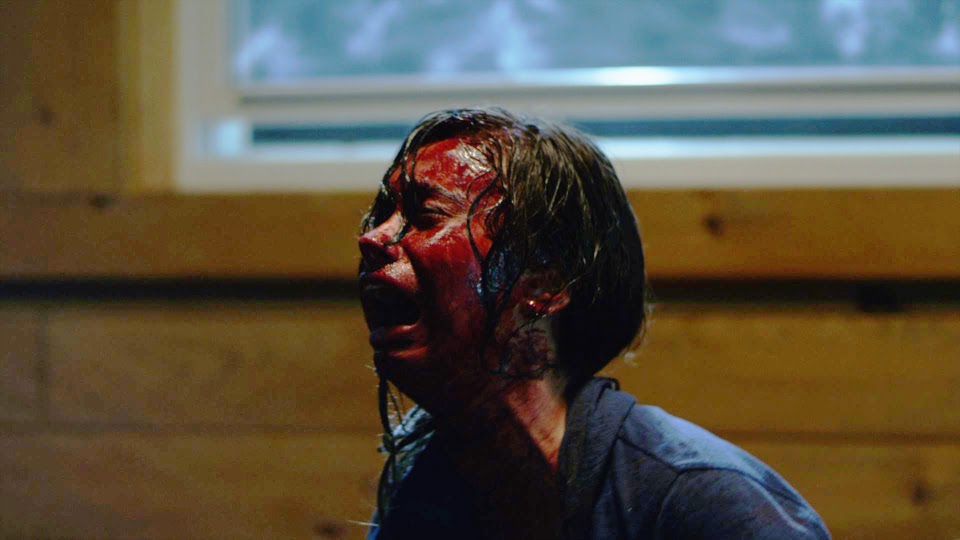
Toronto based Director Tricia Lee is turning out some of the best horror to emerge out of the Great White North. Her latest film “Silent Retreat” won Best Canadian Feature at Toronto After Dark and for good reason as it The film is intensely frightening. Taking the classic cabin in the woods trope and flipping it upside down, the film tracks Janey who in order to avoid jail time agrees to a secluded rehab facility. When she arrives she is given the rules – no communication with the outside world, no electronics, and interaction of any kind during your stay.
Breaking the rules will result in an encounter with the beings that lurk in the woods. “Silent Retreat” offers horror fans some truly pants wetting moments that leave you terrified of what lies lurking in the shadows. Director Tricia Lee sat down with Bloody-Disgusting for exclusive interview to talk about “Silent Retreat”, partnering up with Black Fawn Distribution on the film’s release, her thoughts on the new wave of Canadian horror directors, and why crowd funding a feature film is a monumental task.  Bloody-Disgusting: Tell us a little bit about what sparked the concept behind “Silent Retreat” and how it came together…
Tricia Lee: I actually went on a silent meditation retreat myself. Before leaving, my writing partner Corey Brown said to me, it’s a great place to set a movie, think of a thriller concept while you’re there. And I told him, “Corey, I’m supposed to be clearing my mind”! When I returned, I told him about this girl that I carpooled with on the way up to the retreat, but when I tried to find her to bring her back home, her roommate told me she was sent home early. Now, at this retreat, there was no talking, no eye contact, no gestures, no nothing. So we don’t get to know the people we spent the last 10 days with. Corey and I thought this would be a great place to set a thriller horror film where girls disappeared and no one would ask any questions. So Corey went and wrote a script and I went out to find financing, and so it began.
BD: You play with a lot of psychological horror in the film, which really helps to make the grotesque aspects of the film have more of an impact with audiences. Was it your goal to try have your audience connect with Janey emotionally so they could really feel the sense of terror she feels the film?
TL: As a director, I always want the audience to connect with my main character. Janey is discovering the rules, the mystery and the danger of the camp, as the audience is and I think it is important for the audience to connect with her emotionally to get into the film. I think an audience only feels terror, fear, anticipation, suspense if they are connected to the characters and want them to survive.
 BD: What are some of the benchmarks films for you as a director when working on “Silent Retreat”?
TL: I watched and studied The Descent and Let Me In. The directing in these two genre films, I think is genius and they are both masterpieces.
BD: The film has been getting rave reviews at film festivals like the Toronto After Dark Film Festival and well received by fans. What has your experience been like with critics and the reaction from fans been like so far?
TL: We were very excited and honoured to win Best Canadian Feature at Toronto After Dark. It is an award that means a lot because they are chosen by the fans and the pass holders who went to see almost every film at the festival. Silent Retreat has been getting some great reviews. The ones I enjoy reading the most are very thoughtful, smart and well-written by critics that really grasped and appreciated the themes that we wanted to address.
BD: Tell us a bit about how you came to hook up with Black Fawn Distribution and what they brought to the table for the release of the film?
TL: I first met the Black Fawn guys at the Blood In The Snow Festival where my other feature film “Clean Break” was screening. They had a booth there and we started chatting about their cool grassroots DVD distribution label. They specialize in genre and sell directly to the fans at all the conventions and expos, as well as through their website at www.blackfawndistribution.com. I loved their hands-on, filmmaker-friendly approach. So I held back DVD rights in Canada from my Canadian Distributor VVS, so that Black Fawn could do their magic with the film. Black Fawn released Silent Retreat on DVD in Canada at Fan Expo which was a great opening arena for the film.  BD: There seems to be a new wave of Canadian horror directors making a name for them on the scene. What do think of the state of the horror genre in Canada and how have you seen in progress in recent years? What are some of the directors we should be on the lookout for?
TL: Being a part of the Canadian horror community has been a great experience so far! I think it’s great because it’s a very supportive community. While we are making films in similar genres that are competing for a spot in the marketplace, I feel like we are all very supportive of each other. We help promote each other’s films and show up to support one another at festivals, screenings and IndieGoGo campaigns. And as each of our films do well in the market, it paves the way for the rest of our films to perform as well. We all are working to brand Canadian horror films as something everyone needs to see. Some directors to watch out for are the Soska Sisters, Karen Lam, Ryan Andrews, Gavin Michael Booth, Navin Ramaswaran and Jovanka Vukovic.  BD: What is your take on the idea of crowd-funding a feature film and would you ever consider taking that route for one of your projects?
TL: I actually did an IndieGoGo campaign for Silent Retreat. We raised $5000, which was great and helped our low budget film get to the finish line. However, it was 3 months of full time work and bugging everyone I’ve ever met since kindergarten! It was hard, to be honest and I’m so grateful to those who did contribute. It’s a lot easier when you have a fan base or a lot of followers on twitter, etc. And even then it’s hard to get a stranger to donate. I wouldn’t discount the importance of crowd funding, especially for awareness and audience building, but I’d prefer not to do it again (at least not all by myself next time round!)
BD: Tell us a little bit about your production company A Film Monkey Production and some of the projects you have coming up…
TL: A Film Monkey Production is my production company that I produce and direct my projects through. I’ve made a lot of short films as two features so far. I work very closely with my writer Corey Brown on all the projects. CLEAN BREAK was a thriller about three roommates who are living the bachelor lifestyle until one of them gets a girlfriend who will stop at nothing to get rid of any excess baggage. SILENT RETREAT was our next film. And we are currently packaging our next elevated genre, horror, creature feature ONE DROP , which is about a single mother who overdoses and wakes up in a medical facility to find that everyone is dead and she’s somehow nine months pregnant. After that is BUYING TIME, a sci-fi drama about a pill that will allow you to re-experience your past, five minutes at a time.
BD: For fans that haven’t seen “Silent Retreat” yet how would you sell it to them?
TL: A creature feature / psychological thriller. In this horror film, Janey is sent to a silent meditation retreat in the middle of the woods for rehabilitation, only to discover that the men who run it are brainwashing women to be quiet and submissive, and if she breaks the rules, she’ll discover what lurks beyond the trees … The only way to escape the silence … is to SCREAM.
Check us out on social media: www.Facebook.com/silentretreat @SilentRMovie www.silentretreatmovie.com www.filmmonkey.ca


Interviews
‘Rubberhead’ Director Nick Taylor on FX Maverick Steve Johnson, Practical Effects, and Seven-Year Journey

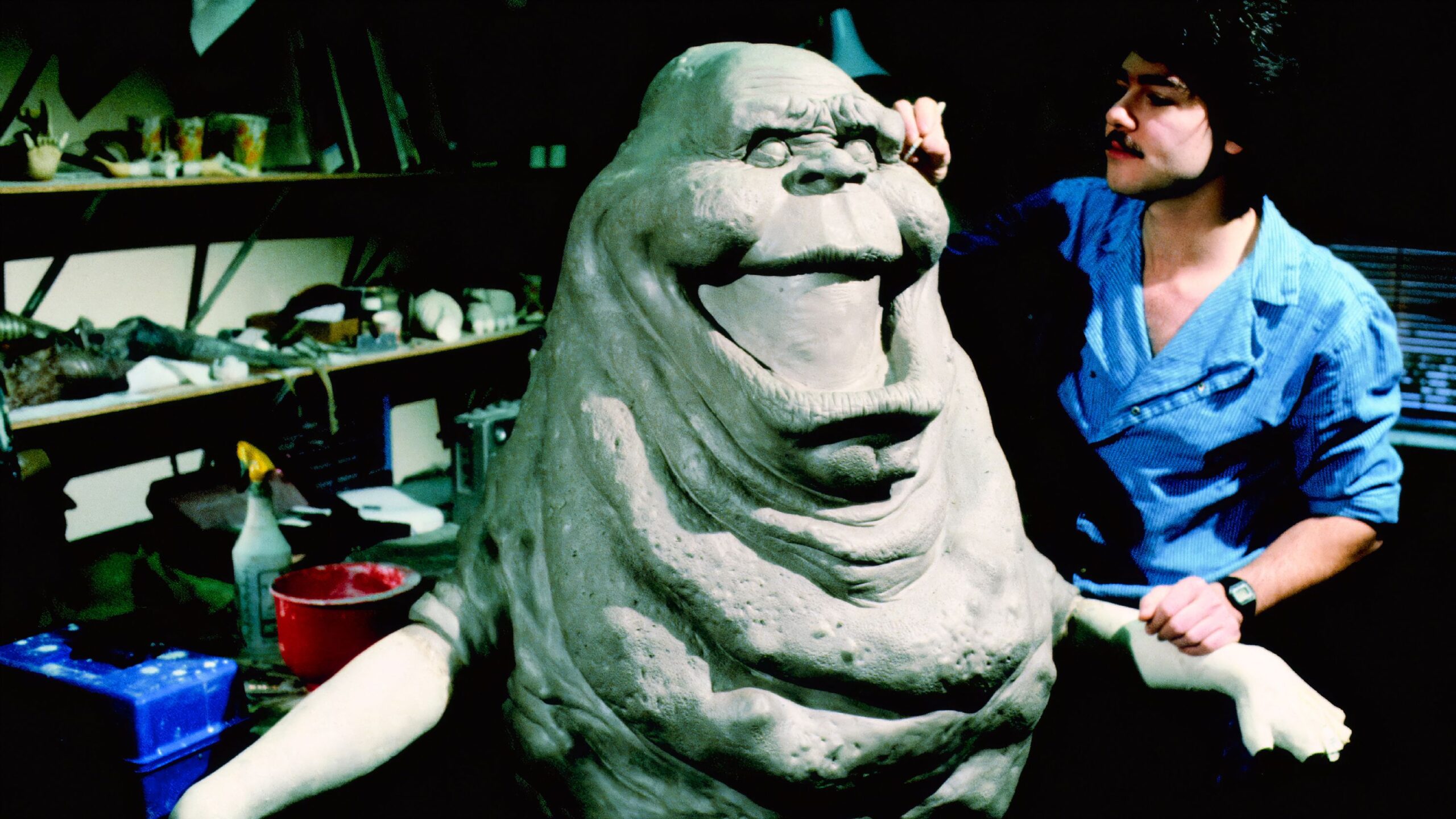
Horror journalist, producer, and podcast host Nick Taylor moves into the director’s seat for his feature debut with illuminating documentary Rubberhead: The Life & Monsters of Steve Johnson.
It chronicles the wild life and career of SFX maverick Steve Johnson, based on the multi-volume book series Rubberhead: Sex, Drugs and Special FX, and those familiar likely already know Rubberhead isn’t your standard horror documentary.
Johnson is responsible for so many memorable movie monsters, having worked on Fright Night, Poltergeist II, An American Werewolf in London, A Nightmare on Elm Street 4: The Dream Master and Night of the Demons, to name a few. He’s also extremely candid in ways that feel atypical in this industry, open about his failures as much as his successes.
“It was a natural progression for sure,” Nick Taylor tells Bloody Disgusting of his transition into filmmaking ahead of Rubberhead‘s world premiere next week at the Fantasia Film Festival on July 23. “I think with my podcast, I got adept at interviewing people and pulling creative lessons out of them, which was the point of my podcast. I wanted this movie to be sort of a creativity pill for artists where if they’re starting a project or feel creatively stuck, they could watch this movie and be inspired and get actual practical creative lessons.”
Taylor’s background in PR and marketing also organically led him down this path.
He charts the course from book promo to documentary director: “But also Bloody Disgusting had a lot to do with this movie because in the very beginning when I first met Steve, I was helping him promote his book and I said, ‘Hey, I got a marketing background and a journalism background. Let me help you promote this book. I’ll just pitch stories from your life to the media, and we’ll see what happens.’ And John Squires wrote an article about Steve making Slimer under the influence of tons and tons of cocaine, and that went fairly viral.”

“For a week, it was story time with Steve,” Taylor continues. “He would tell me a story from his life, and every story was about a major movie, a major director, lots of drugs and alcohol and insanity. I would write them up, and I think John published about three or four of them. So huge shout out to John Squires because that was really great. So yeah, there were definitely a lot of outgrowths of my journalism background that definitely contributed to this movie.”
Rubberhead condenses the multi-book series into a cohesive feature film with a breezy runtime, sparking the obvious question as to how Taylor approached condensing Johnson’s life down to an under 2-hour documentary film.
“That was one of the more difficult parts of all of this, because we had enough for a series or an epically long six-hour fan documentary,” he answers. “But from day one, I did not want to make a fan documentary. I love them. They’re a lot of fun, but I did want the movie to stand on its own two feet as a character-driven portrait of an artist and a time period and a technology, that being practical effects. I did want to be objective. I didn’t want to make this too long. I wanted to make it re-watchable. So I think we just really had to focus on what the narratives were that we wanted to tell. So there were some basically almost cliché archetypical mythic narratives present in Steve’s life. We could have made this way longer, but we wanted to keep it short. But luckily that’s why you have special features.”

Johnson quickly proves to be an engaging subject thanks to his self-effacing wit and frank self-reflections; expect no shortage of stories about how drugs factored into the height of his career or the failures it wrought.
That rare quality was an asset for Rubberhead, Taylor confirms. “He does not shy away from anything about the drugs, the addiction, the bridges burned, the mistakes made, the lessons learned. He just is honest about all of it. He’s had a lot of time for reflection, and he’s done a lot of reflection, so he doesn’t shy away from any of it, which is huge because it’s very refreshing. I don’t think a lot of people are that way, at least in this industry from what I can see. So I think it was hugely beneficial. We wanted to lean into that, and we wanted to make this sort of a gonzo Hunter S. Thompson sort of wild tale through Steve’s overall life.“
Condensing his life into this doc was a slow and steady process for Taylor, too. “It’s been almost seven years. It’s been a labor of love. We’ve been as indie as it gets. We would shoot what we could when we could, and then we would edit when we could. Then after a while it all came together.”
In a way, making Rubberhead brings Taylor’s horror fandom full circle. It turns out that the very film that sparked his interest in the genre and practical effects also comes with an amusing Steve Johnson anecdote.
Taylor explains, “My gateway for sure was Beetlejuice. I saw that at a very young age; I think I was four or five. I felt somebody had shown me, my soul. I get a little emotional thinking about it. There was something about that movie that felt so strange and unusual, but also felt so familiar. It was spooky, but it was fun, and it was lighthearted, and it had humor, but it also had this macabre celebration to it that I just really got into as a kid. I felt somebody had shown me my own soul. And funny story, Steve got fired from Beetlejuice because Tim Burton gave him his hand-drawn designs and Steve’s like, ‘Oh my God, these look like kids did them. This is not what you want. I know what you want. I’m going to redesign these for you.’ And Tim Burton was like, ‘Yeah, no, you’re not.’ So yeah, funny story.”

You must be logged in to post a comment.