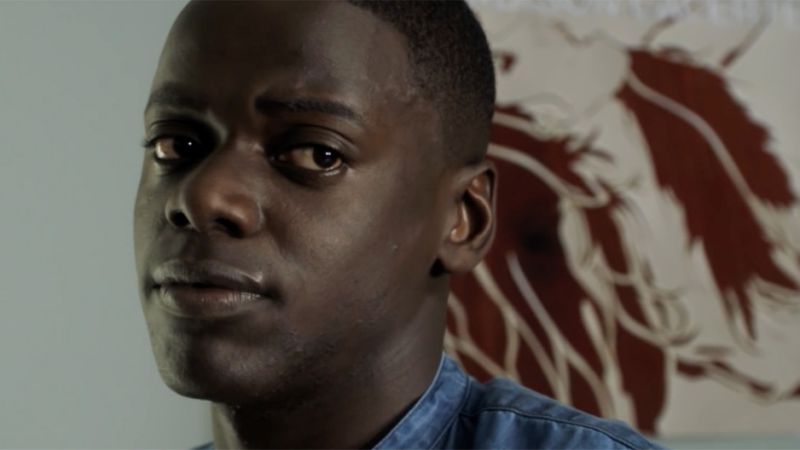
Obviously, if you haven’t yet seen Get Out, you may want to avoid this post.
Seriously. Turn away now.
The final act of Get Out is particularly satisfying, as protagonist Chris manages to escape and exact revenge on his captors. At the very end of the film, after Chris has laid waste to Rose’s family members and left her for dead in the middle of the road, a cop car shows up. It’s pretty safe to assume, in that moment, that out of the car is going to come the white police officer we saw earlier in the film, who will presumably arrest or kill Chris. But the film doesn’t go in that direction. It’s actually Chris’ friend Rod in the car, and the two escape the nightmare situation.
Speaking with the BuzzFeed podcast Another Round, writer/director Jordan Peele just revealed that his originally scripted ending was the much darker one we were expecting.
Peele explained:
There is an alternate ending in which the cops actually come at the end. He gets locked up and taken away for slaughtering an entire family of white people and you know he’s never getting out, if he doesn’t get shot there on the spot.
In the beginning when I was first making this movie the idea was, ‘OK, we’re in this post-racial world, apparently.’ That was the whole idea. People were saying, ‘We’ve got Obama so racism is over, let’s not talk about it.’ That’s what the movie was meant to address. Like look, you recognize this interaction. These are all clues, if you don’t already know, that racism isn’t over. So the ending in that era was meant to say, look, ‘You think race isn’t an issue? Well at the end, we all know this is how this movie would end right here.’
What made Peele decide to go with a happier ending?
It was very clear that the ending needed to transform into something that gives us a hero, that gives us an escape, gives us a positive feeling when we leave this movie. There’s nothing more satisfying than seeing the audience go crazy when Rod shows up.
It doesn’t seem that the alternate ending was actually shot, so don’t expect to ever see it.