Movies
Gimme Skelter (V)
“If the leaps and bounds that Scott Phillips has managed to take behind the camera from STINK OF FLESH to GIMME SKELTER are any indication of what we might expect from him in the future—assuming he stays away from scripting any further films like WEDDING SLASHERS—then the future looks bright indeed for this filmmaker as well as for genre fans.”

What if Charlie Manson had a bastard son? And, what if one day junior decided to follow in Daddy’s footsteps? An interesting idea or simply a wild story made up by a psycho in order to get others to carry out his dirty work? In GIMME SKELTER—the second feature from STINK OF FLESH director Scott Phillips, no one ever “really” finds out if the leader of this new family is Charlie’s son but that doesn’t stop his followers from reigning a night of terror on a small New Mexico town in this low-budget Grindhouse shocker.
In a town of less than a hundred it’s hard to keep things under wraps. And when doofy dude Todd (Mark Chavz) cheats on his gorgeous girlfriend Jonda (former Miss Teen USA Jillian Parry) with a strange new arrival Brass (Jaymi McNulty) he finds himself thrown out of the house and thrown into the worst night of his life—as he discovers his new lover is actually a cult follower whose gang (including Troma veteran Trent Haaga) has just arrived and is planning to kill everyone in town before the dawn.
GIMME SKELTER wittily borrows it’s title from a one-two punch of post-flower power bloodshed—The Rolling Stone’s track Gimme Shelter gave it’s name to the Maysles’ cinematic document of the tragic Altamonte concert and the Beatles classic Helter Skelter which Author/Prosecutor Vincent Bugliosi famously appropriated for his book about the Tate-LaBianca murders. Those two seminal events were watershed moments in the end of American innocence. With Watergate, Vietnam, The Watts Riots and the assassinations of Martin Luther King Jr. and Robert Kennedy the landscape of the United States would be forever changed. This change was echoed in cinema as well and the rise of the Grindhouse era was in full effect delivering nihilistic classics like LAST HOUSE OF THE LEFT and their ilk. With GIMME SKELTER, its apparent that Phillips is attempting to capture a little of the grit, grime, sleaze and cheese that made the 42nd street theaters and dumpy drive-in double features so fascinating. And interminably he manages to capture the overall vibe that filmmakers like Robert Rodriguez and Quentin Tarantino managed to miss in their respective productions.
Since GIMME SKELTER has no major budget to speak of, and the sets and dusty desert setting are Spartan and unpopulated, the film often looks and feels like an authentic old school 70’s genre flick. The violence is appropriate, the nudity is random and unnecessary and the idea of a “Charlie’s Family” collection of cultist killers is absolutely authentic to the period (just a few years ago an even more interesting reproduction SLAUGHTERHOUSE OF THE RISING SUN arrived on DVD shelves). With those things going for it the film is a huge leap forward for Phillips—as STINK OF FLESH was a much more typical regional microbudget zombie film. GIMME SKELTER actually has a lot of heart and talent both in front of, and behind the lens, including a very naturalistic performance from Gunnar “Leatherface” Hansen as one of the local townsfolk. For a part-time actor like Hansen who is generally cast as one of the Heavies or as a caricature (as in BRUTAL MASSACRE) it is amazing to see him deliver a letter-perfect performance as an everyday average guy caught in an intense situation. Even though he might play it a little too close to the chest when the shit starts to hit the fan, the fact that the big man turns in such a nuanced and restrained performance (compared to what is typically asked of him) is nothing less than a revelation here.
If the leaps and bounds that Scott Phillips has managed to take behind the camera from STINK OF FLESH to GIMME SKELTER are any indication of what we might expect from him in the future—assuming he stays away from scripting any further films like WEDDING SLASHERS—then the future looks bright indeed for this filmmaker as well as for genre fans.


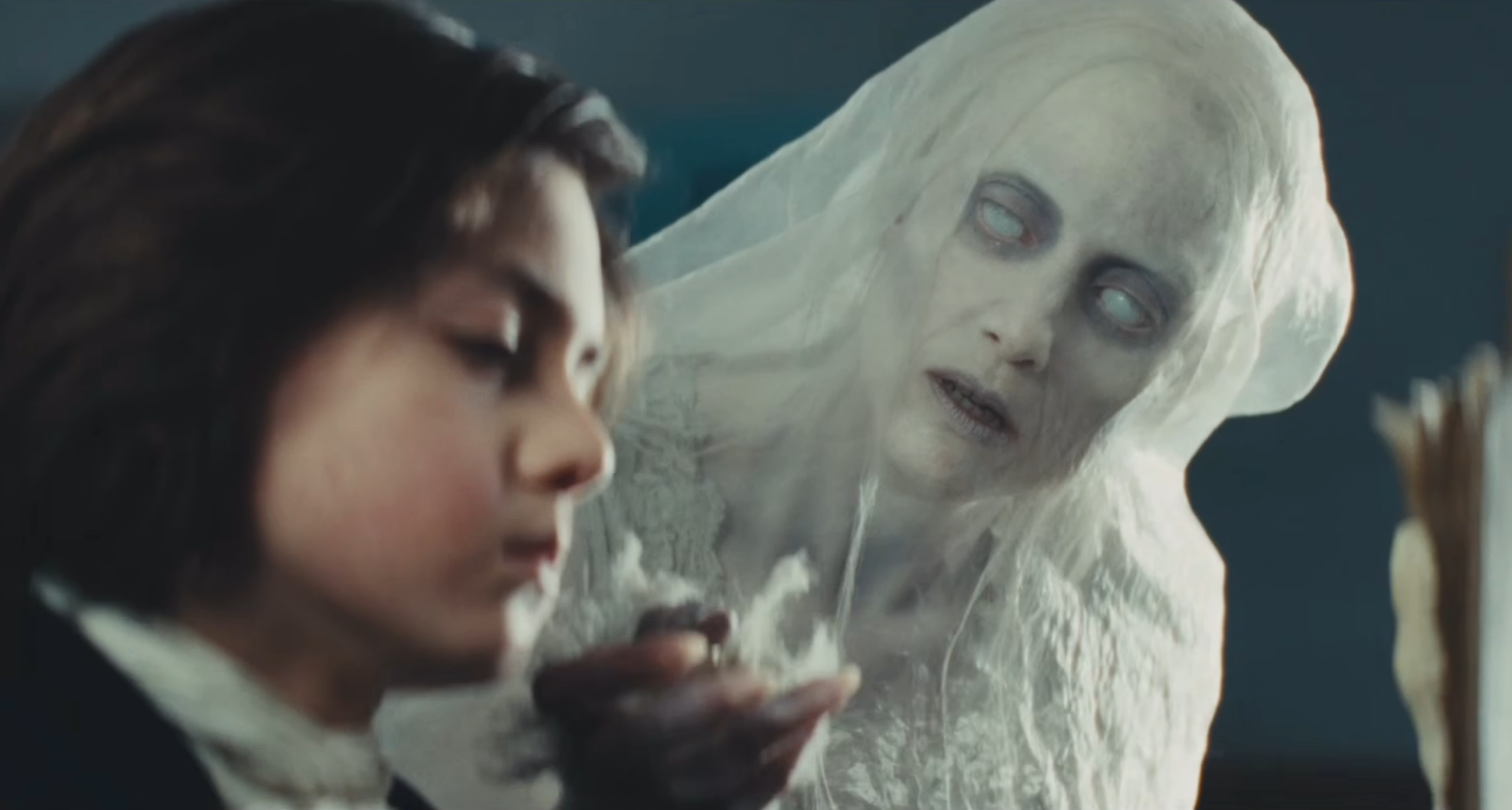
The trailer for Ti West’s upcoming adaptation of A Christmas Carol raised a lot of eyebrows when it dropped earlier this week. While plenty of folks initially dismissed Ebenezer as a derivative project meant to cash in on the recent wave of unnecessary prequels that expand the backstory of beloved characters (such as 2023’s Wonka), Charles Dickens’ original novel already made a point of exploring Ebenezer Scrooge’s origins in detail – meaning that this new film is likely just a particularly faithful adaptation of the source material under a different name.
Couple that with the fact that the movie is being helmed by a genuine horror auteur and I think it’s safe to say that the latest iteration of the first modern ghost story is in good hands.
That being said, one detail that immediately jumped out at me during the brief teaser (other than a blink-and-you’ll-miss-it nod to Johnny Depp’s iconic bedroom death scene from the original A Nightmare on Elm Street) is the fact that many of Ebenezer’s ghosts appear to have been directly lifted from the iconic John Leech illustrations that accompanied the first edition of Dickens’ novel.
Here are a couple of stills from the trailer compared to the original artwork:

The Ghost of Christmas Yet to Come in ‘Ebenezer’ and ‘A Christmas Carol’

The Phantoms in ‘A Christmas Carol’ and ‘Ebenezer’

Marley’s Ghost in ‘Ebenezer’ and ‘A Christmas Carol’
Mainly working with old-school wood and steel engravings that would later be transferred to print, Leech was instrumental in crafting the iconic look of history’s most influential phantoms – especially since Dickens is said to have been deeply involved with the creation of these so-called “comic illustrations.”
And since the novel is commonly said to have popularized spiritualism in Victorian England, much of the ghostly iconography that we still see in genre media to this very day (including some of Ti West’s previous films) can be traced back to the author’s partnership with Leech.
Ebenezer won’t be the first A Christmas Carol adaptation to borrow heavily from these designs, but I can appreciate how Ti West is incorporating an important part of horror history into his latest film.
Ebenezer will be available in theaters starting November 13.

You must be logged in to post a comment.