Comics
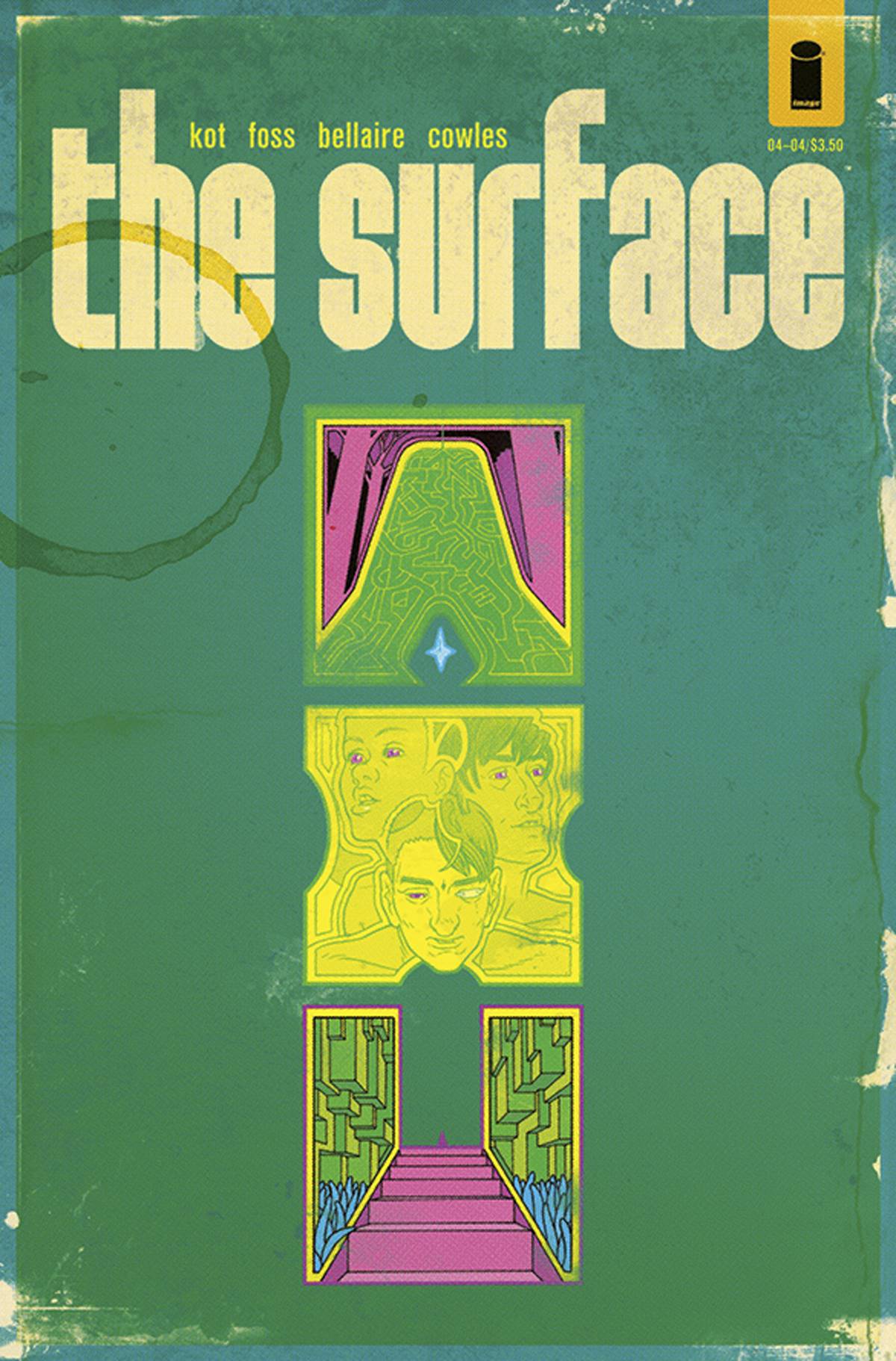
[Comic Review] The Surface #2 Continues A Beautiful Dystopian Trip

Reviewed by Taylor Hoffman
Taylorbhoffman@gmail.com & @taylorcheckers
We pick up where we left off in issue #1, a dreamlike land that may or may not be another world: “The Surface.” Is it an illusion, a hologram, or just a reflection of reality? Whatever it is, it’s gorgeous and weird: electrical blue streaks come out of the mouths of tree faces, three giant pink smiling sperm swim in the air, a rubik’s cube suspends over a miniature highway. Everything appears familiar, yet two steps into Dalí’s The Persistence of Memory as Gomez, Mark, and Nasia try to find their bearings, but instead find relics of their childhood. As always, it’s dangerous territory to go back in history. From there our focus turns to Mark’s father issues that signify a dark time ahead for the group, and soon the utopia becomes a battleground of unveiled secrets.

Story By: Ales Kot and Langdon Foss
Art By: Langdon Foss and Jordie Bellaire
Publisher: Image Comics
Release: April 8, 2015
Price: $3.50
The creative team on The Surface made a truly immersive and uncomfortably beautiful world that really shines in this second issue. Alex Kot’s (Zero) voice sounds through this issue in a more nuanced way than the last. As the first issue included a lot of exposition that matched the much busier technophile city, this issue dialogue was much more sparse, which allowed there to be much more “show and not tell” to happen in the flux of the surface. Langdon Foss (Get Jiro!) makes patterns of psychedelic movement that play tricks with the eyes, which are only magnified by the amazing coloring done by Jordie Bellaire (The Kitchen). There’s certainly that true Moebius vibe alive in this realm, phosphorescent glows of greens, pinks, and blues give the subtle sense of safety, which cuts away to hard black and red contrast as soon as things get “real” and dangerous toward the end.
The Surface has received a lot of flack for seeming pretentious, too dense, and incomprehensible. Those are the readers who scratch their heads in confusion or frustration instead of scratching the surface, which is totally a valid response. However, I absolutely disagree with what I believe to be shallow analyses because what’s truly happening in this comic is some damn good and provocative narrative structuring. The Surface focuses on what’s below the obvious, what provides context for our lives, and the boiling before evaporation of reality. It’s metafiction in which we all must participate fully; because the reader is complicit to the narrator(s); we must fill in the voices in our heads and confront them, we must remember we are reading a story, we must remember we are only built of stories. To figure out what exactly The Surface is about is not the goal, instead the goal is to immerse yourself for ten or so minutes into a different medium of life. It’s a tongue-in-cheek Morrison, which means it’s effective as a catalyst for feeling and forcing us to question those feelings. Some people don’t want to do that, and that’s fine, it’s a lot to think about, and it’s just a comic after all. It’s fiction, and this book’s various narrators constantly remind us that we, too, are immersed in fiction at all times. The first page is the “blink feed,” a Buzzfeed parody that mixes together scrambled news reports of this somewhat future era one step removed from our own. The click-bait, explicit promise of no-bullshit information, and even though there is no other choice but to access this information, I’m still wary to believe any of it. The titles range from “Polyamory Officially Approved as a Legal Choice for Partnered Coexistence” to “What is reality?” and each article is explored in the comic. Turning the page, continuing reading, accepts that we’re clicking on a link to one of these pages because when a subtitle “would you like to know more?” follows headlines like that, well, I say absolutely.
There are many layers to this story that fit inside the larger physical aspect of the comic’s composition. The layout fascinates me because there are these prologue dialogues and ending interview “lifelog pages” that we have absolutely no context to comprehend because there aren’t names attached to any of them, and if there are, they are also just as fictional. There’s a distinct pattern here, we must listen to ourselves listen to others. It’s very House of Leaves because I am not sure if it’s satire or true analysis, but does it matter? It’s interpretation, all literary critique, this review, it’s all subjective to the reader and not author’s intent. Even when there are narrative boxes stating that “this isn’t happening,” it totally is in the world of the comic and our experience reading it.
As for the polyamory between our three characters, I disagree with the assumption that it’s just there for shock or that it has no merit to the story. Remember the first page? We wanted to know more about it, so there it is, our answer is they’re happy and legal. It just is. Just like the surface, the memories, the blood, some things aren’t meant to prove a point, instead those things all connect to create some sense of stability. So is The Surface a hologram of projected images and deep seeded memories? Maybe. There’s something that these characters possess that the higher authorities –– the father, the government, the military –– need, or want, to control. With Mark, Nasia, and Gomez all off-line, they’re rebelling directly against the future of the NSA that basically is a constant and overstimulated twitter feed of bullshit with some true content sometimes.
Delving a bit deeper, Michel Foucault’s An Archeology of Knowledge and Grant Morrison’s Animal Man are on the same level of discussing discourse about The Surface. It’s completely self-referential to what we see could be true. The Surface is a paradoxical post-modern matrix. At only the second issue, I obviously have a lot of thoughts about it. It’s not complete yet, nor is it the greatest piece of fiction of all time, but it’s an important text already that adds to comics as a whole and continuing a tradition of metafiction that engages the reader to read and reflect.
Everything’s meta.



Comics
‘Curse of the Where Wolf’ Bites Into August Release With Trio of Werewolf Theatrical Screenings [Exclusive Preview]

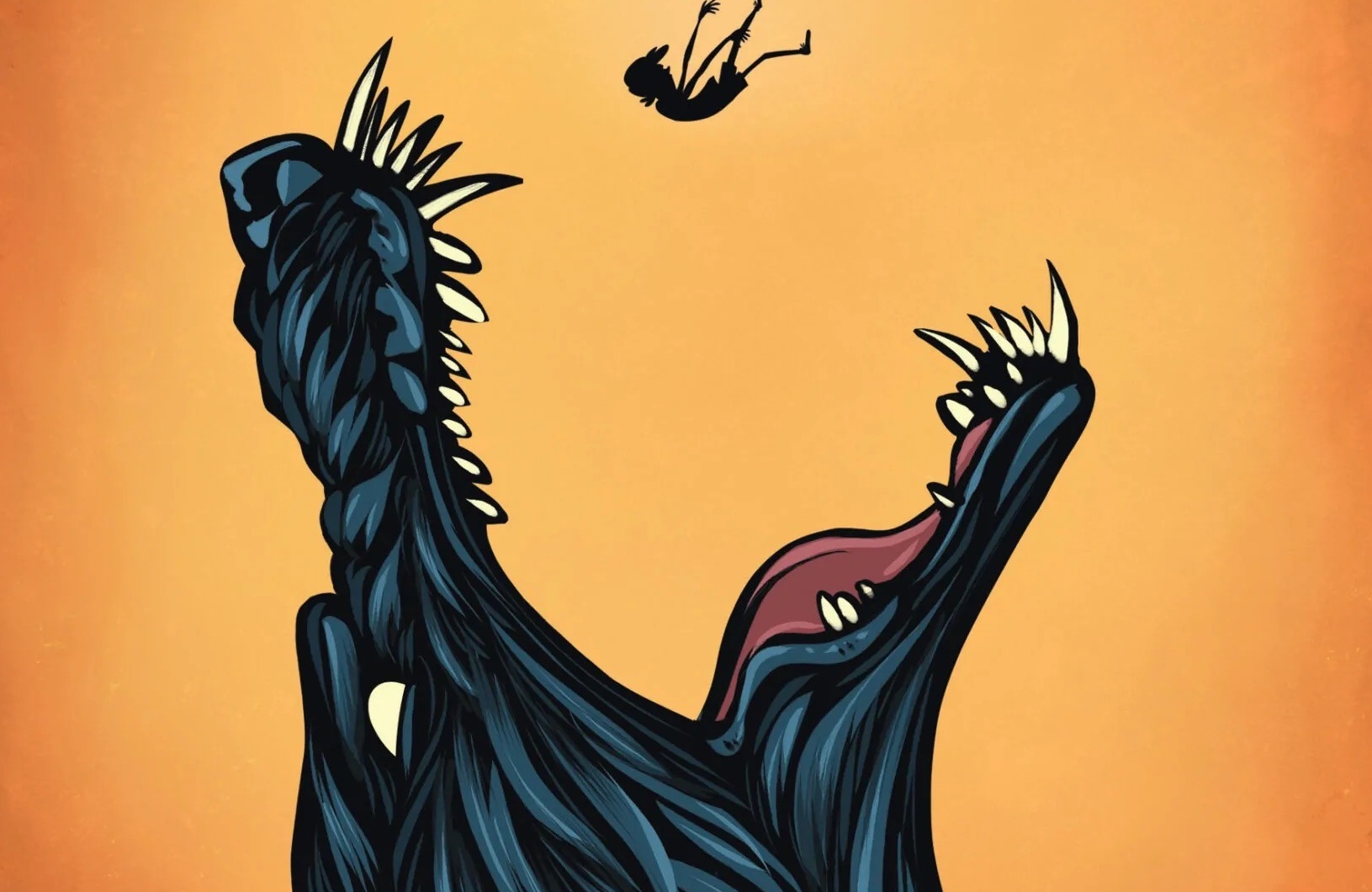
Larry Chaney‘s hairy misadventures are continuing in the sequel graphic novel Curse of the Where Wolf from creative team Rob Saucedo, Debora Lancianese, and Jack Morelli, and its author is celebrating with a trio of horror’s greatest werewolf films.
The Curse of the Where Wolf hits shelves on August 7 from Encyclopocalypse Publications.
That coincides with the launch of a theatrical screening event in Houston, Texas, featuring a trio of seminal werewolf flicks turning 45 this year: The Howling on August 7, Wolfen on August 14, and An American Werewolf in London on August 21.
Each screening features a “werewolf in film” presentation as well as a book signing from Where Wolf author and River Oaks Theatre artistic director Rob Saucedo.
In the new graphic novel, “Being a werewolf sucks. Reporter Larry Chaney wanted to be a hero. Instead, he became a werewolf. Now, caught between incredible new powers and a desire to eat everything (and everyone) in sight, Larry must find a cure for his curse. Or die trying.”
“With Where Wolf, I wanted to tell a whodunit set in a furry convention, so the story was pretty contained within a very specific setting and genre. With Curse of the Where Wolf, I wanted to celebrate everything I love about the possibility of comic books. Curse of the Where Wolf is a funny book, in every sense of the phrase, but it’s also an earnest look at a person’s struggle to become a better version of themselves, especially when the alternative is to become a literal monster,” Saucedo says of Curse.
The original graphic novel was previously serialized as the first webcomic hosted on Fangoria before being collected by Encyclopocalypse Publications in 2023 and has already been optioned for film, podcast, and television development ahead of launch by producers James Fino (“The Freak Brothers” for Tubi, “Rick and Morty” for Adult Swim) and Charles Horak (First Date for Magnolia Pictures).
Expect Larry to find himself in even weirder situations in the 362-page full color sequel; Saucedo has provided Bloody Disgusting with exclusive art pages from the upcoming graphic novel that showcase lupine humor.


You must be logged in to post a comment.