Reviews
[TIFF Review] Neil Jordan’s ‘Greta’ Falters By Falling Somewhere Between Thriller and High Camp


There’s a long Hollywood history of thrillers in which random strangers innocently insert themselves into the lives of our protagonists and then expose the fact that they are psychos. The subgenre peaked in the 80s and 90s when titles like The Crush, Fatal Attraction and Single White Female raked in big money and even greater notoriety, but in recent years its popularity has fizzled out. These days it lives on in infrequent (and often meek) entries like 2011’s The Roommate or in the complementary “vengeful psycho ex” film such as Obsessed and The Perfect Guy.
Leave it to esteemed art house director Neil Jordan to try and inject some life – and class – back into the proceedings. The creative mind behind notorious blockbusters like The Crying Game and Interview with The Vampire digs deep into the Freudian sandbox for his latest film Greta, starring the unlikely pairing of Chloë Grace Moretz and French icon Isabelle Huppert.
Frances (Grace Moretz) is a fresh-faced newcomer to New York. She’s rooming with Erica (genre vet Maika Monroe) in an amazing open concept loft that only people in the movies can afford, working at a fancy seafood restaurant and learning to navigate the city. Frances is also slightly estranged from her father (Colm Feore) following the death of her mother from cancer – he is concerned about her, but all Frances yearns for is freedom and independence.
One day Frances discovers a lost purse on the subway and, despite Erica’s insistence that they treat themselves to a spa/colonic with the contents, Frances elects to return the item in person. She winds up striking up an unlikely friendship with Greta (Huppert), a lonely widower who appears kind, but also a little odd.
It’s no spoiler to confirm that Greta is not what she appears. The older woman begins to ingratiate herself into Frances’ life (a fact that perplexes and bothers Erica), slowly at first and then increasingly making demands on her time. One night during a dinner at Greta’s house, Frances makes a shocking discovery that prompts her to sever ties with the older woman, which sets in motion the main plot of the film as Greta stalks, harasses and threatens Frances at home and at work.
As the titular character, Huppert completely steals the show. Greta is a deranged, neurotic villain posing in plain sight as a kindly old woman. Half of the fun of Greta is watching Huppert’s obvious delight at performing unsavoury acts. This is especially true in the final act of the film when Greta reveals her full crazy intentions and the violence begins to escalate. The film’s highlight is a scene with Huppert involving a gun, a body and a little dancing and it is so amazingly ridiculous that it’s almost worth the price of admission.
As lead, Grace Moretz is unfortunately far less engaging. She seems to be aiming for wide-eyed innocent and lands instead on either sleepwalking or histrionic. Frances is so bland that it is hard to understand why Greta would become dangerously obsessed with her.
It is especially difficult when Frances is compared to Erica. Maika Monroe essentially steals the film out from under her co-star by making Erica imminently likeable, sarcastic and a little flirty. At one point Greta begins sending Frances a series of photographs of Erica while the latter is drinking alone at the bar, prompting a “chase by text” sequence as Frances desperately tries to guide her roommate to safety. Later Erica, examining Greta’s pictures of her, comments how attractive she looks and compliments the stalker for taking a good photo. It’s this kind of quip that makes Erica so much more enjoyable to watch than Frances.
Greta’s biggest failure, however, is the film’s reluctance to fully embrace its full camp potential. These kinds of films benefit from being as outlandish as possible and while there are a few delightfully silly moments (and one truly kick ass moment of gore involving a mundane kitchen utensil), they’re too few and far between. The body count is also surprisingly low, which is unusual for the subgenre in comparison to earlier iterations, which would have had the guts to knock off at least a few more characters.
As it stands, Greta simply isn’t frightening enough to be a great horror film, and it’s not campy enough to be a guilty pleasure. Greta could have been great fun – and a much stronger film – had it leaned into its genre origins. Instead it’s just so-so, despite a very game Isabelle Huppert.





Movies
‘Recluse’ Review – Harrowing Haunted House Horror With Lots Of Skeletons In Its Closet [Tribeca 2026]

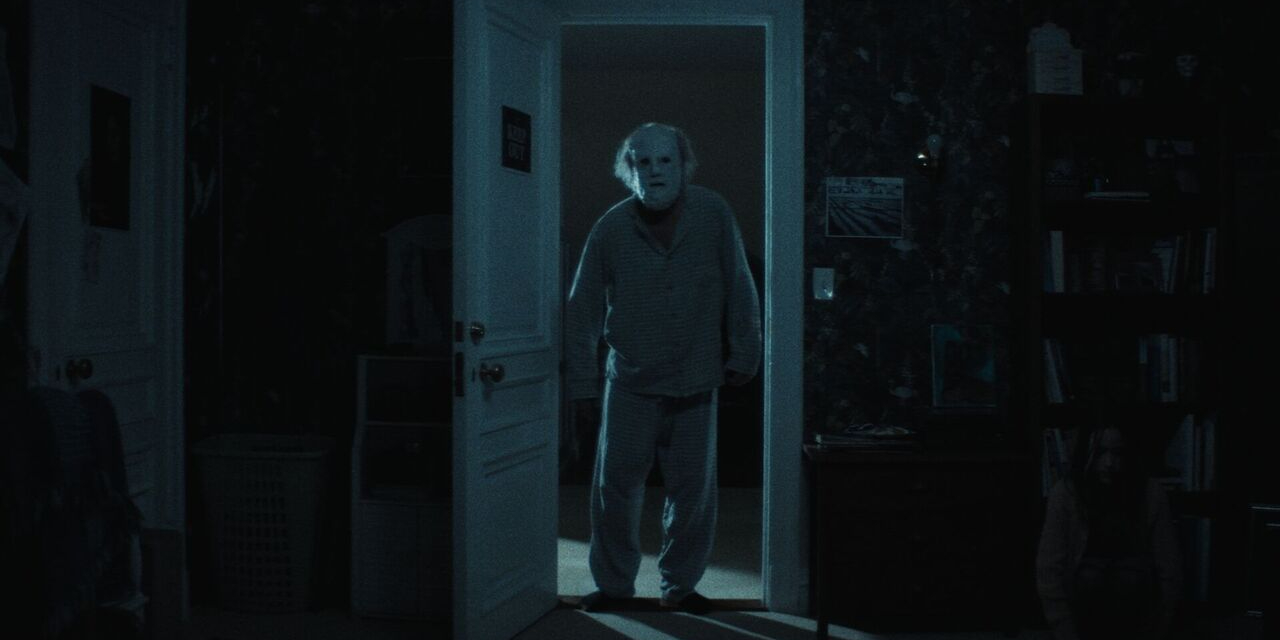
A haunted house story is tense, terrifying storytelling when it’s properly executed. There’s been a growing tendency in horror to blend together harrowing haunted house stories with traumatic homecomings. A family member’s illness or death triggers a return to something dark that was intentionally left behind. Recluse hits all the tropes that one expects to find in this type of horror film, yet it manages to push this story in a daring, disturbing new direction that uses sound as a superpower.
It’s a unique lens to experience a familiar story about family secrets, generational trauma, unresolved grief, and the importance of not just legacy, but preservation. It’s a hell of a directorial debut from Henry Chaisson that’s guaranteed to get under the audience’s skin as they’re dragged through this painful, toxic tale.
Recluse is a gothic haunted house story where an isolated audio engineer, Joan (Sasha Frolova), returns to her family’s estate to check in on her father after he suffers a terrible accident. Joan suddenly discovers something much more sinister that paints her family’s tragedies in a very different light. Chaisson’s debut functions as a fascinating companion piece to this year’s undertone, which does a lot of the same things.
These two films make for a fascinating case of parallel thinking that tackles comparable subject matter through a similar lens, albeit in a bigger, less claustrophobic story in Recluse’s case. In fact, it’s the perfect horror film for anyone who was let down by undertone and didn’t feel like it brought enough to the table. It’s a considerably more conventional horror film, but this isn’t meant to denigrate its high quality. Recluse may hit some familiar notes, but it’s a scary, well-crafted haunted house horror story that goes for the jugular.

A gripping mystery that involves the tragic, unresolved circumstances that surround Joan’s mother teases a chilling connection to the recent horrors that have afflicted her father. Joan desperately tries to put these pieces together and give her family some sense of grander peace before she’s pulled under and becomes another victim of this festering curse that’s systematically worked its way through the Wyatt family. By doing so, Recluse digs into some deeper commentary on collective trauma, a very literal look at the “sins of the father” adage, and how one selfish decision can ripple through generations and fracture off into different dilemmas. By the end, Recluse has brilliantly flipped the powerful concept of legacy on its head by illustrating the horrors and sense of entitlement that can be born out of this idea.
A legacy is just another name for a curse under the right context.
”Listen” is a simple but powerful command from Joan’s father that she briefly obsesses over. In a way, it becomes Recluse’s grander mission statement, whether it’s in response to Joan listening to the people in her life, the signals that her body and mind are telling her, or the world’s greater whims. It’s important to reconnect with these grounding pillars, especially when it feels like control is slipping away.
Recluse excels with how audio and soundscapes can create entire universes that are full of rich details that transport individuals to these environments. There’s also a level of objectivity when it comes to audio recordings and the evergreen permanence that they’re able to provide. Joan’s career as an audio engineer makes sense for someone who wants to cling to hard evidence and proof of existence. It provides great insight into Joan without ever getting lost in contrived exposition.
Joan’s entire life is built around audio engineering, and so it makes sense that Recluse features excellent sound design that really goes above and beyond with its production elements. All of the sound design is expertly handled and turns the film into something special. These auditory elements intuitively keep the audience on edge so that they’re more susceptible to the actual scares that eventually strike. The smallest sound effect gets turned into a crushing, cacophonous assault. It’s a really effective way to build terror. Writer/Director Chaisson also handles the film’s music, which achieves a sublime, unnerving dissonance that further heightens the free-floating anxiety.

The story at the center of Recluse is slightly generic in some respects, but the film’s visual language and tone make it feel distinctly memorable. It also doesn’t hurt that the home that Joan returns to is basically an eerie art studio that’s full of contorted paintings. Recluse never struggles to generate mounting dread and terror that pump through every scene. Powerful, thoughtful cinematography consistently reinforces the film’s themes. Joan is constantly reflected in different surfaces or viewed through mirrors. She’s also often confined to tight, constricting framing that all speaks to her refracted identity during this moment of loss and her attempts to regain agency and control by making sense of something that’s seemingly unexplainable.
Recluse is full of truly disturbing visuals that make it seem like Joan is lost in a dream that turns out to be an extended nightmare. It’s a surreal journey reminiscent of invasive psychological horror like Silent Hill, with a touch of Sinister and Hereditary thrown in for good measure. There are so many individual frames that could endlessly fuel urban legends and creepypastas.
It does a great job with how it presents Joan’s fragile state of mind, where chilling flashes of the past sneak up on her and unresolved trauma manifests into unsettling imagery. There are endless shots that are obscured in darkness, or shadow is creeping in from the corners of frames like a suffocating force of nature. It’s very rare that a scene is fully lit. It leads to a very lonely, isolating atmosphere that’s easy to get lost in.
Chaisson’s debut stands out from the many other high-minded haunted house horror films without succumbing to the same pretensions that often drag down these stories. It’s a grief-stricken character study that’s full of upsetting visuals that scratch at something visceral and raw. The horror elements connect, and the answers to its grander mystery provide an appropriate and believable sense of closure. Those who are looking for an atmospheric horror film that isn’t afraid to be different while still channeling something real will appreciate Recluse.
Recluse made its world premiere at Tribeca; release info TBD.

You must be logged in to post a comment.