News
‘Alan Wake’ Review: A Fear Of The Dark


It’s been a long time coming but Alan Wake is finally here and now all it has to do is live up to the tons of hype that has steadily built up around it since the game was announced nearly five years ago. Great horror games are few and far between, so only a few titles end up standing above the rest to define a console generation. The last big hit to grace our consoles was arguably the Necromorph infested Dead Space, but we’ve also had Resident Evil 5, Dead Rising, Condemned, Left 4 Dead, and a slew of other titles.
So does Alan Wake redefine the horror genre? Take storytelling in video games to new heights? Is it actually fun? How good do the trees look? All these questions and more are answered right after the jump. The horror genre used to be infamous for its clunky controls, but it seems as if we’re outgrowing that this generation as more and more games gift us with capable protagonists to control. Silent Hill: Homecoming replaced the horribly tank-like controls it had relied on for over a decade with a guy that could hold his own, even against hellish creatures from the Otherworld. Dead Space gave us Strategic Dismemberment (need I say more?)
Thankfully, Alan is limber enough to dodge the oncoming axes, pickaxes, chainsaws, and other melee weapons coming his way, as well as take out a few shadowy enemies without too much trouble. The dodge move isn’t easy enough to work every time (unless you have insanely fast reflexes) and you can strafe so you never have to stop moving.
Alan Wake is a linear game, maybe too linear at times, but the level design cleverly hides this fact by giving you plenty of room to explore while on your linear path. This is why having a capable hero is crucial, because enemies can flank you from all sides (since you’re usually surrounded by forest), so it’s important that we’re able to stay and fight or take off screaming for our mommies. In case you were wondering, I tend to take the latter approach.
Prior to the game’s release there was a lot of talk about it being the best looking title of the generation (so far), but that really isn’t true. Alan Wake looks stunning and does some thing particularly well, namely light and shadows. But it’s far from being the visual sensation many were making it out to be.
There are a myriad of really spectacular effects like sparks flying off enemies when you shine your light on them, or the slow motion that’s enabled when you light a flare. But my favorite effect occurs when the Darkness comes, because that’s when you can see fast moving shadows on the ground, strange sounds in the distance, and a strong wind that makes the gorgeous trees shake.
Did I mention the trees? It might sound strange to spend time discussing a game’s foliage but you do spend a majority of your time surrounded by them so it’s rather important that they look realistic. And they do. In fact, there’s a section (worry not dear reader, no spoilers lie here) where people wielding flashlights are chasing you in a forest. This area was particularly memorable because it combined many of my favorite features: white hot beams of far away flashlights cutting through the densely packed trees that occasionally shake and stir when the Darkness arrives. It was really amazing and I would’ve stopped to take it all in if I wasn’t, you know, being chased.
You might not have noticed but Alan Wake is a game that prides itself on its strong storytelling. One might say it’s the type of game that considers itself “story-driven.” This would imply that the story is engaging and pulls you in like a good book. People still read, right? At the end of each Episode lies a cliffhanger ending that, for the most part, is usually fairly surprising. I’m not saying your jaw will drop at some sudden plot twist, but the game certainly has its fair share of immersion and the pacing is fantastic enough to keep the game from ever getting dull.
When it comes to the story, the game’s strong point ends up being the characters and how they develop as the story progresses. Alan is the type of guy you can empathize with, his wife and her unfounded(?) fear of the dark is unique, for a grown woman at least. And there’s a plethora of original characters you’ll come across in the secluded mountain town of Bright Falls that will either fill you with dread or put a grin on your face.
Of course, it’s not all bright and sunny in Bright Falls; there are some minor things like aged character models (no doubt because the game was in development for so long) and awkward driving sections, but my major complaint is how little time you can spend with it. You also have a modestly sized single-player campaign with essentially nothing in the form of stuff to do outside of the main game other than collecting items. The game also at times feels a little constricting in its linearity; you need to this or that before you can move to your next destination, than repeat. The missions are fun and well designed but offer little in terms of variety.
If you don’t mind a single-player only experience and are patient enough to wait for the upcoming DLC that will expand on said experience, this is a truly amazing game. It’s emotional, engaging, highly polished, and intense. One minute you’ll be walking along a quiet forest floor and the next you’ll be surrounded by shadowy enemies, fighting for your life as you try to find a source of light. Alan Wake takes the overused Light versus Dark plot and makes it tangible. The Darkness hunts you, it’s intelligent, cunning, and will stop at nothing to keep you from achieving your goals. The only question is: are you afraid of the dark?





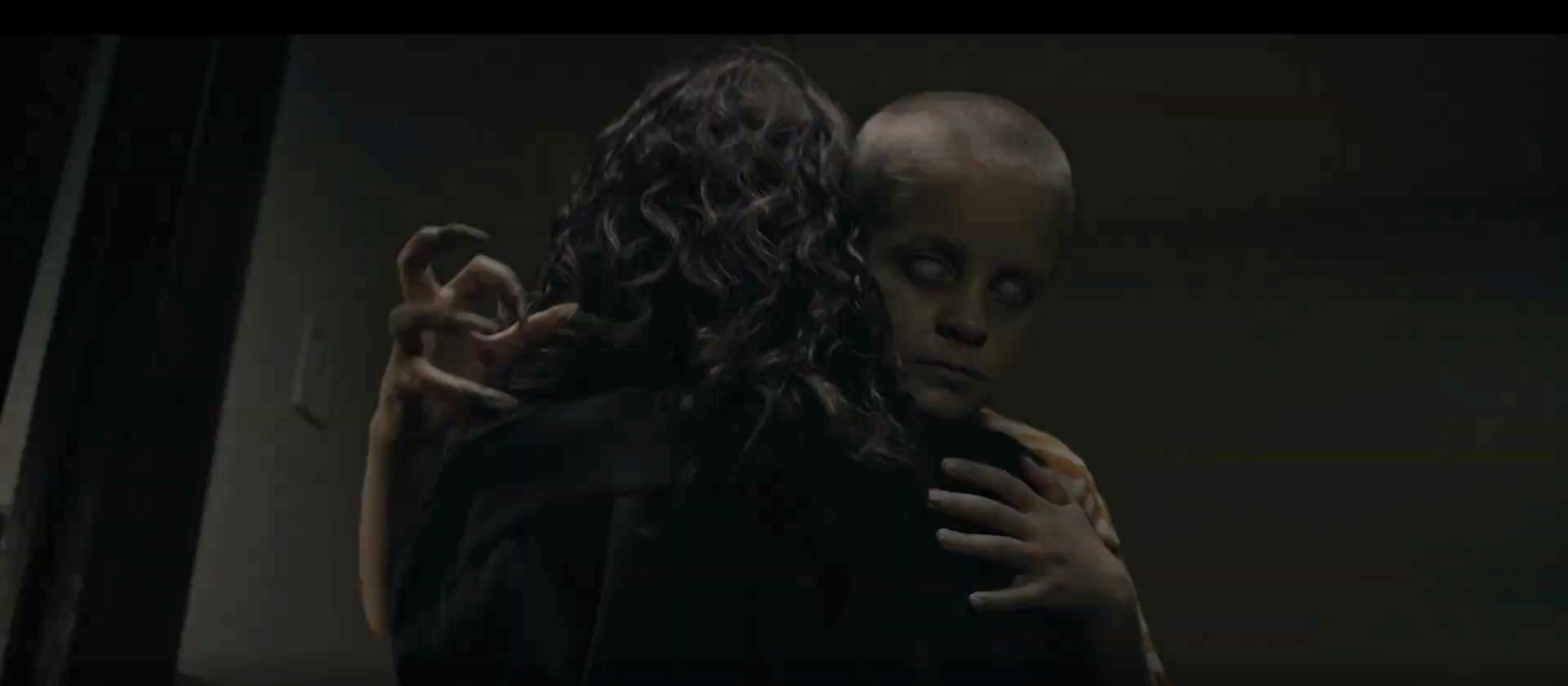
Let’s start with the good news. Lockbox looks far better than its misleading marketing materials suggest, a supernatural horror movie so darkly lit and color graded that you’ll have to squint your way through jump scares. It’s also anchored by reliable genre performers. That’s also about where the good news ends with this rote adaptation of Knifepoint Horror Podcast story “Winthrop.”
The empathetic Carla Gugino gives her all as Ellen, a saint of a woman with boundless patience who takes on life’s hard luck with a kind smile. After giving up her career as a fashion designer to become caretaker for a dying mother, she’s then forced to reinvent herself once more when her caretaker role ends. That catches us up to the events of Lockbox, where Ellen is asked to take in a cousin she hasn’t seen in quite some time who’s dealing with severe PTSD.
Just as Ellen finally establishes a real connection with Winthrop (Lou Taylor Pucci), it’s interrupted by the arrival of peculiar neighbor Vahna (Katharine Isabelle), who spells clear trouble. When Vahna shows up dead, it sets in motion a supernatural battle of possession.

Image Credit: Aura entertainment
Director Daniel Stamm (The Last Exorcism, Prey for the Devil) and screenwriter Justin Yoffe approach Lockbox in the broadest of brushstrokes, dooming it from the start with clunky storytelling and woefully underdeveloped themes of heady topics like PTSD. Winthrop is a character that comes loaded with emotional baggage and trauma that’s piled on throughout his tragic life, but much like its title, his interiority and history are treated like a tightly guarded secret meant to prolong the supernatural mystery.
The problem here, though, is that Lockbox is too sparse to sustain mystery at all, and it instead robs Winthrop of characterization. It winds up trapping the talented Pucci without anywhere to go, toggling between wounded animal and mentally disoriented.
From there, Lockbox bounds through plot developments without any sense of stakes or purpose, peppered by a smattering of haphazard paint-by-numbers jump scares. The only unwavering constant is Ellen’s resolute faith, and Stamm seems to leave it entirely to Gugino to guide confused audiences through this inconsequential story right up until its supernatural climax.

Image Credit: Aura entertainment
To give more credit, Lockbox at least injects an unconventional exorcism here; just don’t expect much in the way of explanation. When the film finally reveals the meaning behind its title, it dangles a fascinating carrot it has zero interest in delivering. More than a severe lack of fleshing out its characters beyond plot drivers or devices, this faith-based flick also seems terrified to offer any worldbuilding whatsoever.
Yoffe’s script stretches the short story beyond its means instead of fleshing it out, and Stamm fills out the gaps with cheap CGI scares and overwrought performances; Isabelle’s Vahna is beyond cartoonish in her villainy. It’s also pretty nonsensical, treating only Ellen’s faith with the utmost sincerity and largely squandering its typically reliable talent. So much so that the final imagery, pure sunkissed saccharine sentimentality, leaves you with the feeling that this horror movie might be better suited as an entry in Chicken Soup for the Soul.
Lockbox releases in select theaters on July 3, 2026.

You must be logged in to post a comment.